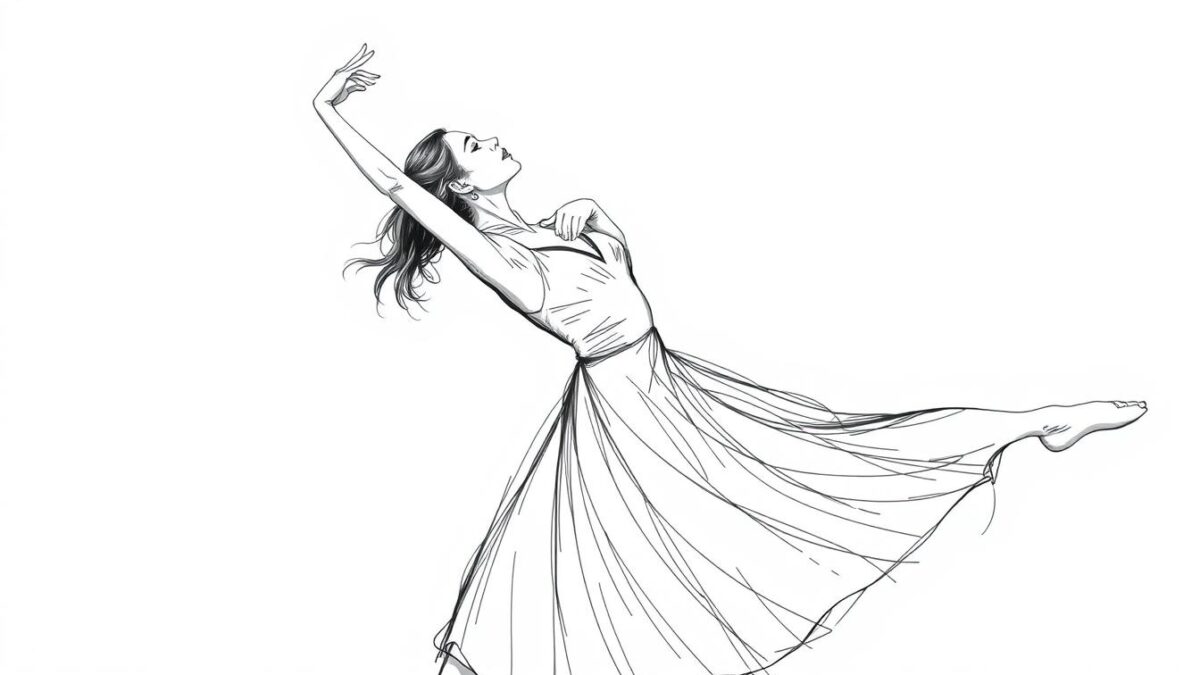
She commanded the stage for over four decades. This ballerina became a symbol of French grace and power.
Born in Paris in 1917, yvette chauviré trained at the Paris Opera Ballet School. She earned the rank of étoile, the highest honor for a dancer there, by 1941.
People who saw her perform described a unique blend of elegance and strength. They called her technique “velvet and steel.” It was a flawless classical form that set her apart.
Her fame quickly spread beyond the theater. She graced the cover of Life magazine in 1938, introducing her artistry to a global audience.
This is the story of a star who shaped an entire style of ballet. Her legacy lives on through the dancers she mentored and the standard of excellence she set.
Early Years and the Making of a Ballet Icon
At the Paris Opera Ballet School, a young dancer’s potential began to unfurl with astonishing speed. Her training started at ten years old, a beginning that set the stage for an exceptional career.
Childhood, Paris Opera Ballet School, and Early Training
Enrollment in 1927 marked the start of a profound relationship with the institution. The Paris Opera became a second home, a place of discipline and classical foundation.
Just two years later, a performance in “L’Eventail de Jeanne” signaled her promise. She joined the main ballet company at thirteen, a rare feat that launched her professional life.
Rapid Rise: From École to Étoile at the Paris Opera
Her ascent through the ranks was remarkably swift. She earned the title of principal dancer in 1937. The highest honor, étoile, followed just four years later in 1941.
This period was crucial for artistic development. Russian choreographers Boris Kniaseff and Victor Gsovsky guided her style toward greater lyricism.
She also learned by intently observing Carlotta Zambelli. This informal study refined her technique, blending precision with expressive warmth.
| Year | Event | Significance |
|---|---|---|
| 1927 | Enrolled at Paris Opera Ballet School | Began formal training at age 10 |
| 1929 | Performance in “L’Eventail de Jeanne” | First major recognition for talent |
| 1930 | Joined Paris Opera Ballet company | Became a professional dancer at age 13 |
| 1937 | Promoted to Principal Dancer | Achieved a leading rank within the company |
| 1941 | Named Étoile | Reached the pinnacle of the Paris Opera hierarchy |
These formative years built an unshakable foundation. They shaped a dancer known for both technical strength and graceful artistry.
Yvette Chauviré: A Legacy of Innovation and Performing Excellence
Her partnership with choreographer Serge Lifar became the engine of her artistic evolution. Yvette Chauviré starred in his experimental ballets, pushing classical form with dramatic range.
Roles in works like “Istar” and “Suite en Blanc” demanded a new kind of power. She delivered with a technique critics called unforgettable.
Collaborations with Serge Lifar and International Legends
When Lifar left the Paris Opera after the war, the dancer followed. This bold move showed her loyalty to artistic vision over institution.
She later returned but left again in 1949, refusing to be confined. This independence allowed her to perform across Europe and the Americas.
During this time, her guest appearances brought a global audience. She became a fixture in major theatres worldwide.
Her partnerships defined an era. She often danced with Rudolf Nureyev, who revered her as a legend. Their performances together were electric.
She also shared the stage with Māris Liepa and Erik Bruhn. These collaborations showcased her ability to match intensity with any partner.
Defining the Signature Role of Giselle and French Ballet Style
She expanded her repertoire to include the great classical works. It was in “Giselle” that she found her ultimate role.
She inhabited the character with such depth that her second act was called “love carved in alabaster.” This role cemented her status.
Her style balanced lyricism with disciplined structure. She became known for her exquisite épaulement, giving every movement clarity and emotional range.
She retired from full-time performance in 1956 but continued guest appearances until 1972. Her technique and artistry remained compelling for decades.
| Partner / Company | Production | Significance |
|---|---|---|
| Serge Lifar (Choreographer) | Suite en Blanc, Istar | Defined her early career with experimental ballets |
| Rudolf Nureyev | Various Classical Shows | Legendary partnership that crossed generations |
| Ballets des Champs-Elysées | Grand Pas Classique | Showcased her versatility outside the Paris Opera |
| Berlin Ballet | La Dame aux Camélias | Highlighted her dramatic performance skills internationally |
The Impact of French Elegance on Ballet and Beyond
When the curtain fell on her performing career, a new chapter began that would shape French ballet for generations. The legendary ballerina brought the same precision to teaching that had defined her stage presence.
Influence on Successive Generations and Masterful Teaching
As co-director of the Paris Opera Ballet School from 1963 to 1968, she mentored future stars. Her students included Sylvie Guillem and Marie-Claude Pietragalla, who carried her teachings forward.
Marie-Claude Pietragalla often spoke about learning more than technique from her teacher. She learned the poetry behind each movement and the intention in every gesture.
The ballerina held masterclasses across Europe, emphasizing épaulement and clarity. In a 1989 interview, she criticized contemporary trends toward extreme, slipshod movements.
Accolades, Documentary Highlights, and Global Recognition
Her influence reached beyond the studio through significant honors. She received the Légion d’Honneur at multiple levels, recognizing her cultural contributions.
Dominique Delouche’s 1983 documentary captured her coaching young ballerinas. Screened at Cannes, it showed her generosity as a teacher alongside archival performances.
She served as an inaugural juror for the prestigious Prix Benois de la Danse in 1992. Colleagues remembered her Parisian elegance and profound understanding of ballet tradition.
Final Reflections on a Timeless Dancer
Her final bow came in 2016 at her Paris home, a quiet end for a monumental life in dance. The New York Times obituary captured the sentiment, calling Yvette Chauviré a “Symbol of French Culture.”
Her star power reached America early. The 1937 film “La Mort du Cygne,” released there as “Ballerina,” landed her on the cover of Life magazine. Decades later, a New York screening of the rediscovered film let a new generation witness her early genius.
She documented her philosophy in two autobiographies. A later documentary showed her masterful coaching, preserving the technique that defined an era.
Tributes from legends like Carla Fracci poured in, honoring the artist who illuminated the world. Yvette Chauviré’s name endures in magazine features and dance studios, a timeless standard of grace.