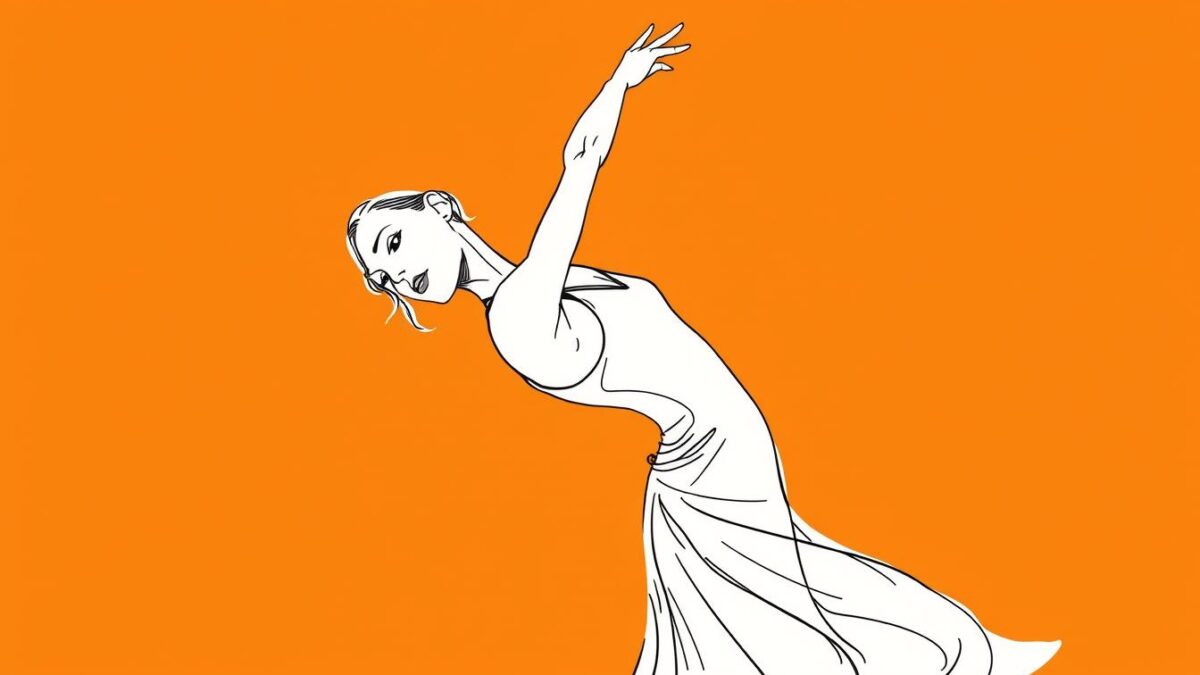
Her movement reshaped a nation’s understanding of modern dance. For five decades, Peggy Baker commanded the stage with a discipline that turned performance into profound research.
Born in Edmonton in 1952, she built a career that bridged two countries. She connected Toronto’s vibrant scene with the established giants of New York.
Her work as a choreographer broke from tradition. It favored abstract storytelling drawn from the dancers’ own physical intelligence and emotional landscapes.
This approach earned the highest honors. She received the Order of Canada, the Governor General’s Award, and the Premier’s Award for Excellence in the Arts.
Her path reveals how a student actor became an internationally acclaimed artist. This is the story of the education and collaborations that forged a unique vision.
Exploring the Life and Artistry of Peggy Baker
Her artistic journey was punctuated by major honors that reflected her growing influence in Canadian performing arts. These recognitions traced the evolution from emerging talent to established master.
Early Beginnings and Influential Education
Before the awards came the foundation. Her training blended acting with dance, creating a unique physical vocabulary. She studied at institutions that valued both technical precision and creative exploration.
This educational background shaped her approach to movement. It taught her to see choreography as both physical expression and intellectual inquiry.
Awards and Milestones: From Order of Canada to Premier’s Award
In 2006, she received the Order of Canada, the nation’s highest civilian honor. This recognition placed her among Canada’s most distinguished cultural contributors.
The following year brought another historic moment. She became the first recipient of the Ontario Premier’s Award for Excellence in the Arts. This premier award acknowledged her profound impact on the province’s cultural landscape.
The Walter Carsen Prize arrived in 2010, cementing her legacy. This carsen prize from the Canada Council provided both financial support and symbolic validation of her career’s significance.
Additional honors spanned decades of work. They included the Governor General’s Award, six Dora Mavor Moore Awards, and honorary doctorates. Each award marked a different facet of her contribution to dance.
Peggy Baker and the Evolution of Modern Dance
The year 1980 marked a pivotal shift when she answered New York’s call, joining the Lar Lubovitch Dance Company. This move immersed her in a choreographic style celebrated for its musicality and complex partnering. The experience fundamentally expanded her technical range.
Impact of Toronto Dance Theatre and Influential Figures
Before New York, her foundation in Toronto provided essential groundwork. The city’s experimental scene shaped her early approach to movement. This background prepared her for the competitive ecology she would encounter.
Toronto’s influence remained crucial even during her New York years. The connection between both cities gave her career its distinctive international character.
The Transformative Move to New York and International Success
A decade in New York exposed her to artists pushing postmodern boundaries. She performed alongside innovators redefining contemporary dance. This environment challenged and refined her artistic voice.
In 1990, Mikhail Baryshnikov recruited her for the White Oak Dance Project. This ensemble of mature dancers became a turning point. It relaunched her career as both performer and choreographer.
That same year brought her first solo concert, “Le Charme d l’Impossible.” Commissioned by the Canada Dance Festival, it premiered in Winnipeg. This performance marked her emergence as a choreographer with her own distinct vision.
Returning to Canada in 1993, she became the National Ballet School’s first artist-in-residence. The role allowed her to teach and stage Lar Lubovitch’s repertoire. Her dual presence bridged Canadian and American contemporary dance practices.
Baker Dance Projects: Innovating Movement and Collaboration
For over three decades, her company became a global ambassador for Canadian contemporary dance. It appeared on stages from New York’s Danspace to the Copenhagen International Dance Festival. This international presence solidified its reputation.
The company’s work was a magnet for collaboration. Peggy Baker drew in a vast network of choreographers, composers, and visual artists.
Choreographic Exploration and the Use of Movement Scores
Her method often involved movement scores. These frameworks guided dancers toward structured improvisation. The result was work that felt both spontaneous and deeply precise.
This approach shone in large-scale events. For Toronto’s Nuit Blanche, she created five all-night performances. These site-specific installations brought dance directly to public spaces.
Global Dance Festivals, Collaborations, and Critical Acclaim
Major festivals were crucial platforms. The company performed at Jacob’s Pillow and Seoul’s MoDaFe. Each dance festival appearance introduced her unique vision to new audiences.
Collaborators like composer Sarah Neufeld and choreographer James Kudelka were essential partners. Their contributions made each performance a true interdisciplinary event.
Critical acclaim followed this expansive body of work. Reviewers recognized its formal rigor and emotional depth. The legacy is further documented in Carol Anderson’s book “Unfold” and the film “Dancing Darkness.”
Reflections on a Legacy of Dance and Future Influence
Her 2023 induction into the Dance Collection Danse Hall of Fame cemented a legacy that transcends performance alone. This honor bookends a career that reshaped Canadian dance. It proves rigorous contemporary work can achieve both critical respect and popular resonance.
Peggy Baker’s methodologies—movement scores, text-based composition—elevated abstraction as valid expression. Honorary doctorates acknowledged her intellectual contributions. She treated choreography as embodied knowledge creation.
The National Film Board’s 2009 short film preserved her work for future generations. It ensures her movement philosophy remains accessible beyond live performance.
Future dancers inherit from Peggy Baker a model of artistic integrity. It refuses commercial compromise and embraces interdisciplinary collaboration. Her approach treats the dancing body as a site of meaning-making equal to any art form.