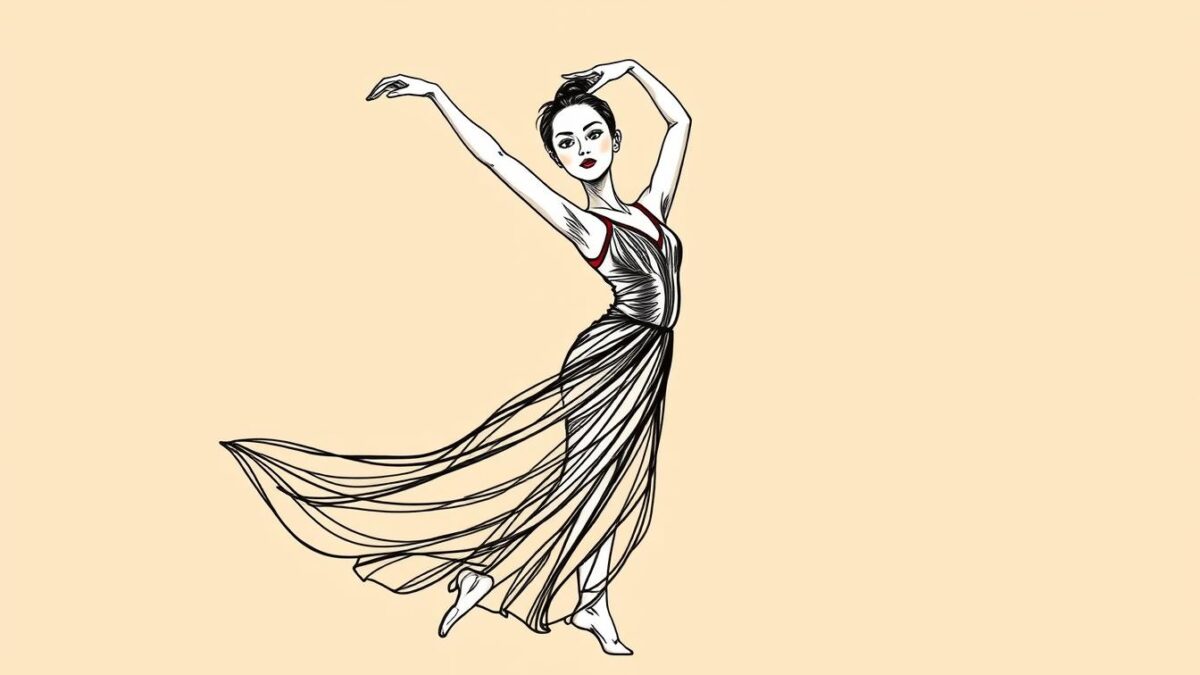
Born in Japan with Korean-Japanese heritage, she became a New Yorker at the age of five. The city’s streets became her second home, its rhythm a fundamental part of her growth.
This article traces her path from that immigrant childhood to the stage. It looks at the choices and training that shaped a singular artistic voice.
At a young age, her presence felt both timeless and immediate. She commanded attention not with flash, but with profound depth and control.
Her success was built over time, through discipline and cultural fusion. There were no shortcuts. Every step was a deliberate act of creation.
The image she projects is one of fluid strength. It speaks to a lifetime of synthesis, not simple imitation. Her craft is a reflection of a life lived between worlds.
Early Life and Cultural Influences
Cultural complexity marked her earliest memories, with Japanese and Korean influences weaving through her childhood. This dual heritage created a foundation that would later define her artistic voice.
Her Korean-Japanese Heritage and Early Roots
Miyu Fujikura learned to navigate different cultural codes from a young age. Japanese formality blended with Korean family traditions in her daily life. This early exposure to multiple ways of being shaped her observant manner.
She absorbed the subtle differences in gesture and expression between cultures. These early experiences taught her that meaning lives beyond words. The number of traditions she internalized became her first unwritten choreography.
Immigrant Experience and New York Beginnings
At five years old, she moved to New York City with her family. The sudden changes forced rapid adaptation in real time. The city’s rhythm became her new classroom.
New York offered a different kind of education. She watched how bodies moved through subway cars and crowded sidewalks. These urban observations would later inform her movement vocabulary.
The immigrant experience didn’t fracture her identity but deepened it. She gained the freedom to synthesize traditions rather than choose between them. This fusion became the core of her artistic approach.
The Journey to Dance: A Detailed Case Study
Her dance education unfolded unconventionally, beginning later than traditional paths but accelerating with remarkable velocity. This delay became an advantage, allowing her to approach movement with fresh eyes rather than ingrained habits.
Formative Training and Initial Breakthroughs
Fujikura’s training spanned contemporary, ballet, and traditional Japanese dance. She refused to let any single artistic model dictate her movement language. This eclectic approach set her apart from peers with more conventional backgrounds.
Her first significant breakthrough came through a small downtown performance. A manager in the audience recognized her raw, fully-formed ability. This connection led to collaborations with choreographers who valued instinct over pedigree.
She measured success by creative control rather than company contracts. To maintain this autonomy, Fujikura set a demanding schedule that prioritized artistic growth. Teaching gigs and odd jobs funded projects that mattered more than paychecks.
| Aspect | Traditional Training | Fujikura’s Approach | Outcome |
|---|---|---|---|
| Starting Age | Early childhood (4-6 years) | Later adolescence | Fresh perspective |
| Discipline Focus | Single technique mastery | Multiple style synthesis | Unique movement vocabulary |
| Career Path | Company auditions | Collaborative projects | Artistic autonomy |
| Success Metric | Contract positions | Creative control quality | Sustainable career |
This case study reveals a dancer who built her career through deliberate choices. Each decision moved her toward greater artistic recognition and personal fulfillment.
Key Milestones in Miyu Fujikura’s Career
Key moments in her artistic development arrived not as isolated events but as interconnected achievements that formed a cohesive narrative. Each breakthrough built momentum for the next, creating a steady upward trajectory.
Notable Performances and Landmark Events
A performance at Japan Society in New York marked a turning point. Critics offered widespread citation for her ability to blend tradition with innovation.
This success led to international festival invitations. She performed under challenging conditions that tested her adaptability. Outdoor venues and technical limitations became opportunities rather than obstacles.
| Milestone Type | Representative Event | Artistic Significance | Career Impact |
|---|---|---|---|
| Breakthrough Performance | Japan Society Showcase | Fusion of cultural traditions | Critical recognition |
| International Expansion | European Festival Circuit | Adaptation to diverse audiences | Global exposure |
| Collaborative Projects | Cross-disciplinary Works | Expanded movement vocabulary | Artistic growth |
| Teaching & Mentorship | Workshop Leadership | Knowledge transmission | Industry influence |
Moments of Recognition and Awards
An article in a major dance publication captured her evolving image. The piece described her as bridging generational divides in the art form.
Awards followed but never defined her approach. She viewed recognition as validation of her artistic models rather than an end goal. The number of honors grew alongside her reputation for integrity.
Miyu Fujikura: Breaking Boundaries in Dance
Her artistic practice dismantled conventional dance categories, forging a path defined by hybridity rather than purity. This approach created a unique movement vocabulary that continues to influence contemporary dance.
Signature Style and Artistic Innovation
Fujikura’s signature style blends Japanese butoh’s grounded weight with American contemporary dance’s fluid dynamics. Her ability to shift between stillness and explosive movement creates compelling visual tension.
She approaches each piece in a manner that prioritizes emotional truth over technical display. This choice makes performances feel urgent and authentic rather than decorative.
Impact on Contemporary Dance Trends
The effects of her work ripple through dance communities worldwide. Younger choreographers now think differently about cultural hybridity in their movement vocabulary.
Critics note the changes she brought to multicultural representation onstage. Her image as an innovator comes from questioning and rebuilding dance forms from within.
An influential article described her as a model for post-identity dance. This work acknowledges heritage without being limited by tradition.
Biological Rhythms and Dance: Exploring the Science
Scientific studies on cellular processes reveal unexpected parallels to the demands of professional dance. Research on biological timing offers fresh perspectives on performance optimization.
The Role of Hormones and Physical Conditioning
Hormone cycles create the invisible framework supporting athletic excellence. Studies on mice show how progesterone concentrations affect physical capacity.
Research examines sperm hyperactivation under specific hormone conditions. These findings illuminate how biological systems optimize performance.
| Biological Process | Laboratory Finding | Dance Performance Parallel |
|---|---|---|
| Sperm Capacitation | Hyperactivation response to progesterone | Muscle activation timing |
| IVF Success Rates | Optimal hormone concentrations | Peak performance windows |
| Estrous Cycle Patterns | Recovery and ability cycles | Training schedule optimization |
| Fertilization Success | Precise condition requirements | Performance environment effects |
Insights from Scientific Models and Performance Data
In vitro fertilization research demonstrates how precise conditions affect outcomes. This principle applies to dance performance scheduling.
Studies on sperm motility reveal cellular responses to chemical signals. These abstract models help understand physical capacity under stress.
The number of variables affecting oocyte fertilization mirrors dance complexity. Both require careful management of multiple factors.
Looking Forward: A Dance Icon’s Next Chapter
Time has solidified Miyu Fujikura’s image from an emerging talent to an influential figure. Her opinion now shapes conversations within the dance world. She commands respect not just for past performances, but for her vision of the art form’s future.
Her manager carefully filters project offers, prioritizing those that align with her artistic goals. An upcoming article will likely explore her balance between creating new work and mentoring the next generation. She aims to build supportive structures for experimental artists.
Her legacy extends beyond the stage. It lives in the pathways she opens for others and the quiet, persistent advocacy for change. She continues pushing forward, driven by a creative impulse that remains as vital as ever.