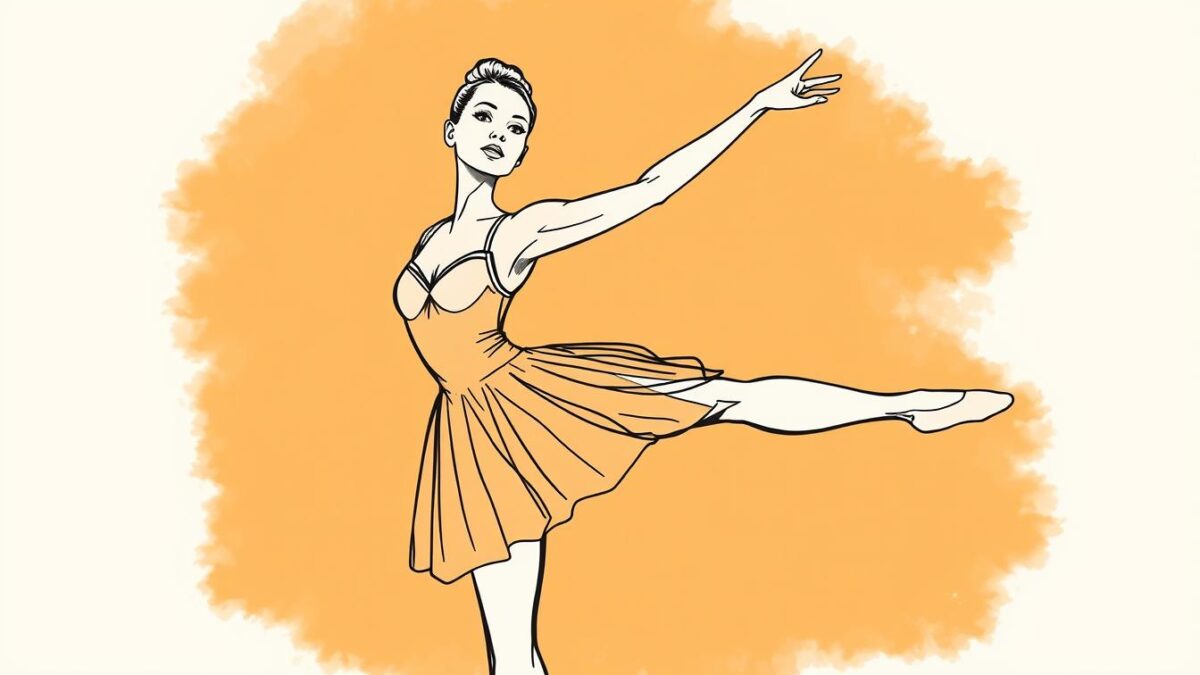
Megan Fairchild commands the stage as a principal dancer with New York City Ballet. Her career is a study in precision and grace, built on a foundation that started in Utah studios.
She earned the principal dancer title in January 2005. This promotion came just ten months after becoming a soloist, marking one of the fastest rises in the company’s modern history.
Her journey reflects a deep commitment to the art form. Beyond performing, she shares her expertise with the next generation at the School of American Ballet.
This artist moves seamlessly from classical repertoire to contemporary work. She brings the same clarity to comedic characters as she does to the Sugarplum Fairy.
Her story balances technical discipline with expressive freedom. It is a career built on the sustained effort required to master both tradition and innovation.
Early Journey and Training in Ballet
A director’s height requirement became an unexpected catalyst for a major career move. Her talent was clear, but the path at her local company was blocked.
She started dance at age four in Sandy, Utah, near Salt Lake City. Tap and jazz classes were fun, but ballet’s specific technique presented a challenge she loved.
Foundations at Ballet West Conservatory
Her training intensified at the Ballet West Conservatory. Instruction came from professionals like Sharee Lane, a former Joffrey dancer, and Maureen Laird from Ballet West.
She became a Ballet West trainee, learning from the wings during productions. This time was crucial for absorbing the professional world.
But the company’s director enforced a strict height rule. Women had to be at least 5’6″. Seasoned dancers saw her potential and gave blunt advice: “Get out and go to SAB.”
Transition to the School of American Ballet
Heeding that advice, she auditioned for summer programs nationwide. The School of American Ballet offered the most substantial scholarship.
At sixteen, she left Salt Lake City for New York. It was a practical decision that shifted her entire trajectory, trading the familiar for a world of new possibility.
Rise to Prominence at New York City Ballet
Within five years of arriving in New York, she progressed from student to principal dancer at City Ballet. This rapid ascent through the ranks demonstrated both exceptional talent and remarkable dedication.
The foundation began at the School of American Ballet in fall 2000. Ms. Fairchild studied under master teachers like Suki Schorer, who emphasized precision in Balanchine technique.
From Corps de Ballet to Principal Dancer
Her professional journey started with an apprenticeship in November 2001. This trial period tested her ability to handle the demanding repertoire of New York City Ballet.
She joined the corps de ballet in October 2002. Ensemble roles required perfect synchronization while maintaining individual clarity. Each performance built her reputation within the company.
Promotion to soloist came in February 2004. Featured roles brought greater visibility and responsibility. Sixteen months later, in January 2005, she achieved principal dancer status.
The Mae L. Wien Award in 2001 recognized her potential early. This honor foreshadowed the career that would follow at York City Ballet.
| Year | Milestone | Significance |
|---|---|---|
| 2000 | Entered School of American Ballet | Began formal training with NYCB’s official school |
| 2001 | Apprentice Member | Started professional trial period with the company |
| 2002 | Corps de Ballet Member | Joined full company ensemble |
| 2004 | Soloist Promotion | Earned featured roles and greater visibility |
| 2005 | Principal Dancer | Achieved highest rank with leading role responsibilities |
Megan Fairchild’s trajectory shows what focused training and opportunity can achieve. Each role prepared her for the next level at this prestigious New York institution.
Exclusive Interview: Megan Fairchild’s Personal Insights
Behind the polished performances lies a story of inspiration drawn from unexpected sources. Fairchild discusses how watching others shaped her own artistic development.
Exploring Early Dance Influences
Ms. Fairchild found role models in dancers who defied physical expectations. Jennifer Demko showed that artistry mattered more than height.
She also admired Jane Wood and Maggie Wright for their musicality. Their work demonstrated that ballet requires more than perfect technique.
Playing Clara in The Nutcracker offered a unique vantage point. She watched principal dancers from just feet away during Act Two.
This became her private masterclass. She absorbed details that would influence her own performances years later.
Behind the Scenes of Mentorship
Her younger brother Robert also became a principal dancer. They rarely partnered due to their height difference.
Ms. Fairchild approaches casting with professional trust. She believes the artistic staff knows where each dancer fits best.
This mindset allows her to approach each new role with curiosity. She lets the choreography reveal unexpected qualities.
Mentorship happens through quiet observation in studios and wings. Experienced dancers pass knowledge without formal ceremony.
Broadway Debut and On the Town Experience
The Tony-nominated revival of On the Town marked a significant departure from the ballet repertoire. This production at the Lyric Theater required a different kind of stage presence.
Transitioning from Ballet to Broadway
When producers approached her about the role of Ivy Smith, she expressed hesitation about singing. They reassured her that authenticity mattered more than vocal perfection.
The show originated from Jerome Robbins’ ballet Fancy Free. The stage version differed significantly from the movie adaptation. This Broadway run featured one of the largest orchestras with 28 musicians.
She took a year-long leave from her ballet company. Her contract allowed an exit after the Tony Awards. This careful planning enabled a smooth return to classical dance.
| Aspect | Broadway Production | Ballet Performance |
|---|---|---|
| Primary Skills | Singing, acting, dance | Classical technique, expression |
| Musical Support | 28-piece orchestra | Traditional ballet orchestra |
| Performance Duration | Year-long run with breaks | Seasonal programming |
| Creative Origin | Based on Robbins’ Fancy Free | Original choreography |
Her final performance occurred on August 9th. She returned to ballet rehearsals after a brief training period. The experience proved that artistic boundaries could be crossed successfully.
Balancing Ballet and New York’s Stage: A Dancer’s Perspective
Her technical strength, once the foundation of her career, became something she learned to balance with expressive freedom. The dancer discovered that perfect execution could sometimes limit emotional connection.
Technical Precision Meets Expressive Freedom
Performing in New York offers unique challenges across different venues. The Lyric Theatre’s large stage felt familiar compared to smaller Broadway houses. This space allowed for the same projection she uses at Lincoln Center.
Ballet performances typically demand seriousness and mystery. Comedy requires a completely different approach. Playing for laughs means being more outgoing than classical work ever allows.
Early in her career, she prioritized clean lines and controlled transitions. Now she focuses on being freer on stage. This shift values interpretation as much as technical execution.
Roles like Liebeslieder Walzer help pull her away from pure technique. The focus shifts to creating atmosphere rather than executing difficult steps. Few dancers achieve this balance without years of experience.
Teaching at the School of American Ballet provides important perspective. She encourages students to find their own voices beyond technical replication. This work helps reinforce her own artistic growth.
Megan Fairchild: Career Milestones and Memorable Performances
From classical repertoire to contemporary works, her performances demonstrate remarkable versatility across decades. Each role builds upon the last, creating a rich tapestry of artistic achievement.
Celebrated Roles and Award-Winning Moments
Coppélia stands as a favorite role for the dancer. Playing Swanilda allows for comedic timing and playful interaction with audiences. She enjoys hearing laughter when dressing as a doll.
The Nutcracker showcases her range through multiple characters. Each part requires different technical skills. From lyrical Sugarplum Fairy to sharp Dewdrop, she masters them all.
Recognition came early with the Mae L. Wien Award for Outstanding Promise in 2001. This foreshadowed a career of consistent excellence. Later, the Theatre World Award honored her Broadway debut.
Iconic Performances on Stage and Screen
In 2011, her Sugarplum Fairy performance reached global audiences. PBS broadcast it live from Lincoln Center. Movie theaters worldwide screened the special presentation.
Jerome Robbins’ works like Dances at a Gathering highlight musicality and partnership. These roles make complex choreography appear effortless and conversational.
Contemporary choreographers expand her artistic range. Works by Justin Peck and Christopher Wheeldon show her adaptability beyond traditional repertoire.
| Performance Type | Notable Work | Year Highlight | Special Recognition |
|---|---|---|---|
| Classical Ballet | Coppélia (Swanilda) | Early Career | Signature Role |
| Holiday Classic | The Nutcracker | 2011 | PBS Broadcast |
| Broadway Debut | On the Town | 2014-2015 | Theatre World Award |
| Contemporary | Works by Peck/Wheeldon | Recent Years | Artistic Expansion |
Each performance contributes to an enduring legacy. The dancer continues to explore new creative challenges while honoring classical traditions.
Insights on Collaboration and Leadership in Ballet
For a principal dancer, leadership extends beyond solo performances into the nuanced realm of partnership and ensemble cohesion. It requires a deep trust in colleagues and a clear understanding of one’s role within a larger creative machine.
Partnership and Ensemble Dynamics
Ms. Fairchild’s most consistent stage partnerships are dictated by practical needs. She rarely performs with her brother, a fellow principal, due to their height difference. Her husband shares the same repertoire, but casting prioritizes physical compatibility over personal relationships.
She most often partners with Joaquin de Luz. Their similar stature allows for secure lifts and balanced turns. This pairing demonstrates how technical needs shape artistic collaborations.
The Broadway experience introduced a different kind of trust. Doing multiple shows a week meant sometimes performing dangerous lifts with a swing—an understudy she barely rehearsed with. Letting go of control was a significant challenge.
She finds inspiration in colleagues with contrasting styles. She admires Sara Mearns for her expansive, risk-taking approach. Their differences foster mutual respect rather than competition.
Fairchild also values the collective effort of a ninety-dancer company. Every member contributes. No single dancer can carry a show alone, a reality that keeps standards high.
As a faculty member at the School of American Ballet, she teaches these things. She shows younger dancers that a career requires trust, generosity, and adaptability alongside technique.
Health, Meditation and Resilience in a Demanding World
Beyond the physical rigor of daily rehearsals and performances lies the often-unseen challenge of maintaining mental clarity. For a principal dancer, the pressure is constant. Finding a sustainable practice is essential for a long career.
Embracing Transcendental Meditation for Well-being
About a year and a half ago, Megan Fairchild began practicing Transcendental Meditation. A ballet mistress at New York City Ballet recommended it. The technique quickly became a cornerstone of her routine.
She discusses its immediate impact. It keeps her calmer, preventing her from getting worked up over small things. During a show, her mind witnesses the movement instead of micromanaging it.
This presence allows for quick, on-the-spot adjustments if something goes wrong on stage. The dancer feels more grounded and responsive in the moment.
Overcoming Stage and Career Challenges
This mental tool also empowered major career decisions. Fairchild credits TM for giving her the positive mindset to audition for On the Town. Normally, such a risk would have felt too stressful.
Instead, she embraced a new motto: stay out of your comfort zone. This philosophy defined her entire Broadway run. It’s an approach she wants to maintain.
Over time, the cumulative demands of ballet—injuries, casting, the aging body—test any artist. Fairchild also sees resilience as the ability to stay present and adapt. It’s about trusting your skills to handle anything.
Final Thoughts and Future Aspirations
Future opportunities remain unwritten, but Megan Fairchild’s career demonstrates the value of staying open to unexpected paths. She never planned to perform on Broadway, yet that experience opened new creative doors.
Today, she teaches at the School of American Ballet, the official school of New York City Ballet. There she passes on the technique learned from master teachers like Suki Schorer and Kay Mazzo.
Her year in the Broadway show revealed a passion for singing. Being around professional singers taught her technique she didn’t have before. She plans to take singing lessons while continuing her ballet work.
From a small studio in Salt Lake City to international stages, her journey shows what disciplined talent can achieve. She recommends Jennifer Ringer’s autobiography for its honest look at ballet life. The next chapter will build on everything she’s learned so far.