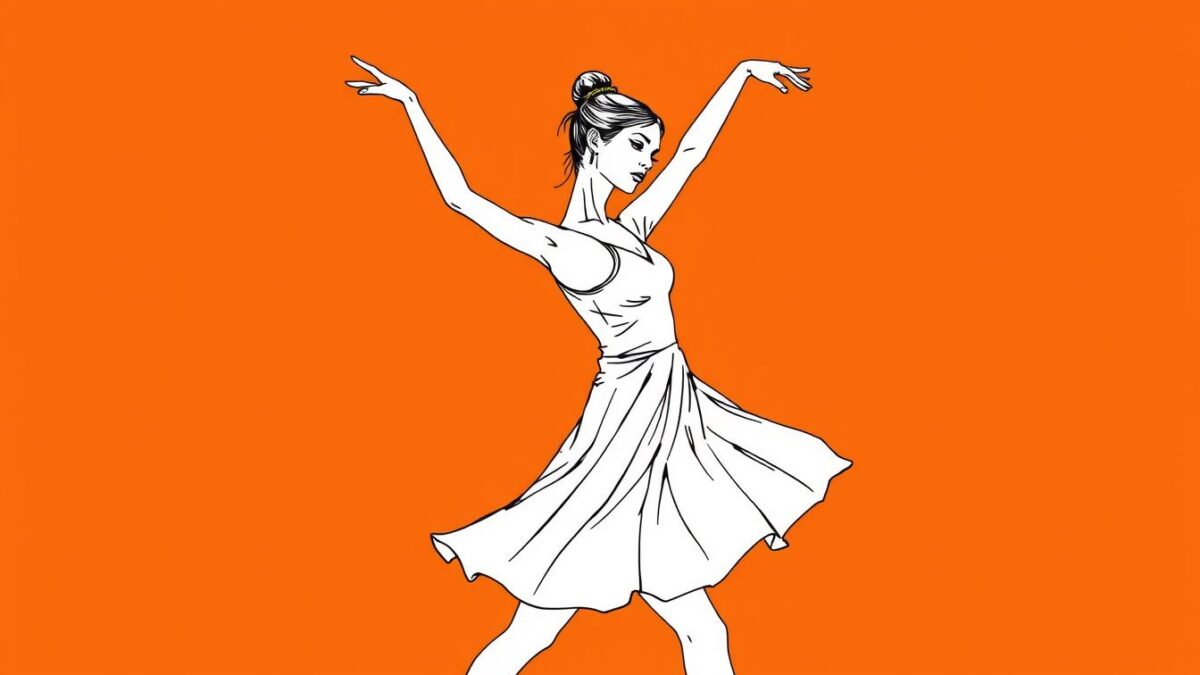
Maho Ogawa commands attention in New York’s contemporary dance scene. She crossed oceans to reshape how bodies speak, carrying traditions from Japan while refusing to be confined by them.
This movement artist relocated to the United States in 2011. Her foundation blends ballet’s precision, traditional Japanese dance’s cultural depth, and Butoh’s raw intensity. These three disciplines rarely converge in one artist’s body.
Her work doesn’t perform culture as spectacle. Instead, she deconstructs it, isolates it, and rebuilds movement vocabularies. These challenge what audiences expect from a Japanese dancer working in America.
She holds the title of 2024-2026 Movement Research Artist-in-Residence. This recognition positions her among New York’s most innovative choreographers actively redefining contemporary performance.
Her presence represents more than artistic migration. It’s a deliberate intervention into conversations about cultural representation and bodily autonomy. She investigates how cultural gestures carry power and how silence functions as language.
She works across disciplines—video, text, programming, live performance. Limiting her practice to a single medium would contradict the very multiplicity she embodies as an artist navigating multiple cultural frameworks.
Maho Ogawa: Celebrating a Visionary Movement Artist
Ballet’s structure, traditional Japanese dance’s ceremony, and Butoh’s intensity formed an unlikely triad in her early training. This combination created a body fluent in multiple movement dialects.
Biographical Roots and Artistic Influences
Her foundation spans three distinct traditions. Each discipline brought different qualities to her physical vocabulary.
Before establishing her own choreographic voice, she performed with diverse artists. These collaborations exposed her to various approaches while clarifying what her own work needed to express.
Transition from Japan to New York
Her 2011 move to the United States represented strategic repositioning. She placed herself where cultural collision could generate new possibilities.
This geographic shift required rebuilding how movement carries meaning. Audiences often misinterpreted cultural gestures, seeing subservience where she intended respect.
The catalyst for her “Minimum Movement Catalog” emerged from this cultural in-betweenness. She needed a personal vocabulary that could interrogate both Western and Japanese forms.
Exploring Movement Research and the Minimum Movement Catalog
Japanese tea ceremony movements, when stripped of their ceremonial context, reveal profound insights about cultural embodiment. This investigation forms the core of Maho Ogawa’s work at Movement Research.
Developing a Unique Choreographic Language
The Minimum Movement Catalog serves as both archive and laboratory. This digital database documents isolated body movements with scientific precision.
Ogawa constructs this movement catalog by breaking choreography into elemental components. She studies how a wrist turns or weight shifts through a knee. These gestures typically disappear inside larger phrases.
This isn’t minimalism for aesthetic effect. It’s archaeological work excavating movement language. The research reveals how cultural conditioning shapes bodies and how power operates through gestures.
Integrating Japanese Tea Culture and Silent Rituals
Her focus on Japanese tea culture examines ritual movements containing entire philosophies. The precise angle of a bowl’s rotation speaks to presence and respect.
She decontextualizes these tea ceremony gestures for examination in galleries and theaters. Audiences encounter them without traditional framing.
Public events inspired by tea rituals build new thinking methods about silence. Participants experience quietness as an active state where minimum movement carries maximum meaning.
Her methodology combines body, video, text, and programming. Each medium offers different access points to movement research.
Performance Highlights and Impactful Venues
Her artistic footprint spans academic halls and gritty Brooklyn warehouses, demonstrating range across institutional and independent spaces.
Showcasing Work at Prestigious Festivals and Art Centers
Ogawa’s works have appeared across two continents. In Asia, she presented at Seoul’s Korea & Japan Dance Festival and multiple Tokyo venues including Za Koenji.
Her United States presence includes Princeton University and Brooklyn’s Invisible Dog Art Center. This underground space supports risk-taking artists outside commercial models.
The Invisible Dog Art Center provides ideal conditions for her minimum movement research. Audiences there engage deeply with her silent rituals.
Collaborations within the New York Dance and Art Community
Financial support from the Foundation for Contemporary Arts and creation residencies at LMCC fuel her research-intensive practice. These resources recognize her work’s cultural significance.
Her 2023 roles as Associated Artist at Culture Push and MR@Judson Artist show sustained investment. New York venues like JACK and Dixon Place map the city’s experimental performance infrastructure.
Collaborations embed her in networks redefining contemporary performance. These partnerships extend beyond solo presentations into collective artistic investigation.
Reflections and Future Directions in Dance Innovation
Maho Ogawa’s work challenges cultural erasure by examining how bodies carry memory. Her practice empowers silenced histories through movement. It fights for equality by giving voice to oppressed gestures.
Public events inspired by Japanese tea rituals build community. They use silence as an active, healing force. This creates a quiet mindset to unite people in New York and beyond.
Her research investigates how environments shape our bodies. Relationships and spaces affect movement consciously and subconsciously. The artist studies how power operates through simple physical choices.
The future involves expanding the Minimum Movement Catalog. This archive offers an alternative to dominant dance vocabularies. It centers nuance and preserves erased knowledge.
Her residency provides crucial support for this long-term inquiry. The goal is to help communities reconnect with presence. It respects small gestures that change how we inhabit our bodies.