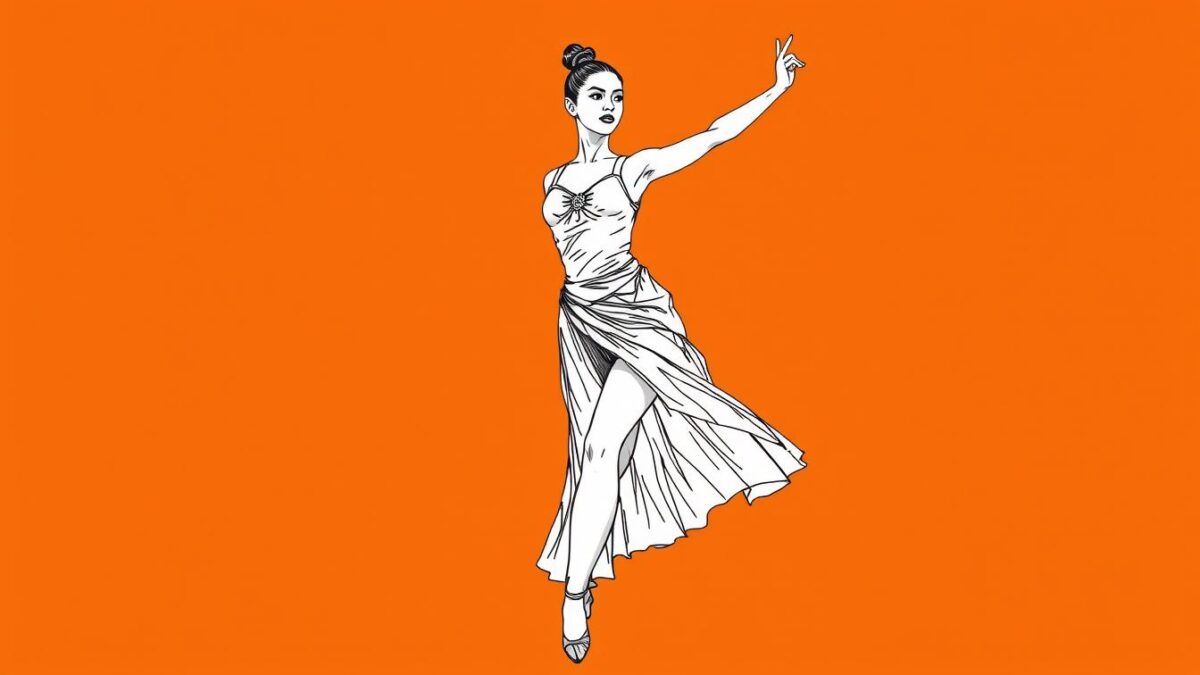
Her path through Japan’s competitive ballet world began with quiet determination. Kurara Ishikawa earned recognition at the Youth America Grand Prix in two consecutive seasons while still in her early teens.
At age 14, she represented the Symphony Ballet Studio. She appeared in the Top 24 for Classical Dance and the Top 12 for Contemporary Dance in the junior division.
The following year, she trained at the Yuki Tokunaga Ballet School. Her technique matured significantly. She placed in the Top 12 for Classical Dance and claimed 3rd Place in Contemporary Dance among senior competitors.
This trajectory reveals a dancer building a versatile command of movement. Her foundation in traditional technique anchors every leap and turn. This profile traces the training and achievements that mark her as an emerging artist of notable caliber.
Innovative Trends in Japanese Dance
Post-war Japan saw ballet take root, evolving from foreign import to distinct artistic expression. Russian technique merged with local discipline, creating a unique training culture.
The Evolution of Modern Ballet in Japan
Today’s Japanese ballet school emphasizes versatility. Institutions like Mori Ballet School and Panda Ballet School blend classical foundations with experimental choreography.
This shift reshaped how dancers train. They now master both traditional variations and contemporary solos within a single season.
| Aspect | Traditional Approach | Modern Japanese Ballet |
|---|---|---|
| Training Focus | Classical technique only | Dual classical/contemporary |
| Curriculum | Fixed repertoire | Rotating styles |
| Competition Prep | Single discipline | Multiple categories |
| School Structure | Rigid separation | Integrated programs |
Impact of Global Competitions on Traditional Dance
International events like Youth America Grand Prix accelerated change. They pushed ballet studios to expand repertoires and train versatile performers.
The impact reaches beyond individual success. Japanese dancers now regularly place internationally, attracting global teachers and elevating the nation’s profile.
This competition culture influenced pedagogy across regional ballet schools. Studios prioritize adaptability, filtering new choreographic trends throughout Japan’s dance education system.
Spotlight on Kurara Ishikawa
At fifteen, she stepped onto the Youth America Grand Prix stage with a maturity that belied her years. Competing in the senior division represented a significant leap forward.
A Look at Her Recent Performance
Her contemporary piece showcased emotional depth and technical precision. She moved with fluidity and control, earning third place among senior women.
The training at Yuki Tokunaga Ballet provided her foundation. This ballet school emphasizes classical discipline while encouraging artistic expression.
In the classical category, she secured a Top 12 finish. This demonstrated her versatility across contrasting styles during the same competition weekend.
Critical Reception and Audience Response
Judges noted her exceptional musicality and phrasing. They observed how she used breath and weight shifts to articulate movement.
Audience members responded to her intelligent approach. Her performance suggested a dancer with long-term potential.
The Tokunaga ballet studio cultivates artists who excel in multiple disciplines. This approach prepares dancers for diverse performance opportunities.
Her work reflects a growing trend toward versatile training. Dancers now build skills that serve both stage and competition contexts equally well.
Competing in Elite Dance Competitions
On the global finals stage, the margin between 2nd place and a Top 12 finish can be a single, held balance. Elite competitions like the Youth America Grand Prix are proving grounds. Dancers from dozens of ballet schools and studios compete for visibility.
Highlights from International Dance Rankings
The ranking system creates clear benchmarks. A 1st, 2nd, or 3rd place finish offers immediate recognition. Yet, judges see placement as a snapshot of a moment, not a final verdict on potential.
Recent results show Japanese dancers dominating classical and contemporary categories. Students from large ballet studios and small regional schools alike earn podium finishes. The depth of training across the country is evident in these tight rankings.
Perspectives from Renowned Judges and Teachers
The boardyagp judges and teachersyagp assess more than technique. They look for artistry, musicality, and stage presence. Their goal is to identify readiness for a professional career.
This perspective helps explain why results are so close. A choice for 2nd place might come down to nuances like épaulement or breath control. Understanding this process clarifies the highly competitive environment these artists navigate.
Bridging Classical and Contemporary Dance
In rehearsal studios across Japan, a quiet revolution reshapes how dancers train. The discipline once focused solely on classical perfection now embraces contemporary experimentation.
Blending Tradition with Modern Innovation
Dancers today master opposing movement philosophies. They build vertical lift and turnout while learning grounded, release-based flow.
Many Japanese institutions integrate both styles into their curriculum. A progressive ballet school like Mori Ballet School schedules contemporary work alongside classical training each season.
This hybrid approach develops versatile artists. Dancers gain the intelligence to shift between idioms without losing technical integrity.
| Training Element | Classical Focus | Contemporary Integration |
|---|---|---|
| Daily Class Structure | Barre then center work | Floor work and improvisation |
| Movement Quality | Upright, lifted posture | Weight-sharing and release |
| Performance Repertoire | 19th-century variations | Commissioned new works |
| Career Preparation | Company auditions | Freelance opportunities |
The challenge lies in maintaining classical rigor while cultivating contemporary awareness. A forward-thinking ballet studio prepares dancers for both traditional and experimental stages.
This dual training expands career options and deepens artistic understanding. Dancers emerge ready for diverse performance opportunities within a single season.
Insights from the International Dance Arena
The international dance arena now functions as a powerful cultural bridge. Major competitions connect talent across continents through shared artistic expression.
Media coverage amplifies this exchange. Events like Youth America Grand Prix transform regional training centers into globally recognized institutions.
Global Cultural Impact and Media Coverage
Japanese dancers consistently appear in international finals. Their success shifts perceptions about elite training locations worldwide.
Each competition season brings guest teachers and choreographers to Japan. This enriches local dance education and creates new opportunities.
| Competition | Key Locations | Cultural Impact | Media Reach |
|---|---|---|---|
| Youth America Grand Prix | New York, Canada semi-finals | Cross-cultural training exchanges | International dance publications |
| Prix de Lausanne | Switzerland, Asian preliminaries | European-Japanese artistic dialogue | Global streaming platforms |
| World Ballet Competition | Orlando, international rounds | Contemporary technique sharing | Social media highlights |
This visibility benefits entire ballet school communities. A successful dancer brings attention to their home ballet studio.
For artists like Kurara Ishikawa, international competitions represent more than personal achievement. They showcase national training traditions on a world stage.
The Legacy of Japanese Ballet Institutions
Behind every competition result lies a training institution’s philosophy. Japan’s leading ballet schools build reputations through consistent excellence.
Influences from Mori Ballet School and Panda Ballet School
The Mori Ballet School and Panda Ballet School represent Takako Mori’s educational vision. This ballet studio approach combines classical rigor with personalized coaching.
Students from these institutions dominate competition rankings. The Panda Ballet School consistently produces Top 12 finishers and podium placements. This track record demonstrates pedagogical consistency.
The Takako Mori Ballet methodology emphasizes musicality and clean technique. Dancers develop expressive depth alongside technical precision. This balanced approach prepares them for diverse performance opportunities.
Alumni from Mori Ballet often join professional companies worldwide. Others become teachers, continuing the school’s legacy. The influence of this ballet school extends beyond competition stages.
Notable achievements from Panda Ballet include:
- Multiple 1st and 2nd place finishes in international competitions
- Consistent Top 12 rankings across age divisions
- Strong showings in both classical and contemporary categories
The Mori Ballet legacy rests on identifying individual strengths. Each dancer receives coaching tailored to their artistic voice. This philosophy creates versatile performers ready for today’s dance landscape.
The Journey Behind the Curtain
Success on stage is built in the studio, where personal milestones shape a dancer’s career more than any trophy. The real work happens away from audience applause.
Personal Milestones and Career Development
Kurara Ishikawa’s training spanned two distinct ballet school environments. At fourteen, Symphony Ballet Studio provided her foundation. This ballet studio focused on building technical fundamentals.
The transition to Yuki Tokunaga Ballet School marked a significant step. Training under the Tokunaga ballet method demanded greater artistic maturity. She moved from junior to senior competition levels.
Daily discipline included managing injuries and academic responsibilities. Choosing competition variations required careful coaching. Each decision shaped her pre-professional path.
Setbacks taught resilience as much as success taught technique. The mentorship at Yuki Tokunaga’s ballet school emphasized incremental progress. Family support sustained the demanding schedule.
This behind-the-scenes journey reveals what podium finishes truly represent. Years of studio work culminate in brief moments on stage.
Key Moments in Kurara Ishikawa’s Career
Competition results are more than just numbers; they are a dancer’s public resume. Each ranking tells a story of technical skill and artistic growth.
Awards, Rankings, and Competition Highlights
At fifteen, a 3rd Place finish in the Senior Contemporary category at the Youth America Grand Prix signaled a major arrival. It validated her stylistic range beyond classical technique.
Her simultaneous Top 12 ranking in the Classical category placed her among the division’s strongest technicians. This consistency across styles is a hallmark of modern training at a top-tier ballet school.
These senior division results built on earlier promise. At fourteen, she earned Top 24 and Top 12 placements, showing a steady upward trajectory that judges watch closely.
| Achievement | Competitive Significance | Career Impact |
|---|---|---|
| 3rd Place (Contemporary) | Podium finish in a senior division | Validates artistic versatility |
| Top 12 (Classical) | Recognition of technical excellence | Opens doors for scholarships |
| 2nd place equivalency | High ranking just below the medal | Strong indicator of future potential |
Media Coverage and Critical Acclaim
Such results generate immediate attention. Media coverage often explains the rigorous rules and judging criteria, helping audiences appreciate the achievement.
Critical acclaim focused on her musicality and emotional depth. This attention raises a dancer’s profile, attracting notice from directors and choreographers worldwide.
The foundation from her home ballet studio was evident. This recognition reflects well on the training philosophy of the entire ballet school system that supported her.
Analysis of Dance Techniques and Performance Art
Performance art transcends technical execution when movement becomes a language of emotional storytelling. The dancer’s training at a disciplined ballet school provides the essential framework.
Clean lines and precise footwork form the foundation. Controlled balances create the scaffolding for expressive movement. This classical rigor comes from institutions like Yuki Tokunaga’s program.
Contemporary work reveals a different dimension. Fluid weight shifts and breath control generate momentum. These elements articulate phrasing in ways pure ballet technique cannot address.
Judges analyze more than just shapes. They watch how a dancer enters and exits movements. Alignment, musicality, and transition quality separate competent technicians from compelling artists.
The Tokunaga ballet approach emphasizes this holistic development. A strong ballet studio equips dancers with both technical tools and artistic intelligence.
Specific elements like épaulement and port de bras contribute significantly. They transform steps into meaningful communication. This integration makes difficult movement appear natural and effortless.
Understanding technique in context reveals the years of training behind each performance. The real artistry lies in making discipline look like freedom.
Cultural Impact of Japanese Dance in the U.S.
American audiences first encountered the precision of Japanese ballet training through competition stages like the Youth America Grand Prix. Students from institutions like Yarita Ballet and Allee Ballet brought technical discipline that resonated deeply with U.S. viewers.
This exposure created a cultural bridge between training methods. American dance professionals noticed the distinctive qualities Japanese dancers brought to the stage.
Audience Reactions in the American Market
U.S. audiences responded to the clean lines and musical phrasing characteristic of Japanese training. The aesthetic aligned with values prized by major city ballet companies.
Each performance expanded understanding of global dance education. Viewers saw how different pedagogical approaches could produce exceptional artistry.
The exchange benefited both cultures. American schools gained insights into Japanese discipline. Japanese dancers accessed diverse choreographic styles and professional opportunities.
This cultural dialogue continues through media coverage and social media. It demonstrates ballet’s evolving identity as a truly international art form.
Expert Commentary and Judges’ Perspectives
The view from the judges’ table reveals what numbers on a scoresheet cannot. It is a search for the spark of artistry that separates a skilled technician from a true performer.
This perspective shapes how young talents are evaluated on the global stage.
Insights from Celebrated Choreographers
Celebrated choreographers serving as judges bring a practical eye. They assess dancers through the lens of company needs and choreographic demands. Their feedback is grounded in real-world stage experience.
The collective insight from the boardyagp judges teachersyagp emphasizes potential over perfection. They look for artistic curiosity and resilience.
- Presence and emotional truth are paramount.
- Musicality and intelligent phrasing show deep understanding.
- Coachability and a strong work ethic indicate long-term potential.
This holistic approach ensures rankings reflect a range of aesthetic values. Judges from various ballet school backgrounds contribute diverse perspectives.
Scholarships that support future dancers often depend on these intangible qualities. Corporate partnerships provide crucial funding, allowing talent from any ballet studio to pursue opportunities. The right ballet school environment nurtures these traits, preparing dancers for the professional demands noted by the boardyagp judges.
Role of Dance Schools in Shaping Future Stars
A competition stage may showcase a single dancer, but it represents the collective effort of an entire training institution. These ballet schools provide the daily discipline, repertoire coaching, and mentorship essential for growth.
Institutions like Panda Ballet School and the Takako Mori Ballet School have built strong reputations. They produce consistent competition winners through high-quality, focused instruction.
Other schools offer diverse training environments. The Watanabe Buber Ballet Academy and Kagari Matsuura Ballet Academy are known for their structured programs. Smaller studios like Kinue Kobayashi Ballet and Mayumi Kinouchi Ballet provide personalized attention.
Regional schools ensure talent development happens nationwide. Studios like Yarita Ballet, Allee Ballet, and Wakui Ballet contribute significantly to the dance landscape. They instill the resilience and artistry needed for a lasting career.
| School Type | Example Institutions | Primary Training Focus |
|---|---|---|
| Major Academies | Panda Ballet School, Watanabe Buber Ballet | Comprehensive technique & competition preparation |
| Specialized Studios | Kinue Kobayashi Ballet, Ohara Yoshimi Ballet | Artistic development & personalized coaching |
| Regional Centers | Yarita Ballet, Soda Ballet, Hakucho Ballet | Foundational training & community engagement |
Dancers like Mayu Tanaka exemplify this system’s success. Their achievements highlight the effective training at schools like Ohara Yoshimi Ballet and Mayumi Kinouchi Ballet. Each ballet studio plays a vital part in building the next generation of artists.
Innovative Production and Choreography in Dance
Beyond the spotlight’s glow, a complex ecosystem of artistic collaboration transforms choreography into living performance. The process extends far beyond steps and sequences.
Behind the Scenes at Prestigious Ballet Productions
Lighting designers, costume creators, and set builders work alongside choreographers. They shape the visual landscape that frames each movement. Dancers learn to adapt their technique to different theatrical contexts.
Forward-thinking ballet schools now integrate production education into their curriculum. Students learn stagecraft alongside technique. This prepares them for professional environments.
Choreographic innovation draws on classical foundations while embracing contemporary expression. The result challenges dancers to expand their artistic range. A strong ballet studio provides the safe space for this exploration.
Organizations like Youth America Grand Prix maintain a clear mission statement. Their timeline includes resources to help dancers participate and understand competition rules. Tutorials and registration systems make the pathway accessible.
Scholarships support future talent through corporate partnerships. This investment in future dance ensures diverse voices can contribute to the art form. The entire production process becomes more inclusive as a result.
Final Reflections on a Dance Star’s Journey
Behind every competition result lies a deeper story of resilience, mentorship, and the quiet daily work that shapes an artist. Kurara Ishikawa’s journey reveals how technical discipline merges with creative curiosity over years of incremental growth.
Training at different environments like the Yuki Tokunaga Ballet School provided diverse approaches. Each ballet studio contributed unique elements to her development. The Tokunaga ballet method particularly emphasized artistic maturity alongside classical foundation.
While a 2nd place finish might capture headlines, the real achievement lives in the daily commitment. This ballet school philosophy values persistence and adaptability above any single ranking. The work itself remains the deepest reward.