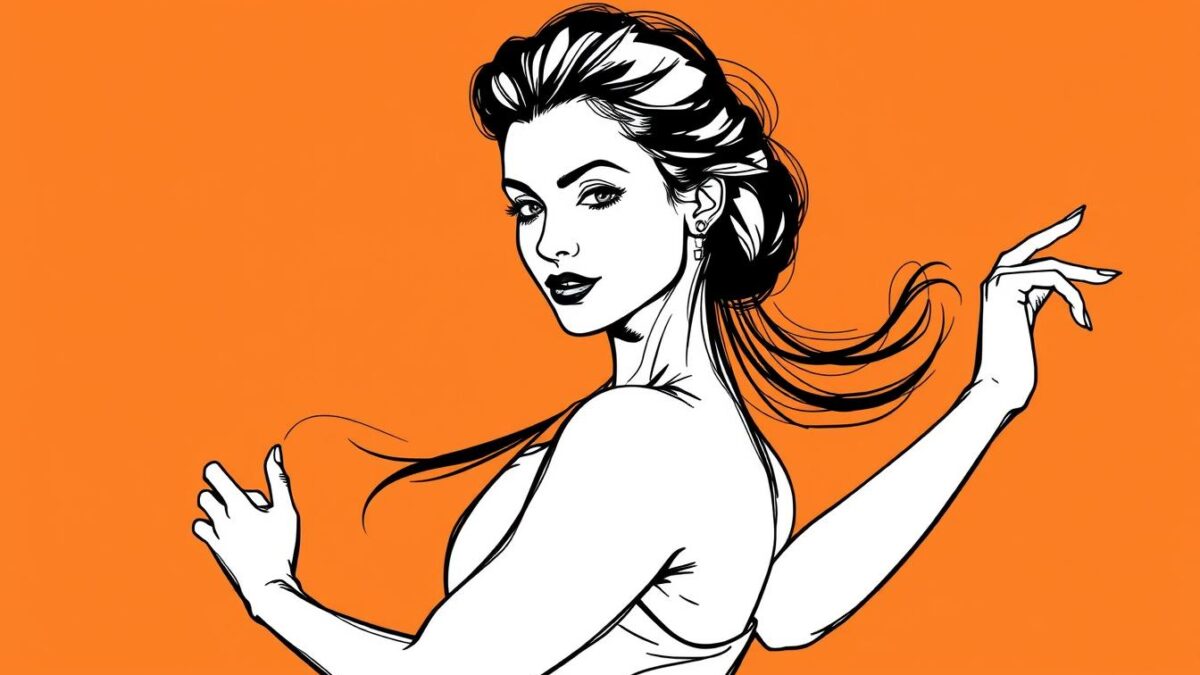
Her name meant glamour and scandal in Belle Époque Paris. Émilienne d’Alençon commanded stages across Europe, a dancer whose life wove together artistic daring and personal myth.
She started with nothing. Born in 1870 to a single mother who worked as a concierge, her future seemed written in the soot of Parisian streets. A sharp wit and natural fire earned her the nickname “female gavroche.”
By fifteen, she entered the city’s shadowy demi-monde. It was a world where talent and beauty could buy a woman extraordinary freedom. She chose the stage name d’Alençon, a choice wrapped in the early lore of her rise.
She became one of the celebrated “Three Graces.” Her performances at the Folies Bergère sold out. Yet her story arcs from triumph to a quiet exile, ending in Monaco in 1945.
Her legacy lives in posters and photographs. A reminder of a Paris where a concierge’s daughter could become a star simply by refusing to be invisible.
Early Life and Formative Years
A birth certificate from July 17, 1870, tells a story of modest beginnings on rue des Martyrs. This single piece of paper, a vital record, was the first official object to document her life. It listed her mother, Marie Victorine Normand, a concierge. The space for a father’s name remained blank.
Family Background and Modest Beginnings
Growing up in Montmartre, she learned resourcefulness early. Scarcity defined her childhood. Her mother’s marriage in 1883 provided a new surname, André, and a layer of legitimacy.
But her character was already set. She earned the nickname “female gavroche.” It captured her quick wit and street-smart survival skills. These traits would later become her greatest assets.
Cultural Influences of Late 19th Century Paris
Paris itself was her academy. The city pulsed with new art and cabaret culture. Grand boulevards stood beside cramped alleys.
For a young woman, this was a city of sharp contrasts. One path led to obscurity. Another led to the stage. The cultural information of the era—spectacle, reinvention—was a perfect match for her ambition. She understood that a new identity was possible with enough nerve.
Breakthrough in the Entertainment World
The year 1889 marked a turning point. Her debut act at the Cirque d’été blended innocence with a daring sensuality. She trained rabbits on stage, a performance that captivated Paris.
This opportunity came through Charles Desteuque. He was a Folies Bergère insider known for finding new talent. His guidance launched her into the city’s vibrant cabaret scene.
Debut at the Cirque d’été and Cabaret Scenes
A fellow performer, Laure de Chiffreville, gave her the stage name d’Alençon. It was a brilliant piece of personal branding. The name suggested an aristocratic air, transforming her into a desirable object for the public.
Her acts evolved quickly. She moved from rabbits to donkeys, then to snake dancing by 1892. Each performance was more provocative than the last.
She commanded stages at venues like Maxim’s and theaters in the Bois de Boulogne. Her appeal was not limited to Paris. She also danced in “The Red Slippers” in London, proving her international star power.
Rise through Folies Bergère and Early Performances
The Folies Bergère became her artistic home. Here, her striptease was elevated to an art form. Her athletic grace and comic timing made her a major attraction.
Photographic studios like Reutlinger captured her image. These pictures sold by the thousands across Europe. They established her as one of the first modern celebrities, her face more recognized than many politicians.
| Year | Venue | Performance / Act |
|---|---|---|
| 1889 | Cirque d’été | Rabbit-training dance debut |
| 1890-1891 | Various Cabarets (Bois de Boulogne, Maxim’s) | Donkey-training act |
| 1892 | Folies Bergère | Snake dancer |
Émilienne d’Alençon in the Belle Époque
Postcards carrying her image traveled across continents, making her face an object of European fascination. These mass-produced images sold fantasies of Parisian sophistication. They cemented her status as a modern celebrity long before film.
Iconic Performances and Public Persona
She commanded stages at the Folies Bergère and Casino de Paris. As one of the famed “Three Graces,” her performances drew aristocrats and artists alike. Each show was a carefully choreographed display of allure and athleticism.
She understood her own appeal perfectly. This dancer turned herself into a desirable object and a shrewd businesswoman. Her fame was a product she managed with brilliant calculation.
Notable Engagements with Celebrated Figures
Her relationship with Duke Jacques d’Uzès ended in colonial tragedy. This loss freed her to connect with kings like Leopold II of Belgium and the future Edward VII. These liaisons placed her firmly in the orbit of European power.
Later, she found affection at the racetrack. She married jockey Alec Carter in 1905, a union based on talent. Her friendship with Coco Chanel also began here, helping launch a fashion legend.
The 1899 Paris-Parisien guide called her a “notoriety.” Émilienne d’Alençon existed in a fascinating space between fame and respectability. She mastered the art of being seen.
Relationships, Liaisons, and Cultural Intrigue
Beyond the footlights, her private life became Paris’s favorite spectacle. Each relationship added depth to her public persona. The media eagerly consumed every detail.
Affairs with Aristocrats and Prominent Courtesans
Émilienne moved through diverse social circles with ease. Her 1905 marriage to jockey Alec Carter showed conventional affection. His death in World War I brought deep personal loss.
She also formed bonds with fellow performers. Relationships with La Goulue and Liane de Pougy created media sensations. The press sensationalized her connection with poet Renée Vivien around 1908.
These liaisons challenged societal norms. She transformed from mere object of desire into a woman claiming agency. Her choices reflected modern attitudes toward sexuality.
Impact on Her Image and the Parisian Social Scene
Competition with courtesans like La Belle Otero played out in newspapers. Journalists tracked their jewels and wealthy patrons. This coverage turned personal lives into public entertainment.
Her fashion influence proved significant too. By wearing Coco Chanel’s hats at races, she launched a design legend. This demonstrated her understanding of cultural capital.
Every piece of information about her relationships fed Parisian mythology. The stories revealed Belle Époque anxieties about class and female independence.
| Partner | Relationship Type | Years Active | Cultural Impact |
|---|---|---|---|
| Alec Carter | Marriage | 1905-1914 | Conventional union ended by war tragedy |
| Liane de Pougy | Professional/Social | 1890s | Media sensation, “Three Graces” connection |
| Renée Vivien | Literary Circle | ~1908 | Link to lesbian literary communities |
| La Goulue | Performer Network | 1889 onward | Cabaret world companionship |
| Coco Chanel | Professional Support | Early 1900s | Fashion influence and career launch |
Artistic Legacy and Enduring Influence
The dancer’s influence extended far beyond her final curtain call, manifesting in literature and enduring cultural memory. Her creative output continued long after she left the stage in 1906.
Contributions to Dance, Theatre, and Popular Media
She turned to writing with surprising depth. Her 1918 poetry collection “Sous le masque” revealed a melancholic introspection.
The 1919 beauty manual “Secrets de beauté pour être belle” became a practical guide. It embodied her philosophy that beauty required professional discipline.
Her 1927 verse play “Le Temple de l’amour” premiered at the Théâtre de la foire Saint-Germain. This demonstrated her ongoing creative ambition.
| Year | Title | Genre | Significance |
|---|---|---|---|
| 1918 | Sous le masque | Poetry Collection | Revealed introspective side |
| 1919 | Secrets de beauté pour être belle | Beauty Manual | Practical beauty philosophy |
| 1927 | Le Temple de l’amour | Verse Play | Continued theatrical ambition |
Portrayals in Film and Documentaries
Modern audiences know her through cinematic interpretations. Karen Black portrayed her in 1981’s “Chanel Solitaire.”
Marine Delterme and Emmanuelle Devos later played the role. These appearances cemented her as a supporting figure in fashion history.
The 2012 Arte documentary “Belles de nuit” examined her era’s courtesan culture. Carole Wrona’s 2015 biography provided comprehensive analysis.
Final Reflections on a Life of Passion and Transformation
The final act of her life unfolded far from the Parisian spotlight that had defined her. World War I ended both an era and her relevance, leaving performers like her stranded when the cultural moment passed.
Alec Carter’s death in combat shattered her world. The loss went beyond grief, taking the one relationship offering genuine stability. She never recovered from this blow.
Alcoholism and opium addiction followed, common escapes for women whose value was tied to youth. Renée Vivien’s poem predicted this withering with painful clarity.
Debts mounted from gambling and supporting younger companions. The 1931 auction at Hôtel Drouot sold her prized possessions—porcelain collections, decorated furniture, painted screens. Each piece represented a trophy from her success.
She died in Monaco on Valentine’s Day 1945. Her burial at Cimetière des Batignolles completed the circle, returning Émilienne to her origins as the concierge’s daughter who refused invisibility.