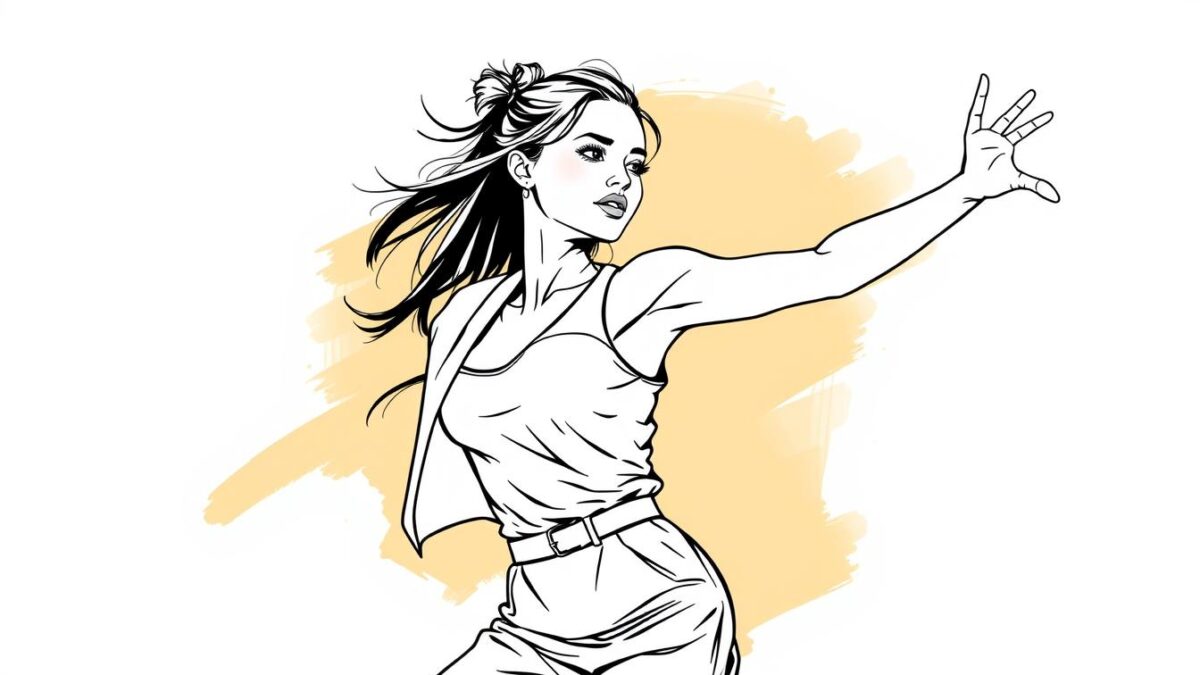
In South Korea, a nation that holds dance in high esteem, the artist bora kim chose a distinct path. She adopted the stage name “Sua” to carve her own identity. This decision separated her from other artists sharing similar names.
Her journey began on August 10, 1994. It is a story built on discipline, not fleeting fame. The name Sua now carries significant weight in dance circles.
At 30 years of age, she represents a mature artist. Her career reflects years of dedicated training and performance. This commitment has shaped her into the recognized performer she is today.
This profile traces her path through the dance world. It examines how she built her reputation and what sets her movement apart. Her work combines technical precision with deep emotional honesty, creating a powerful connection with audiences.
Early Life and Background
Before the stage name and the spotlight, there was a young girl whose life was quietly preparing her for a future in movement.
Family and Upbringing
Her family understood creative discipline from the start. They recognized her physical intelligence early.
Close people saw how she communicated through motion. This natural talent needed careful nurturing over time.
The household provided essential support when dance training became serious. They understood the commitment required.
Discovering the Passion for Dance
Dance discovery happened gradually, not in one moment. She spent time watching performances, absorbing movement language.
The art form became part of her identity during formative years. It shaped her purpose and understanding of dedication.
This foundation—family encouragement and personal curiosity—set her trajectory. She learned that talent means little without daily work.
Career Beginnings in Dance and Performing Arts
The shift from dedicated student to working artist required a specific education. It was built on physical rigor and creative discovery.
Training and Education in Dance
Her formal training began as South Korean institutions raised their standards. They demanded technical excellence alongside artistic interpretation.
She immersed herself in multiple disciplines. Ballet offered precision. Modern dance taught fluidity. Traditional forms connected her to cultural roots.
Her role as a student meant long hours in the studio. This time was spent mastering the fundamentals that would support her entire career.
Early Performances and Influential Moments
Student showcases provided a first taste of performance. These early productions made the relationship with an audience feel electric.
Music became an essential partner. She learned to let rhythm dictate movement and silence hold power.
Influential teachers saw her potential. They pushed her past comfortable limits. Key performances revealed what it meant to truly inhabit a piece of art.
The dancer understood her craft as a language. Each gesture carried its own accent and truth.
Bo-ra Kim: The Dancer’s Unique Style and Talent
What distinguishes Sua’s artistry isn’t found in choreographic complexity but in the raw honesty of each gesture. Her movement communicates with immediate clarity, bypassing technical showmanship for emotional truth.
The beauty of her performances emerges from this stripped-down approach. She removes decorative elements to reveal the core emotional content of every piece.
| Aspect of Performance | Sua’s Approach | Conventional Dance |
|---|---|---|
| Emotional Expression | Raw, immediate honesty | Structured emotional arcs |
| Technical Execution | Effortless, invisible technique | Visible technical mastery |
| Movement Quality | Essential, stripped-down | Ornamental, elaborate |
| Audience Connection | Direct visceral impact | Intellectual appreciation |
Her original style blends power with vulnerability in unexpected ways. She might transition from explosive energy to delicate stillness within a single phrase.
This artistic approach makes difficult movement appear inevitable. The audience experiences pure emotion rather than watching displayed skill.
Critics note how her work treats the body as both instrument and canvas. Each performance becomes living visual art that words cannot fully capture.
Breakthrough Moments and Signature Performances
The transition from promising talent to recognized artist came through performances that left audiences and critics alike unable to look away. Her breakthrough unfolded gradually, built on a foundation of consistent excellence rather than a single dramatic moment.
Memorable Stage Appearances
Certain performances marked turning points in her career. She took on challenging roles that demanded everything she had physically and emotionally.
People who witnessed these signature appearances describe an undeniable presence. Her focus pulled every eye to her, even during ensemble work.
The media began treating her as an artist worth profiling. Her presence elevated any production she joined, making audiences seek out her specific performances.
Awards and Recognition in the Dance World
Award recognition followed as her work accumulated critical attention. Dance festivals and competitions acknowledged her technical excellence.
She collected awards as a natural result of consistent, outstanding work. Juries and selection committees couldn’t ignore her artistic maturity.
Film festival screenings expanded her reach beyond traditional dance audiences. These screenings introduced her movement style to people who might never enter a live theater.
The dance world’s recognition came through prestigious invitations and specific choreographer requests. Younger dancers now study her performances to understand her unique approach.
Evolution into Interdisciplinary Art and Culture
The camera offered a new kind of stage. Here, a single glance could hold as much power as a grand leap. Filmmakers saw how her movement translated with stunning clarity on screen.
This shift expanded her artistic landscape significantly. It introduced her work to audiences who experience culture through film and video.
Expanding Into Film and Music Videos
Her first film project was a revelation. Directors collaborated with her to capture dance without losing its live energy. They worked to maintain a three-dimensional feel in a two-dimensional medium.
Music video work presented a different challenge. The art must serve the song yet stand strong on its own. She brought the same rigorous standards to these productions as to her concert dance.
Each new video project demanded adaptability. She learned to work within tight commercial frames without sacrificing artistic integrity. Production teams valued her professional approach and camera-ready skill.
Collaborations with Diverse Artists
Working with musicians and visual artists pushed her creatively. These collaborations required her to adapt her dance language to new contexts. Every artist brought a unique vision to the project.
This interdisciplinary work broke down boundaries. It positioned her as a complete artist, not just a dancer. Her portfolio grew, showing impressive range while keeping her core artistic identity intact.
The evolution into film and media amplified her reach. It proved that powerful movement art transcends its format, connecting with people everywhere.
Influence of South Korean Culture on Her Artistry
The global rise of Korean arts created a platform where traditional forms meet contemporary innovation. This cultural moment provided essential support for Korean artists across disciplines.
The Impact of the Korean Wave
The Korean Wave’s expansion opened international stages for performers. People worldwide developed a genuine love for Korean cultural exports. This created audiences ready to appreciate contemporary dance.
Commercial success in pop culture built infrastructure that benefited serious artists. Better training facilities and production resources emerged through government and private support for Korean arts.
Cultural Identity and National Pride
Her work incorporates Korean traditional dance vocabulary filtered through modern sensibilities. Specific arm positions and breath qualities reflect deep cultural roots.
She sees herself as part of a living lineage of Korean dancers. National pride in artistic achievement sustains artists pursuing international opportunities. Domestic audiences provide crucial support for Korean performers.
Cultural identity appears not as decoration but as embedded aesthetic principles. These values around discipline and community shape her artistic approach.
Integration of Fine Arts and Media in Performance
Digital technology became her creative partner, transforming how audiences experienced movement. Her work evolved beyond traditional dance stages into immersive environments.
Innovative Use of Visual and Digital Media
Each new project pushed boundaries between dance and visual art. She collaborated with installation artists to create responsive environments. Projections reacted to her movements in real time.
Sculptural set pieces transformed stages into living galleries. This approach appealed to fine arts audiences who rarely attended dance performances. The production design enhanced every choreographic moment.
She developed multiple versions of each piece. A pure dance version worked for traditional theaters. An expanded version included full multimedia elements for arts festivals.
Gallery spaces became natural venues for her work. The art world’s interest in performance created new opportunities. Her content reached audiences beyond dedicated dance fans.
These integrations added dimension without replacing traditional dance. They proved movement could hold its own in contemporary art discourse. Each project demonstrated dance’s power in new contexts.
Personal Life and Public Persona
For an artist whose work communicates so openly, Sua keeps her private world deliberately quiet. She understands that an artist’s mystique is a valuable asset, built on boundaries rather than constant exposure.
Relationships, Mentorship, and Support
Her closest friend circles consist of fellow dancers. These people understand the immense demands of a performing life. They offer genuine support without draining the limited emotional energy she has.
Mentorship became a natural part of her journey. She now dedicates time to guide younger dancers who show serious commitment. It is her way of paying forward the guidance she once received.
A strong support system is non-negotiable. This includes trainers, therapists, and trusted colleagues. They allow the artist to maintain intense focus without losing her original love for dance.
Media Coverage and Fan Engagement
Bora Kim does not love the glare of the media spotlight. She handles interviews with professionalism, steering conversations toward craft and artistic choices.
This focus ensures coverage remains on her work, not personal drama. Her fan engagement happens primarily through powerful performances. Online, she shares professional content without manufactured intimacy.
The girl who began dancing has matured into a woman who masters time management. She balances creative work with business demands, ensuring a sustainable and impactful career.
Legacy, Future Prospects, and Lasting Impact
The legacy of an artist is measured not in moments but in the lasting resonance of their work across time. At this stage, her influence extends to younger dancers who study her performances for their complete physical commitment.
Future projects include continued film work where directors seek her for roles requiring authentic movement. She also develops original choreographic works where she controls the complete creative vision. Music remains central to these plans, with projects exploring true collaboration between dance and sound.
Her lasting impact demonstrates that serious artistry and commercial viability can coexist. The support she receives reflects recognition that investing in her work yields cultural returns. Her career shows what’s possible when talent meets relentless commitment to craft.