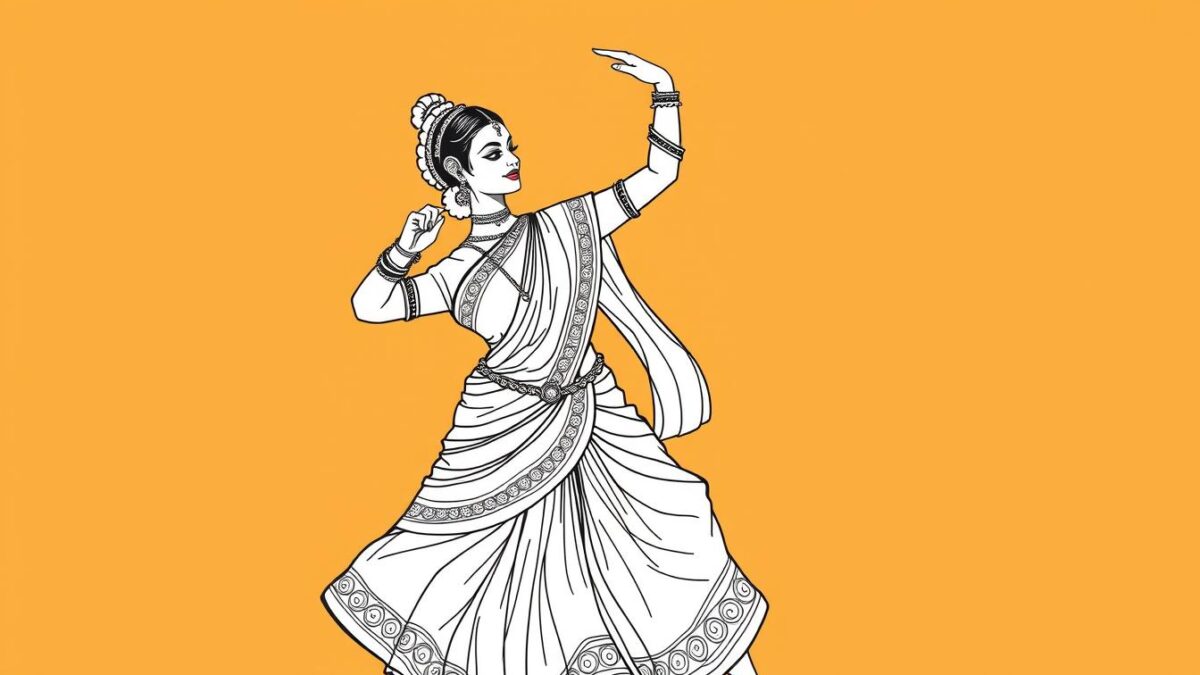
A spotlight cuts through the dark. On stage, a dancer moves with a power that feels ancient and immediate. Her form speaks a language of rhythm and gesture, rooted deep in India’s performing arts heritage.
Bhavna Maithani commands attention not with spectacle, but with precision. She interprets classical traditions, bringing their intricate stories to life for modern audiences. Her work bridges the space between temple rituals and today’s concert halls.
This artist’s path is one of discipline and transformation. It began with rigorous training in a specific dance form, shaping her technical foundation. Her career trajectory reveals a clear artistic philosophy, grounded in respect for the past while speaking to the present.
We will look at the venues and collaborations that have defined her presence. The focus is on her craft, her distinct choices in movement and expression. This is about the cultural impact of a dancer deeply invested in her art.
The Journey of Bhavna Maithani: Passion and Dedication
The rhythm began in childhood, in the foothills of the Himalayas where traditional arts breathe through daily life. This environment shaped her artistic sensibility from the start.
Early Life, Training, and Cultural Roots
Bhavna Maithani’s foundation rests in Kathak, a North Indian classical form demanding precise footwork and expressive storytelling. Her training required six-hour daily practices.
She studied under Guru Sharma, who emphasized the Lucknow gharana’s graceful style. This lineage focuses on subtle expressions and intricate rhythmic patterns.
Her arangetram marked the transition from student to performer. The ceremony demonstrated technical mastery of complex compositions like thumris and tarana.
Milestones in Her Dance Career
Key performances began at local cultural festivals. These early shows built confidence and stage presence.
A breakthrough came with the 2015 Delhi Heritage Festival. Critics noted her mature interpretation of traditional pieces.
Maithani faced financial challenges early on. She balanced teaching with performing to sustain her artistic practice.
Each performance refined her distinctive voice. The artist moved beyond technical skill to develop personal choreographic choices.
Bhavna Maithani and Her Impact on Indian Dance Culture
In a field rich with history, creating a distinct voice requires both deep respect and bold innovation. This artist’s work demonstrates that balance, preserving core classical elements while introducing fresh perspectives.
Influences from Traditional and Contemporary Art Forms
Her choreography draws from a wide artistic palette. It is not confined to dance alone.
Key influences shape her unique vocabulary:
- Literature and Mythology: Epic narratives provide the thematic backbone for many of her productions.
- Visual Arts and Sculpture: The static poses and fluid lines of temple sculptures inform her movement quality.
- Contemporary Theater: Elements of dramatic staging and minimalism appear in her recent works.
This interdisciplinary approach makes her storytelling more layered. It connects dance to broader cultural conversations.
Comparisons with Other Indian Cultural Icons
Her path shares similarities with, yet diverges from, other luminaries. Unlike the pure classicism of Madhavi Mudgal, Maithani incorporates more overt contemporary themes.
Compared to the experimentalism of Astad Deboo, her work remains more firmly rooted in Kathak’s technical grammar. She carves a middle path, respected by traditionalists and appealing to newer audiences.
Inspiration Drawn from Diverse Fields and Research
Her influence extends beyond performance. Through workshops and lectures, she mentors the next generation of dancers.
She advocates for the art form’s recognition, ensuring its vitality. Her impact is measured not just in applause, but in the sustained cultural dialogue she fosters.
Exploring the Elements of Artistic Expression
Artistic expression finds its power in the tension between discipline and freedom. For this dancer, rigorous training provides the vocabulary for spontaneous storytelling.
The Role of Technique, Creativity, and Innovation
Her dance practice builds from classical foundations. Precise footwork creates rhythmic complexity. Expressive hand gestures and facial storytelling convey emotion.
Technical mastery enables creative risk-taking. She develops choreography through careful theme selection. Collaborations with musicians shape the narrative arc.
Innovation appears in subtle choices. Unconventional staging or modern themes push boundaries. Yet tradition remains the anchor.
The creative process involves refining movements through rehearsal. Each performance balances planned sequences with in-the-moment interpretation.
Visual elements support the dance without distraction. Costumes and lighting enhance the storytelling. Music choices range from classical compositions to contemporary scores.
Physical demands serve emotional expression. The repertoire requires both stamina and sensitivity. Technique becomes the vehicle for personal vision.
Reflections on the Legacy of an Icon in the Arts
The true measure of an artist’s impact lies beyond the stage lights and applause. Bhavna Maithani’s legacy lives through the students who now teach her methods and the audiences who carry her stories forward.
Her work bridges classical rigor with contemporary relevance, making tradition accessible to new generations. This approach ensures Kathak remains vital in today’s cultural landscape.
Maithani navigated funding challenges and digital competition by focusing on authentic expression. She proved that depth of craft can cut through entertainment noise.
For women in Indian performing arts, she modeled artistic authority without compromise. Her career demonstrates how technical mastery builds lasting influence.
One recalls her hands tracing stories in the air during a quiet thumri. That gesture captures her essence—tradition speaking directly to the present moment.