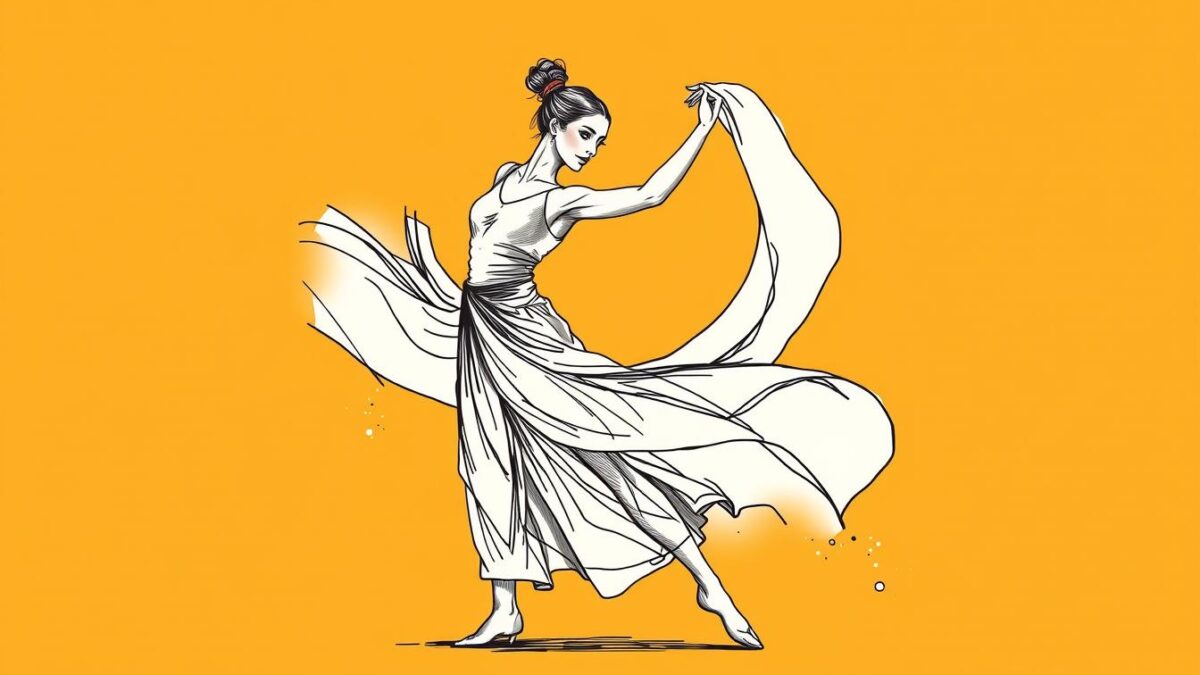
Ai Ono commands attention in Japan’s dance world. Her reputation builds on performances that feel more like immersive art. She moves beyond traditional stages into galleries and experimental spaces.
Her work shows a deep focus on space and precise movement. It explores the relationship between a performer and their environment. This sets her apart from many choreographers.
She thinks of dance as a complete sensory encounter. Light, structure, and the human form combine to tell a story. It is physical expression, but also a visual and emotional experience.
This artist treats performance as installation. Movement becomes sculpture. Her rising prominence reflects a generation blurring the lines between artistic disciplines.
Latest Developments and Creative Projects
Recent months have seen a significant expansion in the scale and ambition of her creative output. Her performances now move seamlessly from quiet gallery corners to major theatrical stages.
Recent Dance Achievements
She has completed several high-profile works that challenge audience expectations. These pieces demonstrate a growing range.
Key achievements include deep collaborations with visual artists and designers. Together, they build complete environments, not just stages. The focus is on a total sensory experience.
Insights into Upcoming Projects
New information points to a continued dedication to site-specific work. Future pieces will respond directly to architectural spaces and their histories.
She is developing works with longer durational elements. Movement is presented as an evolving presence, not a quick spectacle.
Upcoming themes explore memory and displacement. Repetitive gesture and spatial transformation evoke psychological states. Technology will act as a collaborator, enhancing the human body’s expression.
This trajectory places her at a unique intersection of dance, installation art, and experiential design.
Exploring Artistic Inspirations and Stage Design
Light and shadow transform from mere technical elements into active performers on her stages. This approach reshapes how audiences experience movement and space.
Influence of Light and Shadow in Performance
Lighting design functions as choreography itself. Where illumination falls and retreats defines spatial relationships. It shapes emotional tone throughout each piece.
The “Passage” exhibition demonstrates this philosophy. Furniture with precisely placed gaps creates light frames. These details capture and redirect illumination naturally.
Innovative Set Designs Inspired by Minimalism
Minimalism means precision, not emptiness. Every joint and surface serves the production’s investigation. Bodies and objects share space intentionally.
Eight identical furniture pieces create rhythmic repetition. Polished aluminum tabletops reflect surrounding colors. The environment becomes responsive to changing conditions.
| Design Element | Function | Material/Technique | Effect |
|---|---|---|---|
| Side panel gaps | Create light frames | Spot-welded round nuts | Define spatial boundaries |
| Polished tabletops | Reflect light and shadow | Hand-finished aluminum | Enhance color perception |
| Disassemblable components | Adapt to different venues | Modifiable specifications | Maintain conceptual integrity |
| Identical furniture pieces | Establish rhythm | Minimal aesthetic design | Create visual consistency |
This approach to set design reveals important information about artistic method. Functional objects become part of the performance vocabulary. Every element serves the whole composition.
Ai Ono in Focus: Career Highlights and News Updates
The dancer’s media presence reflects a thoughtful strategy rather than seeking mainstream attention. Her career trajectory shows careful selection of performance contexts that allow deeper audience engagement.
Notable Performances and Media Milestones
Key performances at respected Japanese venues have earned critical praise for their conceptual rigor. Reviewers highlight how she creates compelling experiences without dramatic gestures.
Media coverage emphasizes her collaborative approach with composers and visual artists. Strategic choices about presentation contexts provide important information about her artistic priorities.
Integrating Modern Technology in Dance Narratives
Technology serves as an extension of physical expression rather than a replacement. She uses projection and responsive lighting only when they genuinely expand the work’s communication.
This approach meets audience needs for contemporary relevance while preserving live performance’s essential qualities. Digital and physical elements coexist without hierarchy in her carefully crafted environments.
Final Reflections on a Rising Dance Sensation
What makes this performer’s work stand out is the remarkable harmony between intellectual framework and physical expression. She represents a generation treating dance as expanded practice. Movement converses constantly with space, objects, and duration.
Her rising prominence reflects both individual talent and shifting audience expectations. People seek immersive experiences demanding active attention rather than passive viewing. The consistency between conceptual ambition and practical execution defines her approach.
This artist addresses audience needs for art that respects intelligence and time. Her work rewards sustained engagement rather than instant comprehension. Each production manifests ideas about light, shadow, and minimal design in every detail.
Technical skill, conceptual clarity, and collaborative generosity position her as both maker and catalyst. Watching her career develop means witnessing disciplined practice creating work that feels both timely and timeless. The result is art that remains grounded, purposeful, and quietly commanding.