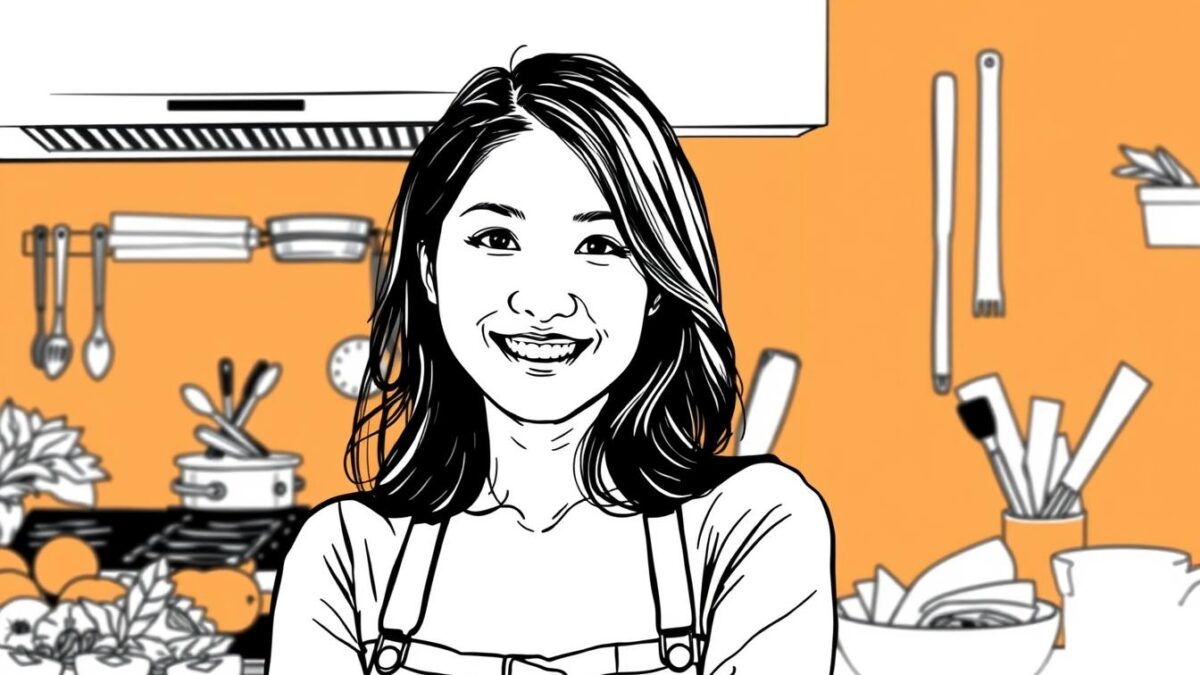
Tiffy Chen turned kitchen experiments into a global phenomenon. The Taiwanese-Canadian creator built her platform on authentic storytelling that bridges culinary traditions.
Her journey began with private Instagram posts during the pandemic. A first public video went viral overnight, proving genuine passion cuts through digital noise.
Chen represents a new generation of food creators who refuse to separate cuisine from identity. Every dish becomes a bridge between generations and geographies.
Her approach strips away pretension. She cooks like she talks, shares what she knows, and invites everyone to the table regardless of skill level.
This interview captures Chen at a pivotal moment. With a cookbook published and condiment brand launched, she preserves family recipes while teaching a global audience.
Food becomes her love language and memory keeper. It’s the thread that holds immigrant families together across oceans and time.
Early Life and Culinary Roots
Long before cameras and cookbooks, a young girl’s palate was shaped by the vibrant streets and family kitchens of Taiwan. The island’s rich food culture became her first classroom.
Childhood Memories and Family Traditions
Her earliest food memories centered on family. Watching her mother and grandmother cook taught her that recipes live in hands, not books.
They worked with instinct, adding dashes and spoonfuls by feel. These kitchen days formed her understanding of flavor balance.
Her father’s restaurant adventures became deliberate lessons. He showed her that great food deserves attention, even if it meant skipping school.
The Influence of Taiwanese Culture
Taiwanese culture treats food as care, not just sustenance. The common greeting “have you eaten yet?” reflects this deep connection.
Street vendors and night markets offered endless discovery. Each dish told a story about people and place.
Her childhood nickname “fàntǒng” (rice bucket) captured her devotion. She wanted rice with everything, even noodles.
These formative experiences built the foundation for her work today. The memories fuel her cookbook and videos with authentic emotion.
From Taiwan to Canada: A Journey of Flavor
Middle school brought a seismic shift when the family relocated to Canada’s west coast, leaving Taiwan’s familiar rhythms behind. Her father maintained work commitments back home, commuting across the Pacific for years. The rest of the family settled into British Columbia life, navigating between two worlds.
Her mother’s kitchen became a sanctuary of memory. Each meal served as active resistance against displacement. Familiar dishes offered comfort and cultural preservation when everything else felt new.
University years in Kingston, Ontario, presented different challenges. The limited food scene forced self-reliance. Cooking became her way to combat homesickness and stress, creating the flavors of home from scratch.
This period transformed her relationship with food from passive appreciation to active creation. She built practical skills through necessity, learning to adapt family recipes with available ingredients. The experience taught flexibility that would later shape her teaching style.
Distance made these recipes more precious over time. She recognized that without documentation, cherished dishes could vanish with the people who knew them. This realization would eventually fuel her cookbook project, preserving culinary heritage for future generations.
Interview Highlights: Tiffy Chen’s Personal Story
The global success of Tiffy Cooks was born from a private, personal challenge during a period of global uncertainty. This part of her story reveals the deliberate steps behind a seemingly overnight sensation.
Overcoming Challenges in a New Land
Her pivot to food content wasn’t reckless. She first tested herself with a private 100-day challenge. Posting one video every day built the consistency she needed.
This private space allowed her to find her voice without pressure. The pandemic created the opening to finally commit to a passion she had circled for years.
When she hit the 100-day mark, confidence replaced doubt. She launched public accounts, ready to share her work with the world.
Defining Moments of Her Culinary Journey
Her first public video went viral overnight. It proved audiences hunger for authentic voices and genuine cultural knowledge.
Reading the data, she saw a clear opportunity. Just a few months later, she quit her day job to create content full-time.
Her “practical” degrees in computer science and marketing were not wasted. They equipped her perfectly for the business of being a modern creator.
The journey from private posts to millions of followers happened fast. But it rested on years of building skills and waiting for the right moment.
The Heart of Tiffy Chen’s Culinary Creations
The kitchen becomes a sanctuary where ingredients meet intention and tradition meets innovation. For the creator, cooking serves as both therapy and love language. “Food is our love language,” she explains. “Without family and without our stories, the dishes wouldn’t be as important to me.”
Her approach bridges generations through practical wisdom. Each recipe carries family history while adapting to modern kitchens. This philosophy makes authentic Asian cooking accessible to everyone.
Busy home cooks find solutions in her under-60-second TikTok videos. These quick recipes deliver “better than takeout” meals in twenty minutes. The content proves flavor need not sacrifice convenience.
| Traditional Approach | Tiffy’s Modern Method | Key Difference |
|---|---|---|
| Rigid ingredient requirements | Flexible substitutions | Adaptability without losing authenticity |
| Hours of preparation time | 20-minute meals | Time efficiency for busy lifestyles |
| Complex techniques | Simple, clear instructions | Accessibility for all skill levels |
| Separate cooking from emotion | Cooking as self-love practice | Emotional connection to food preparation |
Cooking transforms from obligation to self-care in her hands. Taking time to create something for yourself becomes an act of love. This perspective encourages viewers to see kitchen time as nourishment rather than chore.
The emphasis on ingredient flexibility comes from lived experience. Like her mother adapting Taiwanese recipes in Canada, she continues this tradition. Creative substitution maintains authenticity while embracing what’s available.
Inspiration Behind the Tiffy Cooks Cookbook
When oral tradition met digital opportunity, a cookbook was born from necessity rather than ambition. The creator learned family dishes by watching, not writing. Recipes lived in hands and memory, not on paper.
A grandmother’s passing revealed the fragility of this system. Precious recipes vanished with their creators. This loss sparked the mission behind the Tiffy Cooks cookbook.
The book deal arrived at the perfect moment. It became an official record of comforting family dishes and their accompanying stories. This project served as both personal archive and family heirloom.
All 88 recipes were developed collaboratively with family members. The creator traveled to Taiwan to perfect dishes with her maternal grandmother. Each measurement was verified, each technique preserved.
Presenting the finished book to her grandparents completed an emotional journey. Recipes learned in their kitchens returned home as permanent records. Her grandmother’s speechless reaction confirmed the book’s deeper purpose.
The Tiffy Cooks cookbook preserves not just food but identity. It ensures family knowledge matters beyond individual lifetimes. These recipes now carry stories for future generations.
Behind the Scenes of a Viral Food Creator
Content creation at this scale demands more than culinary skill—it requires strategic platform management. The creator’s packed schedule involves constant production across TikTok, Instagram, and her website.
Her viral success stems from understanding real audience constraints. Limited time and ingredient access meet unlimited desire for flavor. This insight shapes every piece of content.
| Platform Type | Content Focus | Time Commitment | Audience Need |
|---|---|---|---|
| Social Media Content | Quick weeknight meals | Under 60 seconds | Immediate solutions |
| Cookbook Recipes | Family heritage dishes | Extended preparation | Cultural connection |
The under-60-second format serves dual purposes. It respects platform algorithms while proving teaching needs minimal explanation with clear demonstrations. Each video delivers “better than takeout” results in twenty minutes.
Her cookbook offers a different experience. Chen structured it like a restaurant menu. Readers can pick appetizers and meat dishes to put together complete meals for guests. This hospitality approach shows her understanding of entertaining needs.
Managing this variety of content requires business acumen. Those “practical” degrees in computer science and marketing now support constant production and audience engagement. The influencer life involves more strategy than leisure.
Mastering Taiwanese Stir-Fry Noodles
Stir-fry noodles demonstrate the heart of Taiwanese home cooking—where every ingredient serves a purpose. This particular recipe comes straight from a family kitchen, passed down through generations.
The method balances vegetables, noodles, and umami-rich sauces with technique that builds flavor without complexity. It represents how Taiwanese stir-fry transforms simple components into satisfying meals.
Step-by-Step Recipe Breakdown
Start by soaking rice vermicelli in cold water for five minutes. This prevents sogginess while allowing noodles to absorb sauce later. Proper preparation separates mediocre from memorable texture.
Heat oil over medium-high and sauté vegetables briefly. Add sauces, white pepper, sugar, and water to create the flavor base. The vegetarian version proves meat isn’t required for satisfaction.
Use chopsticks instead of spoons to toss noodles. This prevents breaking and ensures even sauce distribution. Technique matters even in simple dishes.
Takeaway Cooking Tips
The covered simmer allows noodles to drink up seasoned liquid gradually. This transforms plain vermicelli into flavor-saturated strands needing nothing else.
Customization honors how the recipe’s creator actually cooked. Swap vegetables, add protein, or adjust water based on what’s available. Recipes made with intuition beat rigid measurements.
If using dried shiitake mushrooms, save the rehydrating liquid as bonus stock. This chef’s trick adds umami depth that home cooks often waste.
Essential Pantry Staples for Authentic Asian Cooking
The secret to countless Taiwanese recipes lies not in complexity, but in mastering a handful of foundational ingredients. A focused pantry delivers immense variety.
These staples form the backbone of home cooking. They build flavor and texture with reliability.
Five-Spice Powder and Soy Sauce Secrets
Five-spice powder delivers instant cultural depth. Its blend of star anise, fennel, clove, cinnamon, and Sichuan peppercorn defines braised pork belly and other classic dishes.
The aroma alone can trigger powerful memories of street food and family kitchens. This powder is more than a seasoning; it’s a time capsule.
Soy sauce proves its incredible versatility across different applications. Used for dipping, stir-frying, or braising, it performs unique roles each time.
The same bottle can create entirely different flavor profiles. It answers the question of how one ingredient anchors so many distinct Asian recipes.
Tapioca Starch, Rice, and Other Essentials
Tapioca starch is a workhorse for texture and practicality. It creates the signature crisp coating on Taiwanese fried chicken.
It also offers a gluten-free path for many desserts and dishes. Shoppers should note it’s often labeled sweet potato starch in Taiwan.
For Tiffy Chen, rice was the center of every meal. Her childhood nickname, “fàntǒng” or rice bucket, reflected this obsession.
Rice is the essential base that grounds the meal. These four core ingredients provide the foundation for a world of authentic recipes.
Adapting Family Recipes for the Modern Kitchen
Authenticity in home cooking isn’t about perfect replication, but about preserving the spirit of a dish with whatever ingredients are at hand. This flexible approach honors how recipes actually travel across generations and geographies.
Ingredient Substitutions and Customization
Chen’s mother proved this philosophy works. When the family moved to Vancouver, she maintained Taiwanese cooking through creative substitutions. Dry sherry replaced rice wine, cornstarch stood in for tapioca starch.
The cookbook acknowledges geographic reality. Most American readers lack access to specialized Asian ingredients. Yet they still deserve to cook these delicious dishes.
Protein flexibility makes recipes accessible to different budgets and diets. Add pork belly, shrimp, chicken, or anything available. This approach builds confidence in nervous cooks.
“When it comes to home cooking, I really believe it’s about having fun,” Chen says. Customizing a dish to your liking becomes the best way to put together memorable meals. The recipes made with intuition often beat rigid measurements.
Wrapping Up the Culinary Journey
A hilarious final photo with her mom and sister captures the true heart of the ‘Tiffy Cooks’ cookbook. This image reminds us the book is about real family, not a celebrity chef persona.
Published by Ten Speed Press, the book validates her authority beyond social media. Its 88 easy Asian recipes achieve a key goal: making home cooking accessible to everyone, even those with limited ingredient access.
Reviews confirm audiences crave this genuine approach. The journey from a homesick student to a published author with her own brand took less than a decade.
Chen’s story offers a clear blueprint. Honor your roots, teach with generosity, and trust that authentic food and family stories will always find a hungry audience.