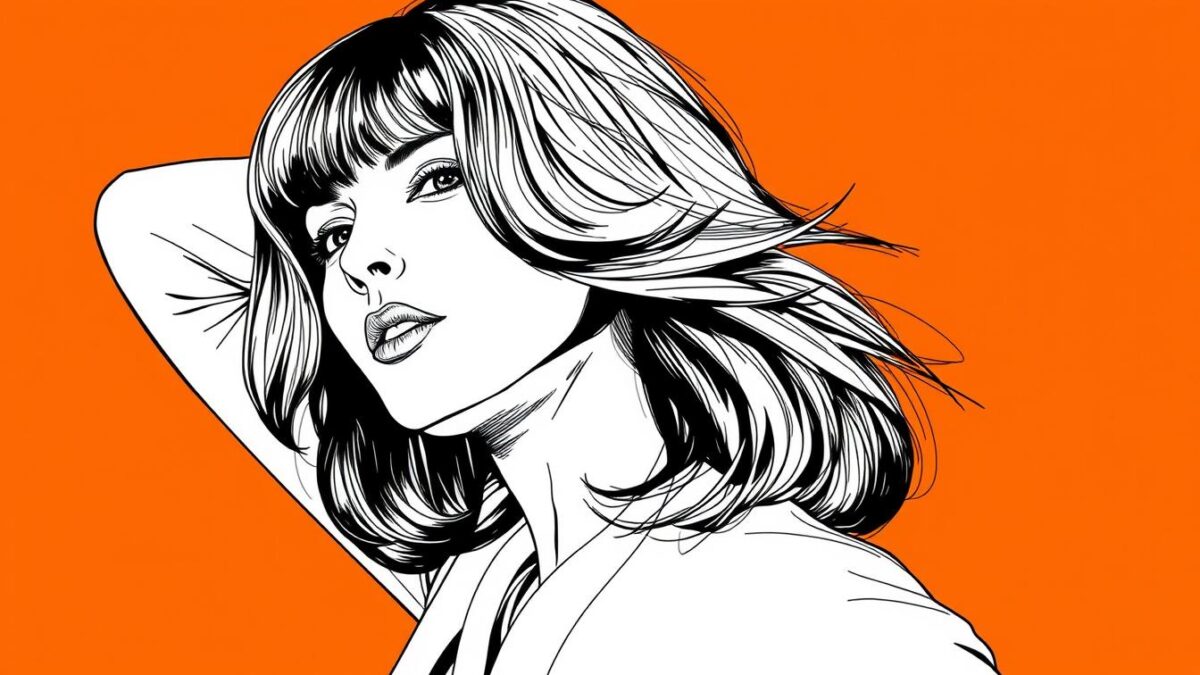
Her face defined an era. With her straight blonde hair and wide-eyed look, Patricia Anne Boyd became the image of 1960s British fashion. She and Jean Shrimpton set a new standard for beauty.
Her life soon intertwined with rock and roll’s greatest talents. She married Beatles guitarist George Harrison in 1966. Later, she wed blues legend Eric Clapton in 1979.
This personal history made her one of music’s most celebrated muses. She inspired some of rock’s most enduring love songs. Harrison wrote “Something” for her. Clapton’s passion produced “Layla” and “Wonderful Tonight.”
But Boyd’s story extends far beyond inspiration. She built her own creative legacy as a photographer. Her exhibition, “Through the Eye of a Muse,” offered intimate portraits of the famous musicians in her life.
Her 2007 autobiography, “Wonderful Today,” became a New York Times bestseller. It provided a rare, firsthand look into a legendary chapter of music history. Today, married to Rod Weston, she continues to shape her narrative with grace.
Early Life and Formative Years
Her story starts not on a film set, but across continents. From the warmth of Kenya to the strict halls of English boarding schools, her youth was a lesson in adaptation.
Childhood and Family Background
Born in Somerset in 1944, she was the first child of Colin and Diana Boyd. Her father’s service in the Royal Air Force meant the family moved often.
They lived in Scotland and Surrey before settling in Nairobi, Kenya, for five formative years. It was there her youngest sister was born.
At eight years old, she was sent to a boarding school near Nairobi. During a break, she returned home to a life-altering discovery. Her parents had divorced without telling her.
Educational Journey and Early Interests
In December 1953, her mother remarried and the children moved back to England. The gray climate felt foreign after the vibrant African sun.
She attended a series of convent schools, including St Agnes and St Michael and St Martha’s. She earned three O-Level passes in 1961 but felt little direction.
That same year, she moved to London. Through her mother’s connections, she found work as a trainee beautician on Bond Street. It was a respectable job, but it didn’t spark passion.
One day, a client from Honey magazine took notice. She saw a potential beyond the salon counter. That single suggestion to try modeling planted the seed for everything that followed.
Pattie Boyd: Iconic Model and Muse
Photographers like David Bailey recognized something special in the young model’s wide-eyed gaze and straight blonde hair. Her career quickly took off with assignments for major publications.
Breaking Into the Fashion World
Starting in 1962, she became a fixture in London and Paris fashion circles. Regular work came from Vogue, Vanity Fair, and Elle.
Top photographers including Terence Donovan and Brian Duffy captured her distinctive look. She soon graced the cover of British Vogue, establishing her credibility.
Defining the British Look of the 1960s
Her appearance in the Beatles film A Hard Day’s Night marked a turning point. The schoolgirl role introduced her to George Harrison and a wider audience.
Fashion designer Mary Quant noted that women aspired to look like Boyd rather than classic stars. She embodied the mini-skirted, straight-haired aesthetic of Swinging London.
Commercial work for Smith’s crisps and fashion columns followed. Her relationship with Harrison amplified her fame, though fan pressure later affected her career choices.
Musical Legends and Intriguing Love Triangles
In March 1964, a chance meeting on a film set sparked one of music’s most legendary love triangles. The personal relationships that followed became the fuel for some of rock’s most enduring compositions.
Romantic Ties with George Harrison
She met George Harrison while dating photographer Eric Swayne. Within days, she ended that relationship and began seeing the Beatles guitarist. They married in January 1966 after a whirlwind courtship.
The couple shared a deep interest in Eastern spirituality. They traveled to India together in 1966 and 1968. But Harrison’s devotion to Hare Krishna created distance between them.
Infidelities on both sides eventually eroded the marriage. She left Harrison in July 1974 after years of strain. Their divorce was finalized three years later.
Inspiration Behind Timeless Songs
As Harrison’s wife, she inspired several Beatles classics. “Something” became one of Frank Sinatra’s favorite love songs. “I Need You” and “If I Needed Someone” also reflected their relationship.
Meanwhile, Harrison’s friend Eric Clapton developed strong feelings for her. His unrequited love produced the passionate album “Layla and Other Assorted Love Songs.” The obsession nearly destroyed Clapton’s career.
After leaving Harrison, she married Clapton in 1979. He wrote “Wonderful Tonight” specifically for her. The tender ballad joined “Layla” and “Bell Bottom Blues” as tributes to their connection.
| Relationship Aspect | George Harrison | Eric Clapton |
|---|---|---|
| Meeting Date | March 1964 | Late 1960s |
| Marriage Years | 1966-1977 | 1979-1989 |
| Inspired Songs | “Something,” “I Need You” | “Layla,” “Wonderful Tonight” |
| Relationship Outcome | Divorced due to infidelities | Divorced due to alcoholism |
Both relationships produced extraordinary music. The love songs born from these connections remain timeless classics. They capture moments of passion, devotion, and heartache that defined an era.
Evolution into Photography and Charity Work
Behind the camera lens, a new creative chapter began to unfold. Pattie Boyd’s journey extended beyond modeling and muse status into meaningful personal expression.
Transition from Modeling to Capturing Moments
She started taking photographs during the 1960s, documenting the musicians in her life. As Harrison’s wife and later Eric Clapton’s partner, she had unique access to private moments.
Her amateur status created an advantage. Subjects relaxed naturally around her, resulting in authentic images that professional photographers couldn’t capture.
Boyd joined the Royal Photographic Society but waited decades before exhibiting. In 2004, she felt emotionally ready to revisit these personal archives.
Her first exhibition, “Through the Eye of a Muse,” debuted on Valentine’s Day 2005. It featured intimate photographs of Harrison and Clapton, revealing the men behind the music legends.
The show traveled internationally for five years, appearing in London, Toronto, Sydney, and beyond. A 2011 exhibition at National Geographic Headquarters further cemented her photographic reputation.
Empowering Causes and Philanthropic Ventures
After separating from Eric Clapton in the late 1980s, Boyd channeled her energy into charity work. She co-founded SHARP (Self Help Addiction Recovery Program) in 1991 with Barbara Bach.
This cause held deep personal significance. Having witnessed Clapton’s struggles with addiction firsthand, she transformed painful experiences into purposeful action.
The organization addressed recovery needs with compassion and practical support. Boyd’s philanthropic work demonstrated her resilience and commitment to helping others.
Reflecting on a Timeless Legacy
The auction of personal artifacts in 2024 marked a deliberate closing of one era and the continuation of another. Pattie Boyd sold letters, photographs, and the iconic painting from the “Layla” album cover at Christie’s. She sought Clapton’s permission, receiving his blessing for this symbolic act.
Her 2007 autobiography “Wonderful Today” became a New York Times bestseller, praised for its honest insight into rock-star life. After decades in the spotlight, she found lasting stability with Rod Weston, marrying him in 2015 after twenty-four years together.
The legacy transcends her role as a fashion model or musical muse. Those timeless love songs remain—”Something,” “Layla,” “Wonderful Tonight”—each a testament to the passion she inspired. Her story reflects a woman who shaped her narrative with grace and intention.