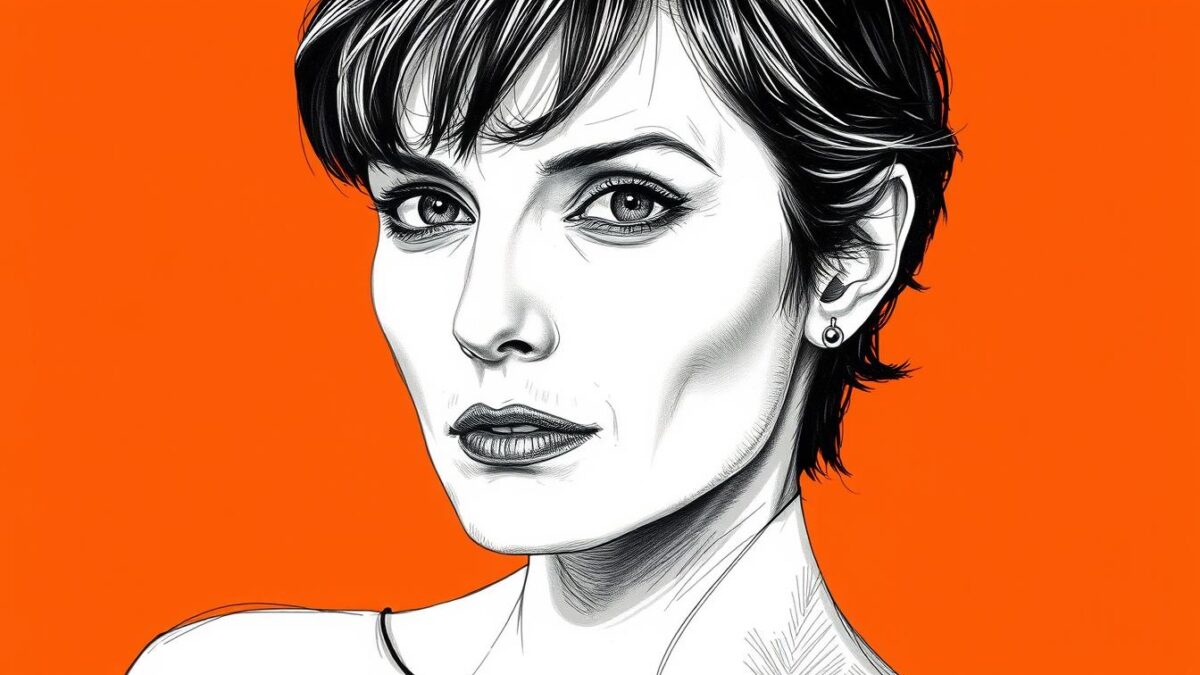
On March 9, 1964, a future cinema icon was born in Paris. This date marks the beginning for a remarkable French actress known for her profound emotional depth and artistic courage.
Her career spans over four decades and includes more than sixty films. She built a reputation by choosing roles for their artistic merit, not commercial appeal. This approach defined her path from the start.
Her work has earned the highest honors, including an Academy Award. She is one of the few performers to achieve such cross-cultural recognition. This success came without compromising her commitment to challenging projects.
This article explores her journey from Paris to global stardom. We examine her craft, her key collaborations, and her lasting impact. The focus remains on the work and the woman behind the celebrated performances.
Early Life and Personal Background
Her formative years reveal a story of artistic inheritance mixed with personal challenges that would later inform her craft.
Family Heritage and Childhood
Born into a creative family, the actress inherited diverse European roots. Her father Jean-Marie worked as a director, actor, and sculptor. Her mother Monique taught and performed while maintaining Polish heritage.
| Family Member | Role | Artistic Influence | Cultural Background |
|---|---|---|---|
| Jean-Marie Binoche | Father | Director, Actor, Sculptor | French with Portuguese-Brazilian roots |
| Monique Stalens | Mother | Teacher, Director, Actress | Polish origin |
| Maternal Grandparents | Actors | Auschwitz survivors | Polish, Belgian, French heritage |
Formative Experiences and Early Influences
When her parents divorced in 1968, four-year-old Juliette Binoche entered boarding school. This separation created what she called parental abandonment. The experience shaped her understanding of real life emotions.
She spent holidays with her grandmother, developing independence. These early challenges informed her acting approach. Binoche drew from real life pain to create authentic characters.
During her teens, she discovered theater as an emotional outlet. At seventeen, she directed a student production. This showed early talent beyond just performing.
First Steps into Acting and Early Roles
Her acting journey started not in prestigious classrooms but on provincial theater tours. Formal training at the Conservatoire National Supérieur d’Art Dramatique lasted only briefly. The rigid curriculum clashed with her instinctive approach to performance.
Through a friend’s connection, she found an agent and joined a traveling theater troupe. They toured France, Belgium, and Switzerland under her stage name Juliette Adrienne. This period built her foundation in live performance.
Working with coach Vera Gregh developed her naturalistic style. This signature approach would define her future work. Meanwhile, small screen roles began to appear.
Initial Screen Appearances
Her first professional screen experience came as an extra in the 1983 series Dorothée, danseuse de corde. A minor role in the TV film Fort bloque followed quickly. Then came her feature film debut in Pascal Kané’s Liberty Belle.
The two-day shoot for Liberty Belle confirmed her passion for film work. But the real turning point arrived with Jean-Luc Godard’s controversial project Hail Mary. Godard cast her after seeing a single photograph.
She spent six months on set in Geneva for the modern Virgin birth story. Yet her screen time in the final cut remained minimal. These early films taught her to value directors who recognized emotional authenticity over conventional beauty.
Breakthrough with French Cinema
Critical recognition arrived swiftly through two pivotal films that showcased her raw talent. The year 1985 proved decisive for the young actress’s career trajectory.
Emergence with Rendez-Vous
Jacques Doillon’s Family Life first caught critics’ attention. He cast Juliette Binoche as a volatile teenage stepdaughter. The director was so impressed he changed the character’s age from 14 to 17.
Her raw emotional intensity signaled a major new talent. But the true breakthrough came with André Téchiné’s Rendez-vous. She replaced Sandrine Bonnaire at short notice due to scheduling conflicts.
The film premiered at Cannes where Téchiné won Best Director. Binoche became the festival’s breakout star overnight. She played Nina, a provincial actress navigating Paris through intense relationships.
| Film | Director | Role Significance | Award Recognition |
|---|---|---|---|
| Family Life (1985) | Jacques Doillon | Volatile teenage stepdaughter | Critical breakthrough |
| Rendez-vous (1985) | André Téchiné | Nina – aspiring actress | César nomination for Best Actress |
The role showcased vulnerability and ambition simultaneously. Film critic Armond White later called it her career-defining performance. She inhabited Nina’s contradictions with complete authenticity.
Working with director André Téchiné taught her to trust bold creative choices. At just 21, the César nomination marked her arrival as a leading force in French cinema.
International Acclaim: The Unbearable Lightness of Being & Beyond
A daring leap across linguistic barriers began with an avant-garde thriller that set the stage for global recognition. The actress’s second César nomination for Mauvais Sang confirmed her standing in French cinema.
English Language Debut and Global Recognition
In August 1986, filming began on Philip Kaufman’s adaptation of Milan Kundera’s novel. The Unbearable Lightness of Being marked her first English-language role.
She portrayed Tereza, the innocent wife caught in a love triangle during the 1968 Soviet invasion of Prague. Her English was limited during production.
Binoche relied on a French translation to understand the script. She acted from instinct and emotion rather than linguistic comprehension.
The 1988 release became a worldwide success. Critics praised her ability to convey vulnerability and quiet strength. She held her own opposite Daniel Day-Lewis and Lena Olin.
| Project | Year | Language | Critical Reception | Award Recognition |
|---|---|---|---|---|
| Mauvais Sang | 1986 | French | Commercial & Critical Success | Second César Nomination |
| The Unbearable Lightness of Being | 1988 | English | Worldwide Acclaim | International Breakthrough |
Transition from French to International Films
The film’s success opened doors to Hollywood opportunities. Yet Binoche chose to return to France instead.
She preferred working with auteur directors over chasing commercial fame. This decision reflected her commitment to artistic integrity.
The Unbearable Lightness established her as an actress crossing cultural boundaries. She maintained emotional authenticity while navigating new linguistic terrain.
Juliette Binoche: A Deep Dive into Her Filmography
Across more than sixty films spanning four decades, her choices reveal a consistent artistic compass. The actress builds each performance from emotional truth rather than dramatic effect.
Signature Film Roles and Standout Performances
Her most memorable characters often face profound emotional challenges. In Three Colours: Blue, she conveyed grief through silence and subtle gestures. The role earned her the Volpi Cup and César Award.
The English Patient brought global recognition and an Academy Award. She balanced vulnerability with strength as Hana, a nurse tending to wounded soldiers.
| Film | Year | Role Significance | Major Award |
|---|---|---|---|
| Three Colours: Blue | 1993 | Woman processing grief after tragedy | Volpi Cup, César Award |
| The English Patient | 1996 | Nurse in wartime love story | Academy Award |
| Chocolat | 2000 | Free-spirited chocolatier | Oscar Nomination |
| Certified Copy | 2010 | Intellectual exploration of authenticity | Cannes Best Actress |
Diverse Range from Indie to Blockbuster
Binoche moves effortlessly between art house projects and mainstream movies. From the romantic charm of Chocolat to the sci-fi complexity of High Life, she maintains her distinctive presence.
Recent works like The Taste of Things confirm her ongoing relevance. Her filmography reflects an artist who chooses depth over popularity.
Key Collaborations with Visionary Directors
The most defining element of her career lies not in the roles themselves, but in the directors who chose her. These partnerships shaped her artistic path from the very beginning.
She consistently sought out filmmakers who valued emotional truth over technical perfection.
Partnerships with Godard and Téchiné
Jean-Luc Godard cast the young actress in *Hail Mary* after seeing a single photograph. This began her relationship with directors who prized instinct.
Her true breakthrough came with André Téchiné in *Rendez-vous*. He trusted her with a complex role that required deep vulnerability.
This collaboration built a foundation of mutual respect. They worked together again years later on *Alice et Martin*.
Memorable Moments with International Filmmakers
Her work with international auteurs further cemented her reputation. She won an Academy Award under Anthony Minghella’s direction in *The English Patient*.
She actively pursued challenging filmmakers, like approaching Michael Haneke for *Code Unknown*.
With Abbas Kiarostami on *Certified Copy*, she delivered a layered performance. It earned her the Best Actress prize at Cannes.
These choices reveal a clear preference for intellectual and emotional challenges. Juliette Binoche built a career by aligning with visionary directors.
Stage Career and Theater Contributions
While cinema brought her international fame, the stage offered a different kind of creative challenge. Juliette Binoche balanced film work with selective theater projects that demanded immediate, uninterrupted performance.
Broadway Debut and London Productions
Her London stage debut came in 1998 with Luigi Pirandello’s “Naked.” Adapted by Nicolas Wright and directed by Jonathan Kent, the production earned strong reviews. It showcased her ability to sustain emotional intensity live.
Two years later, she made her Broadway debut in New York. She starred in Harold Pinter’s “Betrayal” alongside Liev Schreiber and John Slattery. The Roundabout Theatre Company production earned her a Tony Award nomination.
This success in New York proved her command of American stages. Director David Leveaux guided the acclaimed run.
In 2008, she explored physical storytelling with choreographer Akram Khan. Their modern dance production “in-i” toured globally. This revealed her willingness to push beyond traditional acting methods.
Each stage project challenged her in unique ways. They complemented her screen work while expanding her artistic range.
Exploring Versatility in Genres and Roles
Genre exploration became a defining challenge for the performer as she navigated between dramatic intensity and lighter comedic territory. The 1990s marked her transition into more complex emotional landscapes.
Dramatic Intensity and Melancholic Portrayals
Throughout the decade, Binoche became known for portraying what she called her “sorrowful sisters.” These characters faced tragedy with quiet, passive intensity rather than theatrical displays.
Her ability to convey profound grief through subtle expressions defined this period. Films like Three Colours: Blue showcased her mastery of emotional nuance.
Romantic Comedies and Experimental Projects
In 1996, she attempted a significant departure with A Couch in New York. This screwball romantic comedy paired her with William Hurt in a house-swapping story.
The project proved unsuccessful both critically and commercially. Yet it demonstrated her willingness to challenge herself beyond established dramatic movies.
Her versatility shines through nuanced variations within dramatic roles rather than genre-hopping. She finds fresh authenticity in each emotional journey across different movies.
Critical Acclaim and Award-Winning Performances
The highest honors in cinema came as natural consequences of her commitment to challenging roles. Juliette Binoche built a career on artistic choices, with awards following as authentic recognition.
Oscar, César, and BAFTA Recognitions
Her breakthrough came with the Academy Award for Best Supporting Actress in The English Patient. This made her only the second French actress to win an Oscar.
The achievement followed her César Award for Three Colours: Blue. These honors spanned different decades and film types.
| Film | Year | Award | Category | Significance |
|---|---|---|---|---|
| The English Patient | 1996 | Academy Award | Best Supporting Actress | Second French actress to win Oscar |
| Three Colours: Blue | 1993 | César Award | Best Actress | Volpi Cup at Venice Festival |
| Chocolat | 2000 | Academy Award Nomination | Best Actress | Hollywood recognition |
Noteworthy Festival Triumphs
International festivals consistently celebrated her work. She earned the Cannes Best Actress award for Certified Copy in 2010.
This festival recognition complemented her major award wins. It showed appreciation from both critics and peers.
Her consistent excellence across decades proves lasting artistic impact. The awards reflect depth rather than fleeting popularity.
Influence on Global Cinema and Film Trends
Her impact on global cinema extends far beyond the borders of France, reshaping perceptions of European performers. By the 1990s, Juliette Binoche was recognized as a leading force. She proved that an actress could achieve mainstream success without abandoning artistic principles.
This French actress created a new template for international actors. She moved between French art cinema and English-language films with ease. Her choices showed that commercial and artistic goals could coexist.
Impact on International Storytelling
Her work with visionary directors brought European art cinema to wider audiences. Collaborations with figures like Kieślowski and Haneke introduced American viewers to complex narratives. These films demonstrated a hunger for authentic, character-driven stories.
She helped break down barriers for subtitled films. Audiences embraced these works because of the powerful performances. This influence paved the way for younger French actresses like Marion Cotillard.
Her career itself became a statement. It championed longevity based on craft over transient fame. This French actress built a legacy that continues to inspire.
Notable Film Projects: From Classics to Contemporary
From the gritty streets of Paris to the vast expanse of outer space, her roles have consistently challenged cinematic conventions. Each project represents a deliberate artistic choice.
Cannes Highlights and Iconic Roles
The actress made her mark at Cannes early with Rendez-vous. Her breakthrough established a pattern of festival success. Certified Copy earned her the Best Actress prize in 2010.
These films showcased her ability to command international attention. She brought emotional depth to intellectually complex material.
Revisiting Cultural Milestones
Three Colors: Blue remains a reference point for portraying grief. The film’s exploration of loss became a cultural milestone. Similarly, The English Patient introduced her artistry to global audiences.
Later works like Clouds of Sils Maria examined aging and artistic legacy. The meta-textual role reflected her own career journey.
| Decade | Notable Film | Director | Significance |
|---|---|---|---|
| 1980s | Mauvais Sang | Leos Carax | Avant-garde breakthrough |
| 1990s | Three Colors: Blue | Krzysztof Kieślowski | International acclaim |
| 2000s | The Widow of Saint-Pierre | Patrice Leconte | Period drama mastery |
| 2010s | Clouds of Sils Maria | Olivier Assayas | Meta-textual reflection |
| 2020s | The Taste of Things | Trần Anh Hùng | Contemporary relevance |
Throughout these projects, the performer maintained artistic integrity. She chose films that challenged both herself and cinematic conventions.
Behind the Scenes: Directorial Insights and Production Stories
Behind the camera, production stories reveal as much about an artist’s process as the final performances on screen. These behind-the-scenes moments show how creative vision meets practical reality.
Challenges on Set and Creative Decisions
Some films faced significant production hurdles. Les Amants du Pont-Neuf took three years to complete. It required multiple producers and French government funding.
The actress contributed her own paintings to the film. She also designed the French poster. This showed her deep creative involvement beyond acting.
Damage proved particularly difficult for director Louis Malle. He called it his hardest film. The first day involved major arguments according to the performer.
She was released from Lucie Aubrac six weeks into shooting. Differences about script authenticity led to this decision. The experience taught her to trust her instincts before committing.
Collaboration Dynamics with Renowned Directors
Juliette Binoche often pursued challenging directors herself. She approached Michael Haneke to make Code Unknown. This demonstrated her active search for creative partnerships.
Similarly, she sought collaboration with Abbas Kiarostami. This resulted in Certified Copy. Working with Abbas Kiarostami required adapting to his improvisational style.
The script evolved through actor-director dialogue. This intellectual approach earned her the Cannes Best Actress prize. These stories reveal an artist who engages deeply while maintaining creative boundaries.
Public Persona and Cultural Impact
Her face became instantly recognizable through high-profile campaigns, yet she maintained a grounded authenticity. Between 1995 and 2000, she served as the face of Lancôme’s perfume Poème. Legendary photographer Richard Avedon captured her image for print advertisements.
This commercial work expanded her visibility beyond art-house cinema audiences. She balanced these projects with serious artistic commitments. Her credibility remained intact despite the mainstream exposure.
She has been open about her personal life while maintaining privacy where it matters. Relationships with actors André Halle and Benoît Magimel were part of her journey. Motherhood came with the birth of her son Raphaël in 1993.
In a recent interview, she reflected candidly on her Oscar-winning period. “I was trembling all the time during The English Patient,” she admitted. Director Anthony Minghella helped her find confidence on set.
Her connection to New York runs deep through theater work and film projects. The city became a second creative home alongside Paris. She made her Broadway debut in “Betrayal,” earning a Tony nomination.
This transatlantic career model shows actresses can age gracefully while staying relevant. She continues taking challenging roles well into her sixties. Her example quietly changes industry perceptions about women in movies.
Reflections on a Storied Career
From her first screen appearance in 1983 to recent projects in 2024, Juliette Binoche has charted a singular path. Her career spans over four decades and more than sixty films. This demonstrates remarkable longevity in an industry known for short attention spans.
She consistently chose roles for their artistic merit rather than commercial appeal. Working with visionary directors became her signature approach. Each collaboration revealed her commitment to creative challenge over safety.
The actress earned the highest honors, including an Academy Award for best supporting work. Her BAFTA and César awards further confirm her exceptional talent. These recognitions came through authentic performances, not calculated career moves.
Binoche continues to take complex roles into her sixties, proving that craft matters more than youth. Recent films like The Taste of Things showcase her enduring power. Her legacy shows how artistic integrity builds a career that lasts.