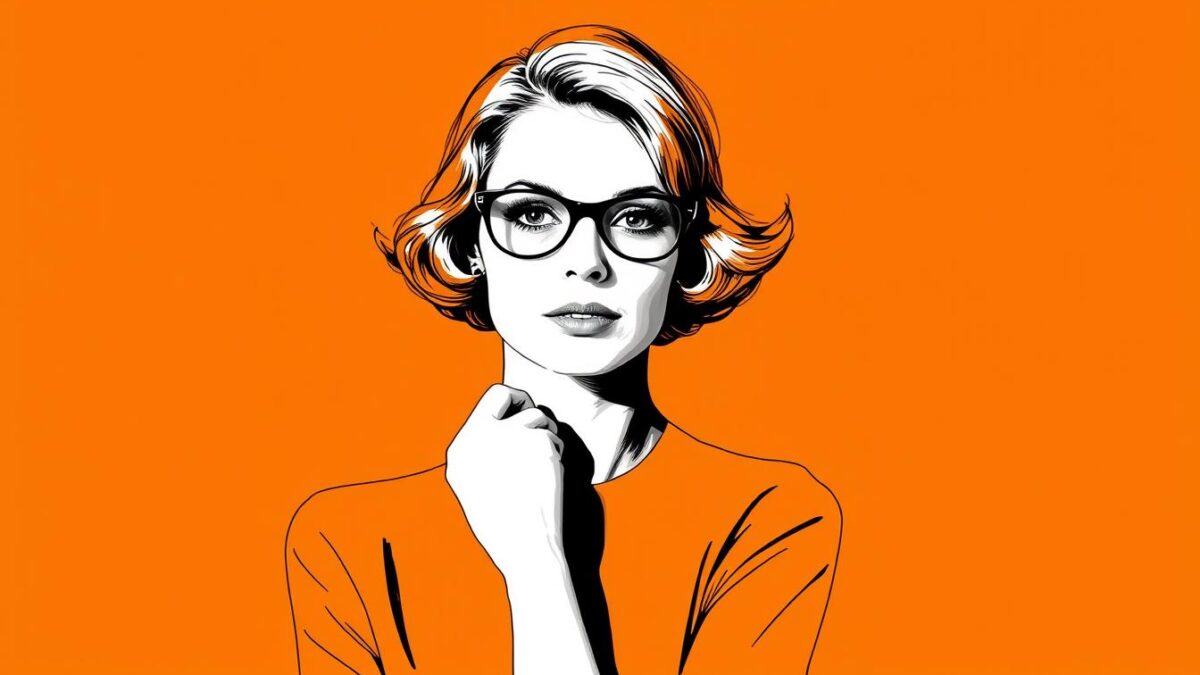
She arrived when fashion needed revolution. The early 1960s demanded a new kind of beauty—one that broke from the polished aristocracy of previous decades.
This model brought a gawky grace that felt entirely fresh. With endless legs and eyes that commanded the camera, she represented a seismic shift.
Nicknamed “The Shrimp” for her slender frame, she grew up on a farm in High Wycombe. Surrounded by animals, she felt more comfortable with horses than haute couture.
Her transformation into a global phenomenon seemed almost accidental. By seventeen, she stumbled into modeling. Within years, her face launched countless magazine covers.
She became the blueprint for an era. Her wide doe-eyes, arched brows, and pout defined Swinging London’s aesthetic. This icon embodied the youthquake movement that rejected old rules.
Her influence earned recognition from Harper’s Bazaar and Time magazine decades later. She wasn’t just a pretty face—she was a cultural force who changed how we see beauty.
Early Life and the Spark of a Modeling Career
Before the cameras and catwalks, there was a farm girl with no interest in modeling. Her world revolved around horses and rural life in Buckinghamshire.
Childhood Roots in High Wycombe
Growing up on a farm, she felt more comfortable with animals than fashion. Her black Labrador Danny collected eggs while she preferred ponies to parties.
She attended St Bernard’s Convent School in Slough as a reserved student. Never fitting into school gangs, she developed a quiet determination that would later serve her well.
The Turning Point: Meeting Cy Endfield and Enrolling at Lucie Clayton
At seventeen, she enrolled at Langham Secretarial College in London. She achieved 140 words per minute in shorthand but felt no real direction.
A chance meeting changed everything. Film director Cy Endfield spotted her at a zebra crossing near Langham Place.
He thought she might work for his film Mysterious Island. Though the producer disagreed, Endfield saw potential and suggested the Lucie Clayton Charm Academy.
She enrolled at Lucie Clayton in 1960, beginning her modeling career that same year. With a secretary’s help, she temporarily changed her name to appear first in the model directory.
| Aspect | Before Modeling Opportunity | After Modeling Opportunity |
|---|---|---|
| Education Focus | Secretarial college, typing skills | Lucie Clayton modeling course |
| Career Path | No clear direction | Two-year modeling contract |
| Personal Style | Tomboyish, minimal makeup | Learning professional presentation |
| Geographic Center | Buckinghamshire farm life | London fashion scene |
She described herself as gawky with a lot to learn about the way modeling worked. But the farm girl had found her unexpected path.
Career Highlights and Iconic Moments
The camera found its perfect partner in 1960, changing fashion forever. On a Kellogg’s corn flakes shoot, a young photographer named David Bailey saw past the initial awkwardness others noted. He introduced himself simply as “Bailey,” a man consumed by the moment and the lens.
Their first session that December sparked a creative fire. Shrimpton became his muse, and he became the architect of her stardom. She later stated she owed her entire career to the photographer.
Bailey’s camera captured a new kind of beauty. It was raw, modern, and alive. This look defined the 60s and made her the symbol of Swinging London.
Breakthrough with Photographers like David Bailey
Before Bailey, other photographers struggled. Larry Neal recalled a gawky girl, focusing on headshots to avoid her flared nostrils. But Bailey saw a born model with natural ability.
Their work together felt revolutionary. It contrasted sharply with the polished, aristocratic models of the previous decade. She projected attitude and individuality with every frame.
The partnership was intense and prolific. They began a personal relationship that lasted four years. The iconic images they created, however, have far outlasted the romance.
Record-Setting Magazine Covers and the Swinging London Era
Her face soon launched countless magazine covers. She graced Vogue, Harper’s Bazaar, and Vanity Fair. The press dubbed her the world’s highest-paid model and the most photographed face on the planet.
In 1963, Glamour named her Model of The Year. Titles like “The Face of the ’60s” cemented her status. This fame was both thrilling and overwhelming.
The 2012 BBC film We’ll Take Manhattan dramatized a pivotal 1962 New York photoshoot. It focused on her relationship with Bailey during that time. The model herself, however, expressed little interest in revisiting the past.
Jean Shrimpton: Pioneering a Fashion Revolution
A simple white dress, cut short by necessity, became a thunderclap in 1965. This moment crystallized her role not just as a model, but as a catalyst for change.
Her status as the world’s first supermodel was undeniable.
Defining Moments in 1960s Fashion
Her 1965 trip to Melbourne for the Victoria Derby turned into a cultural flashpoint. Wearing a short Colin Rolfe shift dress without stockings or gloves, she shattered conservative dress codes.
The media frenzy was instant. The outfit, born from a lack of fabric, helped launch the miniskirt into the mainstream. It symbolized the freedom of the 1960s.
Her influence extended beyond hemlines. In a Revlon ad, she wore a Bill Blass lace dress. Women called demanding the dress, not the lipstick.
Legacy as the World’s First Supermodel
In her book “The Truth About Modelling,” Shrimpton was candid about her early days. She admitted thinking the work was just about posing.
She quickly learned it required connecting expressions to the clothes. This honest approach defined her career.
She broke the mold for models. Her gamine look—long legs, wide eyes—became the template for the 60s. It represented a new, youthful energy.
Shrimpton believed in individuality over imitation. Her unique style ensured she was never just another face. She paved the way for all models who followed.
Media, Relationships, and Life Beyond the Runway
The relationships that shaped her life beyond modeling revealed a woman navigating fame on her own terms. Her personal connections with influential figures created a narrative as compelling as her modeling career.
High-Profile Romances and Personal Connections
Her four-year relationship with photographer David Bailey began soon after they started working together. The intense connection between these two ambitious people defined an era.
After leaving Bailey, she spent three years with actor Terence Stamp. This relationship proved challenging, with Shrimpton feeling like “a bit part in a movie about Terence Stamp.”
Other relationships followed, including one with photographer Jordan Kalfus in New York. This period marked an intellectual awakening where she discovered art and literature.
Transitioning from Fashion to a New Chapter in Life
In 1979, she married photographer Michael Cox in a simple ceremony. They celebrated with champagne and fish and chips, far from fashion-world glamour.
That same year, their son Thaddeus was born. A chance mention from a waitress led them to purchase the Abbey Hotel in Penzance.
Running the hotel became her life’s work for over thirty years. This represented a complete break from her modeling past.
The story of her relationship with Bailey was later dramatized in the BBC film We’ll Take Manhattan. Shrimpton expressed little interest in revisiting this part of her life.
Fashion Icon and Cultural Influence
Magazine covers across the world told the story of a new kind of beauty. Her face appeared everywhere from Vogue to Time, making her the most photographed woman of the era. This global reach cemented her status as a true fashion icon.
Major publications later confirmed her lasting impact. Harper’s Bazaar named her one of the 26 best models of all time in 2009. Time magazine followed in 2012, placing her among the 100 most influential fashion icons since 1923.
Impact on International Fashion Trends and the Miniskirt Revolution
Her physical appearance broke all the rules. Nicknamed “The Shrimp” for her long legs and slim figure, she contrasted sharply with voluptuous 1950s models. Her wide doe-eyes and gamine look defined Swinging London’s youthquake movement.
| Characteristic | 1950s Models | Jean Shrimpton’s Impact |
|---|---|---|
| Body Type | Voluptuous, curvaceous | Slender, long-legged |
| Persona | Aristocratic, polished | Youthful, rebellious |
| Magazine Presence | Limited high-fashion covers | Global coverage across genres |
| Cultural Symbolism | Traditional elegance | Swinging London freedom |
Shrimpton never romanticized the fashion world. In a 2011 Guardian interview, she described it as “full of dark, troubled people” where “only the shrewd survive.” Her honesty about the industry’s pressures made her perspective uniquely credible.
She expressed admiration for fellow free spirit Kate Moss, recognizing a kindred “naughty girl” who maintained individuality. This connection across generations shows her enduring influence on models who value authenticity over conformity.
Reflecting on a Timeless Legacy
Some people are born for the spotlight; others just happen to be good at the job. Jean Shrimpton described modeling as an “automatic reflex”—something she could turn on and off for the photographer. She never enjoyed being photographed, viewing it as work rather than passion.
Her priorities shifted over the years. The same woman who once dominated magazine covers now found purpose running a hotel in Cornwall. She needed money for roof repairs, which led to a ghostwritten autobiography she never wanted published.
Shrimpton called herself “a melancholy soul” who found transformation through family and the wild beauty of Cornwall. Her legacy isn’t just the iconic images, but the choice to walk away from fame on her own terms. She proved that even the world’s first supermodel could find something more valuable than being photographed.