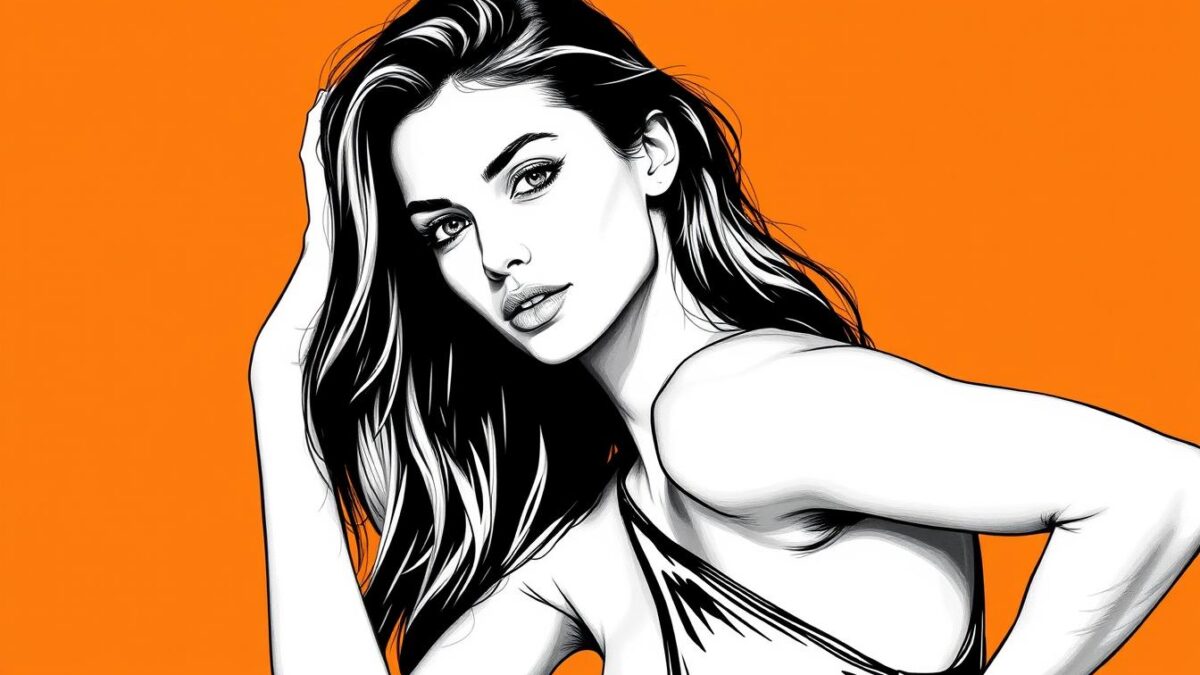
Her story starts in Horizontina, a small town in southern Brazil few knew by name. From there, she launched a career that reshaped the entire modeling world.
She brought a new energy to the fashion industry. Her athletic presence helped move the aesthetic away from the waifish look popular in the late 1990s.
For many years, she ranked as one of the highest-paid figures in her field. By 2007, she stood among the entertainment industry’s wealthiest women.
Forbes later recognized her broader influence, naming her one of the world’s most powerful women in 2014. This supermodel’s impact stretches far beyond the camera’s flash.
Her German-Brazilian roots and upbringing with five sisters grounded her. That foundation shaped the global force known as Gisele Bündchen.
An Overview of Gisele Bündchen’s Iconic Career
Her career numbers alone tell a story of unprecedented market dominance. The model appeared on over 1,200 magazine covers, a record reflecting her enduring appeal.
For years, she was the face of Victoria’s Secret. Her role as an Angel from 1999 to 2006 helped define the brand’s global image.
On the runway, she commanded attention with her “horse walk.” This powerful, stomping stride became her signature and influenced a generation.
By 2015, her portfolio was staggering. It included 550 campaigns, 2,000 covers, and 3,500 editorials.
In 2007, fellow supermodel Claudia Schiffer called Gisele Bündchen “the only remaining supermodel.” This statement highlighted her unique position in the fashion world.
A $700 Taschen book celebrating her 20-year career sold out in one day. It proved her influence reached far beyond typical fans to serious collectors.
Early Life and the Discovery of a Supermodel
A mother’s decision to enroll her daughters in a modeling course would unexpectedly alter the course of fashion history. This simple act set the stage for one of the most remarkable discoveries in modeling.
Childhood and Family Roots
Gisele Bündchen grew up in Horizontina, Brazil, in a prominent Catholic family. Her father was a university professor and her mother a banker. Her grandfather had even served as the town’s mayor.
She was one of six daughters, sharing a close bond with her fraternal twin, Patricia. During her school years, her dream was to play professional volleyball. The idea of modeling was far from her mind.
First Steps into Modeling
In 1993, her mother enrolled her and two sisters in a course to build confidence. After the course, a trip to major cities served as a reward. It was during this time that a scout from Elite Model Management spotted the 13-year-old in a shopping mall.
She soon entered the Elite Model Look contest, placing second. The result convinced her to seriously pursue modeling. By 1995, at just 14 years old, she moved to São Paulo to launch her career, leaving her small-town life behind.
Breakthrough Moments and Career Milestones
Rejection in London became the catalyst for her eventual breakthrough. The young model faced 42 no’s before Alexander McQueen said yes in 1998.
That runway show validated her persistence. It marked the moment when industry resistance finally broke.
Debut at New York Fashion Week & Major Vogue Covers
Her professional journey began at New York Fashion Week in 1996. She was just 16 years old, still finding her footing.
By 1998, major fashion houses recognized her potential. Campaigns for Missoni, Chloé, and Versace filled her portfolio that single year.
Vogue Paris featured her face first in 1998. British Vogue and i-D magazine followed, profiling “A Girl Called Gisele.”
The true breakthrough came with her first U.S. Vogue cover in 1999. The magazine declared her “the return of the sexy model,” signaling a deliberate aesthetic shift.
She appeared on three American Vogue covers that year alone. One historic November issue placed her alongside modeling royalty like Kate Moss and Naomi Campbell.
Winning VH1/Vogue Model of the Year in 1999 confirmed what insiders knew. Gisele Bündchen had become an industry force in less than three years.
Pioneering the Fashion World
The fashion industry’s direction shifted dramatically when Vogue made a bold declaration in 1999. The magazine credited Gisele Bündchen with ending the heroin chic era. This modeling aesthetic had defined the previous decade with extreme thinness and dark circles.
Her healthy, athletic look offered a stark contrast to the pale, waifish models who dominated runways. Sun-kissed skin and vibrant energy became the new standard. The industry quickly followed her lead toward a more natural beauty.
She pioneered the distinctive “horse walk” on runways. This powerful stride involved lifting knees high and kicking feet forward with each step. Other models soon adopted this confident movement that commanded attention.
After appearing in five major campaigns at age 18, New York magazine editor Sally Singer called her an “über” model. This term recognized something beyond traditional categories. Rolling Stone made her only the fourth model to grace their cover, naming her “The Most Beautiful Girl in the World.”
Vogue’s online encyclopedia described her as “the world’s hottest model” and “the Brazilian bombshell.” These early moments signaled a fundamental shift in how the industry defined beauty. Gisele Bündchen became the face of a new era for women in fashion.
Gisele Bündchen’s Impact on Supermodel Culture
Media outlets across the globe started using unprecedented language to describe the Brazilian model’s impact on fashion and culture. Her influence reached beyond magazine covers and runways, reshaping how the world viewed modeling as a profession.
Cultural Shifts and Industry Influence
In 2007, fellow modeling icon Claudia Schiffer made a striking declaration. She called Gisele Bündchen “the only remaining supermodel,” acknowledging how few figures commanded such widespread influence.
The Independent went further in 2009, labeling her “the biggest star in fashion history.” This bold claim reflected her unprecedented earning power and cultural reach across continents.
Vogue Italia dubbed her the “King Midas of fashion” in 2012. Brands that invested in her representation consistently saw remarkable returns on their investment.
An Esprit campaign featuring the model demonstrated this market-moving power. Consumer awareness rose 9% in Germany and 19% in China following her involvement.
Her impact resonated deeply with young women worldwide. A 2000 survey in Brazil revealed 86% of teenagers wanted to become fashion models, a trend Capricho magazine directly attributed to her influence.
This supermodel brought warmth and accessibility to an industry known for distance. She made modeling seem both aspirational and attainable, changing what young women believed was possible for their own lives.
High-Profile Campaigns and Collaborations
The most telling measure of a model’s market value lies in the brand partnerships they secure. Gisele Bündchen built an impressive portfolio across multiple luxury sectors.
Her work spanned fashion, fragrance, and accessories. Each campaign demonstrated her versatility and commercial appeal.
| Brand | Campaign Type | Years Active | Photographer |
|---|---|---|---|
| Dolce & Gabbana | Fashion Campaigns | 1998-2003 (11 campaigns) | Various |
| Dolce & Gabbana | Fragrance “The One” | 2006-2009 | Various |
| Dior | Saddle Bag Launch | 2000 | Nick Knight |
| Versace, Givenchy, Ferragamo | Spring Collections | 2012 | Various |
| David Yurman | Jewelry Campaign | 2012 | Peter Lindbergh |
Spring 2012 showcased her dominance with three simultaneous campaigns. Versace, Givenchy, and Salvatore Ferragamo all featured her face that season.
She replaced Kate Moss at David Yurman, signaling a shift toward warmer luxury aesthetics. Chanel selected her for their Les Beiges makeup line in 2013.
Marc Jacobs positioned her among cultural icons for Louis Vuitton’s 2014 campaign. This move cemented her status as more than a model—she became a brand muse.
Redefining Beauty Standards in Fashion
Beauty ideals in fashion underwent a seismic shift as the new millennium approached. Vogue officially credited Gisele Bündchen with ending the heroin chic era in 1999. Her athletic, sun-kissed presence replaced pale, waifish models on runways worldwide.
This transformation extended beyond the catwalk. A 2006 Elle survey revealed more than half of American stylists voted her as having Hollywood’s best hair. Her natural, beachy waves became the new ideal over over-styled perfection.
The model’s influence reached plastic surgery consultation rooms globally. A 2008 survey of 20,000 surgeons across 84 countries showed patients most frequently mentioned Bündchen when requesting abdominal and hair procedures. She ranked second for breast enhancements and on Vanity Fair’s 2009 World’s Most Beautiful poll.
By 2011, her toned physique became the most desired female body according to the Annual Famed Hottest Looks survey. AskMen.com included her on their “Most Desirable Women” list for ten consecutive years. Only two other women achieved that consistency.
These accolades reflected more than physical appearance. They signaled a cultural move toward valuing health and natural beauty. Gisele Bündchen’s impact reshaped how women worldwide perceived their own bodies and potential.
Transition to Acting and Diverse Ventures
The mid-2000s marked a period of professional exploration for the supermodel. She deliberately stepped beyond the world of high fashion to test her abilities in new arenas.
Film Roles and Television Appearances
Her first significant film role came in the 2004 comedy “Taxi.” She co-starred with Queen Latifah and Jimmy Fallon. While the film received poor reviews, her performance resonated with a younger audience.
This pop culture appeal earned her two Teen Choice Award nominations in 2005. She was recognized for both Breakout Star and Villain.
Two years later, she took a smaller part in the hit film “The Devil Wears Prada.” Playing Serena showed her willingness to support an ensemble cast in a major cultural event.
Her interests expanded into production over time. Between 2010 and 2011, she served as executive producer for “Gisele & the Green Team.” This educational cartoon reflected her growing commitment to environmental advocacy.
In 2016, she appeared in the Emmy-winning documentary series “Years of Living Dangerously.” Her episode, “Fueling the Fire,” tackled climate change directly.
Acting never became her primary career. Yet these projects demonstrated a consistent drive to grow her professional identity. Gisele Bündchen used her platform for storytelling and cause-related work.
Trailblazing Endorsements and Business Success
Brands quickly learned that her name was not just an image but a powerful business asset. This supermodel’s influence translated directly into remarkable commercial success across diverse industries.
Iconic Brands and Strategic Partnerships
Her collaboration with Ipanema created a retail phenomenon. The flip-flop line sold a staggering number of pairs, over 250 million by 2010.
This generated an estimated $197 million in revenue. Years later, the sandals still moved about 25 million pairs annually.
They became the engine for the manufacturer’s export business. Pantene saw a similar surge, with sales jumping 40% in Latin America after she became the face of the brand.
The deal was worth $4 million per year. Her 2014 contract with Under Armour reportedly matched top athlete endorsements.
The CEO later credited the partnership with boosting women’s brand sales. Gisele Bündchen also launched her own venture, Sejaa Pure Skincare.
This eco-friendly line reflected her personal values. It showed a move from media star to savvy entrepreneur.
Gisele Bündchen: A Supermodel Legacy
Institutional recognition consistently validated the scale of her influence. It moved beyond fashion into global power rankings.
Forbecan lists became a regular measure of her reach. She ranked 53rd among powerful celebrities in 2007. By 2012, she held the 61st spot and was fourth on the World’s Most Powerful Latino Celebrity list.
Her business acumen earned a No. 5 ranking on Forbes’ 10 Most Powerful Businesswomen in Brazil in 2013. The following year, she was the 89th most powerful woman in the world, the only model on that list.
Time magazine cemented her cultural status in April 2012. They placed her on the All-Time 100 Fashion Icons list, a nod to her lasting impact since 1923.
Vogue honored her that same August. She was among the 10 women with the most covers in the magazine’s 120-year history.
The Guinness World Record book featured her in 2015. It documented her as the highest-earning model from June 2014 to June 2015.
This supermodel’s legacy redefined a model’s career. She proved it was possible to be a businesswoman and cultural force. Her work shaped industries rather than just serving them.
Family, Motherhood, and Personal Life
The same intentionality that shaped her career guided Gisele Bündchen’s approach to family life. Her marriage to NFL quarterback Tom Brady in 2009 marked the beginning of a deeply personal chapter that would span over a decade.
Balancing Motherhood and a Global Career
Her first child, son Benjamin Rein, arrived in December 2009. The middle name honored her father Reinoldo, connecting the newborn to her Brazilian roots. Daughter Vivian Lake followed in 2012, completing their immediate family.
Gisele Bündchen also embraced her role as “bonus mom” to Jack, Brady’s son from a previous relationship. This expanded her definition of motherhood beyond biological ties.
When her children were young, the model deliberately stepped back from her global career. “My world was them,” she told Vanity Fair. She breastfed both children until nearly age two and handled daily school routines herself.
After her divorce from Tom Brady was finalized in 2022, she focused on cooperative parenting. In a 2024 interview, she acknowledged that some days are easier than others but praised their children’s intelligence and adaptability.
Her family choices reflected the same values-driven approach that defined her professional success. She prioritized hands-on parenting over lucrative opportunities, creating a stable home life for her children.
Fitness, Movement, and Lifestyle Philosophy
In a recent social media post, Gisele Bündchen distilled her approach to wellness into a single, powerful concept. She framed fitness not as a complex regimen but as a fundamental, accessible practice for everyone.
Her philosophy centers on the idea that movement is medicine. It benefits the mind and soul as much as the heart and muscles.
Daily Movement as Medicine
She described how physical activity shifts stagnant energy and releases stored emotion. It softens the physical tension of anxiety, like tight shoulders and shallow breath.
Movement invites flow where there was resistance. This brings oxygen, clarity, and presence back into your being.
Her message is clear: your body is your home, and it was made to move. Caring for it through activity is a form of self-care, not a chore.
Yoga, Wakeboarding, and Wellness Routines
The post showcased a diverse range of activities. This variety highlights that all forms of movement hold value.
| Activity | Setting | Focus |
|---|---|---|
| Yoga | Desert | Mindfulness & Flexibility |
| Wakeboarding | Water | Strength & Adventure |
| Jiu-jitsu | Training Space | Discipline & Connection |
| Cycling | Outdoors | Freedom & Joy |
From a gym session to a dance in the kitchen, every moment of activity counts. The key is to find joy in the practice.
She encourages people to choose movement as a gift they give themselves each day. This approach makes wellness a sustainable part of life.
Social Media Influence and Modern Connections
Her Instagram presence today is a masterclass in balancing public access with private life. Gisele Bündchen maintains a carefully curated social media feed, sharing glimpses while protecting her family’s privacy.
Since welcoming her third child, she has posted less frequently. This shift prioritizes time with her newborn over maintaining a constant online schedule.
In August, she offered fans a rare look at her daily routine. A carousel of images showed her holding her baby boy, his blonde hair visible but his face thoughtfully hidden from view.
One photo captured a natural moment. She wore a simple green tank top, no makeup, with her hair down, a departure from polished supermodel imagery.
Another image illustrated her active lifestyle integrated with motherhood. The baby was strapped to her chest in pale gray workout clothes as she looked at a horse.
She also shared a shot of the baby’s hand touching hers, revealing her star tattoo. A photo of her playing pool with partner Joaquim Valente showed their casual intimacy.
These posts give fans a genuine connection without exploiting her children. Her strategy proves that influence in the modern media landscape doesn’t require constant content. Authenticity and selective sharing can be more powerful than volume.
Philanthropy and Environmental Activism
For over a decade, Gisele Bündchen has channeled her platform toward urgent humanitarian and ecological challenges. Her charitable work reflects a deep commitment to creating positive change in the world.
Charitable Initiatives and Eco-friendly Causes
Since 2009, she has served as a Goodwill Ambassador for the United Nations Environment Program. This role allows her to advocate for sustainable practices on a global scale.
Her support extends to major organizations like Save the Children and Doctors Without Borders. She also backed the Breast Cancer Campaign, educating women about self-exams.
Substantial donations demonstrate her serious approach to giving. In 2010, she contributed $1.5 million to Red Cross Haiti earthquake relief.
This placed her among the year’s top celebrity donors. She also gave $150,000 to Brazil’s Zero Hunger program.
In 2007, she founded The Luz Foundation to empower young girls. The organization helps them build confidence and self-esteem.
During the COVID-19 pandemic, she launched the Luz Alliance fund. This initiative provided essential support to families in Brazil.
She partnered with then-husband Tom Brady on hunger relief efforts. Their work helped provide millions of meals through Feeding America.
Gisele Bündchen’s philanthropy mirrors her professional strategy. It focuses on measurable impact rather than superficial recognition.
Fashion, Runway, and Red Carpet Impact
Certain public appearances transcend fashion to become cultural moments. Gisele Bündchen mastered this art, choosing events with global resonance.
Her most iconic moment came during the 2016 Summer Olympics in Rio. She walked through Maracanã Stadium as “The Girl from Ipanema” played, representing Brazil on the world stage.
Met Gala Moments and Iconic Appearances
The Met Gala served as another key event for the model. Her appearances in 2017 and 2023 showcased an evolution from fresh-faced ingénue to established style icon.
Beyond the red carpet, her image holds significant value. A single black-and-white photo from 2008, shot by Irving Penn, sold at auction for $193,000.
This established her likeness as collectible art. Not every moment was without controversy.
Her 2008 Vogue cover with LeBron James sparked debate over racial imagery. It showed how high-fashion shoots can sometimes miss the mark.
She also made strategic returns to the runway. Surprise appearances closing shows for Balenciaga in 2010 and Givenchy in 2011 generated immense buzz.
These were not comebacks but powerful reminders of her enduring command.
| Event | Year | Significance |
|---|---|---|
| Rio Olympics Opening | 2016 | Global cultural moment |
| Met Gala | 2017, 2023 | Style evolution on display |
| Irving Penn Photo Auction | 2008 | Image valued as fine art |
| Balenciaga Show | 2010 | Surprise runway return |
Final Reflections on a Timeless Model Legend
A new chapter unfolded for the supermodel in the summer of 2023, built on peace and partnership. Gisele Bündchen began a relationship with jiu-jitsu instructor Joaquim Valente, finding a fresh start after her divorce from Tom Brady.
In February 2025, the couple welcomed their first child together, a baby boy. His middle name, River, is public, but his first name remains a private tribute, possibly honoring family like her late mother.
She now mothers three children, including her newborn son. On her first Mother’s Day with him, she shared a photo of the boy in an “I ❤️ Mom” onesie, calling motherhood her greatest gift.
By late summer, she posted glimpses of the infant’s golden hair. She told Vogue France she regained her routine as her son began sleeping through the night.
Gisele Bündchen’s legacy extends far beyond the spotlight. It lives in the peaceful home she built and the family she leads on her own terms.