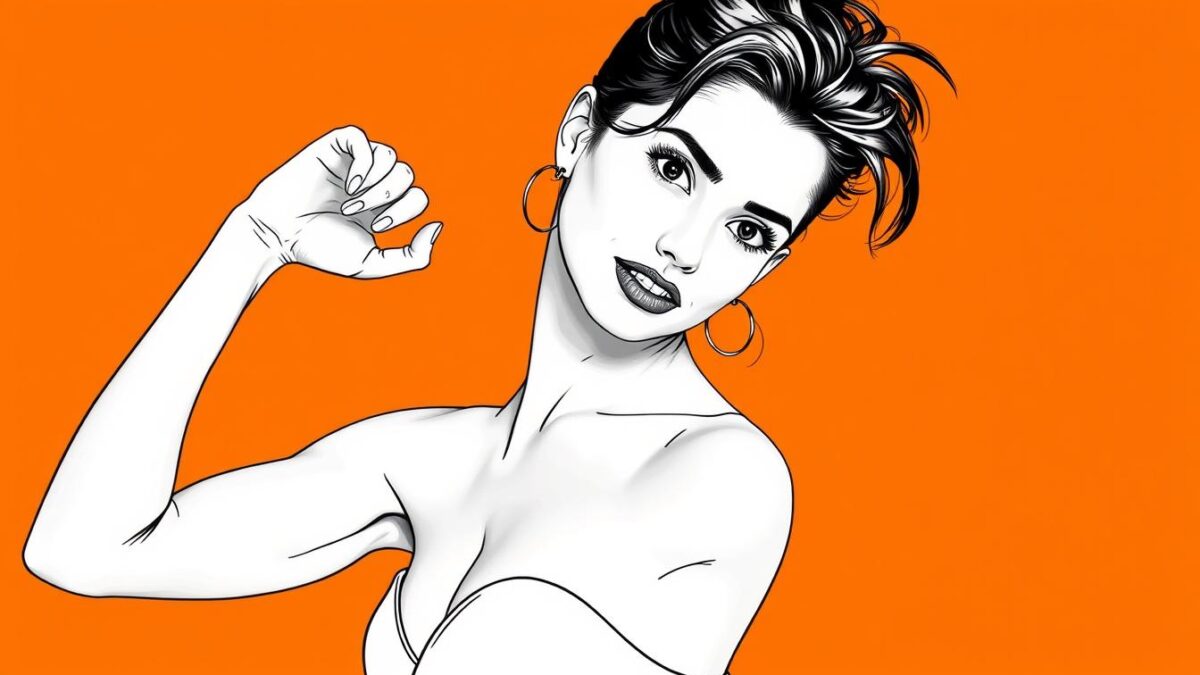
She came from Natal, a coastal town in Rio Grande do Norte. Her striking features and natural presence were clear from the start.
At a young age, she stepped into local fashion shows. People saw something rare in her. This early start set the stage for everything.
Her career began in 1995 and continues today. She became a defining Brazilian supermodel of the 2000s. Her professionalism and authentic beauty stood out.
This earned her representation with major agencies across the globe. She commands attention without manufactured glamour.
Beyond the runway, she built a strong family life. She balances her international career with marriage and motherhood. Her journey shows a remarkable balance of personal and professional worlds.
Biography and Early Beginnings
Her path to the global runway started with local fashion shows in her hometown. This early exposure built a strong foundation for an international career.
Childhood, Local Shows, and Discovery
At just nine years old, she walked in her first local show. Her striking features immediately caught the attention of photographers.
She grew up in Natal, Rio Grande do Norte. The city’s vibrant culture celebrated a natural confidence that shaped her presence.
People often told her she should be a model. She listened, entering the prestigious Elite Look of the Year contest at thirteen.
Breakthrough and the Elite Look of the Year Win
Winning that competition changed everything. It was her ticket from regional shows to the world stage.
At fourteen, she moved to São Paulo to work with agents. Soon after, she relocated to New York, signing with a major agency.
By age seventeen, her face graced covers of Vogue Paris and Marie Claire. She had become an established presence among top models.
Her rapid rise was no accident. It was built on a unique look and serious professionalism that agencies recognized instantly.
The Impact of Fernanda Tavares in Fashion
Magazine covers became her canvas, with each appearance solidifying her international status. Her presence in editorial fashion signaled a shift toward authentic beauty.
International Recognition and Magazine Covers
She appeared repeatedly in Marie Claire across multiple international editions. This consistent visibility made her an editorial favorite that publications trusted.
Sports Illustrated featured her twice in their Swimsuit Issue. She brought high-fashion authority to the American beauty canon.
Her work extended to ELLE, Cosmopolitan, and Allure. These magazines analyzed her as part of a Brazilian modeling phenomenon.
Elite Modeling Milestones and Signature Campaigns
The model agency representation spanned continents through Mega Model Agency. This strategic positioning maintained her relevance across different markets.
She walked in five Victoria’s Secret fashion shows between 2000 and 2005. Each show demonstrated her versatility in commercial and high-fashion contexts.
A $1.3 million Guerlain perfume deal positioned her as a luxury ambassador. This contract required sophistication beyond the runway.
| Year | Publication/Campaign | Significance |
|---|---|---|
| 2000-2005 | Victoria’s Secret Fashion Show | Five appearances demonstrating commercial appeal |
| 2002 | Dolce & Gabbana Milan Show | Shared stage with Naomi Campbell and Gisele Bündchen |
| 2003 | Sports Illustrated Swimsuit | Brought Brazilian beauty to American mainstream |
| 2005 | Marie Claire International | Multiple edition covers establishing editorial dominance |
Her Dolce & Gabbana appearance captured fashion’s changing guard. She stood alongside icons while representing the new generation.
PETA anti-fur campaigns showed her using the platform for advocacy. This added dimension to her public persona beyond modeling.
Fashion Milestones and Industry Contributions
Spring collections consistently featured her presence, showcasing her adaptability across fashion’s evolving landscape. She became a fixture during fashion weeks in New York and Paris.
Runway Highlights and Designer Collaborations
Her runway career reads like a directory of influential houses. Chanel, Prada, and Versace all selected her for their shows. Designers valued her specific energy and professionalism.
John Galliano cast her three times across different Spring Summer seasons. This repeated collaboration showed he found the theatrical beauty his designs required. Her movement complemented his maximalist aesthetic perfectly.
Louis Vuitton and Emanuel Ungaro both featured her in campaigns and runway shows. These relationships extended beyond single-season bookings. They became ongoing professional partnerships that shaped her portfolio.
| Designer | Season | Significance |
|---|---|---|
| Ralph Lauren | Spring 2000 | Top figure in collection representing American aspiration |
| John Galliano | Spring/Summer 2001 | First of three collaborations with the designer |
| Chanel | Haute Couture | Pinnacle of craftsmanship recognition |
| Dolce & Gabbana | Spring/Summer 2002 | Milan fashion week prominence |
| Versace | Multiple seasons | Consistent presence across changing aesthetics |
Her hair became part of her signature on the runway. That cascade of brown moved with her, distinguishing her from other models. Designers recognized this consistent element instantly.
The Spring Summer collections from 2000 through 2009 featured her repeatedly. She adapted to changing fashion aesthetics across nearly a decade. Her distinctive presence remained constant throughout this period.
Final Thoughts on a Fashion Icon
Beyond the runway lights, Fernanda Tavares crafted a career that redefined what Brazilian models could achieve internationally. Her work in fashion created new pathways for talent from regions like Rio Grande do Norte.
Television hosting showcased her versatility. At age sixteen, then twenty-three, she commanded MTV Brasil shows with authentic personality. Swimming and jogging maintained the discipline that supported her longevity.
Her friendship with Gisele Bündchen represented a cohort of Brazilian models who shifted industry dynamics. Together, they brought authentic energy to global runways previously dominated by other regions.
The legacy includes iconic Marie Claire covers and campaigns that newer models study. Tavares demonstrated that career sustainability comes from professional consistency and personal authenticity.