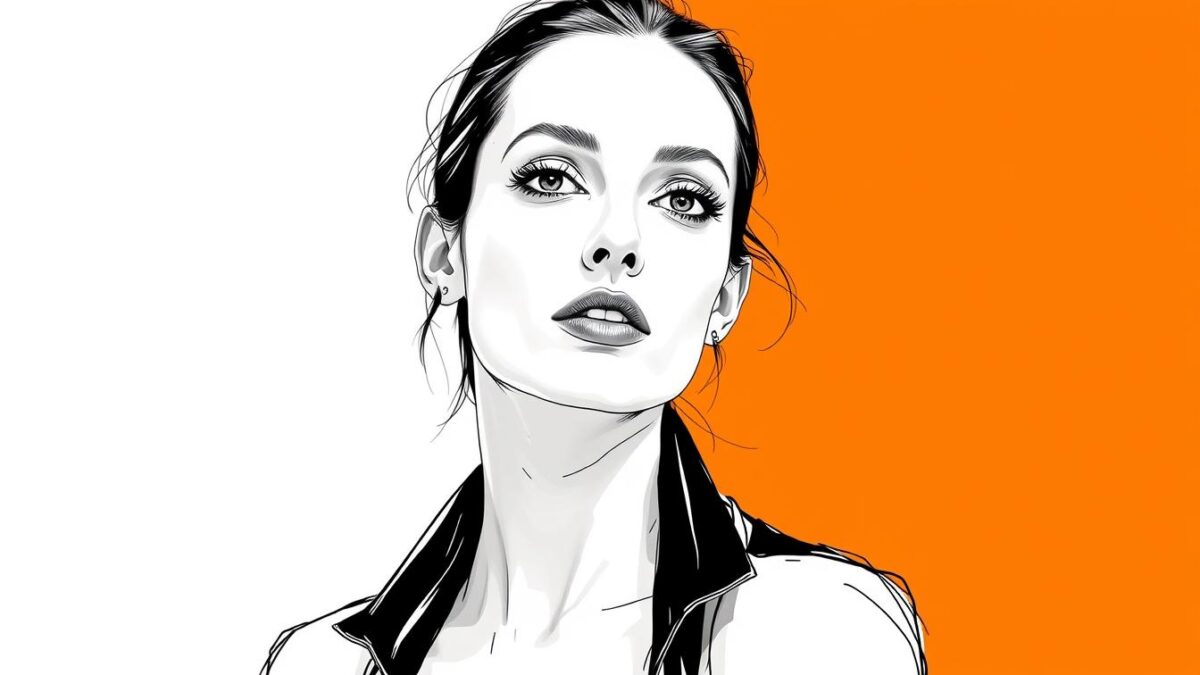
Six feet tall with striking features, Erin O’Connor emerged as fashion’s most distinctive face. She commands runways and editorial spreads with a presence that defies traditional beauty standards.
Born in Brownhills, West Midlands, England in 1978, she transformed from a shy teenager into an internationally recognized supermodel. Her journey spans three decades of working with the industry’s most revered names.
Karl Lagerfeld once declared her “one of the best models in the world.” This recognition speaks to her ability to embody both high art and commercial appeal across her remarkable career.
Today, she continues to work while building roles as a television presenter, writer, and advocate for ethical fashion. Her commitment to meaningful change in the industry she knows intimately remains strong.
At nearly 50 years old with 30 years in modeling, she proves that true style and substance outlast fleeting trends. Her signature look became an asset rather than a limitation in an industry often obsessed with sameness.
Early Life and Background
Before the cameras and couture, there was Brownhills Community School and the formative years that shaped a future icon. Erin O’Connor’s early life in the West Midlands stood in stark contrast to the glamorous world she would eventually inhabit.
Childhood and Education in Brownhills
Growing up in Brownhills, this young girl navigated adolescence while standing noticeably taller than her peers. She attended the local community school where conventional beauty standards of perms and Wonderbras defined the era.
The person she was then—tall, timid, and uncertain—felt like an outsider. Classical ballet training provided discipline and grace that would later distinguish her runway presence.
Cultural Roots and Family Influences
Her Catholic upbringing and Irish heritage through her father from Ballycastle provided strong cultural grounding. These roots informed her unwavering values and sense of self.
She developed keen observational skills as a shy individual learning to read rooms. This awareness would serve her well in the unpredictable fashion industry ahead.
Breakthrough and Discovery in Modeling
A borrowed suitcase packed with tinned food was all she took to London. This simple detail captured the enormity of the leap she was taking.
Her journey into modeling began with a chance encounter. It was a pivot point that would redirect her entire life.
Chance Encounter at Clothes Show Live
In 1995, a school trip to Birmingham’s Clothes Show Live changed everything. A talent scout spotted the tall, brace-wearing teenager in the crowd.
This led to a whirlwind trip to the capital. She soon signed with the respected Models1 agency, marking her official entry as a professional model.
First Published Work and Early Campaigns
Her first published work arrived in December 1996. Legendary photographer Juergen Teller shot her for i-D magazine’s “The Undressed Issue.”
This editorial debut in issue 159 signaled her arrival. Yet, the early time was marked by uncertainty and frequent rejection.
She was often told she didn’t fit in. These challenges, however, forged the resilience that would define her career.
Rise to Supermodel Status
Designers like John Galliano and Alexander McQueen saw in her a muse capable of bringing their most fantastical visions to life. This trust propelled her to the forefront of the industry.
She commanded runways for the world’s most prestigious houses. Her name became synonymous with a powerful and transformative presence.
Iconic Runway Moments
The late 1990s and early 2000s were fashion’s most theatrical era. She didn’t just walk; she performed.
Elaborate productions saw her dancing through flames and walking on water. Her background in ballet gave her the grace to fully inhabit these spectacular moments.
Each show was a narrative, and she was the central character. Designers valued her ability to embody extreme concepts with conviction.
After many years away from the catwalk, her return for the Marc Jacobs A/W 2015 show was a triumph. It proved her relevance in the modelling world remained potent.
Her path to becoming a supermodel was never about fitting a mold. It was about creating a new standard altogether.
Collaborations with Fashion Icons
The most respected names in fashion didn’t just book her; they built creative worlds around her. These partnerships went beyond the transactional, becoming deep artistic dialogues.
Working with Designers like Galliano, Dior, and McQueen
Karl Lagerfeld described Erin O’Connor as “one of the best models in the world.” This recognition cemented her role as his muse for numerous Chanel campaigns.
Jean-Paul Gaultier captured her essence in 1998. He said she wasn’t just a model but “quite like art,” an extraordinary inspiration.
Alexander McQueen valued her as both a collaborator and a muse. Their shared history was a powerful designer-muse dynamic.
| Designer | Relationship | Notable Work |
|---|---|---|
| Karl Lagerfeld | Muse | Chanel advertising campaigns |
| Alexander McQueen | Collaborator & Muse | Runway shows, “Savage Beauty” exhibition |
| Jean-Paul Gaultier | Inspiration | Haute Couture presentations |
| Photographer | Frequency | Style |
| Steven Meisel | Repeated | Editorial storytelling |
| Nick Knight | Repeated | Avant-garde imagery |
| Mario Testino | Repeated | Classic elegance |
She became part of an elite circle of photographers’ preferred subjects. Names like Patrick Demarchelier and Steven Meisel sought her out repeatedly.
The people she worked with recognized an intelligence and presence. This willingness to push boundaries made every project more compelling.
Being chosen as a muse meant becoming part of fashion history. She was immortalized in campaigns that defined entire eras.
Erin O’Connor: A Defining Face of Fashion
Her signature look began not with a designer’s sketch but with a pair of hair clippers and bold vision. This transformation created one of fashion’s most memorable faces.
Signature Look and Influential Style
Working with hair stylist Guido Palau marked a turning point. The dramatic half-shaved cut became her signature for years.
This bold style transformed her into what she called an “accidental anarchist.” The fierce exterior served as armor for the shy person within.
The haircut solved a practical problem. She was often told she didn’t fit conventional standards. Rather than conforming, she embraced difference.
| Aspect | Before Transformation | After Transformation | Industry Impact |
|---|---|---|---|
| Visual Identity | Conventional model look | Iconic half-shaved style | Redefined beauty standards |
| Career Perception | Frequent rejection | Highly sought-after | Proved uniqueness sells |
| Public Recognition | Standard model anonymity | First-class stamp feature | Cultural icon status |
| Creative Opportunities | Limited to certain roles | Muse for top designers | Expanded artistic range |
Her style wasn’t about following trends. It created a visual language entirely her own. Designers and photographers could work with or against it for maximum impact.
The severe features and statuesque frame became instantly recognizable. This rare achievement stood out in an industry of beautiful faces. Her look challenged conventions without rejecting femininity.
Television, Radio, and Media Ventures
The television screen became a new runway for the model’s expanding influence. Her media work revealed a sharp intellect and a desire to demystify the fashion industry.
She moved beyond the catwalk to become a storyteller. These ventures showcased her expertise to a broader audience.
Notable TV Appearances and Documentaries
Her first major television role was a playful cameo on “Absolutely Fabulous” in 2001. Playing herself introduced her charm to mainstream viewers.
A more intimate portrait emerged in 2003 with Channel 4’s “This Model Life.” The documentary series peeled back the glamorous facade.
She later served as a judge on “The Model Agent,” mentoring new talent. Her most prominent TV role was on the reality show “The Face.”
On this program, she competed directly with supermodel Naomi Campbell. Their collaboration highlighted her authority as a practitioner and teacher.
Radio Documentaries and Blogging for Vogue
She found a powerful voice in radio, writing and presenting for BBC Radio 4. Documentaries like “Erin’s Model World” explored fashion’s complexities.
This platform allowed for deeper, more thoughtful analysis. It cemented her reputation as an articulate industry insider.
| Platform | Project | Role | Contribution |
|---|---|---|---|
| Television | Absolutely Fabulous | Herself | Mainstream introduction |
| Television | This Model Life | Subject | Industry transparency |
| Television | The Face | Mentor/Judge | Talent development |
| Radio | BBC Radio 4 Docs | Writer/Presenter | Narrative authority |
Editorial and Journalistic Contributions
Beyond the photographer’s lens, Erin O’Connor found a powerful voice through the written word. She contributes to some of Britain’s most respected publications.
Her authority, built over decades on the catwalk, translates into sharp commentary. She writes with the insight of someone who knows the industry intimately.
Columns, Blogs, and Print Contributions
O’Connor maintains a regular blog for British Vogue online. It offers an insider’s view of the fashion world, balancing expertise with accessible prose.
During London Fashion Week, she writes for the event’s official paper, “The Daily Rubbish.” Her columns provide real-time analysis of shows and trends.
Her work creates a full-circle moment with i-D magazine. The publication that featured her first photos now publishes her writing.
She addresses the important things within the fashion industry. Her columns often focus on integrity, sustainability, and the treatment of people.
This editorial work gave her a new kind of power. She shapes conversations directly, moving from illustrating ideas to authoring them.
| Publication | Role/Contribution | Primary Focus |
|---|---|---|
| British Vogue | Regular Blog Contributor | Industry trends and insider perspectives |
| The Daily Rubbish (LFW) | Columnist | Real-time show commentary and analysis |
| The Guardian, The Sunday Times | Feature Writer | Ethics, beauty standards, and cultural commentary |
| i-D Magazine | Contributor | Fashion critique and personal essays |
Signature Style and Personal Transformation
At the peak of her modeling success, a visible physical condition threatened to undermine everything she had built. The industry’s demand for flawless perfection met a biological reality that couldn’t be airbrushed away.
Beyond Surface Beauty
During her twenties, severe hormonal acne covered her face with painful, angry red marks. Her team sent advance warnings to clients before shoots, preparing them for what they would see.
She carried theatrical spray paint machines to cover the inflammation. This was a humbling experience for someone whose face defined her professional identity.
The acne represented an obvious flaw that threatened the very thing that made her career possible. It was both physically painful and emotionally distressing during what should have been triumphant years.
She still carries the warrior marks from that period, visible in certain light. O’Connor chooses not to erase them because they represent a battle won and a version of herself she respects.
Years of dealing with skin issues taught her more about true beauty than a lot of models ever learn. She transformed a personal crisis into professional expertise.
By her forties, she achieved better skin than in her twenties. Understanding what her skin actually needed made the difference, not following generic advice.
This journey taught her that beauty isn’t about perfection but presence and health. Confidence comes from accepting every part of your journey, including the difficult days.
Entrepreneurship and Ethical Fashion
Behind the glamour of couture shows and magazine covers, a deeper mission was taking shape—one focused on ethical responsibility. The supermodel channeled her platform toward meaningful change within the fashion world.
Fair-Trade and Eco-Friendly Initiatives
In 2009, she co-founded “All Walks Beyond the Catwalk” with Caryn Franklin and Debra Bourne. This initiative directly challenged the industry’s narrow beauty standards.
For the launch campaign, she stepped behind the camera for the first time. She photographed models holding “Size Me Up” signs, creating a powerful statement about body diversity.
With stylist Kate Halfpenny, she launched “She Died of Beauty.” This fair-trade cotton line proved that style and conscience could coexist beautifully.
| Organization/Project | Role | Primary Focus | Impact |
|---|---|---|---|
| All Walks Beyond the Catwalk | Co-Founder | Body diversity and beauty standards | Industry-wide dialogue on representation |
| She Died of Beauty | Co-Creator | Fair-trade fashion products | Proved ethical fashion’s commercial viability |
| Traid | Spokesperson | Fair-trade advocacy | Increased awareness of ethical production |
| Save the Children | Ambassador (2011) | Children’s welfare | Leveraged fashion platform for humanitarian work |
| Borne Charity | Ambassador | Premature birth research | Supported medical research through fashion influence |
These efforts demonstrated her belief that people working in fashion have a responsibility. They must address the damage caused by promoting impossible ideals.
O’Connor understood her privilege and used it to amplify voices typically ignored by the industry. Her work created lasting change beyond the runway.
Transition to Motherhood and Personal Life
In 2014, a new chapter began that would redefine her understanding of balance and purpose. The supermodel welcomed her first son, Albert, with partner Stephen Gibson. This milestone tested her ability to merge professional demands with maternal responsibilities.
Balancing Career and Family
Rather than conceal her pregnancy, she celebrated it artistically. She commissioned photographer Nick Knight for the “Expecting” series on ShowStudio.com. The images captured motherhood’s natural beauty without pretense.
The accompanying interview happened during early labor. This detail reveals her commitment to completing creative projects under any circumstances. Five years later, she welcomed a second baby boy.
Motherhood added depth to her professional identity. It proved women could excel in both roles without compromise. She navigated this transition with the same integrity that defined her modeling career.
| Aspect | Pre-2014 Career Focus | Post-2014 Integrated Life | Key Adaptation |
|---|---|---|---|
| Professional Schedule | Global fashion commitments | Balanced project selection | Strategic timing around family needs |
| Public Image | Runway and editorial presence | Motherhood as creative subject | Authentic personal storytelling |
| Personal Priorities | Industry demands first | Family as central focus | Redefined work-life integration |
| Creative Expression | Modeling as performer | Motherhood as artistic theme | Expanded narrative scope |
Though now separated from Gibson, she manages single motherhood while sustaining a three-decade career. Her approach challenges expectations about how mothers should balance professional ambitions.
Overcoming Industry Challenges and Embracing Integrity
Faced with suggestions to change her appearance, she drew a firm line that would define her career’s ethical stance. This moment crystallized her commitment to authenticity in a business often driven by conformity.
Standing Up Against Conformity
During her American work, industry executives proposed cosmetic alterations. They suggested a nose job and breast augmentation to fit their ideal.
Erin O’Connor responded with a defiant refusal. This rejection empowered her sense of self-worth. She chose to back herself rather than create another mirage.
Advocacy and the Model Sanctuary Initiative
In 2009, years before #MeToo, she helped establish the Model Sanctuary. This safe space offered counseling, tax advice, and financial guidance.
The initiative addressed a critical gap in the fashion world. Models often faced vulnerability without proper support systems. The sanctuary treated them as people, not products.
| Industry Challenge | Proposed Change | Her Response | Outcome |
|---|---|---|---|
| Physical conformity | Cosmetic surgery | Defiant refusal | Strengthened self-worth |
| Lack of support systems | Silent acceptance | Model Sanctuary creation | Industry resource gap filled |
| Backlash for speaking up | Maintain status quo | Continued advocacy | Paved way for future movements |
Standing up came with backlash and criticism. But O’Connor understood that self-respect meant defending integrity. Every person in the modeling job deserves dignity.
Influence on Beauty Standards and Contemporary Trends
The fashion industry’s narrow ideals met their match in a model who championed self-knowledge over sameness. Erin O’Connor’s influence reshaped the very idea of beauty. She proved that striking, unconventional features could be as powerful as traditional prettiness.
Her philosophy defined beauty as “without compromise.” This requires growing your own conviction, not seeking constant external validation. True beauty starts to emerge when you have a strong sense of who you are.
This confidence and self-knowledge make a person compelling. It goes far beyond physical attributes alone.
The term “androgynous” was often applied to her. She felt this was a slight misfire. It was as if people lacked the language for an appeal that wasn’t overtly feminine or sexualized.
Her career demonstrated a powerful truth to one generation after another.
- Intelligence and Presence: She expanded the definition of beauty to include qualities like integrity and individuality.
- Concept over Convention: The best models are those who can embody concepts and communicate emotion, not just those with conventional looks.
- Celebrating Difference: By refusing to alter her appearance, O’Connor helped shift the conversation toward celebrating uniqueness.
She showed that the most memorable impact comes from authenticity. Her legacy is a broader, more inclusive vision of beauty.
Artistic Collaborations and Cultural Impact
The first-class British postage stamp bearing her image marked a cultural milestone. Nick Knight’s photograph made her the only non-royal face to receive this national honor.
Exhibitions and Art-Inspired Projects
Fashion illustrator David Downton created an entire exhibition of line drawings featuring the model. This moved her from fashion subject to artistic muse, igniting her passion for design.
Her magazine covers span the most prestigious publications in the world. She graced British Vogue, Italian Vogue, W, Elle, and Harper’s Bazaar.
In February 2015, Steven Meisel photographed her for Italian Vogue’s cover. Sølve Sundsbø shot her for Love Magazine the same month.
These collaborations positioned her among the best models of her generation. The things she represented—individuality and integrity—made her a cultural symbol.
Her impact extended beyond fashion into conversations about art and British identity. She became a subject worthy of serious artistic consideration.
Legacy in Awards, Honors, and MBE Recognition
Official recognition arrived in 2017 when Erin O’Connor received one of Britain’s highest civilian honors. The Member of the British Empire distinction celebrated her services to fashion and charity.
This honor acknowledged more than three decades in the industry. It validated her advocacy for ethical practices and support for emerging talent.
The MBE recognized her broader contributions beyond modeling work. Her charitable ambassadorships and efforts to challenge industry standards created meaningful change.
Even personal challenges tested her resolve. In 2011, her assistant was convicted of stealing £12,000 from her.
This professional setback didn’t diminish her focus on larger goals. Her job was never just about clothes or beauty.
The honor stands as formal acknowledgment that integrity and commercial success can coexist. Her legacy reshaped conversations within the fashion world.
Continued Evolution in the Fashion World
Representation across five major fashion capitals tells a story of enduring demand that defies industry ageism. Erin O’Connor maintains contracts with leading agencies in London, New York, Milan, Paris, and Dublin.
Relevance in Modern Fashion and Media
Her February 2015 return to open Marc Jacobs’ A/W show demonstrated that her runway presence remained potent. She also walked for Giles Deacon during London Fashion Week that season.
These appearances signaled that designers still value her ability to bring narrative depth to collections. After years focusing on other ventures, the fashion world welcomed her back with recognition.
Each day she continues working challenges the industry’s obsession with youth. Her career proves that presence and skill only deepen with time.
Approaching 50 with 30 years of modelling behind her creates a rare narrative. She represents models who remain relevant because of experience rather than despite age.
Erin O’Connor’s evolution shows that careers need not follow predetermined arcs. Building substance alongside image creates relevance that transcends temporary trends.
Closing Reflections on a Timeless Icon
What makes a model timeless isn’t just physical beauty but the fire within to stand up for others. After thirty years in fashion, Erin O’Connor calls this freedom from others’ opinions “the ultimate luxury.”
She radiates more confidence now than in her twenties. The focus has shifted from looking younger to appearing present and vital.
Her beauty combines striking features with graceful movement. But the most remarkable things about her are internal qualities like integrity and purpose.
She became a role model by proving success doesn’t require sacrificing values. At this point, her legacy shows true icons are built through consistent choices.
O’Connor stands as proof that lasting impact comes from being genuinely yourself. Her journey demonstrates beauty with substance withstands the ages.