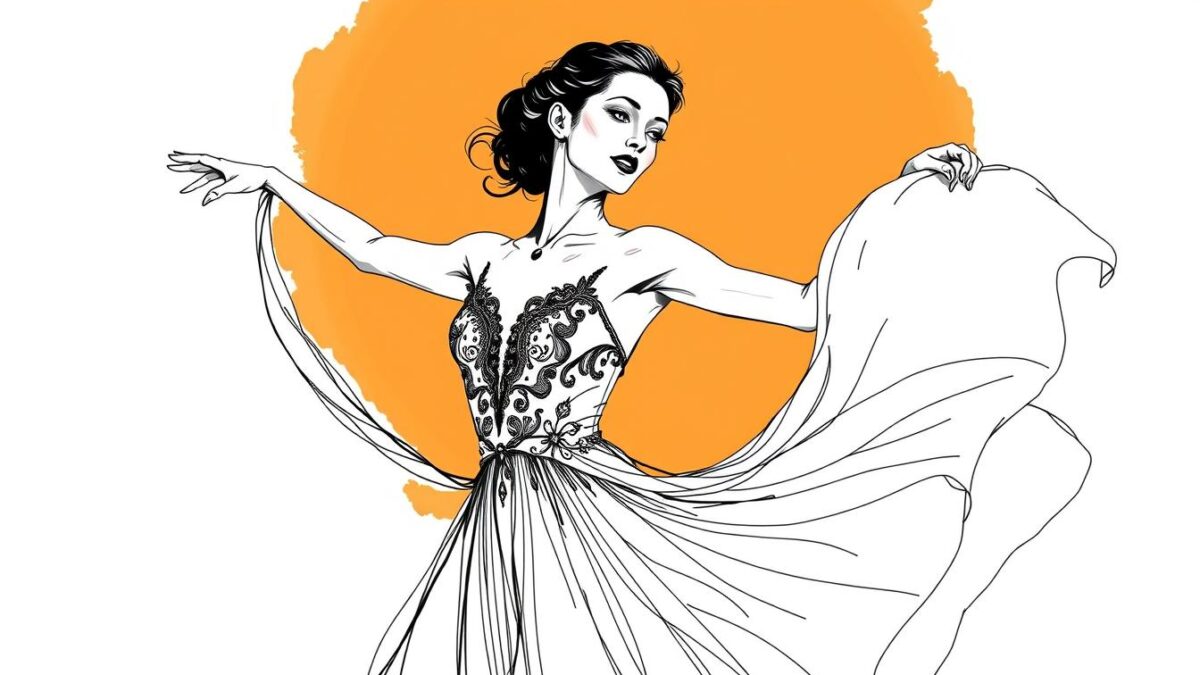
Renée Marcelle Jeanmaire entered the world on April 29, 1924, in Paris. Her life, spanning nearly a century, was a masterclass in artistic defiance. She refused to be boxed in by a single discipline.
From the strict halls of the Paris Opera Ballet, she leaped onto Broadway stages and into the smoky glow of Montmartre cabarets. Her fierce individuality and technical skill blurred the lines between classical and contemporary.
The role of Carmen in London, 1949, catapulted her to international fame. It showcased a performer who sharpened her edges instead of softening them. Her signature cropped haircut and provocative style became her trademarks.
She built a legendary partnership with dancer and choreographer Roland Petit, her husband from 1954 until his death. Their collaboration, along with work with designers like Yves Saint Laurent, defined an era of glamour.
Her legacy is one of earned elegance. It lives in the rigor she brought to every role, every costume, every precise movement down a grand staircase. She proved that true style comes from relentless discipline.
Early Life and Beginnings in Ballet
Before the spotlight found her, a young girl’s life was shaped by family influences and early artistic exposure. Her foundation was built on values that would define her career.
Childhood and Family Background
Her mother Olga gave her the affectionate nickname that would stick for life. It came from “mon Jésus,” a term of endearment that softened into its familiar form.
Her father Marcel was a self-made businessman. She often highlighted his work ethic as something she carried into every rehearsal.
A pivotal moment came when her grandfather took her to see Roméo et Juliette. The ballet sequence captivated her completely. It ignited an obsession that never faded.
First Steps in Dance and Early Training
At nine years old, she entered the Paris Opera Ballet school in November 1933. The institution demanded absolute discipline. Talent alone wasn’t enough to succeed there.
That same year, she met Roland Petit. Both were nine years old. Their meeting would anchor her personal and professional life for decades.
Yvette Chauviré served as her mentor at the school. The great ballerina introduced her to teacher Boris Kniaseff. His influence remained constant throughout her career.
| Year | Milestone | Significance |
|---|---|---|
| 1933 | Entered Paris Opera Ballet School | Began formal training at age nine |
| 1933 | Met Roland Petit | Formed lifelong partnership |
| 1938 | Began working with Boris Kniaseff | Developed technical foundation |
| 1940 | Accepted into company | Professional debut at sixteen |
By 1940, she joined the company but soon felt constrained by its conservatism. At eighteen, she made the bold decision to leave. Her mentor supported this courageous move.
Her first steps in dance taught her more than technique. They taught her when to stay and when to walk away. This lesson served her throughout an extraordinary career.
Breakthrough and Iconic Roles on Stage
Her career breakthrough arrived not through waiting but through bold assertion. When Roland Petit conceived the ballet Carmen, he hesitated over casting the title role. The dancer made it clear the part was hers.
The Transformation into Carmen
Before the London premiere, Petit took her to Antoine, Paris’s leading hairdresser. He chopped her long curls into a boyish crop that became iconic worldwide. The contrast with Antoni Clavé’s corset-like costumes created unforgettable tension.
Carmen premiered at London’s Prince’s Theatre on February 21, 1949. The duets Petit choreographed carried a raw sensuality never before seen on the London stage. Audiences were both shocked and thrilled.
Paris and Broadway: Milestones in Performance
After the London triumph, the Ballets de Paris took Carmen to Broadway for an extended tour. The production returned the following season, cementing her international status. In 1954, she starred on Broadway again in The Girl in Pink Tights.
These performances built a career on provocative roles that challenged tradition. Zizi Jeanmaire proved her versatility extended beyond ballet to commercial theater.
| Year | Production | Role | Significance |
|---|---|---|---|
| 1944 | Soirées de la danse | Featured Dancer | Early professional appearance at Théâtre Sarah Bernhardt |
| 1946 | Nouveau Ballet de Monte Carlo | Ballerina | Joined prestigious company |
| 1949 | Carmen with Ballets de Paris | Title Role | Career-defining breakthrough performance |
| 1954 | The Girl in Pink Tights | Lead Role | Broadway musical success |
Zizi Jeanmaire: A Legacy in Dance and Film
Hollywood’s glittering lights called in 1952, but the stage remained her true home. While film offered global recognition, her artistic heart belonged to live performance.
Major Film Appearances and Stage Revues
Her film career launched with the musical Hans Christian Andersen, where she played Doro opposite Danny Kaye. This role introduced her to American audiences.
She continued appearing in films like Anything Goes with Bing Crosby. Yet cinema never became her primary focus.
Beginning in 1961, she embraced Parisian revues at the Alhambra Theatre. These shows blended dance, song, and spectacle in ways Hollywood couldn’t match.
Collaborations with Roland Petit and Hollywood Ventures
Roland Petit created over sixty shows for her throughout their partnership. Works like La Rose des vents and Cyrano de Bergerac showcased their creative synergy.
In Hollywood, she formed a platonic friendship with Howard Hughes at RKO Pictures. Several projects never materialized, and she found the studio system creatively limiting.
She returned to Paris where her most meaningful work awaited. Her partnership with Petit defined her artistic journey more than any film role.
| Year | Film | Role | Notes |
|---|---|---|---|
| 1952 | Hans Christian Andersen | Doro | Musical with Danny Kaye |
| 1956 | Anything Goes | Gaby Duval | Cole Porter musical |
| 1957 | Folies-Bergère | Claudie | French musical comedy |
| 1961 | Black Tights | Carmen/The Gold Digger | Dance anthology film |
Influence on Fashion, Fitness, and Personal Style
A single haircut in 1949 would transform not just her appearance but the beauty standards of an entire era. Zizi Jeanmaire’s influence reached far beyond the stage, creating a blueprint for modern elegance.
Signature Haircut and Fashion Statements
The boyish crop she wore for Carmen became an international sensation. Thousands of women copied the look, proving one styling choice could shift fashion’s center of gravity.
She never grew her hair long again. “Short hair may go out of style,” she stated, “but I will always keep mine short.” The cut suited her skin tone and personal style.
Yves Saint Laurent became her chief designer in 1961. He created the iconic dress for “Mon truc en plumes.” Their collaboration extended into her private wardrobe and a deep friendship.
Fashion recognized her influence early. She sat front row at Saint Laurent’s 1967 show alongside cinema legends. Vogue later identified this as a guidepost of fashion week celebrity culture.
Exercise Routines and the Art of Maintaining Elegance
Her elegance wasn’t just about clothes or hair. It was rooted in daily discipline. Zizi Jeanmaire described her regimen in multiple articles for women.
She worked at the ballet bar every single day, even during film shoots. Rising before dawn, she believed aging was about preventing muscles from stiffening.
Her routines were practical and specific. She held pointed toes to keep knees limber. She rolled weight across her feet to shape calves.
Women learned from these articles that beauty was a daily practice. The art of maintaining elegance meant working when no one was watching.
Final Reflections on a Dance Legend’s Life and Impact
Even when injury threatened to end her time on stage, she refused to accept any identity but that of a dancer. After hurting herself during a 1975 ballet, Roland Petit suggested she focus on her successful singing career. Her reply was definitive: “I’m a dancer. If I can’t dance, I can’t do anything.”
She recovered fully and returned to perform throughout the late 1970s. The couple later moved to Marseille, then Geneva, where Petit continued creating works for her.
Her influence extended beyond the theater. Peter Sarstedt’s song immortalized her style with the line “you dance like Zizi Jeanmaire.” She calculated descending the Casino de Paris steps 1,460 times—a number reflecting her discipline.
Jeanmaire’s legacy lives in every artist who chooses individuality over convention. Her career demonstrated that true elegance is earned through daily practice and unwavering commitment to craft.