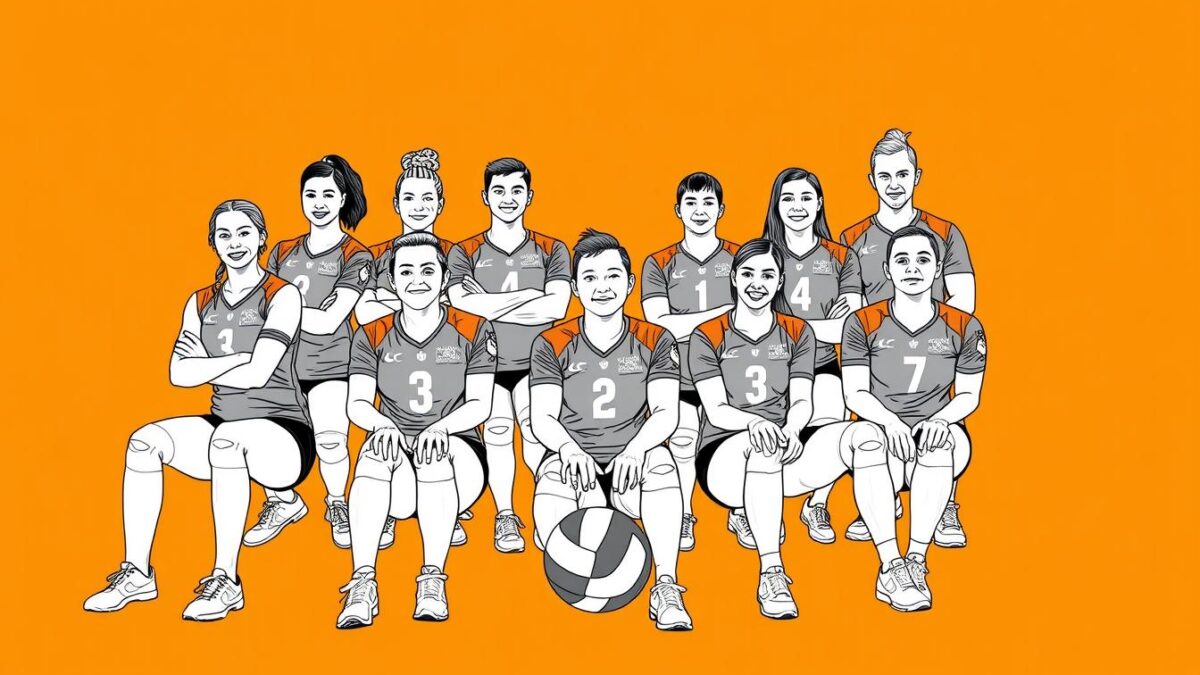
Canada’s sitting volleyball team writes a powerful chapter in adaptive sports. These athletes compete at an elite level, turning physical challenges into strengths on the court.
The game itself is a dynamic adaptation. Players remain seated, executing serves and spikes on a smaller court with a lower net. This format demands a different kind of athleticism.
Over the years, many talented individuals have shaped this national team. They brought skills from beach and indoor courts, adapting them for this version of the game.
This sport became an official Paralympic event in 1980. Since then, the Canadian squad has steadily climbed the international rankings. Their success stems from dedicated training and sharp player development.
The team dynamic is crucial. With limited movement, communication and positioning become everything. Each athlete’s court sense is critical to the group’s success.
Introduction to Canada’s Sitting Volleyball Legacy
Explosive upper body strength and rapid reflexes define the demanding nature of Canada’s sitting volleyball legacy. This Paralympic team sport requires tactical intelligence equal to its standing counterpart. Athletes compete on a court measuring just 10 by 6 meters.
Canada entered the sitting volleyball arena later than European and Asian nations. The program gained momentum through grassroots development and recruiting veterans from other adaptive sports. This strategic approach built a foundation for international success.
Over time, Canada’s volleyball team developed a reputation for disciplined defense. Coaches emphasized fundamentals and mental toughness in competition. The squad became known for creative offensive sets that challenged opponents.
Canadian athletes brought diverse backgrounds to the sport. Military veterans, accident survivors, and congenital amputees each contributed unique perspectives. Their collective experience enriched the team culture and competitive approach.
The legacy extends beyond medals and rankings. This program created pathways for adaptive athletes across the country. It demonstrated the elite capabilities of people with physical disabilities through determined athletic performance.
The Evolution of Sitting Volleyball and Traditional Volleyball
What began as ‘mintonette’ in 1895 Massachusetts transformed through decades into a global sport with seated and standing variations. William G. Morgan created this activity as a less intense alternative to basketball for YMCA members. Canada became the first country outside the United States to adopt the game in 1900.
The original concept allowed unlimited players and contacts. Over time, it evolved into the regulated sport we know today. Standardized courts, six-player teams, and three-touch rules emerged. Sitting volleyball appeared in the 1950s as rehabilitation for wounded veterans.
This adaptive version combined traditional volleyball with the German game sitzball. It gained Paralympic status in 1980, creating a competitive platform for athletes with physical impairments. Beach volleyball’s introduction in 1996 influenced sitting volleyball coaching strategies.
| Aspect | Traditional Volleyball | Sitting Volleyball |
|---|---|---|
| Court Size | 18m x 9m | 10m x 6m |
| Net Height | 2.43m (men) / 2.24m (women) | 1.15m (men) / 1.05m (women) |
| Player Movement | Full court coverage | Buttocks must maintain floor contact |
| Key Rule Focus | Jumping and vertical power | Upper body strength and anticipation |
Rule refinements over time created a distinct game that rewards speed and upper body power. The buttocks-contact requirement prevents lifting during play. This sport continues to evolve while maintaining its core athletic principles.
Key Characteristics of Top Volleyball Players
The anatomy of a top-tier volleyball athlete reveals a consistent pattern of skill, dedication, and influence. These elements combine to create competitors who define games and inspire teams.
This foundation supports excellence in both standing and sitting disciplines. The core principles translate seamlessly across the net.
Skill and Versatility on the Court
Exceptional technical skill is the baseline. A great athlete masters their primary position with precision.
Versatility is the differentiator. Players who excel in multiple positions offer strategic depth. Their broad court awareness makes them invaluable.
Consistency under pressure separates the good from the great. They deliver their best when the match is on the line.
Work Ethic and Leadership Attributes
A relentless work ethic fuels improvement. Elite players treat practice with game-day intensity. They are perpetual students of the sport.
Leadership extends beyond captaincy. It manifests in composure and tactical communication. A true player elevates everyone around them.
| Trait | Manifestation in Play | Impact on the Team |
|---|---|---|
| Technical Skill | Precise sets, powerful attacks, disciplined defense. | Builds a reliable foundation for offensive and defensive systems. |
| Versatility | Ability to perform effectively in different positions. | Provides coaches with flexible lineup options during a match. |
| Work Ethic | Consistent high-level performance in training and games. | Sets a standard of excellence and motivates teammates. |
| Leadership | Clear communication, calm demeanor, strategic insight. | Fosters cohesion, trust, and resilience during challenging moments. |
Various Volleyball Players: A Closer Look
Individual careers across the volleyball landscape offer revealing insights into athletic excellence. These competitors from different nations and backgrounds serve as valuable case studies.
Examining player profiles uncovers consistent patterns in skill development and competitive mentality. These traits transcend specific formats—indoor, beach, or sitting variations.
Each athlete profiled demonstrates unique strengths. Some excel in offensive power, others in defensive anticipation. Setters provide strategic orchestration that defines team success.
The profiles include competitors from multiple court positions. Different roles demand distinct physical attributes and technical skills. Understanding these individual achievements helps contextualize broader team dynamics.
These players earned recognition through consistent performance at the highest levels. Olympic Games, world championships, and professional leagues across continents tested their abilities.
Canadian sitting volleyball team members embody similar skills and work ethic. They adapted techniques from standing volleyball while developing position-specific innovations for their format.
Profile Spotlight: Zhu Ting – The Powerhouse from China
Zhu Ting’s name resonates with power in the world of international volleyball. This Chinese athlete commands attention with a devastating spike and remarkable all-around skill.
Her primary role as an outside hitter showcases her offensive dominance from the left side. Yet, her versatility allows her to excel as an opposite hitter or middle blocker when her team needs flexibility.
The 2016 Olympic Games in Rio cemented her legacy. Zhu Ting led the Chinese women’s squad to a gold medal, earning the tournament’s Most Valuable Player honor.
Her attacking prowess stems from a blend of raw power and precise placement. She finds gaps in defenses with sharp angles and deep corner shots.
Beyond the Olympic stage, she achieved great success with her club team, VakıfBank Istanbul. She secured multiple Turkish and European titles, proving her adaptability in different leagues.
International federations repeatedly recognized her excellence. Zhu Ting was named Best Outside Hitter and MVP at both the World Championship and World Cup.
Her development focused on complete court awareness, not just hitting. This made her a valuable asset in every rotation and position.
Teammates and coaches consistently praise her humble nature and relentless work ethic. These qualities mirror the dedicated mindset found in elite athletes everywhere.
Legendary Leadership: Karch Kiraly’s Multifaceted Impact
No player has dominated volleyball’s different formats like Karch Kiraly, whose versatility remains unmatched. His career stands alone in the sport’s history.
Kiraly achieved what no other athlete has accomplished. He won Olympic gold medals in both indoor and beach volleyball. Representing the United States, he earned three indoor gold medals at the 1984 and 1988 Olympic Games.
His 1996 beach volleyball gold medal completed this unique double. This demonstrated elite performance across two distinct competitive formats.
Kiraly’s positional flexibility set him apart. He mastered multiple positions including outside hitter, setter, and libero. Each role demanded different skills and tactical awareness.
His serves combined power with precision, disrupting opponents’ offensive rhythm. Defensive capabilities and ball control became his trademarks. These skills influenced coaching philosophy across programs.
After retiring, Kiraly transitioned to coaching with equal success. He led the United States women’s national team to a bronze medal at the 2016 Olympic Games. His tactical knowledge translated effectively from court to bench.
The leadership Kiraly demonstrated provides a template for athletes everywhere. His work ethic and commitment to improvement continue to inspire.
Profile Spotlight: Matt Anderson’s Dynamic Game Play
When Matt Anderson approaches the net, defenses brace for impact from one of the sport’s most versatile weapons. His explosive power and technical precision define a new standard for offensive excellence.
This elite volleyball player demonstrates remarkable versatility across multiple court positions. Anderson excels as an outside hitter with devastating spike power. He also masters the opposite hitter role and adapts seamlessly to middle blocker responsibilities.
Accolades and Position Versatility
Anderson’s career achievements highlight his consistent dominance. He earned Best Outside Hitter honors at the 2012 Olympic Games. His performance at the 2018 FIVB World Championship further cemented his legacy.
His position flexibility gives coaches strategic advantages. Anderson understands the unique demands of each role. This adaptability makes him invaluable during critical matches.
Impact on the United States Men’s National Team
Anderson played a crucial role in the United States men’s bronze medal victory at the 2016 Olympic Games. His offensive production and serving pressure were instrumental throughout the tournament.
Beyond statistics, Anderson provides leadership and composure. He communicates effectively with setters to optimize offensive timing. His presence elevates the entire team’s performance.
Profile Spotlight: Sheilla Castro’s Offensive Brilliance
Sheilla Castro combined raw power with surgical precision, making her one of the most feared hitters in the sport’s history. This Brazilian legend anchored an era of dominance for her national squad.
Her primary role was as an outside hitter, where her spike velocity and strategic placement were unmatched. Castro’s versatility allowed her to excel as an opposite hitter and even a middle blocker when needed.
She was instrumental in the Brazilian women’s volleyball team securing gold medals at the 2008 and 2012 Olympic Games. Her performance at the 2008 Games earned her both Best Scorer and Most Valuable Player honors.
Castro’s offensive genius lay in her ability to read blocks mid-attack. She could effortlessly target seams or hit sharp angles to the sidelines.
Her serve was another potent weapon. She mixed powerful jump serves with tactical float serves to disrupt opponent reception.
This complete mastery of every front-row position set a new standard for women volleyball players worldwide. Her career remains a blueprint for offensive excellence.
Profile Spotlight: Tijana Boskovic – Serbia’s Rising Star
Serbia’s Tijana Boskovic commands the court with a blend of raw power and technical precision that few can match. This elite volleyball player emerged quickly as a global force from the opposite hitter position.
Her offensive game is devastating. Boskovic generates incredible spike velocity from the right side, combining a powerful jump with a whip-like arm swing.
Key Achievements and Award Wins
Her talent shone on the world’s biggest stage. At the 2016 Olympic Games, Boskovic led her national team to a silver medal and earned the Best Opposite Hitter award.
Just two years later, she captured the 2018 FIVB Women’s World Championship. Boskovic secured the gold medal for Serbia and was named the tournament’s Most Valuable Player.
While she dominates as an opposite hitter, her versatility is a key asset. Boskovic adapts seamlessly to outside hitter or middle blocker when her team needs flexibility.
This complete skill set, paired with a humble dedication to improvement, cements her status among the world’s best.
Strategic Mastery: Bruno Rezende and the Art of Setting
Bruno Rezende operates as the tactical brain of a volleyball team, a setter whose decisions dictate the game’s rhythm. Known as Bruno Voloch, this Brazilian player exemplifies elite playmaking. His precision and anticipation make him one of the best in his role.
The setter functions as the team’s quarterback. This player makes split-second choices based on the opponent’s block and teammate positioning. It is a role demanding immense court vision and strategic thinking.
Rezende’s skills extend beyond accurate ball placement. He uses deceptive body language to conceal his intentions until the last moment. This prevents blockers from committing early, creating open hitting lanes.
His core responsibilities are multifaceted:
- Orchestrating the offense by varying set tempo.
- Maintaining excellent defense and ball control on tough passes.
- Understanding each hitter’s preferences for optimal attacks.
This strategic mastery is not confined to standing volleyball. In the sitting version, the setter’s role remains crucial. Players in this position make identical decisions, adapting to reduced mobility while setting from a seated position. Rezende’s artistry highlights the setter’s indispensable part in any successful team.
Understanding Volleyball Tactics and Rules
At its core, the game is a structured dance of three contacts, a race against the ball’s descent. A team earns a point by grounding the ball on the opponent’s side of the court. This fundamental objective drives every serve, pass, and attack.
The complete set of rules creates a precise framework for competition. These regulations cover everything from the official ball to court dimensions.
Basic Play, Techniques, and Court Dynamics
Play begins with a serve from behind the end line. The receiving team then has three touches to return the ball over the net. No single player can make two consecutive contacts.
The standard court measures 9 by 18 meters. A net divides it, set at 2.43 meters for men and 2.24 meters for women. A line three meters from the net marks the attack boundary for back-row players.
The libero position changed defensive strategy. This specialized player wears a different colored jersey. The libero cannot attack above the net height or block but excels at digging and passing.
This player often acts as a second setter. They step in when the primary setter makes the first defensive contact. Each position on the court has a specific role in the team’s system.
Setters run the offense. Outside hitters and opposites deliver powerful attacks. Middle blockers defend against quick plays. Understanding these roles is key to the sport’s tactics.
The Historical Journey and Evolution of Volleyball
In 1895 Massachusetts, a YMCA director crafted a new activity that would eventually span continents and competitive formats. William G. Morgan designed this game as a gentler alternative to basketball for middle-aged businessmen.
From Morgan’s Mintonette to Modern-Day Rules
Morgan initially called his creation “mintonette,” borrowing concepts from badminton. The original rules allowed any number of people on a 25-by-50-foot court.
Matches consisted of nine innings with unlimited ball contacts per team. Alfred Halstead observed the volleying nature during the first exhibition match in 1896, leading to the name change.
Key rule changes emerged over time:
- The set and spike technique debuted in the Philippines in 1916
- The three-hit rule and back-row restrictions appeared in 1920
- Winning points dropped from 21 to 15 in 1917
Adaptations in International and Olympic Play
Canada became the first country outside the United States to adopt the game in 1900. The FIVB formed in 1947 to standardize international competition.
World Championships began in 1949 for men and 1952 for women. The sport joined the Olympic program in 1964, providing a global stage.
Beach volleyball gained FIVB endorsement in 1987 and Olympic status in 1996. This sand-based variation with two-player teams expanded the game’s appeal worldwide.
Global Impact: International Rankings and Major Competitions
International rankings create a clear hierarchy in the sport, measuring team strength across continents. The FIVB World Ranking system provides this standardized evaluation for national programs.
This point-based approach rewards consistent performance against quality opponents. Teams earn more points for defeating higher-ranked competition.
Insights from the FIVB Points System
Tournament weight varies significantly in this system. The Olympic Games and World Championship carry maximum value due to their prestige.
The annual Volleyball Nations League offers regular point opportunities. This rewards both participation and strong results over time.
Rankings reflect cumulative performance rather than single events. This emphasizes program consistency over temporary success.
These standings directly impact competitive pathways. Higher-ranked teams often receive favorable Olympic qualification paths.
Similar systems track sitting volleyball programs through Paralympic events. The mechanics remain consistent despite different competitive fields.
Understanding these rankings explains why teams prioritize certain tournaments. Strategic point accumulation balances with athlete management throughout the season.
Final Reflections on Canada’s Sitting Volleyball Team and Star Athletes
The court becomes a different kind of proving ground for Canada’s sitting volleyball team. Their success is built on a foundation of technical excellence, inspired by the world’s best players.
These elite athletes share a common thread. It is a relentless work ethic and leadership that elevates the entire team. These qualities translate directly, even with the unique demands of seated play.
Every role on the court adapts but remains vital. The setter’s strategic vision and the hitter’s powerful contact with the ball are just as crucial. Mastery of these core skills defines their performance.
Their pursuit of gold on the world stage honors the sport’s evolution. It proves that dedication to fundamentals creates success, no matter the format. This team’s story is one of pure athletic commitment.