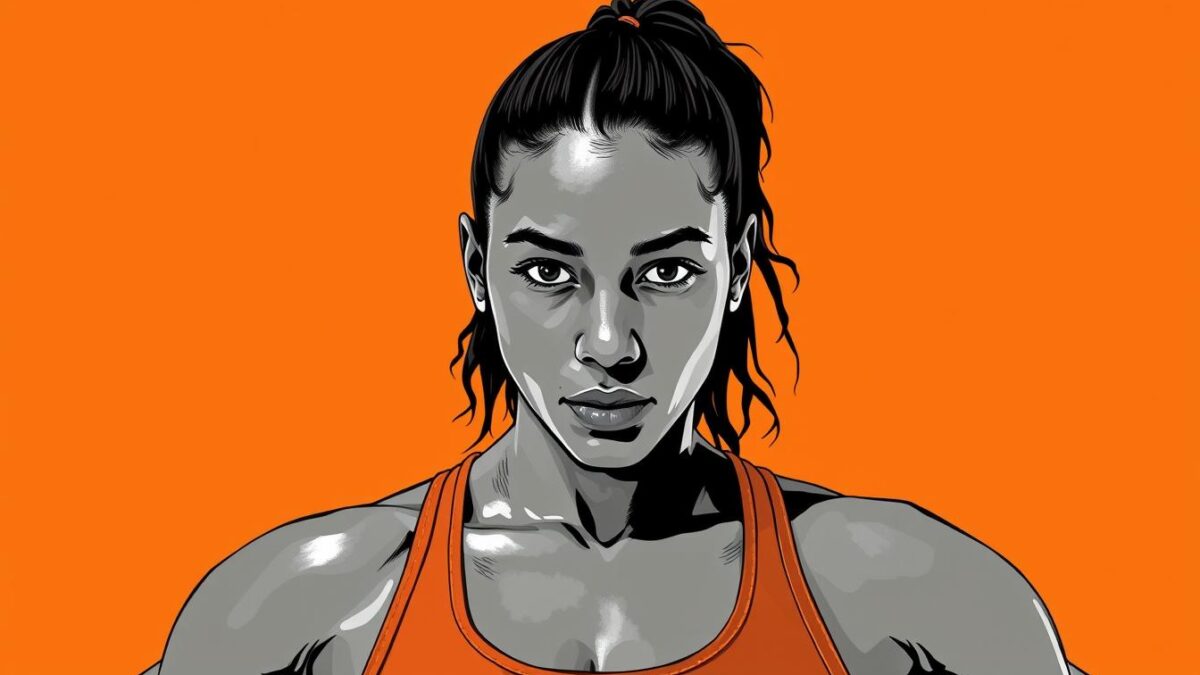
She commands the left side of the pitch with a resilience forged on Brazilian futsal courts. This player turned childhood dreams into Olympic silver and a place among the sport’s most respected defenders.
Her journey began far from the spotlight, in the small town of Caeté. She faced barriers head-on, proving that football was her calling. Over 148 appearances for the Brazil national team tell part of the story.
Her career spans three FIFA Women’s World Cups and two Olympic Games. She also built a dominant club legacy with Corinthians after stints in Denmark. A pause to raise her son only strengthened her return to elite competition.
Trophy cases filled with Copa América and Copa Libertadores titles speak to her excellence. Off the field, she now stands as a SIGA Champion. She uses her platform to advocate for integrity and gender equity in the beautiful game.
Early Life and Journey to Football Stardom
Her journey to football stardom began with exclusion and a simple refusal to quit. In Caeté, Minas Gerais, she kicked a ball on dusty streets with cousins. These informal matches were her first real taste of the game.
She soon moved to organized futsal, often the only female name on team rosters. Boys frequently told her football was for men. They said the pitch was not her place, suggesting she belonged elsewhere.
Roots in Caeté and Overcoming Early Challenges
Caeté offered few structured pathways for a girl obsessed with football. She faced verbal attacks that questioned her right to play the game. These challenges from others only hardened her resolve to succeed.
Every match became a battle to prove she deserved her spot. She learned that performance silenced doubters better than arguments. This resilience built on futsal courts would define her entire career.
Family Support and Personal Motivation
Her family provided crucial counterbalance to the outside noise. They believed in her dream from the beginning, offering unwavering support. This foundation gave her strength when coaches or peers pushed back.
The decision to move to São Paulo marked a turning point in her journey. The city’s professional clubs took women’s football seriously. São Paulo provided the training and visibility that launched her toward the national team.
She carried those early street lessons into elite competition. The understanding that every place must be earned through performance stayed with her. Her family’s belief combined with personal drive created an unshakable foundation.
Career Highlights and Milestones in Women’s Football
Her career trajectory reads like a map of women’s football’s global rise, marked by championships across continents. This journey showcases both individual excellence and the sport’s growing prominence.
Club Career Achievements and Transitions
The defender’s club path demonstrates remarkable adaptability. After early experience in Brazil, she joined Fortuna Hjørring in Denmark’s top division.
Her time in Europe produced 24 goals in 39 appearances. She secured league titles and domestic cups before returning home.
Signing with Corinthians in 2019 launched an unprecedented period of dominance. The club collected three Copa Libertadores trophies and four consecutive Brazilian championships.
National Team Triumphs and International Tournaments
Her national team career began with immediate impact in 2013. A debut goal announced her arrival on the international stage.
She competed in three FIFA Women’s World Cup tournaments, including the 2019 edition in France. Olympic appearances in 2016 and 2024 bookended her international service.
The 2024 Olympics concluded with silver despite a quarterfinal injury. This final tournament capped a career defined by resilience and consistent performance at the highest level.
Tamires Dias: Champion On and Off the Field
As a SIGA Champion, she channels hard-won experience into systemic change for the next generation. Her advocacy work complements an already impressive football career.
Resilience, Advocacy, and Gender Equity in Sport
Her appointment as a SIGA Champion in 2025 recognized dual excellence. She joined 24 other athletes promoting integrity in sport.
The football player uses her platform to advocate for gender equity. She speaks openly about discrimination faced as the only girl in childhood games.
Her message to young women is clear and direct. Believe in yourself and ignore voices claiming football belongs only to men.
Integrating Personal Life with Professional Success
Motherhood at age 21 could have ended her career. Instead, it became proof that women can excel in sport while raising children.
She returned to elite competition after raising her son. This made her the first mother to reach 100 caps for the Brazilian women’s national team.
Her relationship with singer Gabi Fernandes adds another layer to her public identity. She lives openly in a country where LGBTQ+ athletes face visibility challenges.
Both on and off the pitch, she builds infrastructure for future generations. Her work ensures greater opportunities for Brazilian women in the beautiful game.
Reflections on Legacy and Future Opportunities in Women’s Soccer
The transformation of women’s football in Brazil is no longer a distant dream. Tamires sees it as an imminent reality, built on talent waiting for proper investment. Big clubs now launch serious women’s programs, recognizing the sport as viable business.
Her individual honors document sustained excellence. IFFHS named her to CONMEBOL’s Team of the Decade. Multiple Bola de Prata and Samba Gold awards place her name among Brazil’s greatest players.
The 2019 World Cup proved global audiences will watch elite women’s soccer. This opened opportunities that were closed when she started. Her legacy extends beyond trophies to pathways she helped create.
Young girls in small towns now see professional football as achievable future. The world she describes—where Brazilian leagues compete with Europe’s best—is being built game by game.