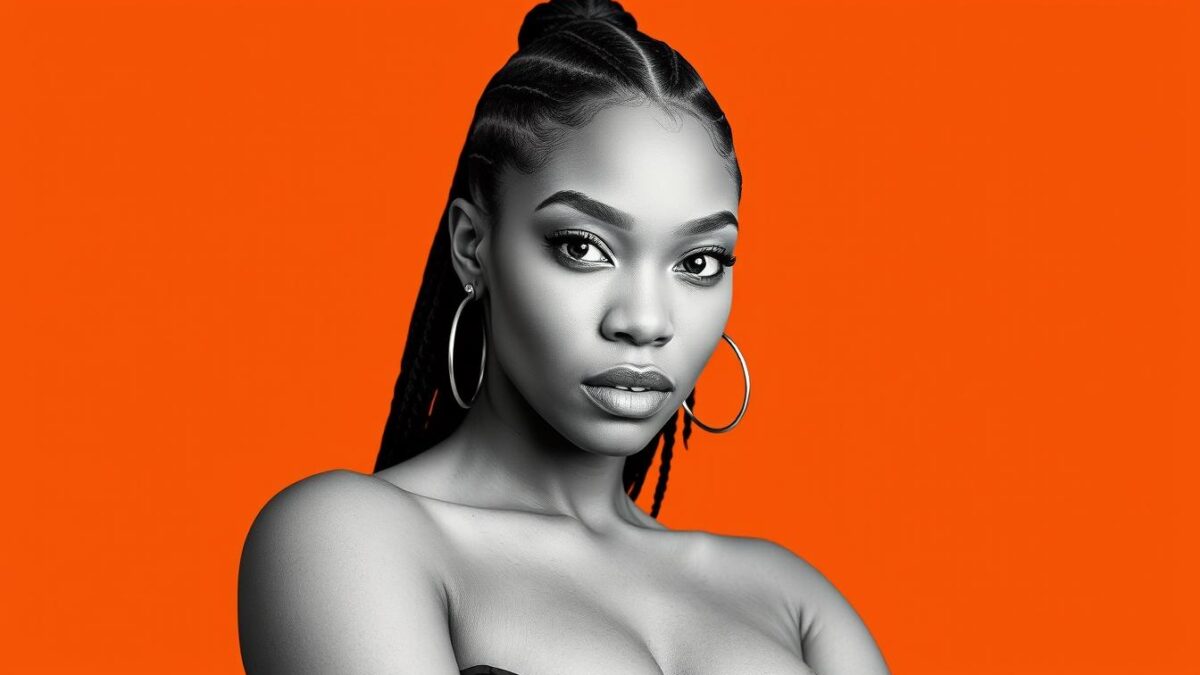
Solána Imani Rowe entered the world on November 8, 1989, in St. Louis, Missouri. Her journey from that starting point to global recognition is a story of artistic vision and relentless drive. She would later choose a name that reflected a deep cultural and spiritual curiosity.
As SZA, this artist reshaped the sound of modern R&B. She blended raw, diaristic lyrics with bold genre experiments. Her work refuses to stay within traditional boundaries, creating a unique space in the music landscape.
Her career path shows a clear trajectory. It moves from self-released projects to Grammy-winning albums. This progression demonstrates both her creative control and her commercial power over time.
This biography traces that path. It follows her from a teenager in New Jersey to a chart-topping figure. Her story is one of persistence, navigating industry pressures to emerge stronger with each release.
Early Life and Background
Growing up in a household where Christian and Muslim traditions coexisted shaped the artist known as SZA from her earliest days. Solána Imani Rowe was born in St. Louis but raised in Maplewood, New Jersey. Her parents modeled a delicate balance between their different faiths and Southern roots.
Her mother Audrey worked as an AT&T executive while father Abdul produced videos for CNN. The family nickname “Chickabee” from the film Nell reflected the creative warmth of her home. This environment nurtured her artistic spirit from childhood.
Rowe attended both Sunday school and Muslim school during her youth. She wore a hijab in elementary school but stopped after 9/11 due to bullying fears. This difficult time taught her early lessons about identity and safety.
In high school, she participated in gymnastics, cheerleading, and dance. After graduation, SZA cycled through three colleges before studying marine biology. She dropped out in her final semester to pursue music, taking her first major risk. This decision marked a turning point in time for the artist who would choose her stage name and redefine R&B.
Musical Beginnings and Key Influences
The years following her college departure were a turbulent mix of survival jobs and artistic searching. This period of aimlessness, marked by late nights in New Jersey and New York City, directly fueled the raw honesty in her future songs.
Her experiences bartending and dancing provided a gritty backdrop. They taught her about survival and self-reliance.
She chose a stage name rooted in hip-hop tradition. Inspired by RZA and GZA of the Wu-Tang Clan, she adapted the Nation of Islam’s Supreme Alphabet. The letters in SZA hold deep meaning, from savior to Zig-Zag and Allah.
This self-driven approach defined her first steps into music. She began creating with friends, using beats found online. Her early sound was lo-fi but striking.
Self-Released EPs and Early Sound Exploration
Her debut EP, See.SZA.Run, arrived in October 2012. It was a completely independent release. Critics immediately noticed its unique quality.
The Guardian praised the project, comparing its vibe to major artists like Drake and The Weeknd. This recognition validated her DIY efforts.
Just six months later, she dropped her second EP, titled S. The project continued her exploration of a warped, dreamy sound. It balanced confidence with a palpable fragility.
These early releases built a dedicated online following. Platforms like Tumblr became hubs for fans who connected with her distinctive voice.
| EP Title | Release Date | Critical Reception |
|---|---|---|
| See.SZA.Run | October 29, 2012 | Praised for lyrical depth; compared to Drake and The Weeknd |
| S | April 10, 2013 | Described as dreamy and warped, exuding confidence and fragility |
This phase was crucial. It established the artistic foundation for everything that followed. The freedom of self-releasing allowed her sound to develop organically.
Pivotal Moments Leading to Top Dawg Entertainment
The path to Top Dawg Entertainment began unexpectedly at a 2011 CMJ New Music Report event. Her boyfriend’s clothing company sponsored a show featuring Kendrick Lamar. This chance encounter would redirect her career trajectory.
TDE president Terrence “Punch” Henderson received her early material. He recognized an artist who could expand the label’s sound beyond its West Coast rap foundation. The raw quality of her independent EPs stood out.
Meeting TDE and Industry Breakthrough
On July 14, 2013, she became the first woman signed to Top Dawg Entertainment. This placed her alongside Kendrick Lamar, Schoolboy Q, and Jay Rock. The signing brought both validation and new pressure.
She immediately began collaborating with labelmates. Features on Isaiah Rashad’s Cilvia Demo and Schoolboy Q’s Oxymoron built her credibility. These strategic appearances showed her versatility within the TDE family.
Transition from Indie Releases to Major Label Recognition
Her third EP, Z, arrived in April 2014 featuring Kendrick Lamar on “Babylon.” This collaboration signaled full acceptance within the Top Dawg roster. The project marked her official major label debut.
Z debuted at number 39 on the Billboard 200. It sold nearly 7,000 copies in its first week. The EP peaked at number 9 on Top R&B/Hip-Hop Albums.
| Date | Event | Significance |
|---|---|---|
| July 14, 2013 | Signed to Top Dawg Entertainment | First female artist on TDE roster |
| April 8, 2014 | Z EP Release | Major label debut with Kendrick Lamar feature |
| 2014 Tour Dates | Opened for Jhené Aiko and Coldplay | Gained experience with diverse audiences |
By year’s end, she was opening for Jhené Aiko’s Enter the Void Tour and Coldplay’s Ghost Stories Tour. These experiences taught her how to command large stages. The transition from indie artist to Top Dawg talent was complete.
SZA’s Breakthrough Album CTRL and Its Impact
Ctrl began as a modest EP concept but grew into a landmark debut studio album. Originally titled A, the project evolved over three years of creative expansion. What started as the final chapter of a trilogy became her defining work.
Label tensions with TDE and personal anxiety caused multiple delays. Perfectionism pushed the artist to the brink of quitting music entirely. The album underwent numerous rewrites before its final form.
After signing with RCA Records in April 2017, Ctrl finally arrived on June 9. The release blended alternative R&B with contemporary soul and rock influences. It marked a significant moment in modern music.
Five singles showcased different emotional facets of the album. “Drew Barrymore” and “Love Galore” featuring Travis Scott became standout tracks. These songs demonstrated her unique approach to storytelling.
Critics universally praised the album upon its release. Time magazine named it the best album of 2017. The work received top placements on year-end lists from Billboard, Pitchfork, and NPR.
Commercially, the debut landed at no. 3 on the Billboard 200. It became the second longest-charting R&B album by a woman. The album maintained chart presence for over eight consecutive years.
At the 2018 Grammys, SZA earned five nominations including Best New Artist. She was the most-nominated woman that year. Though she won no awards, the recognition solidified her status.
Ctrl established SZA as a generational voice in contemporary R&B. The album articulated millennial anxiety and desire with rare clarity. It remains a touchstone for honest artistic expression.
Collaborations with Kendrick Lamar, Doja Cat and More
Following her breakthrough album, she became one of music’s most sought-after voices for high-profile partnerships. These collaborations expanded her reach while maintaining artistic integrity.
High-Profile Partnerships Shaping Her Career
The collaboration between Kendrick Lamar and SZA on “All the Stars” created a cultural moment. This Black Panther soundtrack single reached No. 7 on the Billboard Hot 100 chart.
The song earned Academy Award and Golden Globe nominations for Best Original Song. It also won Best Visual Effects at the MTV Video Music Awards.
Notable Features and Chart-Topping Singles
Her feature on Maroon 5’s “What Lovers Do” peaked at No. 9, introducing her to mainstream pop audiences. The Lamar SZA partnership demonstrated her versatility across genres.
The Kendrick Lamar Sza collaboration was followed by work with Doja Cat on “Kiss Me More.” This song became one of 2021’s biggest hits.
It won the Grammy for Best Pop Duo/Group Performance, marking her first Grammy win. These strategic features showcased her ability to elevate any song she touched.
The Creative Process Behind SOS and Lana
The five-year gap between albums was a crucible of creative doubt and industry friction. This period of time was marked by frequent scrapping of material and a fear that the new music would not meet expectations.
Public tension surfaced in a 2020 tweet pointing fans to her label. It hinted at the complicated politics delaying the record.
When the SOS album finally saw its release in December 2022, it defied categorization. It blended R&B, rap, rock, and pop into a sprawling statement. This was a direct response to being pigeonholed as solely an R&B artist.
Critics celebrated the project for surpassing the immense hype. They called it a mature evolution after the long wait.
The follow-up, the SOS deluxe edition titled Lana, was described as a new album entirely. Its tracklist expanded over time, featuring new songs and SOS outtakes.
This approach reflected a restless creative spirit, refusing to settle even after a major success.
| Project | Release Date | Key Characteristics |
|---|---|---|
| SOS | December 9, 2022 | Multi-genre album; critical acclaim; response to artistic labeling |
| Lana (Deluxe) | December 20, 2024 | Expanding tracklist; treated as a new album; included outtakes and new recordings |
| Lana Reissue | February 9, 2025 | Added four more tracks; demonstrated ongoing creative process |
The journey of these releases highlights SZA’s dedication to artistic growth. It shows her willingness to challenge both industry norms and her own boundaries.
Genre-Blending: Exploring R&B, Pop, and Hip-Hop
Contemporary music finds its most compelling voices in artists who move freely between styles. SZA creates sounds that defy easy classification.
Her work blends R&B with pop sensibilities and hip-hop rhythms. Rock elements and alternative influences complete the mix.
Diaristic lyrics function like personal journal entries set to music. They explore themes of sexuality, nostalgia, and modern contradictions.
Early critics labeled her sound as alternative R&B. This description captured the lo-fi quality but missed her full range.
| Genre Influence | Characteristic Sound | Notable Examples |
|---|---|---|
| Alternative R&B | Lo-fi production, psychedelic textures | Early EPs, Ctrl album tracks |
| Pop Integration | Catchy hooks, accessible melodies | Collaborations, SOS singles |
| Hip-Hop/Rap | Rhythmic flow, featured verses | Kendrick Lamar features, SOS rap tracks |
| Rock Elements | Guitar riffs, raw energy | SOS album experiments |
The SOS album deliberately incorporated rap verses and rock guitar. This challenged industry categorization of the artist as purely R&B.
This approach reflects how she actually listens to music. She pulls from disparate influences without worrying about cohesion.
Many contemporary artists now feel permission to move between styles. SZA’s work proves genre boundaries exist more in marketing than creative practice.
Live Performances, National Tours, and Visual Storytelling
Touring provided the ultimate test of artistic authenticity. The artist moved from small venues to sold-out arenas while maintaining emotional connection.
Memorable Tour Highlights and Stage Presence
The Ctrl Tour from 2017 introduced audiences to a compelling live experience. It balanced intimate moments with explosive energy across international stages.
In September 2023, an invite-only show at Brooklyn Navy Yard created buzz. The artist debuted unreleased tracks like “Saturn” and “BMF” for a select crowd.
This special show became a cultural moment. It built anticipation for the upcoming Lana deluxe edition through exclusive access.
The SOS Tour cemented headliner status from 2023 to 2024. Elaborate visual production matched the album’s ambitious scope in sold-out arenas.
| Tour Name | Time Period | Key Achievement |
|---|---|---|
| Ctrl Tour | 2017-2018 | International introduction to live performance style |
| SOS Tour | 2023-2024 | Arena sell-outs with elaborate visual production |
| Grand National Tour | April 2025 | Record-breaking co-headlining tour with Kendrick Lamar |
The Grand National Tour with Kendrick Lamar launched in April 2025. This national tour broke records as the highest-grossing co-headlining show in history.
Prior to the grand national tour, a Super Bowl LIX halftime performance reached millions. The Kendrick Lamar collaboration showcased their chemistry on a global stage.
Visual storytelling extends beyond music videos into cohesive live experiences. Each show prioritizes narrative and emotion over mere spectacle.
Chart Success, Awards, and Recognitions
Chart success arrived with remarkable staying power, transforming critical acclaim into commercial dominance. The debut album Ctrl landed at number 3 on the Billboard 200, beginning an eight-year chart run that demonstrated enduring impact.
Grammy recognition came swiftly in 2018 with five nominations, including Best New Artist. Though she left empty-handed that year, the honor signaled industry respect.
Solo hits proved her chart power without features. “Good Days” peaked at number 9 on the Billboard Hot 100, marking her first solo top-10 entry.
The SOS album shattered records with over ten weeks atop the Billboard 200. It became the longest-running top-10 album by a woman, surpassing Adele’s 21.
“Kill Bill” delivered her first Billboard Hot 100 number-one, ranking as 2023’s third best-selling single globally. The track accumulated 1.84 billion units worldwide.
At the 2024 Grammys, redemption arrived. SOS won Best Progressive R&B Album while “Snooze” earned Best R&B Song.
By August 2024, SOS reached its 100th week in the Billboard 200 top 10, the first album by a woman to achieve this milestone. “Luther” with Kendrick Lamar ran for 13 consecutive weeks at number one.
The artist’s trophy case includes five Grammy Awards, a Brit Award, three American Music Awards, and Billboard’s Woman of the Year honor. In 2024, she received the Songwriters Hall of Fame’s Hal David Starlight Award.
Impact of Social Media and Streaming on SZA’s Career
The digital landscape became a crucial amplifier for the artist’s career trajectory. Her early music found a home on Tumblr, where niche communities fostered a slow, organic rise. This grassroots model set a precedent for how she would later harness the power of social media.
Viral Moments and the TikTok Effect
Platforms like TikTok transformed promotional strategy for the SOS album. Many of its songs gained momentum through viral snippets and user-generated content before their official release.
TDE cleverly leveraged this organic buzz. They formally dropped singles like “I Hate U” and “Shirt” only after they had already captured fan attention online.
The song “I Hate U” began as a SoundCloud upload, a decision influenced by the artist’s astrologer. “Shirt” was teased for over two years, building immense anticipation through its time online.
Streaming services have also been vital. They keep albums like Ctrl and the SOS deluxe edition charting for years through playlist placement and algorithmic discovery.
This approach blends intuition with strategy. It creates authentic moments that also drive commercial success in the modern music industry.
SZA in the United States: Cultural Influence and Legacy
The true measure of an artist’s significance emerges not just from album sales, but from how they transform the musical landscape. This artist’s work has reshaped contemporary R&B while influencing pop culture broadly.
Redefining Contemporary R&B and Pop Culture
Her impact extends far beyond her own discography. She helped popularize alternative R&B when the genre needed fresh voices. The music balances experimentation with mass appeal.
Behind the scenes, she has co-written songs for major artists like Beyoncé and Nicki Minaj. These collaborations reveal her skill in crafting hits that define cultural moments. Her diaristic lyrical approach has inspired a generation of artists to embrace vulnerability.
Comparisons to Mariah Carey highlight her vocal range and emotional depth. By surpassing records held by Adele and Michael Jackson, she claimed space in music history. Her influence resonates strongly with young women and Black audiences.
The artist’s legacy continues to evolve. She has fundamentally shifted conversations about what R&B can be. Her work demonstrates that genre boundaries exist more in marketing than creative practice.
Evolving Artistry and Future Projects
Artistic evolution defines the current chapter of her career, marked by a refusal to be confined by past successes. This constant push against expectations keeps her work fresh and unpredictable.
The Lana deluxe edition perfectly illustrates this approach. It is not a simple reissue but a living project. Its tracklist expands over time, reflecting her current creative state.
In 2025, she expanded her creative expression beyond music. During the Grand National Tour, she launched Not Beauty, a line of lip products sold exclusively at pop-up stores.
This move into lifestyle branding reflects a broader trend among modern artists. They view their work as multimedia expressions rather than isolated albums.
Her creative process is guided by instinct and emotion, not market research. Future projects remain unpredictable, with fans speculating about a third studio album.
SZA sets a new standard by prioritizing her pace and mental health over commercial pressure. Her artistry becomes more layered, weaving together music, fashion, and visual art into a cohesive identity.
Reflections on an Ongoing Journey of Artistic Growth
Awards and chart records tell only part of the story behind this artist’s profound impact on modern music. Her journey from a New Jersey teenager to a Grammy-winning force is a story of radical honesty and creative risk.
Five Grammy Awards, a Brit Award, and the Billboard Woman of the Year honor reflect industry recognition. Yet her true influence lies in how she reshapes sound.
Collaborations with Kendrick Lamar on the Black Panther soundtrack and Doja Cat on “Kill Bill” showcase her versatility. Songs like “Drew Barrymore” and the ambitious SOS album have become generational touchstones.
The record-breaking Grand National Tour with Lamar demonstrated immense commercial power. SZA’s legacy is one of evolution, inspiring a generation of artists to embrace vulnerability and defy genre.
Her ongoing journey proves that the most compelling music comes from an artist who refuses to stand still.