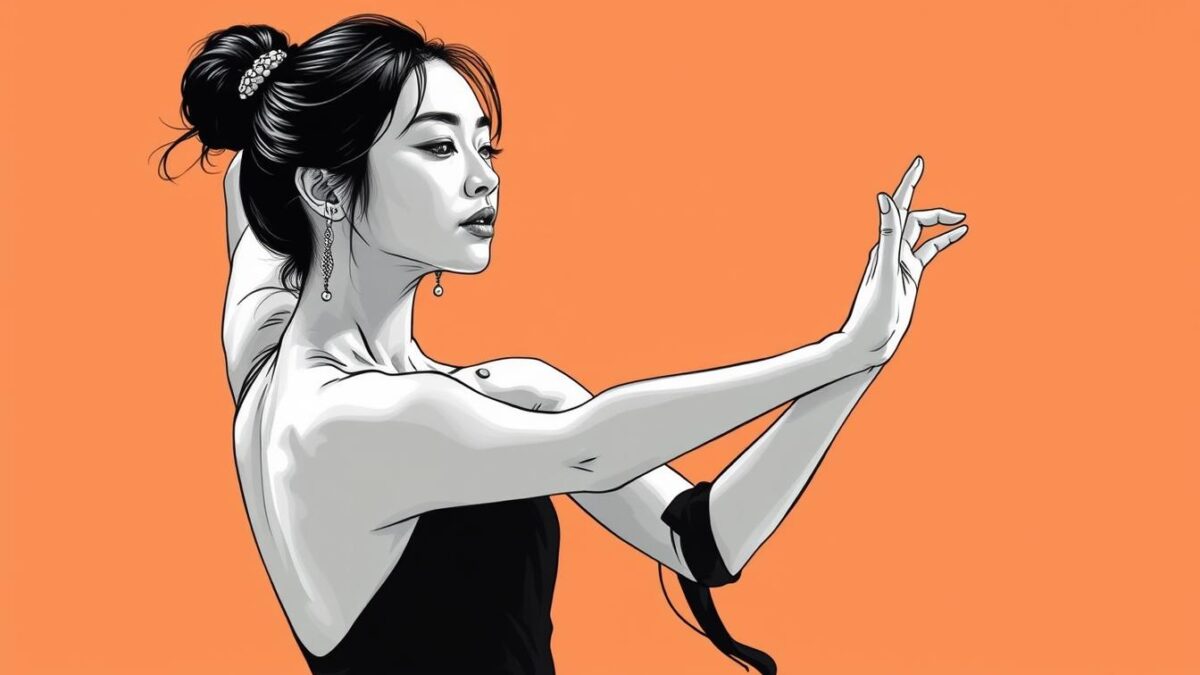
Her foundation was built at the Mayumi Kinouchi Ballet Studio in Japan. There, she honed a precise technique that would soon make waves. By age 16, she was competing in senior contemporary dance divisions, a significant leap.
She consistently placed among the top twelve women. This track record across two years showed more than just skill. It revealed a dancer maturing with remarkable consistency against Japan’s best.
The natural next step was the international stage. In July 2024, she joined the International Contemporary Ensemble workshop in Genoa, Italy. This Nervi Festival residency, hosted by Youth America Grand Prix, placed her among global artists.
This profile traces that path. It looks at the verified competitions, performances, and collaborations that mark Sari Miyachi’s rise. The focus is on the tangible milestones of a professional-caliber dancer coming into focus.
Spotlight on Sari Miyachi: Career and Impact
Her career trajectory accelerated dramatically during the 2023-2024 season with a breakthrough European engagement. This period marked the transition from national competitions to international performance platforms.
Career Milestones and Notable Performances
The Youth America Grand Prix International Summer Workshop at Italy’s Nervi Festival became the culminating experience. Sari Miyachi performed in two major galas during July 2024.
The Future of Dance Gala on July 27th presented contemporary works in Nervi Park’s open-air setting. This tested adaptability to outdoor performance conditions.
Next evening’s Stars of Today Meet the Stars of Tomorrow Gala featured established artists from major ballet companies. She danced excerpts from Bolero X and Deca Dance alongside professionals.
Industry Recognition and Media Features
Selection for this residency itself signaled professional recognition. The workshop simulated company life with intense daily schedules across Genoa venues.
Media coverage focused on the International Contemporary Ensemble’s participation. Her name appeared among emerging global artists working at classical-contemporary intersections.
| Workshop Day | Morning Session | Afternoon Focus | Evening Activity |
|---|---|---|---|
| July 22-26 | Technique Classes | Rehearsals & Casting | Costume Fittings |
| July 27 | Final Rehearsals | Venue Adaptation | Future of Dance Gala |
| July 28 | Company Workshops | Guest Artist Sessions | Stars of Tomorrow Gala |
Dance Competitions and Industry Highlights
In Japan’s senior contemporary dance divisions, a pattern of excellence emerged across multiple seasons. Sari Miyachi consistently ranked among the top twelve women competitors. This achievement spanned two consecutive years at ages 16 and 17.
Her results demonstrated technical reliability rather than a single breakthrough performance. Both placements occurred while training at Mayumi Kinouchi Ballet Studio.
Insights from Classical and Contemporary Categories
The contemporary category emphasized modern choreographic interpretation. It focused on movement innovation over classical variation execution.
This alignment with contemporary work proved significant for future opportunities. The category’s demands matched the skills needed for ensemble selection.
Rankings, Awards, and Notable Competitors
No Grand Prix awards were given in either senior division competition year. Top placements distributed among multiple dancers in a highly competitive field.
Notable competitors included Iori Takemura from HAGA Ballet Academy and Mai Fujioka from Ecole de Ballet Tio. These dancers represented Japan’s established training institutions.
| Competition Year | Age | Placement | Category | Notable Competitors |
|---|---|---|---|---|
| Year 1 | 16 | Top 12 Women | Senior Contemporary | Iori Takemura, Mai Fujioka |
| Year 2 | 17 | Top 12 Women | Senior Contemporary | Kii Ohashi, Mai Ishiyama |
| Both Years | 16-17 | Consistent Top 12 | Contemporary Focus | Multiple Academy Dancers |
Global Dance Events and ICE Performances
Professional company life became the daily reality for 83 dancers gathered in Genoa for the International Contemporary Ensemble. The July 2024 workshop transformed Italian venues into intensive training grounds.
International Workshop and Festival Experiences
Days began with classical technique classes at Carlo Felice Theater. Afternoons shifted to contemporary repertoire rehearsals under international choreographers.
Shahar Binyamini staged his work Bolero X with precision. Matan David led Gaga technique sessions exploring Naharin’s movement vocabulary.
Collaborations with Major Ballet Companies and Artists
Japanese dancers formed a significant contingent within the international cohort. They brought contemporary specialization from competitive backgrounds.
The collaboration included ichika serizawa, a junior division champion from BALLET・LE・COEUR. Guest artists from Mariinsky Ballet and Dutch National Ballet provided professional mentorship.
| Participant | Training Background | Notable Achievement | Workshop Focus |
|---|---|---|---|
| Sari Miyachi | Mayumi Kinouchi Ballet Studio | Senior Contemporary Top 12 | Bolero X repertoire |
| Ichika Serizawa | BALLET・LE・COEUR | Junior Contemporary Champion | Gaga technique |
| Machika Miyairi | Japanese ballet academy | National competitor | Contemporary adaptation |
| Rui Takagi | Professional training center | International experience | Outdoor performance |
Nervi Park’s open-air setting tested adaptability to European touring conditions. The experience offered practical insight into international production demands.
Final Reflections on Sari Miyachi’s Ongoing Legacy
What defines a dancer’s legacy often emerges not from single moments of glory but from sustained technical consistency across multiple platforms. Sari Miyachi’s path demonstrates this principle through reliable performances rather than flashy breakthroughs.
Her training provided a foundation that proved adaptable to both competition formats and professional repertoire. This consistency opened doors to international workshops where contemporary methodologies expanded her artistic vocabulary.
The collaborative environment at events like the Nervi Festival offered crucial networking with global peers. These experiences accumulate into professional readiness more than any single award could.
This transition phase marks where technical training meets real-world production demands. The foundation is laid; what follows will determine how these experiences translate into a working dancer’s career.