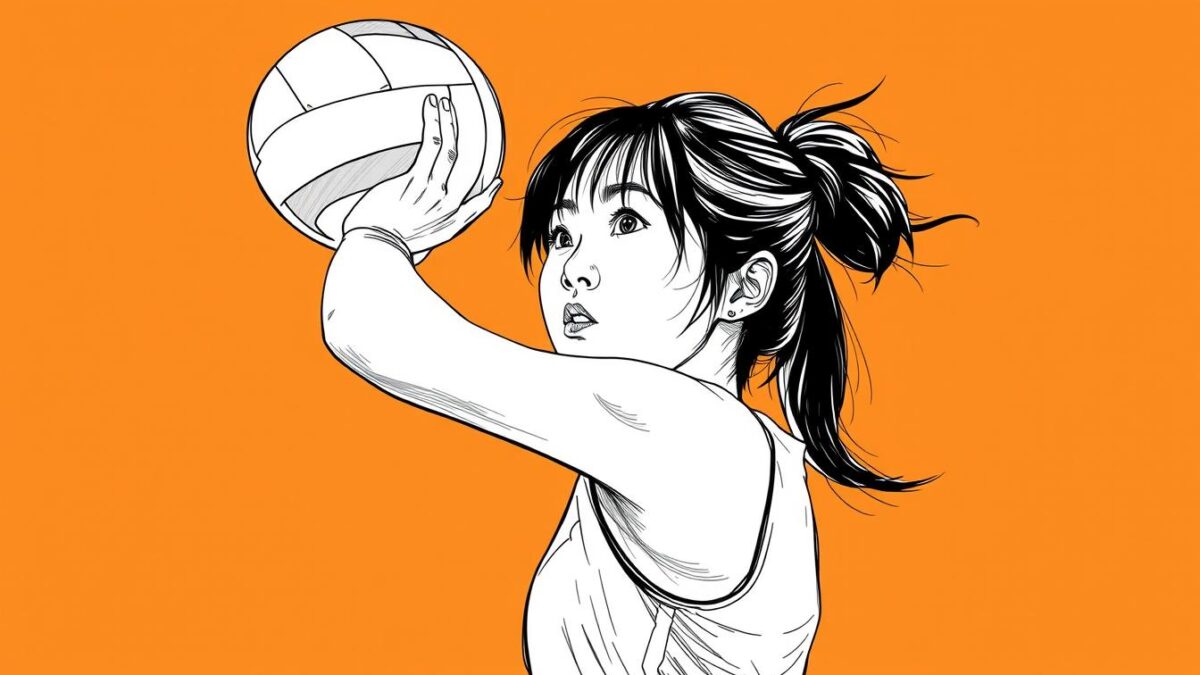
Saori Kimura stands among Japan’s most celebrated athletes. Her career as a volleyball player spanned four Olympic Games, showcasing rare talent and resilience.
She led her team with commanding skill from the wing-spiker position. Her height and powerful spike reach made her a formidable presence on the court.
The pinnacle arrived at the 2012 London Olympics. There, she captained the squad to a hard-won bronze medal, breaking a long-standing drought for Japan.
Her versatility defined her game. Kimura could excel in any role, a trait that earned her the nickname “Miracle Saori.” She lifted her team in crucial moments.
Beyond her tenure with the Toray Arrows, her legacy transformed expectations for Japanese players. She proved elite athletes could master multiple positions.
Early Life: Formative Years and Influences
From her earliest days in Yashio City, the rhythm of volleyball filled her home. Both parents played the sport, with her mother providing particularly strong guidance. Frequent moves between Osaka and Tokyo taught adaptability that would later define her career.
Family Background and Early Training
The family eventually settled in Akiruno City, where Kimura attended Tanishi Elementary School. This constant movement between cities during her early years built resilience. She learned to adjust quickly to new environments and coaching styles.
Her parents’ volleyball background meant the sport felt natural from the start. Competition was part of daily life, absorbed through observation and family practice sessions. These early experiences shaped her fundamental understanding of the game.
First Encounters with Volleyball
She began playing volleyball in second grade with Akikawa JVC, a local club. The program emphasized defensive fundamentals over flashy offensive skills. Countless hours were spent perfecting receiving techniques and reading hitter tendencies.
Playing as a left hitter throughout elementary school, she helped her team win a championship in sixth grade. A brief departure from the team in fourth grade lasted only two weeks. The quick return showed volleyball offered something unique that unstructured play couldn’t replace.
| Grade Level | Key Development | Team Achievement |
|---|---|---|
| 2nd Grade | Joined Akikawa JVC, began defensive training | Learning fundamentals |
| 4th Grade | Brief team departure and return | Personal commitment solidified |
| 6th Grade | Mastered left hitter position | Championship victory |
By graduation from elementary school, she had established a rare balance between defensive and offensive skills. This foundation would catch the attention of national team scouts in later years. The early training emphasis on defense proved invaluable at the highest levels of competition.
High School Years and Debut on the World Stage
Seitoku Gakuen High School became the crucible where raw talent transformed into championship form. The athlete’s physical growth continued dramatically during this period. She entered high school standing 163 cm but gained 15 cm over three years.
This development gave her new advantages on the court. By her second year, she secured the starting opposite hitter position. Her powerful attacks became central to the team’s strategy.
Breakthrough at Seitoku Gakuen High School
The 2003 season brought major success for the high school program. Kimura helped lead her team to victory at the Spring High School Volleyball Tournament. This secured Seitoku’s second consecutive championship title.
Later that year, the team finished third at the Inter-High School Championship. Each tournament tested her skills against Japan’s best young players. These competitions built the confidence needed for higher levels.
National Team Call-Up and Early Competitions
Immediately after the high school season, national team coaches took notice. They invited the young player to training camp in August 2003. This marked her first time joining the Japan women’s national volleyball team.
Her international debut came quickly at the Asian Women’s Volleyball Championship. She initially registered as a setter, showing remarkable versatility. By November, she made her world stage debut at the FIVB World Cup.
The transition from high school tournaments to global competition happened within months. This rapid ascent demonstrated her exceptional readiness for elite volleyball.
Professional Breakthrough with Toray Arrows
The transition from high school to professional volleyball came swiftly in 2005. She joined Toray Arrows directly after graduation, entering Japan’s top women’s league.
The club environment demanded immediate impact from the young athlete. Veteran players and coaches expected her high school dominance to translate to V.League production.
Establishing Her Reputation in the V.League
Her debut season brought instant recognition. The New Face Award in the 2005-06 campaign confirmed her seamless transition to professional competition.
She absorbed the faster pace and sophisticated offensive systems without hesitation. The player developed chemistry with setters and learned to read defensive rotations.
By 2008, her wing-spiker play helped Toray Arrows secure their first championship title. This validated the organization’s investment in her as a franchise cornerstone.
| Season | Achievement | Significance |
|---|---|---|
| 2005-06 | New Face Award | Successful professional debut |
| 2007-08 | First Club Title | Championship breakthrough |
| 2009-10 | League MVP | Premier player status |
Three consecutive Best 6 selections placed her among Japan’s elite domestic players. The 2009-10 MVP award marked her arrival as the V.League’s premier athlete.
She established herself as Toray’s leading player before her mid-twenties. This created a platform that would support her international career commitments.
International Impact and National Team Milestones
Her national team journey began with high-stakes Olympic qualification that would define her international career. The 2004 Athens Summer Olympics qualification tournament introduced her to global pressure.
Olympic Appearances and Early International Competitions
In her first start against Italy, she scored 14 points, earning the “Super High School Girl” nickname. The performance helped Japan secure an Olympic spot for the first time in two tournaments.
At the Athens Summer Olympics, severe back pain limited her court time. Watching the China-Russia final live ignited her desire for an Olympic medal. This moment fueled her ambition for years.
The 2006 World Championship and 2008 Beijing Olympics provided crucial experience. Fifth and sixth-place finishes taught the margin between good teams and medal contenders.
Historic Performances at World Championships
The 2010 FIVB Women’s World Championship in Japan became her breakthrough tournament. She carried the team through Pool A with dominant performances against Poland and Serbia.
Against top-ranked Brazil, Japan won the second set 35-33. This remains the highest-scoring set in international women’s volleyball history at that time. She scored the final point past Brazil’s Jaqueline.
Though Brazil won the semifinal, her 25-point, 19-dig performance proved she could match the world’s best. The third-place match showcased her complete skill set against the United States.
| Year | Tournament | Result | Key Performance |
|---|---|---|---|
| 2004 | Summer Olympics | Qualified | 14 points vs Italy in debut |
| 2006 | World Championship | 6th Place | Gained elite experience |
| 2008 | Summer Olympics | 5th Place | Continued development |
| 2010 | World Championship | Bronze Medal | 27 excellent receptions vs USA |
Japan won their first World Championship medal in 32 years. This bronze medal breakthrough validated years of national team development. It established Kimura as the centerpiece for Japan’s 2012 Olympic campaign.
Saori Kimura: Versatility on the Volleyball Court
What made this player truly exceptional was her ability to command any position on the volleyball court with equal authority. Her versatility became a strategic weapon for every team she joined.
Mastering Multiple Positions on the Court
While wing-spiker served as her primary role, she possessed experience across the entire front line. She could transition seamlessly to middle blocker, right hitter, or opposite hitter during matches.
This flexibility allowed coaches to adjust tactics based on opponent weaknesses. Her understanding of each position’s responsibilities gave her unique court awareness.
| Position | Key Skills Demonstrated | Strategic Value |
|---|---|---|
| Wing-Spiker | Powerful attacks, scoring efficiency | Primary offensive threat |
| Middle Blocker | Quick blocks, fast transitions | Defensive stability |
| Opposite Hitter | Back-row attacks, serve reception | Versatile scoring options |
| Setter | Game tempo control, distribution | Tactical flexibility |
Leadership and the Role as Team Captain
Head coach Masayoshi Manabe appointed her captain in 2013 following significant roster changes. This recognized both her technical skills and leadership qualities.
Her experience with VakifBank Istanbul added international championship knowledge. She brought Turkish league intensity back to the national team environment.
The captaincy placed her in a mentoring role for younger players. She translated Olympic experience into practical guidance during high-pressure matches.
Life Abroad: Playing in Turkey and Beyond
In the summer of 2012, a surprising announcement sent ripples through the Japanese volleyball community. The star player would leave Toray Arrows for VakıfBank Türk Telekom. This move to a Turkish club was rare for a Japanese athlete in their prime.
The decision tested her skills on a new continent. It was a bold step into Europe’s most competitive league.
Experiences with VakıfBank and Galatasaray
Her first season abroad was remarkably successful. With VakıfBank, she achieved a rare triple crown. The team won the Turkish Cup, the domestic league, and the coveted CEV Champions League.
This Champions League victory was a significant milestone. It proved her ability to excel against Europe’s best club teams. The following year, she joined Galatasaray Daikin.
This switch offered a different experience within the same country. Each club had its own unique culture and demands.
Cultural Impact and Professional Growth Overseas
Living in Istanbul provided a fresh perspective on the sport. Training methods and match preparation were intense and detailed. She absorbed new approaches to the game.
The time abroad accelerated her development. She faced different styles of play and high-pressure situations. This period was crucial for her growth.
After two productive years, she returned to her home club. She brought back valuable experience and a broader understanding of international volleyball.
Triumphant Return to Japan with Toray Arrows
After two productive years in Turkey, a familiar club announced the return of its star player. The June 5, 2014 confirmation signaled a new chapter for both the athlete and the organization.
Renewed Commitment to the Home Club
Kimura rejoined Toray Arrows with championship experience from multiple continents. Her Turkish club tenure transformed her into a complete international competitor.
The veteran’s return stabilized the roster with needed leadership and offensive power. She balanced club duties with national team captaincy through the 2016 Rio Olympics.
This three-year period represented her final chapter with the club that developed her career. The 2016-2017 season brought playoff disappointment despite her strong individual performance.
Her March 22, 2017 retirement marked the end of an era for Japanese volleyball. The player who carried the club to multiple championships had given her all to the sport.
Accolades and Record-Breaking Achievements
The trophy case tells the story of a career defined by consistent excellence at every level. Individual honors and team championships accumulated throughout her journey, creating a resume few could match.
Individual Honors and Award Highlights
Her professional debut earned immediate recognition with the 2005-06 New Face Award. This launched a decade of individual accolades that showcased her complete skill set.
Best Server awards at Asian Championships demonstrated her often-overlooked serving prowess. Four consecutive Best 6 selections in the V.Premier League placed her among Japan’s elite players year after year.
The 2009-10 V.Premier League MVP represented her peak domestic dominance. That same year, she claimed Best Scorer at the FIVB World Grand Prix, proving her scoring ability translated internationally.
Club Championship Triumphs and Tournaments
With Toray Arrows, she built a championship dynasty from 2007 to 2012. The team captured multiple league titles and cup victories during her tenure.
| Season | Tournament | Achievement |
|---|---|---|
| 2007-08 | V.Premier League | Champion |
| 2009-10 | Empress’s Cup | Champion |
| 2012-13 | CEV Champions League | Champion |
Her 2012-13 season with VakıfBank produced a remarkable triple crown. The Turkish Cup, domestic league, and Champions League titles added international club medals to her collection.
This volleyball player proved her championship formula worked across different competitive environments. Each tournament victory reinforced her status as a winner.
Major International Tournaments and Key Matches
Her career unfolded across the world’s biggest stages, with each tournament adding another chapter to Japan’s volleyball resurgence. The rhythm of international competition became her constant companion for over a decade.
Olympic Highlights and Bronze Medal Success
The 2012 London Olympics represented the ultimate payoff. Japan’s women’s national team captured the bronze medal, ending a 28-year drought.
In the critical quarterfinal against China, her crosscourt kill tied the fifth set at 15-16. This sparked a comeback victory that broke an 11-year losing streak against their rivals. The moment showcased her clutch performance under extreme pressure.
She delivered 25 excellent receptions in the bronze medal match against South Korea. This passing stability allowed Japan’s offense to dominate in a straight-sets sweep.
World Grand Prix and Championship Battles
The FIVB World Grand Prix served as her annual proving ground. She earned the Best Scorer award in 2010, demonstrating consistent point production against elite teams.
Her four World Cup appearances traced her evolution from prospect to leader. The 2010 World Championship bronze medal broke a 32-year drought for Japanese volleyball.
That tournament featured her 26-kill performance against the United States. It cemented her status as a player who elevated her game when it mattered most.
Lasting Legacy and Enduring Influence
When Japan’s women’s volleyball team finally returned to the podium, one athlete’s comprehensive skills proved decisive. The bronze medals at the 2010 World Championship and 2012 London Olympics ended droughts that had lasted decades.
Impact on Japanese Women’s Volleyball
Saori Kimura’s legacy transformed expectations for what a Japanese volleyball player could achieve. Her versatility across multiple positions demonstrated that elite athletes need not specialize narrowly.
As national team captain, she mentored younger players with championship experience. Her leadership during critical matches provided stability that coaching alone cannot teach.
| Tournament | Previous Medal Drought | Kimura Era Result | Significance |
|---|---|---|---|
| World Championship | 32 years | Bronze (2010) | First podium since 1978 |
| Olympic Games | 28 years | Bronze (2012) | First medal since 1984 |
| Player Development | Position specialists | Versatile athletes | New training approach |
FIVB’s recognition as Japan’s female player of the decade validated her impact. Young athletes now emulate her preparation and competitive mentality.
The standard she set continues to influence Japanese volleyball. Future national team players will chase her combination of skill and leadership for years to come.
Celebrating a Lifetime of Impact in Volleyball
The final chapter of Saori Kimura’s volleyball career began with a quiet announcement on March 22, 2017. Three days later, the V.League All-Star Game became an impromptu celebration. Former teammates from her 12-year professional journey gathered to honor the standard she set.
Her marriage to beach volleyball player Yujiro Hidaka in late 2016 opened a new personal chapter. The 2016-2017 season provided a fitting conclusion, reminding fans that even great careers yield to time. From high school championships to Olympic bronze, her path became a blueprint for excellence.
The standing ovation at her final appearance acknowledged more than championships won. It honored the joy and intensity she brought to every match. Kimura’s retirement marked an era’s end, but her influence continues through players she mentored and the championship culture she built.