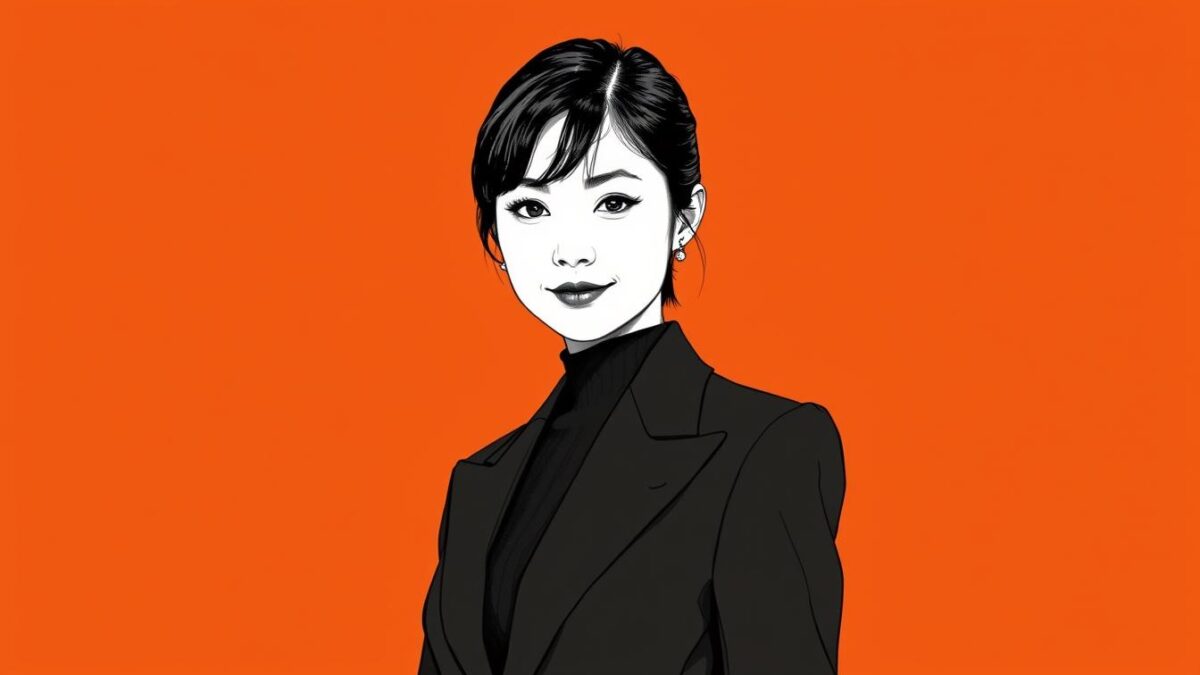
Some performers chase fame. Sakura Ando chases truth. She is one of Japan’s most compelling actors, known for raw, visceral performances.
Her roles often reject formulaic romance. They center craft over celebrity, feeling urgent and real.
Born in Tokyo on February 18, 1986, her talent runs in the family. Her father is actor-director Eiji Okuda. Her sister is filmmaker Momoko Ando.
This deep connection to Japanese cinema shaped her artistic instincts from the start.
In 2025, her work received major global recognition. She was named a focus artist at the Hong Kong International Film Festival.
A retrospective showcased key films like Shoplifters and 100 Yen Love. This highlighted her incredible range.
Her arrival on the world stage was cemented in June 2023. She received an invitation to join the Academy of Motion Picture Arts and Sciences.
This article explores her career trajectory and unique philosophy. It looks at the roles that built her reputation as an actor who works on instinct.
Early Career and Breakthrough Moments
For an actor committed to emotional truth, early career decisions reveal more about artistic philosophy than strategic planning. The performer’s journey began professionally in 2005, driven by instinct rather than stardom ambitions.
Debut Roles and Initial Recognition
Early films like A Long Walk (2006) and Ain’t No Tomorrows (2008) showcased raw potential. But the 2007 drama Out of the Wind proved significant. As Mariko Iwata, she commanded screen time in her first leading role.
First Award Wins and Festival Appearances
The 2008 epic Love Exposure became her true breakthrough. Director Sion Sono’s vision gave space for remarkable emotional range. Her performance as Koike demonstrated the physicality that would define her signature style.
This role earned the Best Supporting Actress award at the 31st Yokohama Film Festival in 2010. The recognition validated her risk-taking approach. Industry eyes turned toward an actor willing to embrace challenging material.
Multiple award nominations followed between 2010 and 2011, including the prestigious Kinema Junpo Award. These early honors established her as a serious performer. Critics and audiences appreciated her authentic view of character development.
Festival appearances during this time provided visibility beyond Japan. They planted seeds for future international recognition. The early years shaped her belief that film choices should align with personal timing.
The Evolution of Sakura Ando’s Iconic Roles
By the early 2010s, her roles started demanding more than just screen presence. They required emotional precision.
Defining Performances in Early Films
Directors like Kiyoshi Kurosawa recognized her unique talent. In the 2012 drama Penance, she anchored complex narratives without melodrama.
Her leading role as Rie in Our Homeland demonstrated remarkable subtlety. The film addressed families divided by Korea’s partition.
She played women navigating isolation and survival. These characters avoided passive romantic archetypes common in commercial cinema.
Transition to Critically-Acclaimed Roles
International recognition came with the 2015 CUT ABOVE Award at JAPAN CUTS in New York. Audiences appreciated performances grounded in real experience.
Her artistic philosophy shaped this transition. “I work on instinct,” she stated. “I learn through body language and feeling.”
This period refined her performance style. Restraint and physicality conveyed interior life through gesture and silence.
| Film | Year | Director | Role Significance |
|---|---|---|---|
| Penance | 2012 | Kiyoshi Kurosawa | Complex narrative anchor |
| Our Homeland | 2012 | Yong-hi Yang | Leading role with political depth |
| Petal Dance | 2013 | Hiroshi Ishikawa | Emotional journey film |
| The Samurai That Night | 2015 | Kazuya Shiraishi | Critically acclaimed performance |
Each project fit her life at that time. She chose roles based on feeling rather than career calculation.
Exploring Notable Films and Performances
From intimate dramas to blockbuster spectacles, these films demonstrate exceptional range. Each role showcases a commitment to authentic character work.
Impactful Roles in Shoplifters & 100 Yen Love
In 100 Yen Love, the actor transformed into Ichiko Saito. This character’s boxing journey followed personal trauma.
The performance earned major awards including the Japan Academy Prize. Critics praised the raw physicality and emotional honesty.
Shoplifters featured another powerful role under Hirokazu Kore-eda’s direction. As Nobuyo Shibata, she anchored the makeshift family.
The Palme d’Or-winning film showcased her ability to convey complex emotions. Reviewers called her performance the standout element.
Highlights from Godzilla Minus One and Bad Lands
Godzilla Minus One presented Sumiko Ota, a war survivor turned guardian. Takashi Yamazaki’s film blended spectacle with human drama.
This role earned the Best Supporting Actress award in 2024. It proved her skill in grounding epic stories with emotional truth.
In Bad Lands, she played Neri, an Osaka grifter navigating criminal networks. The role demonstrated comfort with morally complex characters.
| Film | Year | Director | Award Recognition |
|---|---|---|---|
| 100 Yen Love | 2014 | Masaharu Take | Japan Academy Prize – Best Actress |
| Shoplifters | 2018 | Hirokazu Kore-eda | Palme d’Or, Japan Academy Prize |
| Godzilla Minus One | 2023 | Takashi Yamazaki | Academy Award, Japan Academy Prize |
| Bad Lands | 2023 | Masato Harada | Critical acclaim for range |
Personal Reflections and Interview Insights
Her 2025 appearance at the Hong Kong International Film Festival offered a rare glimpse into the person behind the powerful performances. As a focus artist, she reflected on her craft and life with striking honesty.
Artistic Process and Emotive Approach
She described her method as purely instinctual. “I’m more visceral and emotional,” she stated. “I learn and perform based on body language and feeling.”
This approach rejects intellectualizing a role. It aligns with the raw honesty that defines her best work. She never considers audience expectations when choosing a project.
Her goal was never stardom or maverick status. She follows a personal sense of timing, connecting only with material that feels urgent.
Collaborating with people of different values is a priority. She views it as a chance to learn and broaden her worldview. This maturity reflects deep artistic confidence.
Balancing Family Life with a Film Career
She openly discussed the challenge of being a working parent. “Parenting and shooting at the same time is really difficult for me, especially in Japan,” she noted.
This honesty led to a current sabbatical focused on raising her daughter. Her reflections resonate with broader conversations about gender and labor in the film industry.
When asked about future collaborations, she mentioned Stephen Chow. More importantly, she emphasized staying open to unexpected opportunities. Her career remains built on craft, curiosity, and grounded choices.
Reflections and Future Prospects
Her collection of awards tells only part of the story. Multiple Japan Academy Prizes, Blue Ribbon Awards, and international recognition like the Florida Film Critics Circle Award mark a career of exceptional caliber.
The 2023 invitation to the Academy of Motion Picture Arts and Sciences cemented her global status. It places her among a select group whose work transcends borders.
This actor’s philosophy has always prioritized instinct over calculation. Her current sabbatical to raise her daughter is a natural extension of this belief. Career decisions align with life’s rhythms.
Future prospects remain bright. Her established reputation and openness to diverse collaborators promise compelling work upon her return.
Sakura Ando’s legacy is secure. It is built not on celebrity, but on a curated filmography of courage and craft. Her performances linger long after the view ends.