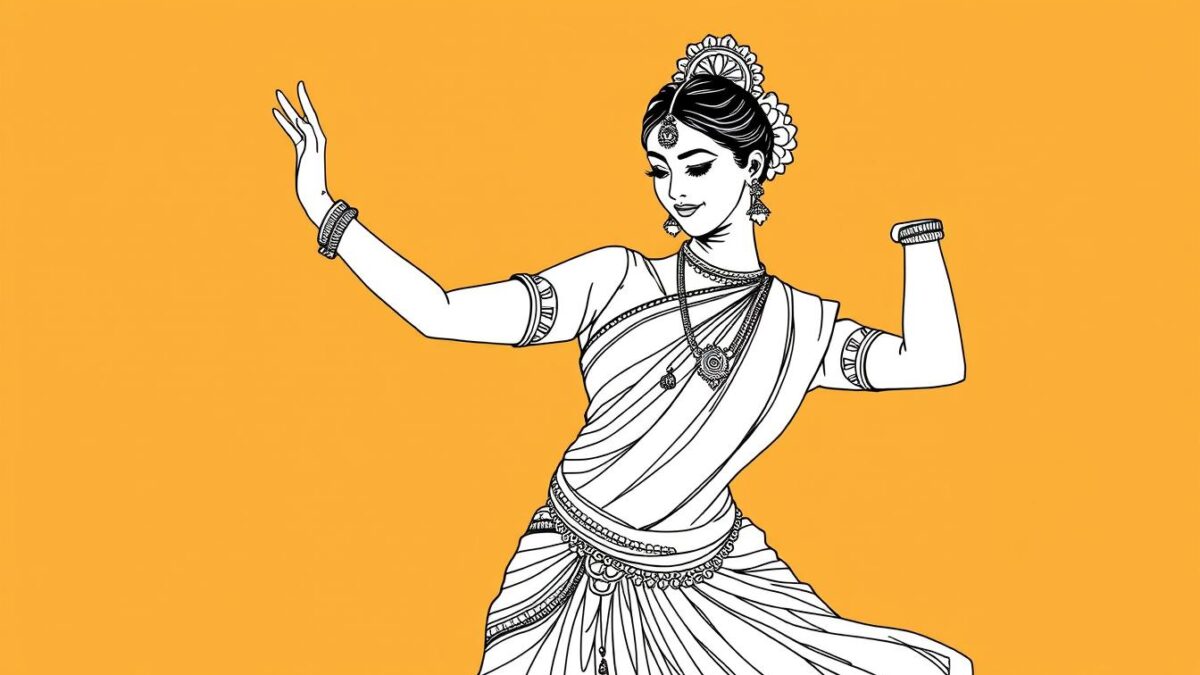
Rukmini Vijayakumar commands three stages at once. She is a soloist in the classical Indian dance form of Bharatanatyam. She creates movement as a choreographer. And she brings characters to life on screen in regional film.
Her career spans continents. It blends deep training in India with studies at the Boston Conservatory. This foundation gives her work a unique global perspective.
She directs two key institutions. The Raadha Kalpa dance company is her creative ensemble. LshVa is her art space for developing new work and training future artists.
Her approach honors tradition while pushing boundaries. She performs ancient vocabulary with precision. Yet she also crafts contemporary pieces that tour the world.
This bharatanatyam dancer lives in the creative tension between old and new. Between the solo spotlight and ensemble creation. Her work is a quiet force in the art of movement.
Early Life, Training, and Artistic Influences
Her artistic foundation was built on a rigorous classical education. It started with deep training in Bharatanatyam under three respected gurus.
Foundations in Bharatanatyam and Classical Dance
She spent years mastering the dance form’s precise vocabulary. Her training under Guru Sundari Santhanam was particularly formative.
Guru Sundari, a senior disciple of Padma Subrahmanyam, taught her the Karanas. These 108 movement units from the ancient Natyashastra text demand anatomical precision. Each gesture carries specific meaning.
This early life immersion gave her work a strong architectural foundation. The philosophy of movement from that time still influences her approach today.
Blending Western Techniques with Traditional Forms
At sixteen, her perspective expanded. Teacher Yana Lewis introduced her to Western concepts of alignment and body lines.
Yana sparked a lasting interest in anatomy. She also connected the young dancer to a yoga teacher for further study.
Rukmini Vijayakumar then pursued formal Western training. She earned a BFA in Ballet and Modern dance from the Boston Conservatory.
She later studied acting in New York and Los Angeles. She also took university courses in fitness and physiology.
This unique blend of East and West defines her as a dancer. She credits her three primary teachers for launching her performance journey.
Rukmini Vijayakumar: Mastering the Raadha Kalpa Method
A unique pedagogical system emerged from extensive study of Bharatanatyam’s ancient vocabulary and contemporary applications. This approach reshapes how classical Indian dance is taught and performed.
Evolution of the Raadha Kalpa Pedagogical System
Fifteen years of research developed the Raadha Kalpa Method. This pedagogical system focuses on classical Indian dance forms.
The core idea centers on neutrality in mind and body. Dancers achieve efficiency, precision, and imagination without tension. The system blends classical Indian rigor with Western anatomical understanding.
It provides tools rather than fixed rules. Dancers adapt vocabulary to different aesthetics and dynamics. Versatility becomes a guiding principle.
Innovative Choreography and Performance Approach
The Raadha Kalpa approach to Bharatanatyam balances tradition with contemporary relevance. Choreographies draw from ancient sources while speaking to modern audiences.
This work refuses the false choice between preservation and innovation. The method encourages constant questioning and evolution. It keeps the artistic practice alive and responsive.
| Aspect | Traditional Training | Raadha Kalpa Method |
|---|---|---|
| Focus | Fixed style adherence | Adaptive vocabulary |
| Body Approach | Prescribed movements | Neutrality principle |
| Creative Scope | Interpretation within bounds | Imaginative freedom |
| Training Goal | Technical mastery | Physical intelligence |
The Kalpa Method represents a significant evolution in dance pedagogy. It honors tradition while embracing contemporary physical intelligence.
Global Stage, Film Roles, and Dance Productions
The stage and screen have become parallel platforms for her artistic expression. Rukmini Vijayakumar has built a career that moves fluidly between live performance and cinematic work.
Iconic Performances and International Tours
Her solo work has graced prestigious venues worldwide. The Jacobs Pillow festival and Korzo Theater represent key stops on her international circuit.
In 2018, she received the Jiri Kylian grant for choreography. This recognition supported her residency at Korzo theater in the Netherlands.
There she created “Unrequited,” an abstract piece exploring Sati and Shiva. The work premiered to international audiences, showcasing her contemporary idiom.
Her ensemble productions like “Prabhavati” and “The Dark Lord” have toured extensively. These works blend dance theater with mythological themes from Indian literature.
Cinematic Journey: Filmography and On-Screen Impact
Her film career began in 2009 with “Ananda Tandavam.” She later appeared in Mani Ratnam’s “Kaatru Veliyidai” as Dr. Nidhi.
The artist distinguishes clearly between stage and screen performance. Film requires serving the director’s vision within tight technical constraints.
Stage performance offers immediate connection with live audiences. This real-time exchange creates a human bond she deeply values.
Her dance films “Yoganiyoga” and “Namami Yoga Vidye” reached millions online. These projects demanded precision with limited takes and tight budgets.
Final Reflections on a Multifaceted Dance Legacy
Some careers defy simple summary, built instead on the creative tensions that give them life. Rukmini Vijayakumar moves between solo performance and ensemble creation, between ancient forms and contemporary expression. This artist refuses to choose between preservation and innovation.
Her approach to Bharatanatyam honors tradition while pushing boundaries. The impact extends beyond the stage through the Raadha Kalpa Method. This system trains dancers with anatomical intelligence and imaginative freedom.
When asked about her greatest achievement, she pointed to the future. “I hope I haven’t already achieved it,” she said, looking toward the work still to come in the years ahead.
This dance legacy lives in the quiet reshaping of what classical art can be. It shows how tradition stays vital through restless curiosity and creative tension.