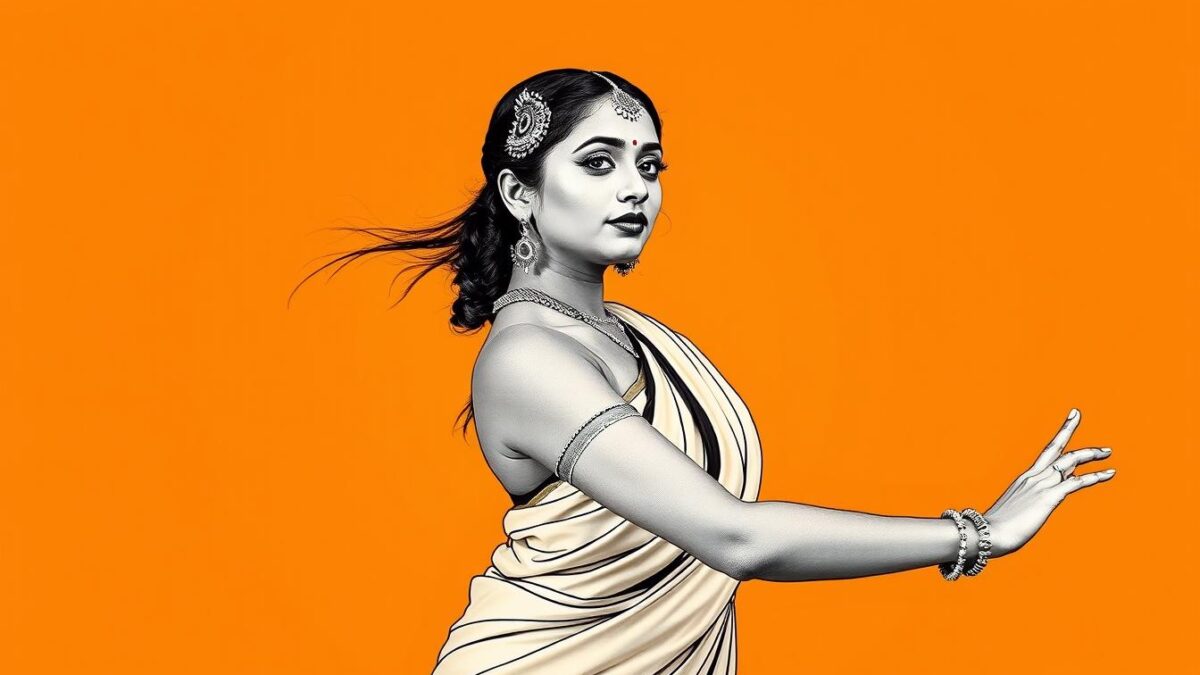
Her art carries the memory of ritual across continents. This interdisciplinary artist builds her practice on the weight of cultural traditions and the search for an authentic home.
She navigates multiple landscapes, questioning where immigrants belong on unceded Indigenous lands. Her work sits at the intersection of heritage preservation and modern innovation.
It defies simple categories. She moves between visual installations, curatorial projects, and community engagement with intellectual rigor.
Her research centers on cultural otherness and identity. This foundation informs gestural portrayals of hybrid rituals, testing the boundaries of assimilation.
She has exhibited at prestigious venues worldwide, from the Victoria Parliament in Melbourne to a gallery in Venice during the Biennale. Her academic credentials include a PhD focused on cultural identity and place.
Beyond the gallery, she directed a community art studio for years. Now, as a Public Art Officer, she bridges institutional programming with public space and community needs.
Introducing Oinita Banerjee and Her Ascending Star
The artist’s work bridges ceremonial traditions with contemporary spaces, creating hybrid expressions that challenge institutional norms. Her practice commands attention through its refusal to fit simple categories.
Her Captivating Performance Style
Banerjee doesn’t perform dance in conventional ways. Instead, she creates gestural portrayals that evoke movement and ritual through visual art.
Her mark-makings carry the weight of alpana and mehndi patterns. These ceremonial practices mark time, space, and belonging through repetition.
Early Inspirations and Cultural Roots
Early inspirations trace back to ritualistic ceremonies witnessed during formative years in India. Migration forced a reconstruction of cultural memory that now fuels her work.
Growing up with English literature alongside Indian traditions created a bilingual artistic sensibility. This dual fluency informs her unique approach to cultural expression.
| Year | Event/Role | Location | Significance |
|---|---|---|---|
| 2016 | Dance of the Hindu Gods Exhibition | Victoria Parliament, Melbourne | Brought Indian iconography to Australian civic space |
| 2017-2021 | Sessional Lecturer | Deakin University | Shared hybrid approaches with students |
| 2019 | Home and Away Solo Exhibition | Academy of Fine Arts, Kolkata | Brought Australian practice back to Indian audiences |
The Intersection of Dance, Culture, and Technology
Her artistic practice integrates technology not as a gimmick, but as a vital conduit for cultural memory. Digital platforms and contemporary exhibition tools allow ritual to become accessible without losing its depth.
This approach redefines how traditions can live in new contexts.
Innovative Techniques and Modern Influence
Works like the 2023 public art commission “Holm, Treatment 3” in Werribee show this fusion. She translates immigrant narratives into permanent civic installations using modern materials.
Her curatorial projects, such as “Third Space” at Linden New Art, create liminal zones. These spaces are neither purely Indian nor Australian, allowing for honest hybrid expression.
The flow of influence is bidirectional. Ceremonial aesthetics enter contemporary art spaces, while Western frameworks help reshape how those traditions are preserved.
| Project | Venue | Year | Focus |
|---|---|---|---|
| Third Space | Linden New Art, Melbourne | 2024 | Cultural identity & belonging |
| Mining Memory | POP Gallery, Port Adelaide | 2024 | Migration narratives |
| EPAR OPAR | Incinerator Gallery | 2024 | Hybrid rituals |
Empowering Students Through Art
In roles like Arts Program Officer for Wyndham City Council, she created pathways for emerging artists. She bridges institutional programming with community needs.
Her curatorial work offers students platforms to explore complex themes. These projects provide real-world exhibition opportunities and conceptual frameworks.
This mentorship empowers a new generation to navigate cultural difference with confidence and skill.
Oinita Banerjee: Exploring a Signature Artistic Journey
From Venice to regional Australia, her installations have transformed public spaces into sites of cultural dialogue. These spaces become stages where audiences encounter questions of belonging and identity.
Defining Moments on Stage
The 2019 Venice Biennale exhibition at Palazzo Bembo marked a career peak. It brought Indian-Australian perspectives to a global art context.
“Ondormohol” at Art Gallery of Ballarat in 2021 confirmed her regional significance. The show explored cultural otherness through reconstructed ritual.
Earlier works like “Sarhad” (meaning “border”) used migration themes. The 2018 exhibition examined immigrant experience through boundary language.
Selection for “Hatched 2017” at Perth Institute of Contemporary Arts validated her approach early on. It connected her to national experimental art networks.
Global Impact and Cross-Cultural Connections
Her reach extends across Australia, India, and Italy through exhibitions and academic forums. She presents research on cultural identity and migration.
Projects like “CHINDIA” explored the India-China cultural corridor. “Site of Passage” used historic migration sites to reflect on displacement.
Academic presentations at University of Sydney and Monash University position her as both practitioner and scholar. She articulates theoretical frameworks behind her ritual-based practice.
The “Dance of the Hindu Gods Symposium” in 2016 transformed visual art into cross-disciplinary conversation. It created space for dialogue about ritual and cultural memory.
Final Reflections on an Enduring Legacy
When an artist’s practice becomes a living methodology, it outlasts any single exhibition or performance. Oinita Banerjee built frameworks that continue to shape conversations about cultural identity and belonging.
Her legacy lives through the artists she mentored and communities she engaged. The public installations remain active sites of dialogue, asking viewers to reconsider whose stories define civic spaces.
This approach transforms displacement into creative foundation. It challenges simple binaries between traditional and contemporary, authentic and hybrid.
The networks Banerjee built between India and Australia form lasting infrastructure. They ensure questions of home and identity continue generating fresh responses long after individual projects conclude.