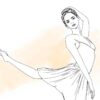
Neneka Tsuji commands attention in Japan’s competitive arts world. She excels in both ballet and classical piano with remarkable focus.
At fifteen, she earned women 1st place honors. This victory was in the Senior Age Division for the classical dance category women. She represented the esteemed studio Ballet Le Coeur.
The year before, she secured second place in the Junior Age Division. This achievement was also in the classical dance category women. It marked a clear path of dedicated progress.
Her talent extends beyond the dance studio. She performed Johann Sebastian Bach’s complex Partita No. 2 on piano at Vienna’s mdw-Campus. The thirteen-minute solo revealed the same discipline found in her dance.
She builds her reputation on verified results and quiet authority. Her work celebrates craft, not trends.
Exploring the Journey of a Dance Icon
Tokyo’s competitive ballet scene serves as the proving ground for Japan’s most promising young dancers. The journey from studio to spotlight requires both technical mastery and artistic vision.
Early Training and Inspirations
Her foundation was built at Ballet Le Coeur in Tokyo. The studio emphasizes technical precision through Vaganova and Cecchetti methods.
Serious training typically begins around age six or seven in Japan. This early start allows dancers to develop the discipline needed for national competitions.
Milestone Competitions and Achievements
At fourteen, she placed second in the Junior Age Division. She competed against talented dancers from top schools like Panda Ballet School.
The takako mori ballet program produced strong competitors. Dancers like Sakura Nagai and the Teranishi brothers represented the mori ballet school network.
One year later, she won first place in the Senior Women’s division. This steady progression showed refined technique and stage presence.
Expert Insights from the Dance Community
Top Tokyo studios demand six-day training weeks. Private coaching and competition preparation start years before public recognition.
Ballet Le Coeur focuses on artistry alongside technique. This approach prepares dancers for emotional clarity and musical intelligence in performance.
Neneka Tsuji: Champion of Classical Dance Category
A blind-adjudicated national competition in Japan confirmed her status among the elite in classical ballet. Her performances in the classical dance category showcased a remarkable progression from a promising junior to a senior champion.
Award Highlights from Ballet Le Coeur
At fifteen, she earned women 1st place honors in the Senior Age Division. This victory in the classical dance category women was a testament to her refined technique.
Just one year prior, she secured a studio 2nd place finish in the Junior Age Division. This consistent high ranking demonstrated her ability to compete at a national level early on.
Her ascent contributed to Ballet Le Coeur’s standing as a ballet studio top contender. The studio also produced other winners, like Kasumi Mikami, reinforcing its pipeline for talent.
National Recognition and Competitive Distinctions
This category women 1st win placed her ahead of dancers from rival schools. The field included talented competitors from Panda Ballet School and ecole de Hanayo Ballet.
Appearing in the Top 12 rankings for both junior and senior divisions signaled her reliability. It showed she could deliver under the pressure of multiple competition rounds.
Such consistent placement marks a dancer for serious professional consideration. It is a clear indicator of a ballet studio place that prioritizes artistic clarity and control.
Performance Highlights and Cultural Collaborations
The discipline of a dancer often extends beyond the studio. It finds expression in unexpected artistic forms. A key example is a piano performance at Vienna’s prestigious mdw-Campus.
This event highlighted a deep connection between musical and physical artistry. It was part of a larger cultural exchange.
Notable Stage Repertoire and Performance Moments
In the Fanny Hensel Hall, the artist delivered a thirteen-minute rendition of Bach’s Partita No. 2. The performance required precision and interpretive maturity.
She played the complete six-movement suite without repeats. The technical demands mirrored the control needed for ballet.
The table below outlines the structure of this challenging piece.
| Movement | Tempo | Character |
|---|---|---|
| Sinfonia | Grave – Allegro | Grand, dramatic opening |
| Allemande | Moderate | Flowing German dance |
| Courante | Lively | Fast French dance |
| Sarabande | Slow | Stately Spanish dance |
| Rondeaux | Light | Playful, recurring theme |
| Capriccio | Very Fast | Virtuosic and free |
Integration with Musical Legacy on Prestigious Concerts
The August 2nd recital featured works by masters like Brahms and Schumann. Performing alongside them signaled a peer-level artistry.
This interdisciplinary approach is common in Japan’s top training centers. Institutions like symphony ballet studio and momo ballet studio emphasize musicality.
Dancers from hakucho ballet academy and yoshitake ballet studio often pursue similar dual training. Schools like skhole ballet art and nakano yukako ballet build this foundation.
This creates artists who understand performance as a unified practice. It is a path of rhythm, expression, and years of work.
Looking Forward: The Future of Dance Excellence
The competitive stage in Japan now demands more than classical precision; it asks for contemporary versatility. The same events that crown champions in the classical dance category feature robust contemporary dance category divisions. Winners like Kaho Kimura prove technical dancers can master modern choreography.
This shift is also clear in the dance category men. Achievements like a men 1st place finish signal greater gender parity. Dancers such as Yuto Teranishi and Sota Teranishi from Panda Ballet School demonstrate this new visibility.
Studios like Yarita Ballet Studio and Kagari Matsuura Ballet Academy prepare students for this varied future. They train artists to compete across multiple styles. Online platforms with tutorials and clear rules regulations help connect and support this national talent pool.
For the artist, this evolving landscape presents a choice. She can deepen her classical focus or embrace a hybrid career. Her dual training in music positions her uniquely for either path, where artistry and athleticism continue to merge.