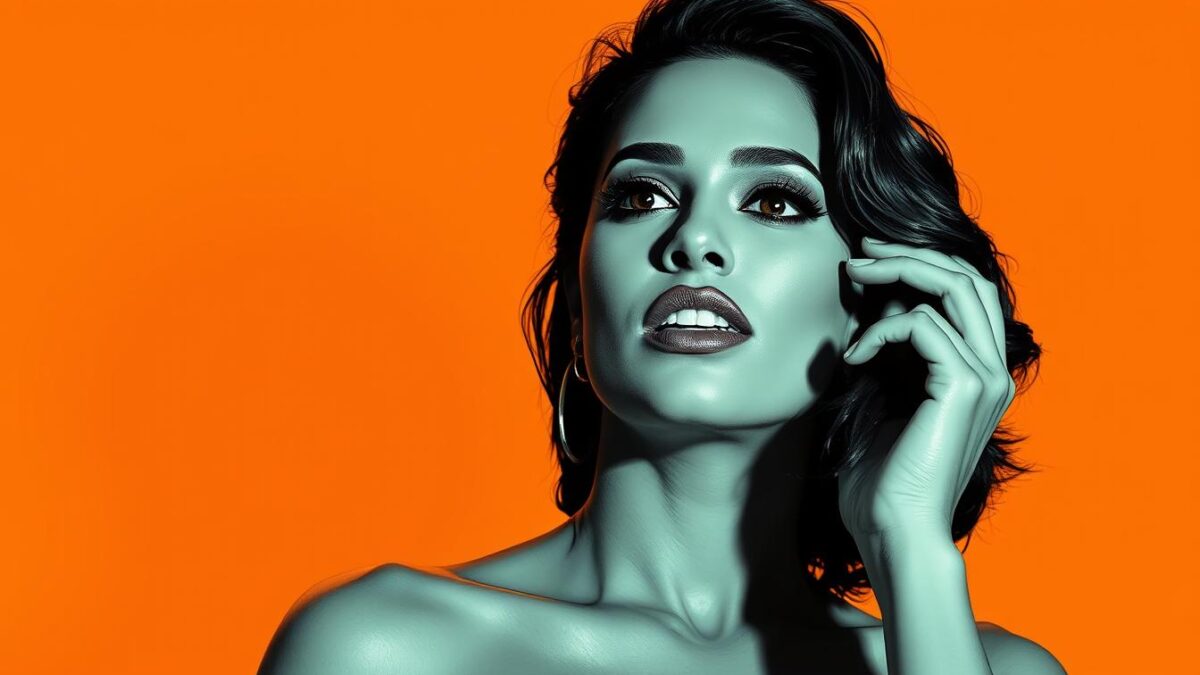
A voice emerged from Rio de Janeiro in July 1967 that would reshape Brazilian music. This brazilian singer brought a unique sound to the world stage. Her talent was undeniable from the start.
She commands respect as a complete artist. Her work spans singing, composing, and producing. This creative control defines her three-decade career.
Accolades followed her unique path. They include four Latin Grammys and many national honors. Rolling Stone Brasil ranks her among the greats.
Her journey from opera student to MPB icon is a story of bold choices. It is built on powerful partnerships and a dedication to craft. This guide explores that singular path.
A Glimpse into Her Early Life and Musical Beginnings
Born into a family where samba rhythms and Italian heritage coexisted, Marisa Monte’s artistic identity began forming from childhood. Her environment blended Brazil’s vibrant musical culture with European traditions.
Family Background and Cultural Roots
Her father, Carlos Saboia Monte, served as cultural director at Rio’s legendary Portela samba school. This position immersed the family in Brazil’s richest musical traditions daily.
On her father’s side, she descends from the Saboias, one of the oldest Italian families in Brazil. This lineage connected her to centuries of cultural heritage from both continents.
Training in Opera and Early Influences
As a child, she studied singing, piano, and drums. This early versatility would later define her genre-blending approach to music.
At 14, she began formal opera training, dreaming of becoming like Maria Callas. Five years later, she moved to Italy to study bel canto seriously.
After ten months abroad, she returned to Brazil, realizing she couldn’t live apart from her homeland. This decision redirected her path toward popular music while retaining her classical foundation.
Her operatic training left an indelible mark on her vocal technique. It granted her the control and range that would later captivate global audiences.
The Rise of a Brazilian Music Icon
A partnership with seasoned producer Nelson Motta in 1987 set the stage for a breakthrough. Together, they crafted “Veludo Azul,” a live show that blended MPB tradition with pop energy.
The performance at Rio’s Jazzmania quickly became a must-see event. It sold out regularly, generating buzz far beyond the usual music circles.
Breaking Through with the Live Concert “MM”
This success led to a deal with the EMI label in 1988. The next step was to record the concert for an album.
Directed by Walter Salles for television, the live record “MM” launched in January 1989. It featured a bold mix of songs from Titãs to Motown.
The single “Bem Que Se Quis” became a national hit. The album sold half a million copies, making the artist a household name.
From Rio de Janeiro to International Stages
The singer’s reach soon extended beyond Brazil. A debut at New York’s Knitting Factory introduced her sound to a new audience.
Critics greeted her with enthusiasm, signaling strong international potential. This was the time Monte became a true phenomenon in Brazilian music.
Her vision proved it could cross borders and genres with ease.
Marisa Monte: Blending Traditional MPB with Modern Influences
Ownership of her creative work became the non-negotiable foundation for this singer. She demanded the rights to all her songs when renewing with EMI Music.
This rare move granted her complete artistic and financial control. It allowed her to build a catalog true to her vision, free from label pressures.
The Evolution of MPB and Samba in Her Music
Her sound honors the past while pushing forward. Growing up, her father’s role as cultural director at the Portela samba school immersed her in Rio’s rich traditions.
She never abandoned this foundation. Her recordings include traditional samba and folk tunes alongside original, contemporary compositions.
This blend created a unique space in Brazilian music. It balanced rhythmic complexity with pop accessibility.
Two of her works, MM and Verde, Anil, Amarelo, Cor-de-Rosa e Carvão, are ranked among the 100 best Brazilian albums. Her 2008 single “Não é Proibido” even reached global gamers through the 2010 FIFA World Cup soundtrack.
Her music proves that respecting roots and exploring new sounds are not opposites. They are partners in creating lasting art.
Creative Collaborations and Influential Partnerships
Her creative vision found its fullest expression not in solitude, but through a series of powerful artistic alliances. These partnerships were dialogues, not transactions, where distinct voices merged into a unified sound.
Working with Carlinhos Brown, Arnaldo Antunes, and Nando Reis
Three figures became central to this collaborative spirit. Arnaldo Antunes and Nando Reis, both former members of the rock band Titãs, brought lyrical depth and melodic invention.
Carlinhos Brown, leader of the percussion group Timbalada, infused the music with complex rhythms and Afro-Brazilian textures. Their work began on albums like Mais and Verde, Anil, Amarelo, Cor-de-Rosa e Carvão.
Brown’s contributions, including “Maria de Verdade,” became instant classics. The synergy was so potent it led to the supergroup Tribalistas.
Artistic Synergy and Experimentation
This trio’s collaboration sold over three million copies, proving the power of their combined songwriting. They reunited in 2017, reigniting widespread enthusiasm.
Beyond Brazil, the artist worked with avant-garde figures like Laurie Anderson and David Byrne. These partnerships expanded her sonic palette without ever losing coherence.
Each collaboration was a space for genre-blending experimentation. It moved fluidly between samba, rock, and electronic sounds.
Record-Breaking Albums, Awards, and Milestones
The numbers tell a story of both mass appeal and artistic integrity. Album sales and awards paint a complete picture of this artist’s impact.
By 2011, she had sold more than 10 million albums worldwide. This milestone placed her among Brazil’s most commercially successful artists.
Chart-Topping Albums and Sales Success
Specific projects achieved remarkable sales. Her 2000 album sold 2 million copies. The Tribalistas project in 2002 sold an astonishing 3.5 million copies.
In 2006, she released two albums simultaneously. This bold move showcased her range from intimate songcraft to traditional samba.
She negotiated her own vanity label, Phonomotor Records. This gave her complete control over production and artistic direction.
Accolades from Latin Grammys to National Honors
The singer has won numerous national and international awards. These include four Latin Grammy awards and eight Brazilian Music Awards.
Her album Infinito Particular earned a Latin Grammy nomination. Another release won for Best Samba/Pagode Album.
Rolling Stone Brasil ranks her as the second greatest singer in Brazilian music history. Two of her albums appear on the list of the 100 best Brazilian albums.
Her chart success never sacrificed artistic integrity. Each album reflected careful curation and a refusal to chase trends.
Innovative Live Performances and Artistic Evolution
Live performance became her true medium, where voice and vision merged completely. Each concert felt like a unique event, carefully crafted yet spontaneous.
Signature Stage Presence and Theatrical Shows
Her 1989 debut established a hybrid style. She blended MPB tradition with pop rock energy in theatrical events.
The 1997 Barulhinho Bom album showcased her charismatic command. She held audiences through subtle dynamics and dramatic shifts.
Monte became known for reinterpretation in live settings. She transformed familiar songs with new tempo and emotional emphasis.
Her 2000 tour spanned 150 shows across Brazil. This grueling schedule demonstrated her stamina and commitment to fans.
A three-night Rio stand in 2001 was captured on DVD. It revealed the intimacy and intensity of her peak performances.
Following her 2006 album release, international tours stretched into 2007. Each time she performed, arrangements highlighted her voice and allowed improvisation.
Video albums document her growth as a performer. They show her understanding of silence, space, and timing in music.
Legacy and Impact on Brazilian and Global Music
The true measure of an artist’s impact lies in how they transform the landscape for those who follow. Marisa Monte’s influence reaches deep into the heart of contemporary Brazilian music.
Influence on Contemporary Brazilian Music
Rolling Stone Brasil ranked this Brazilian singer second only to Elis Regina. This places her among the most respected voices in the nation’s history.
Her ability to blend traditional MPB with modern sounds created a new template. Younger artists still reference this approach in their own work.
Legends like Gal Costa have covered her music. Countless contemporary singers cite Monte as a formative influence.
Enduring Cultural and Musical Contributions
In 2014, the Brazilian government awarded her the Order of Cultural Merit. This recognized her contributions to the nation’s cultural heritage.
Marisa de Azevedo Monte demonstrated that commercial success and artistic integrity can coexist. Her career proves audiences embrace challenging music when presented with conviction.
Her insistence on owning her catalog inspired other musicians to demand better contracts. She remains one of the oldest respected figures in Brazilian music families.
Final Reflections on an Enduring Musical Journey
The release of ‘Portas’ on her 54th birthday marked another milestone in a journey that continues to captivate audiences. This 2021 album through Sony Music showed the artist’s persistent relevance across generations. Her career demonstrates remarkable staying power.
Ten studio albums, two live records, and countless collaborations fill her discography. She has worked with over 50 artists while maintaining creative control. Each new release offers fresh options for her growing fanbase.
From opera training at a young age to trending status today, her path reflects courage and craft. The songwriter’s father instilled deep musical roots that shaped her unique sound. Marisa Monte’s story remains an inspiring record of artistic integrity.