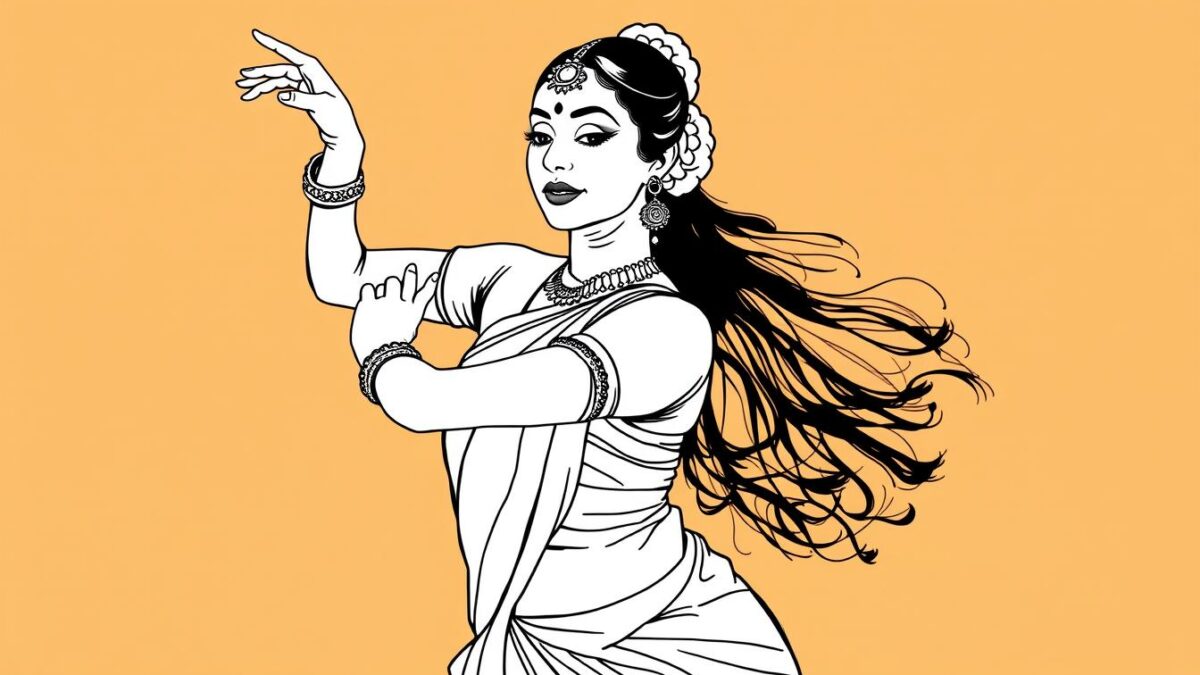
At 72, this artist commands attention through disciplined artistry, not celebrity noise. Her work spans over five decades, rooted in classical Indian dance traditions.
Born in 1953 in Ahmedabad, she grew up where science met art. Her parents valued both intellectual rigor and cultural preservation.
Mallika Sarabhai built her reputation as a classical dancer specializing in Kuchipudi and Bharatanatyam. She then expanded into film, theater, and writing.
Her career refuses to separate beauty from responsibility. Performance and politics merge in her work. Tradition meets innovation.
This isn’t a story of overnight fame but sustained commitment. She chose craft over stardom, purpose over profit. The performing arts became her language for justice.
She remains a vital force today, still choreographing and teaching. Her work touches women and marginalized communities worldwide.
Early Life and Foundations of an Icon
Growing up in a home where rockets and rhythm coexisted, she inherited two distinct but complementary legacies. Her childhood environment blended scientific rigor with artistic expression.
Family Influences and Cultural Heritage
Her father, Vikram Sarabhai, pioneered India’s space program. He believed progress required both vision and disciplined execution. The scientist founded institutions that advanced national development.
Her mother, Mrinalini Sarabhai, established Darpana Academy in 1949. The institution preserved Indian dance traditions while promoting social change. This artistic foundation became central to her daughter’s career.
The family legacy extended to her paternal grandfather. He led Ahmedabad’s textile industry in his twenties. This demonstrated early responsibility and achievement.
| Institution | Degree | Year | Field |
|---|---|---|---|
| St. Xavier’s College, Ahmedabad | Bachelor’s | 1972 | Economics |
| Indian Institute of Management, Ahmedabad | MBA | 1974 | Business Administration |
| Gujarat University | Doctorate | 1976 | Organizational Behaviour |
Educational Journey and Early Inspirations
She pursued education with remarkable intensity. By age 23, she completed her doctorate from Gujarat University. Her academic path revealed a mind seeking systemic understanding.
Even during doctoral studies, dancing remained essential. She balanced intellectual pursuits with artistic practice. This dual engagement shaped her unique approach to performance.
Her education provided tools for analyzing human behavior. She studied why organizations succeed or fail. These insights later informed her socially conscious art.
Mallika Sarabhai: The Artist and Activist
By the early 1990s, her dance had evolved into a language of protest, blending classical forms with contemporary urgency. This artist refused to separate beauty from responsibility in her creative work.
Evolution in Dance and Choreography
She developed a unique contemporary vocabulary for her dance performances. Drawing from theater, music, and martial arts, she created a fresh artistic space.
Her choreography became a vehicle for social change. Works like “Shakti: The Power of Women” toured globally, addressing women’s rights issues directly.
Social Activism Through the Arts
The 1992 Babri Masjid demolition marked a turning point in her career as a social activist. She could no longer keep art separate from surrounding violence.
She established the Centre for Non-Violence Through the Arts in 1997. This initiative encouraged artists to create works addressing conflict and peace.
Her performances tackled difficult social issues with honesty. They proved that dance could be both beautiful and purposeful, driving meaningful change.
Career Milestones and Multidimensional Pursuits
Her career path defies simple labels, moving fluidly between cinema, global theater, and institutional leadership. Each pursuit deepened her commitment to art as a tool for education and social dialogue.
The Journey Through Film and Stage
Mallika Sarabhai entered films at fifteen. She appeared in parallel cinema works like “Himalay Se Ooncha” and “Katha.”
A defining moment arrived with British director Peter Brook. He cast her as Draupadi in his legendary stage production of “The Mahabharata.”
She toured the world with the play for five years. This role solidified her confidence as a performer and creator on an international scale.
Leadership at Darpana Academy and Beyond
She took over the Darpana Academy of Performing Arts from her mother. Under her guidance, the institution expanded its mission significantly.
She founded the Janavak department to document tribal folk arts. The academy now holds a vast archive of recordings.
Her leadership extended to television production. Through Darpana Communications, she created thousands of hours of programming.
Shows focused on women’s empowerment and public health. She used television as another platform for meaningful change.
Scriptwriting, Television, and Global Influence
Her creative work also flourished in writing. She penned scripts for plays, television series, and even contemporary dance lyrics.
In 1984, she co-founded Mapin Publishing, which she continues to run. This venture added another dimension to her cultural impact.
Later productions, like the multimedia spectacle “Kadak Badshaahi,” proved local stories have powerful appeal. It ran for 33 consecutive nights, captivating audiences.
Legacy and Ongoing Impact on Arts and Society
Recognition from governments worldwide confirms what audiences have long understood: Mallika Sarabhai’s work transcends performance to become cultural dialogue. The Padma Bhushan from India and France’s Order of Academic Palms honor a career that bridges classical dance with urgent social issues. These awards acknowledge her unique position in the performing arts world.
Her political engagements revealed the same commitment to change. Running against L.K. Advani in 2009 demonstrated courage, not calculation. Personal challenges, including her mother Mrinalini Sarabhai’s passing, deepened her artistic resolve. She turned to yoga and meditation, integrating these practices into her teaching.
At 72, she continues leading Darpana Academy, choreographing works that address violence and inequality. Her family legacy extends through her brother’s environmental work and cousin’s political career. The classical dancer remains a vital force, using art to empower women and marginalized people everywhere.