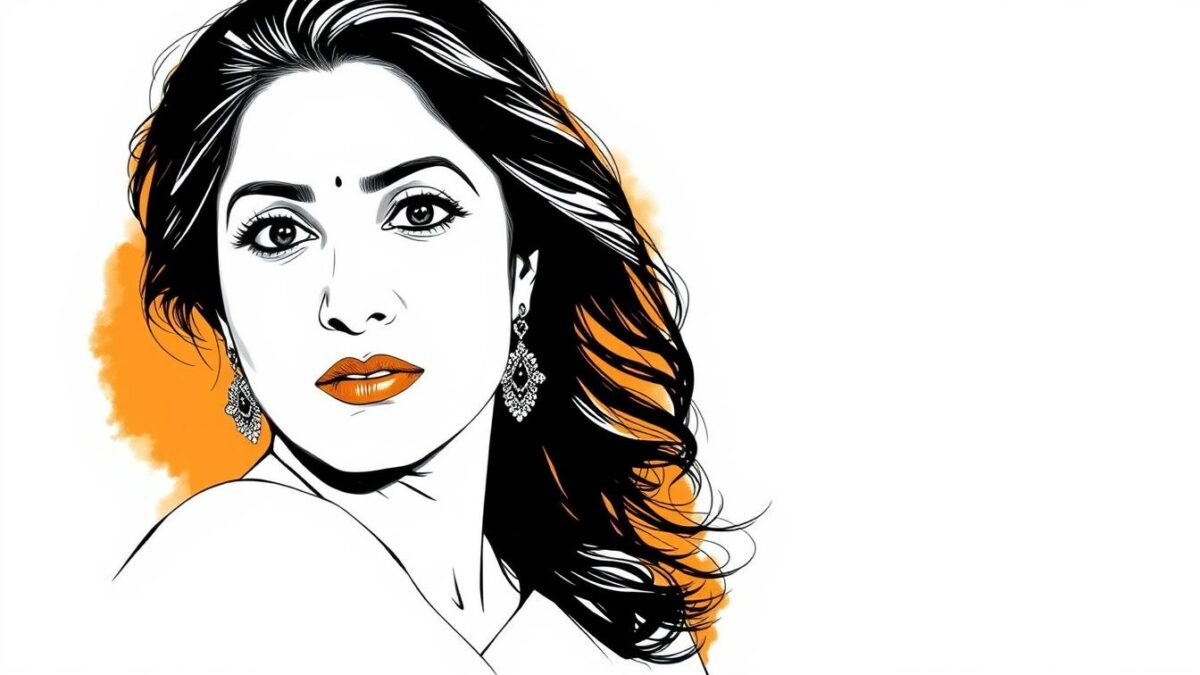
Born in Bombay on May 15, 1967, this actress quickly became a defining force in Indian cinema. Her career spans over seventy Hindi films, each performance leaving a lasting mark on popular culture.
Critics and audiences alike celebrated her exceptional dance skills. She brought a unique energy to every role, elevating each film she touched with compelling presence.
The industry recognized her talent with six Filmfare Awards from seventeen nominations. This consistent excellence demonstrated her mastery of the craft.
In 2008, the Government of India honored her contributions with the Padma Shri award. This civilian honor acknowledged her impact on cinema and the arts.
Beyond the screen, she built a rich personal life with cardiovascular surgeon Dr. Shriram Nene. Together they raised two sons while she maintained a demanding career.
This exploration traces her journey from early dance training to Bollywood stardom. It examines the choices that shaped her life and her enduring influence on entertainment.
Early Life and Cultural Foundations
Before the spotlight, Madhuri Dixit’s life was centered on academic ambition and a close-knit family. She grew up in a traditional Marathi Kokanastha Brahmin household in Bombay. Her parents, Shankar and Snehlata Dixit, alongside her three older siblings, created a nurturing environment.
This family strongly valued education and cultural grounding. They provided a stable foundation that encouraged both scholarly pursuits and creative expression.
She attended Divine Child High School in Andheri. There, she participated in dramatics and other activities beyond her core studies. These early years honed her confidence and stage presence.
Initially, her ambitions leaned toward science. She aimed to become a microbiologist and enrolled at Sathaye College in Vile Parle. Her BSc curriculum included microbiology.
However, a profound shift occurred just six months into her college education. The pull of cinema proved irresistible. She made the bold decision to discontinue her studies and pursue films full-time.
This choice reflected a deep belief in her artistic talent. The people who knew her best saw a unique potential beginning to blossom. Her early life instilled the discipline that would define her legendary career.
Discovering Dance: The Roots of Her Art
Long before the film cameras found her, a young Madhuri Dixit discovered her first language in the rhythmic beat of a tabla. This early passion for movement laid the groundwork for an iconic career.
Dance entered her life at just three years old. It quickly grew from a pastime into a profound dedication.
Kathak Training and Early Performances
She committed to eight rigorous years of Kathak training. This classical Indian dance form taught her precise footwork, expressive gestures, and storytelling rhythm.
Her talent was undeniable. At age nine, she earned a scholarship for her skills, a rare honor for a child.
The first time her name appeared in print was for a Guru Purnima festival performance. A journalist wrote that the little girl had “stolen the show.” That moment of recognition filled her with immense pride. It was a early sign of the star she would become.
This deep technical work gave her a powerful sense of achievement. Kathak became more than steps; it shaped her grace and emotional power.
Influence of Family and Culture
Her family and cultural background created a supportive environment for her artistic growth. Classical dance was valued and nurtured in her home.
These formative years instilled a discipline that would define her entire career. The love for movement she developed during this time set her apart. It remained the core of her captivating screen presence.
Breaking into Bollywood with Debut Films
Her cinematic journey began with a modest drama that would test her resilience from the very start. The transition from aspiring performer to working actress came through determined persistence.
Debut in Abodh and Early Struggles
Madhuri Dixit entered the film industry in 1984 with Abodh. This Rajshri Productions drama cast her as a young bride opposite Bengali actor Tapas Paul.
The film failed commercially but earned her positive critical attention. Reviewer Aakash Barvalia noted she excelled as a naive village girl unaware of marriage’s realities.
Her 1985 release Awara Baap also flopped at the box office. Subsequent films between 1986 and 1987 faced similar commercial challenges.
Swati, Manav Hatya, Hifazat, and Uttar Dakshin all struggled financially. These early projects tested the actress’s determination during a difficult period.
Hifazat marked her first collaboration with Anil Kapoor. This professional relationship would later yield several successful films.
Despite commercial setbacks, Madhuri Dixit continued refining her craft. Each project built industry relationships and prepared her for future breakthroughs.
The Tezaab Breakthrough and Its Impact
Everything changed for the actress when N. Chandra’s action drama Tezaab premiered in 1988. After several commercial disappointments, this film marked her transition from struggling performer to bona fide star.
She portrayed Mohini, a character forced into dance performances to support her abusive father. The role demanded both emotional depth and exceptional dance skills.
Iconic Dance Number “Ek Do Teen”
The “Ek Do Teen” sequence became an instant cultural phenomenon. Audiences flocked to theaters specifically to witness her electrifying performance.
This dance number showcased her Kathak training with modern Bollywood flair. It remains one of Hindi cinema’s most memorable musical moments.
Critical Acclaim and Filmfare Recognition
Critics noted her nuanced acting beyond the famous dance scenes. Akshay Shah highlighted her powerful dramatic scenes opposite Anupam Kher.
The performance earned her first Filmfare Award nomination for Best Actress. Industry recognition finally matched her growing popular appeal.
| Aspect | Pre-Tezaab Films | Tezaab (1988) | Impact |
|---|---|---|---|
| Box Office Performance | Commercial struggles | Highest-grossing film of the year | Proved mass appeal |
| Critical Reception | Mixed reviews | Widespread acclaim | Established acting credibility |
| Career Standing | Struggling actress | Leading star status | Opened doors to major projects |
Tezaab’s success came at the perfect time in her career. It demonstrated how the right role could transform an actress’s trajectory overnight.
Establishing a Stellar Career in the 90s
Following the breakthrough of Tezaab, a remarkable string of commercial hits in 1989-1991 cemented her position at the industry’s forefront. This period transformed her from a rising star into Bollywood’s most bankable actress.
Major Blockbusters and Award Wins
Her first release of 1989, Vardi, performed well commercially. She then reunited with Anil Kapoor for Subhash Ghai’s Ram Lakhan, which became the year’s second highest-grossing Hindi film.
Tridev followed as another massive success, finishing as the third highest-grossing film of 1989. These back-to-back hits demonstrated her consistent box office appeal.
The momentum continued into 1990 with Kishen Kanhaiya ranking fourth at the box office. Her career reached new heights with Dil opposite Aamir Khan.
This romantic drama emerged as the highest-grossing film of the year. It earned Madhuri Dixit her first Filmfare Award for Best Actress.
Her portrayal of Madhu, a rich girl falling for a poorer boy, showcased her dramatic range. The film’s success confirmed her status as a leading actress.
Commercial hits like Thanedaar and the psychological thriller 100 Days maintained her career momentum through 1991. Saajan, co-starring Sanjay Dutt and Salman Khan, became both a critical and commercial triumph.
These successive successes established her as an actress whose presence guaranteed box office returns and critical attention. Her career trajectory during this period set new standards for consistency in Hindi cinema.
Charting Success: Box Office Hits and Award Triumphs
A remarkable trilogy of films—Beta, Hum Aapke Hain Koun..!, and Dil To Pagal Hai—marked the peak of commercial success in the 1990s. These productions demonstrated an unmatched combination of critical acclaim and box office dominance.
Defining Blockbusters of the Decade
Beta (1992) showcased the actress as Saraswati, an educated woman challenging tradition. The film became the year’s biggest hit and earned her second Filmfare Award for Best Actress.
Hum Aapke Hain Koun..! (1994) redefined Bollywood success metrics. This family drama earned ₹1.35 billion worldwide, breaking Sholay’s long-standing record.
The film held the highest-grossing Hindi film title for seven years. Her performance as Nisha brought a third Filmfare Award and first Screen Award.
Dil To Pagal Hai (1997) continued the winning streak as the year’s top-grossing Indian film. The musical romance earned her fourth Filmfare Award, cementing her awards season dominance.
| Film | Year | Box Office Achievement | Award Recognition |
|---|---|---|---|
| Beta | 1992 | Biggest hit of the year | Filmfare Award #2 |
| Hum Aapke Hain Koun..! | 1994 | Record-breaking ₹1.35B worldwide | Filmfare Award #3 + Screen Award |
| Dil To Pagal Hai | 1997 | Highest-grossing film of the year | Filmfare Award #4 |
These three films represented the pinnacle of 1990s Bollywood success. They combined artistic merit with unprecedented commercial performance.
Versatility in Acting and Dance
While known for her commercial successes, the performer’s true artistic range revealed itself in character-driven films that explored complex women’s stories.
Her versatility extended far beyond romantic leads. She embraced roles that balanced mainstream appeal with deeper artistic ambition.
Diverse Roles Across Genres
In Anjaam (1994), she delivered a powerful performance as Shivani Chopra. This revenge-seeking wife and mother earned her seventh Filmfare nomination.
The role showcased emotional intensity far removed from typical dance numbers. Critics noted her ability to command the screen through dramatic performance alone.
Mrityudand (1997) cast her as Ketki Singh, a village woman confronting oppression. Anupama Chopra declared this her career’s best performance.
The critic noted how “simply dressed, she looks stunning and acts even better.” This film demonstrated her commitment to exploring women’s diverse experiences.
Madhuri Dixit proved she could inhabit characters with authenticity and depth. Her willingness to take on unglamorous roles showed artistic courage.
These performances in films like Pukar and Lajja cemented her reputation. She became known for both legendary dance skills and serious acting talent.
Madhuri Dixit Nene: A Cinematic Icon
Beyond the silver screen’s glow, Madhuri Dixit Nene’s legacy is etched into the very fabric of Indian entertainment. Her impact is measured in more than just the seventy-plus films she graced.
Legacy in Film and Dance
Critics consistently highlight a rare duality in her craft. She possessed exceptional acting depth alongside legendary dance skills.
This combination set a standard that redefined the potential of a leading actress. Her influence shaped dance trends and fashion for a generation.
Financially, she ranked among India’s highest-paid celebrities for over a decade. This reflected her immense box office power and cultural sway.
Forbes India has featured her on its Celebrity 100 list every year since 2012. This confirms her enduring status in the entertainment industry.
The Government of India honored her contributions with the Padma Shri in 2008. This civilian award acknowledged her profound impact on arts and culture.
Her work extends beyond performance. She advocates for children’s rights with UNICEF and co-founded the production company RnM Moving Pictures.
Madhuri Dixit’s career is a master list of achievements. It shows how one artist can permanently alter the landscape of film and dance.
Exploring Challenging Roles and Dramatic Performances
Beyond the box office hits, the actress sought roles that challenged both her and the audience’s expectations of a leading lady. She moved into darker, character-driven stories that showcased a different kind of power.
Transformative Roles in Anjaam and Mrityudand
In 1994, Madhuri Dixit starred in the psychological thriller Anjaam. This film marked her first collaboration with Shah Rukh Khan.
She played Shivani Chopra, a woman whose life is shattered by a dangerous stalker. The role demanded a raw intensity as her character sought revenge.
While the film had moderate commercial success, it earned the actress her seventh Filmfare nomination. Critics recognized her bold choice to tackle such dark material.
Her commitment to complex characters continued with 1997’s Mrityudand. Directed by Prakash Jha, she played Ketki Singh, a village woman fighting patriarchal oppression.
She acted alongside Shabana Azmi and Shilpa Shirodkar. For this part, she shed all glamour to embody the character authentically.
A Screen magazine review called her portrayal “fiery.” Publications like the Times of India also praised the performance.
This role earned her a third Screen Award for Best Actress. It validated her skill in serious dramatic cinema far from typical romantic storylines.
These films proved she could powerfully represent women facing real social issues. They expanded what a mainstream Bollywood actress could achieve on screen.
Transitioning to Television and Reality Shows
Television offered a natural extension for an artist whose expertise spanned both acting and dance. The small screen became her new classroom.
Madhuri Dixit brought legendary credentials to this fresh entertainment format. Her presence elevated dance competitions beyond mere spectacle.
Role as a Judge on Jhalak Dikhhla Jaa and Dance Deewane
Jhalak Dikhhla Jaa marked her first major television commitment. She judged the show across multiple seasons from 2010-2014, returning in 2022.
Dance Deewane became another platform starting in 2018. Her work continued through 2021 and beyond, connecting with new generations.
Contestants received guidance from one of Bollywood’s greatest dancers. Her feedback combined technical precision with artistic vision.
| Show | Role | Years Active | Impact |
|---|---|---|---|
| Jhalak Dikhhla Jaa | Judge | 2010-2014, 2022 | Elevated dance competition credibility |
| Dance Deewane | Judge | 2018-2021+ | Multi-generational audience connection |
| So You Think You Can Dance | Judge | 2016 | International format adaptation |
| Kahin Na Kahin Koi Hai | Host | 2002 | Early television exploration |
This television work list allowed her to maintain visibility during film breaks. It provided creative satisfaction while balancing family time.
The transition demonstrated her adaptability in evolving entertainment landscapes. Madhuri Dixit found new ways to share her talents across media.
Personal Life: Marriage, Family, and New Beginnings
In 1999, at the peak of her cinematic reign, she made a choice that stunned her industry and fans alike. She married Dr. Shriram Nene, a cardiovascular surgeon based in the United States.
This decision meant leaving behind Bollywood’s glamour for a new life. She prioritized her marriage and future family over continued stardom.
Her Marriage to Dr. Shriram Nene
The union with Dr. Nene represented a world entirely separate from films. Their love story began away from the public eye.
Madhuri Dixit Nene has spoken with pride about her husband’s character. She describes him as a kind-hearted man who supported her.
Life in the United States
The early years of their marriage presented significant challenges. Dr. Nene was completing a demanding medical residency in Florida.
His grueling hours often kept him away from home. The actress managed the household and their two sons largely on her own.
Despite the loneliness and stress, their bond grew stronger. Dr. Nene’s heartfelt birthday message decades later—”I’d choose you all over again in a heartbeat”—reveals a deep, enduring connection. Their story is one of love, sacrifice, and commitment across two different worlds.
Overcoming Career Challenges and Sabbaticals
Walking away from Bollywood at the height of her success required immense courage. The actress chose personal fulfillment over professional momentum.
Breaks, Hiatus, and the Comeback with Aaja Nachle
Madhuri Dixit’s marriage and move to America meant stepping back from films. This sabbatical lasted several years as she focused on family life away from the spotlight.
After a five-year absence, she returned with Aaja Nachle in 2007. The dance film seemed perfectly suited to her strengths as a performer.
Despite her praised performance, the film struggled at the box office. This suggested the industry landscape had shifted during her time away.
The lukewarm reception raised questions about audience connection. It highlighted the difficulty of rebuilding career momentum after extended breaks.
Many actresses find successful comebacks nearly impossible in an industry favoring younger talent. Madhuri Dixit’s attempt demonstrated remarkable bravery despite the challenging results.
Recent Ventures: Web Series and Box Office Returns
Her return to serious acting roles after a seven-year hiatus demonstrated remarkable staying power in an industry known for short careers. The actress continued to evolve with changing entertainment landscapes.
Notable Projects Like Dedh Ishqiya
In 2014, the black comedy Dedh Ishqiya marked a powerful comeback. She played Begum Para, a cunning con woman who captivated audiences and critics alike.
The Times of India review praised her scintillating return. The performance earned her 14th Filmfare Best Actress nomination.
She followed with Gulaab Gang, portraying a vigilante leader fighting for women’s rights. This expanded her list of socially conscious roles.
Latest Releases and Streaming Success
Total Dhamaal (2019) became her highest-grossing release in years. The adventure comedy performed exceptionally well at the box office.
Bhool Bhulaiyaa 3 (2024) proved even more successful. It ranks among the highest-grossing Indian films of all time.
The Fame Game (2022) on Netflix allowed her to explore long-form storytelling. Her nuanced performance reached streaming audiences worldwide.
These recent ventures across theatrical releases and streaming platforms show her continued relevance. She adapts seamlessly to modern entertainment demands.
Influence on Indian Pop Culture and Global Appeal
Across India, her influence became a daily presence in homes, dance studios, and fashion choices. The actress shaped how people experienced entertainment throughout the 1990s and early 2000s.
Her cultural impact reached every corner of the country. From urban centers to rural villages, people embraced her unique charm.
Impact on Fashion and Dance Trends
Madhuri Dixit’s dance numbers became national obsessions. Songs like “Ek Do Teen” and “Dhak Dhak” transformed how people viewed Bollywood entertainment.
Women across India copied her sari styles and jewelry choices. Her graceful presence in every film created lasting fashion stories.
Publications like Times India covered her cultural significance extensively. Their news stories documented her evolving influence over decades.
Beyond cinema, she extended her reach through meaningful work. Since 2014, she has advocated for children’s rights with UNICEF.
Her husband Dr. Shriram Nene shares health tips on his YouTube channel. This gives fans a personal experience of their family life.
Forbes India has recognized her enduring value annually since 2012. Her global appeal continues to inspire Indian communities worldwide.
Parting Impressions: Celebrating a Legendary Journey
The journey from aspiring performer to cultural icon reveals a woman who balanced artistic ambition with personal fulfillment. Madhuri Dixit’s career spans four remarkable decades, each chapter marked by thoughtful choices.
Her story shows how an actress could achieve both commercial success and critical acclaim. The love she brought to each role transformed ordinary movies into lasting cultural touchstones.
Recent reviews confirm her enduring screen presence and craft. This legendary career offers a masterclass in resilience, proving that authentic talent transcends industry trends.
Madhuri Dixit’s life and work continue to inspire new generations. Her legacy reminds us that true success blends professional achievement with personal contentment.