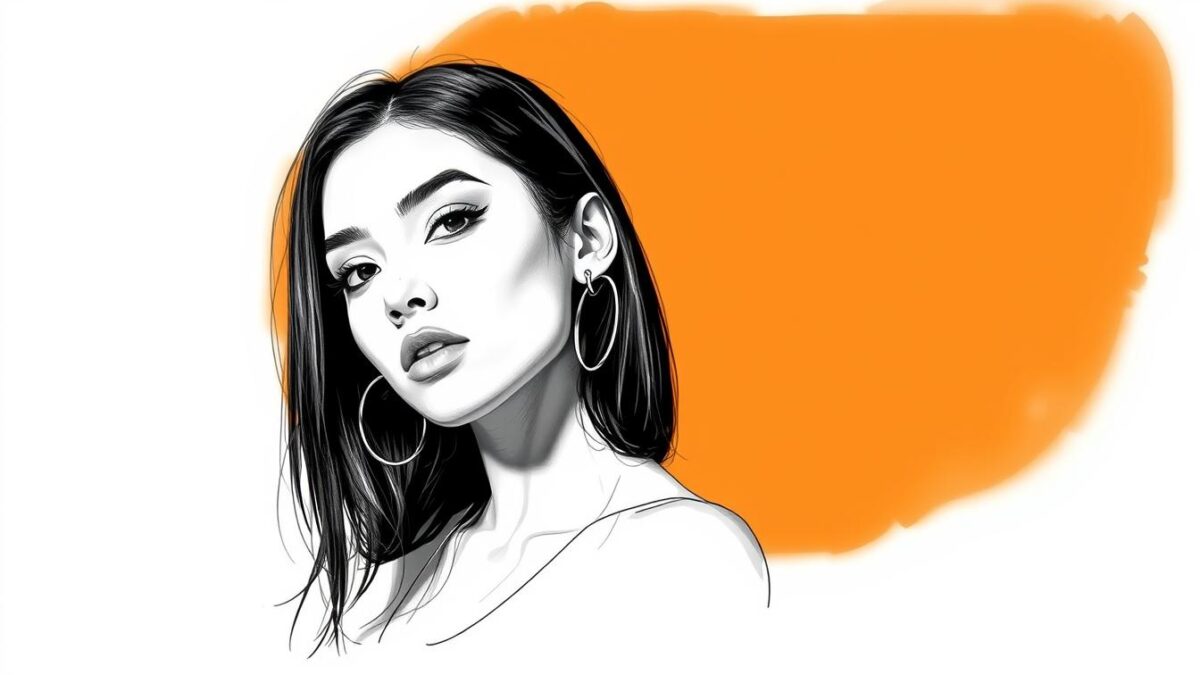
From Toronto’s vibrant scene emerges a powerful new voice. LØLØ, born Lauren Isenberg, crafts a sound that refuses to be ignored. Her pop music carries a distinct edge, blending raw punk energy with catchy melodies.
She writes with unflinching honesty about young adulthood. Her lyrics capture frustration, desire, and self-awareness. Tracks like “u turn me on” and “debbie downer” are bursts of melodic rebellion.
This artist previously performed under the name renforshort. There, she honed her skills as an alt-pop singer and instrumentalist. That foundation informs her current work, which feels both immediate and deeply personal.
Her journey reflects a shift in modern pop. It prioritizes emotional truth over polished perfection. She builds connection through shared experience, not just spectacle.
Early Life and Inspiring Beginnings
Long before the stage lights, a different kind of education began at home. The foundation was built not in studios but through family record collections.
Childhood Influences and Family Musical Heritage
Her parents’ vinyl introduced diverse sounds early on. She absorbed Billy Joel’s storytelling and Nirvana’s raw energy equally. These artists taught that great music could be both melodic and intense.
The variety shaped an eclectic taste that defied simple categorization. She learned that emotional truth existed across all genres.
Early Online Success and Memorable Talent Show Moment
By fourteen, she started sharing original songs online. This direct connection with listeners became her early strategy. The digital space served as a creative laboratory.
Her talent show victory surprised everyone. Instead of a predictable pop song, she performed “Mo Li Hua” in Mandarin. This traditional Chinese folk piece showcased technical skill and cultural curiosity.
The choice revealed an artist unafraid to take creative risks. It demonstrated that authenticity mattered more than following trends.
LØLØ Lauren Isenberg’s Journey Through Music
Signing with Geffen Records represented more than just a business move—it signaled artistic evolution. This transition marked a critical phase where raw talent met professional opportunity.
Adopting renforshort and Early Independent Releases
In 2019, two singles emerged under the name “Ren.” These early works tested creative waters independently. They demonstrated a musician finding her voice before industry attention arrived.
The Geffen deal brought a new identity: renforshort. This name change reflected artistic rebirth. It signaled a more focused creative direction.
Defining Moments: From “Teenage Angst” to Signature Singles
The 2020 debut EP “Teenage Angst” captured late adolescence perfectly. It felt manic and restless, mirroring internal turmoil. Listeners connected with its unpolished honesty.
One year later, “off saint dominique” continued the diary-like documentation. The artist refused to settle into predictable patterns. Each release showed artistic growth.
| Release | Year | Artistic Identity | Key Characteristic |
|---|---|---|---|
| Early Singles | 2019 | Ren | Independent exploration |
| Teenage Angst EP | 2020 | renforshort | Raw emotional capture |
| off saint dominique | 2021 | renforshort | Evolutionary documentation |
This period established a signature method. The artist transformed immediate experience into art without filter. Crisis became creative fuel, building connection through shared vulnerability.
Evolving Soundscapes and Artistic Growth
With the 2022 album “dear amelia,” the artist’s sound evolved from chaotic energy to focused storytelling. This debut full-length project arrived shortly after her twentieth birthday. It signaled a significant step in her musical journey.
The record presented a more deliberate course. It moved beyond the pinballing grunge and pop hybrids of earlier work. This new music embraced a steadier, mature narrative.
Transitioning from Grunge/Pop Hybrids to Mature Storytelling
The opening track, “i miss myself,” set the tone. It reached for the anthemic quality of bands like Oasis. This song demonstrated a new level of emotional scope.
Influences expanded to include vintage New Order and The Strokes. The album wove gossamer guitar lines with motorik precision. This created a richer, more textured pop landscape.
Even collaborations showed depth. Travis Barker’s work on “we’ll make this ok” blended raw language with a danceable groove. It proved pop could be both profane and polished.
Experimenting with Pop, Punk, and Acoustic Confessionals
Growth did not mean abandoning her core. The song “moshpit” transformed into a metaphor for doomed romance. It retained its intensity while exploring new themes.
Raw vulnerability remained a touchstone. “i drive me mad” was written immediately after a studio panic attack. This direct self-documentation continued to fuel her best work.
The album “dear amelia” captured a pivotal moment. It balanced refinement with chaos, and pop hooks with punk spirit. This project deepened her roots without losing their compelling edge.
Final Reflections on Lølø’s Impact and Future Prospects
Artistic vulnerability has become the signature of a new wave of Canadian pop talent. This generation prioritizes emotional truth over commercial formulas. They build careers on documentation rather than decoration.
LØLØ stands alongside peers like Sasha Alex Sloan and Carlie Hanson. These artists refuse to choose between pop accessibility and punk intensity. Their music offers solidarity instead of escape.
Tracks like “luv friends” showcase community-focused artistry. Future releases will likely balance pop hooks with raw confession. The question isn’t whether she’ll grow, but how far she’ll push boundaries while staying true to her voice.