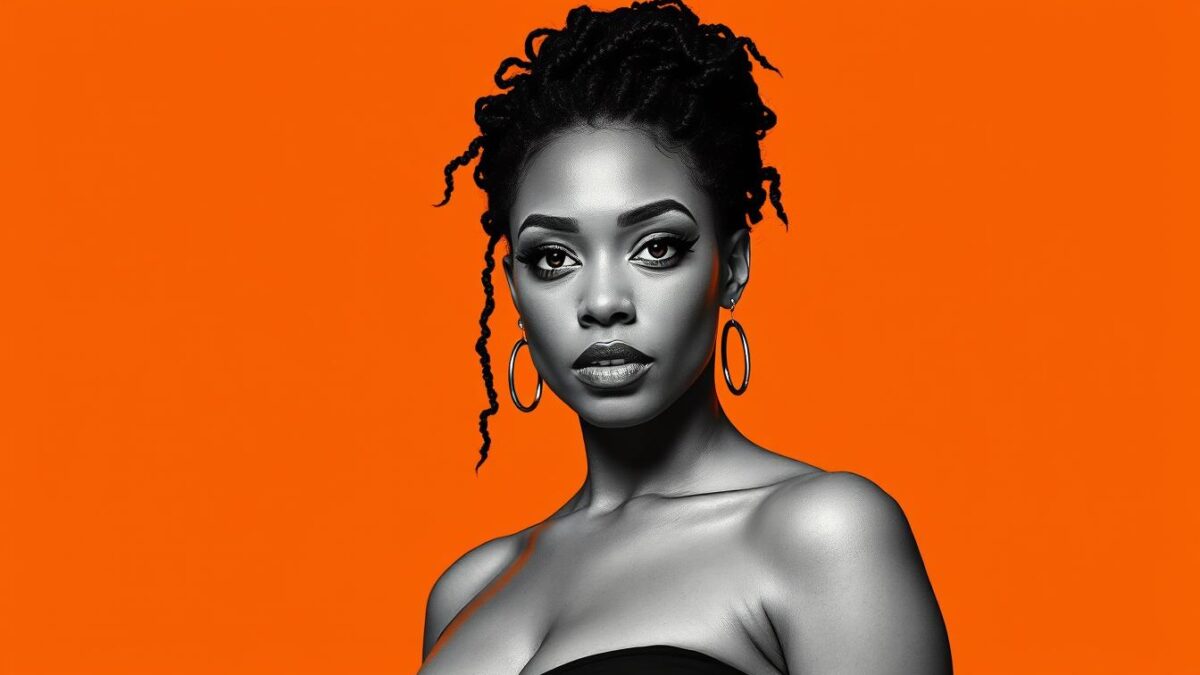
Linn da Quebrada is a powerful force in Brazilian culture. She is more than a singer. She is an actress, screenwriter, and a bold activist. Her work reshapes visibility for trans women.
Born Lina Pereira dos Santos in 1990, her stage name holds deep meaning. It translates to “Linn from the Hood” and “Broken Beauty.” This anchors her art in both place and defiance.
She identifies as a Black trans and queer woman. This lived experience grounds her creative output. Her music and advocacy are inseparable, fighting racism and supporting LGBTQIA+ rights.
Her 2017 album, Pajubá, cemented her status as a queer icon. It was described as a trans answer to Beyoncé’s Lemonade. This project established her radical voice on the music scene.
Biography and Early Influences
The foundations of her radical artistry were laid in childhood. Lina Pereira dos Santos grew up within the strict religious community of Jehovah’s Witnesses in São Paulo.
Growing Up in São Paulo and Religious Roots
Her upbringing was steeped in Bible study. The doctrine viewed her future identity as sinful. This created guilt but also gave her powerful tools.
She developed oratory skills and a deep connection to words. The relationship between sacred and profane still colors her music today. These religious roots in São Paulo shaped her artistic language.
Family Impact and Personal Formation
Her mother worked as a domestic laborer from Alagoas. Her father left when she was seven. The family structure was matriarchal and protective.
Strong women raised children alone. They taught resilience through frustration and abandonment. This family environment built protective walls around her.
| Influence Type | Source | Impact on Identity |
|---|---|---|
| Religious Doctrine | Jehovah’s Witness Community | Created guilt but provided rhetorical tools |
| Family Structure | Matriarchal Household | Taught protection and resilience |
| Media Exposure | Brazilian Television | Offered models of gender fluidity |
Brazilian TV offered contrasting influences. She imitated performers like Vera Verão and Lacraia. These early models helped shape her emerging identity among her people.
Linn da Quebrada: Career, Music, and Activism
A bold musical statement in May 2016 catapulted the artist from underground scenes to national recognition. The funk track “Enviadescer” mocked cisgender heterosexual men and exploded on YouTube. This anthem established her radical voice in Brazilian music.
Breakthrough in Funk and the Music Scene
Her 2017 album Pajubá blended afro-funk-vogue rhythms with powerful political messaging. She described the work as Brazil’s trans answer to Beyoncé’s Lemonade. The project earned praise from activist Angela Davis, who invited her to join a cultural boycott.
The singer agreed, stating that music serves as “a response to the present.” By May 2021, she was preparing a second album titled Trava Linguas. Her musical journey began unexpectedly through theater in late adolescence.
She quickly wrote eight songs—half funk, half rap. This creative burst came from needing to hear her own voice. She sings to create new desires and organize her thoughts.
Role in Big Brother and Television Appearances
In January 2022, the artist entered Big Brother Brasil 22 on TV Globo. Her participation brought trans visibility to prime-time television across Brazil. She competed for 81 days, finishing in 9th place.
During Week 10, she won Head of Household, a significant achievement. This reality TV stint functioned as activism, reaching millions of households. It forced national conversations about identity and belonging.
Earlier, in June 2021, she co-hosted the talk show TransMissão on Canal Brasil. Philosopher Judith Butler appeared as the first guest. These television appearances demonstrated her growing cultural influence beyond music.
Exploring Artistic Identity and Social Impact
Her body became a canvas for transformation in 2021. At age thirty, breast implants served as public declaration. She described this change as a way for people to recognize her identity.
Creative Process, Hip Hop, and Funk Inspirations
She recommends “Quem sou eu” as an entry point to her music. This mature composition with BadSista carries doubt and courage. It questions identity through hip hop and funk rhythms.
She sees music as part of her artistic toolkit. The creative process helps organize thoughts and create new desires. Her work blends personal exploration with cultural commentary.
Activism, Community, and LGBTQIA+ Advocacy
She helped found the Associação de Travestis de Santo André. This community work anchors her impact beyond performance. It supports Black trans people in São Paulo.
She rejects the “activism” label for her art. All artistic manifestations are political in her view. This perspective challenges market categorization of her work.
She notes LGBTphobia exists throughout society, not just hip hop. The absence of LGBTQIA+ people from jobs shows systemic issues. Her commentary highlights both problems and progress.
Closing Reflections on the Interview Journey
The interview revealed an artist who composes by breaking down, finding strength in vulnerability. She described São Paulo as a city of contradictions, offering opportunities while demanding much from its people.
Her participation in Big Brother Brasil represented a significant part of her journey. This television experience brought visibility to millions of households across the country.
She sees herself at the intersection of multiple roles—singer, actress, and advocate. Music serves as a tool for self-discovery rather than professional identity.
Her creative process has evolved since her early work. Now she asks deeper questions about direction and healing, comparing herself to a bird learning to sing.
This reflection leaves space for ongoing transformation, showing an artist still in motion.