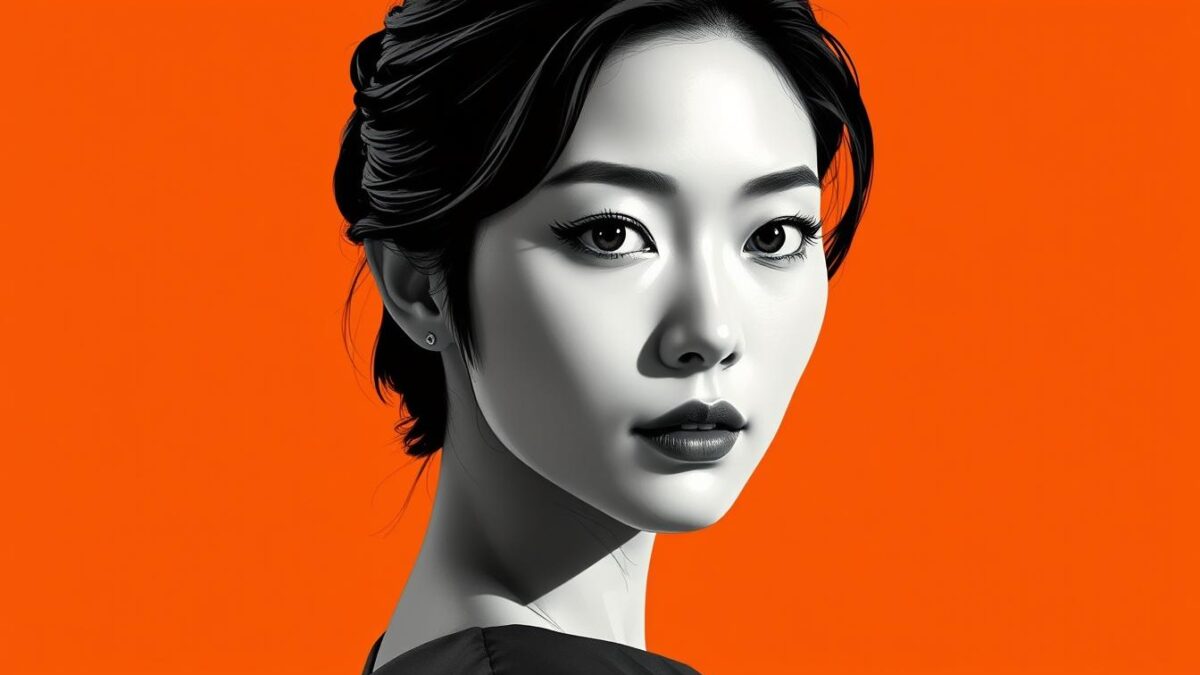
A quiet intensity arrived in Seoul on January 31, 1971. It belonged to a girl who would grow up to command screens across Asia. This is the story of actress Lee Young-ae. Her career is not one of sudden fame but of careful, steady ascent.
She grew up with two older brothers in a family that prized discipline. This upbringing forged a strong work ethic. She brings that same precision to every role she plays.
Standing at 165 centimeters, she holds attention through sheer presence. Her voice and craft do the heavy lifting. In 2009, she married Jeong Ho-yeong, a Korean-American businessman. She chose a private partnership over public spectacle.
Motherhood followed in February 2011 with the birth of fraternal twins. She balanced this new chapter with a selective career. Her agency, Good People Entertainment, mirrors her own reputation. It is professional and focused on meaningful work.
This journey is anchored in training and instinct. It favors characters with depth over simple glamour. A story built on truth, not noise.
Biographical Background and Early Life
The journey from university halls to television screens began with an uncommon choice of study. Her academic path revealed intellectual depth beyond typical entertainment industry expectations.
Family, Birth, and Education
She pursued German Language and Literature at Hanyang University. This unusual major hinted at broader cultural interests. Later graduate studies at Chung-Ang University focused on Theater and Film.
This academic grounding provided critical understanding of her craft. The table below outlines key educational milestones:
| Institution | Degree | Field of Study | Year Completed |
|---|---|---|---|
| Hanyang University | Bachelor of Arts | German Language & Literature | Early 1990s |
| Chung-Ang University | Master of Arts | Theater & Film | Mid-1990s |
Journey from Modeling to Acting
Her public introduction came through a 1991 Mamonde cosmetics commercial. The “Oxygen Lady” persona captivated viewers with urban sophistication. Raised hair and a trench coat created an iconic image.
By 1993, she transitioned to acting with “How’s Your Husband?”. The role earned Best New Actress honors at the SBS Drama Awards. This proved her narrative carrying power.
Fluent in Korean, English, and German, she brought linguistic range to international projects. Hobbies like swimming and piano reflected the discipline seen in her performances. Christian faith informed both her philanthropy and character portrayals.
Breakthrough Role in Jewel in the Palace
When “Jewel in the Palace” premiered in September 2003, few could predict its monumental impact. The historical drama, also known as “Dae Jang Geum,” would become a cultural phenomenon.
Lee Young-ae portrayed Seo Jang-geum, a royal physician in the Joseon era. Her quiet determination resonated across generations and borders.
Impact on Korean Drama and International Audiences
The series achieved remarkable viewership numbers that redefined success for historical narratives. It dominated television ratings throughout its run.
| Metric | Average | Peak | Achievement |
|---|---|---|---|
| Viewership Rating | 46.3% | 57.8% | Top 10 Korean dramas |
| International Reach | 91 countries | Pan-Asia | Cultural phenomenon |
| Awards | Daesang (Grand Prize) | MBC Drama Awards | Highest television honor |
| Regional Impact | Japan stamps | NHK Hall event | First in 12 years |
The actress received the Daesang at the MBC Drama Awards. This grand prize cemented her status as a leading performer.
“Dae Jang Geum” aired in 91 countries, introducing global audiences to Korean storytelling. The drama sparked interest in Korean culture, cuisine, and history worldwide.
In Japan, her popularity required NHK to use their main hall for the first time in over a decade. Commemorative stamps featuring the actress were issued, demonstrating her cross-cultural appeal.
Award-Winning Film Performances
Beyond television success, the actress’s film career revealed even greater dramatic range and critical acclaim. Her choices demonstrated a preference for complex characters over commercial safety.
Joint Security Area and Lady Vengeance – Critical Milestones
The 2000 mystery thriller Joint Security Area became the highest-grossing Korean film of its time. Lee Young-ae played Major Sophie E. Jean, a neutral investigator at the DMZ. Her restrained performance anchored this politically charged narrative.
Five years later, Lady Vengeance became her defining film role. As Lee Geum-ja seeking revenge after wrongful imprisonment, she combined grace with rage. This performance earned multiple Best Actress honors internationally.
| Film | Year | Role | Key Awards |
|---|---|---|---|
| Joint Security Area | 2000 | Major Sophie E. Jean | Highest-grossing Korean film |
| Lady Vengeance | 2005 | Lee Geum-ja | 26th Blue Dragon Film Awards, Baeksang Arts Awards |
| One Fine Spring Day | 2001 | Han Eun-soo | Busan Film Critics Awards |
| Bring Me Home | 2019 | Searching mother | 25th Chunsa Film Art Awards |
One Fine Spring Day and Other Celebrated Roles
Reuniting with director Hur Jin-ho for One Fine Spring Day showcased her subtle artistry. Her portrayal of Han Eun-soo won Best Actress at the Busan Film Critics Awards.
In Last Present, she earned praise for depicting terminal illness with emotional honesty. After a 13-year hiatus, Bring Me Home returned her to the big screen. This role won another Best Actress award at the Chunsa Film Art Awards.
International recognition came in 2006 when she became the first Korean actress on the Berlin International Film Festival jury. This honor acknowledged her standing in global cinema.
Lee Young-ae as a Symbol of Hallyu
Long before streaming services made Korean content globally accessible, one performer’s reach stretched across continents through traditional broadcast. Her work became a cornerstone of the Korean Wave movement.
Global Influence and Media Recognition
The success of “Jewel in the Palace” transformed the actress into a pan-Asian phenomenon. Her face became recognizable from Tokyo to Colombo, representing Korean drama at its most influential.
In 2007, the South Korean government awarded her the Medal of Culture Merit. This formal recognition acknowledged her work as a significant cultural export. The honor highlighted entertainment’s role in national soft power.
Her portrayal of Jang-geum in the iconic drama became symbolic of Hallyu itself. The character transcended entertainment, entering the realm of cultural diplomacy. This impact was particularly evident in Sri Lanka, where audiences affectionately called her “Changumi.”
Major awards continued to recognize her enduring influence. The 2015 Seoul International Drama Awards presented the 10th Anniversary Hallyu Achievement Award. In 2022, the National Brand Awards honored her continued impact.
Most recently, the 2024 Asian Film Awards celebrated her with the Excellence in Asian Cinema Award. This acknowledged both her body of work and her role in elevating Korean cinema internationally.
Versatility in Television Roles
Across three decades of television work, each role has served as a deliberate step in an evolving craft. The actress built her reputation through diverse projects before achieving international fame.
Notable Dramas and Voice Cameos
Early dramas like “Medical Brothers” and “Romance” showcased her growing range. Each performance sharpened the discipline that would define her later work.
“Fireworks” in 2000 introduced her to Taiwanese audiences. This expanded her reach beyond South Korea’s borders.
After a long hiatus, she returned with “Saimdang, Memoir of Colors” in 2017. Playing dual roles across time periods demonstrated her continued ambition.
In 2021, “Inspector Koo” allowed her to explore darker, contemporary material. This noir thriller showcased different facets of her acting ability.
She also lent her distinctive voice to “Taxi Driver” from 2021-2023. Even in narration, her presence added weight and credibility.
“Maestra: Strings of Truth” cast her as a world-renowned conductor hiding dangerous secrets. The role required both authority and vulnerability in equal measure.
Future projects include a return to her iconic character in “Uinyeo Dae Jang Geum.” This rare opportunity revisits the role that defined her career decades later.
Philanthropy and Social Contributions
While her on-screen roles captured global attention, another story unfolded quietly behind the scenes—one of consistent humanitarian commitment.
Charitable Work and Humanitarian Initiatives
The actress began her philanthropic journey early. In 1997, she traveled to Ethiopia as an NGO Goodwill Ambassador. A 1999 trip to India’s Thar Desert documented lives of the lowest social caste.
Her 2001 autobiography “A Most Special Love” shared these experiences. Lee Young-ae donated all book proceeds to charity. This gesture set the tone for decades of giving.
UNICEF appointed her Goodwill Ambassador in 2004. She used this platform to advocate for children’s rights worldwide. Her donations built schools in China and Myanmar.
One elementary school in China was renamed in her honor. In 2014, she quietly paid medical bills for a Taiwanese family. That same year, she established a scholarship fund in Sri Lanka.
| Year | Initiative | Location | Impact |
|---|---|---|---|
| 1997 | NGO Goodwill Ambassador | Ethiopia | Humanitarian mission |
| 2004 | UNICEF Ambassador | Global | Children’s rights advocacy |
| 2014 | Medical bill coverage | Taiwan/Seoul | Life-saving surgeries |
| 2014 | Sujatha Diyani Scholarship | Sri Lanka | Female education support |
| 2022-2023 | Disaster relief donations | Multiple regions | Over 400 million won aid |
Lee Young became the first Korean actress in Gucci’s “Chime for Change” campaign. Recent donations supported Ukraine relief, flood victims, and Gaza humanitarian efforts. Her philanthropy responds to both global and local crises with consistent generosity.
Endorsements and Brand Ambassadorships
Brand partnerships became another stage for her disciplined presence. The same authority that defined her acting translated seamlessly to commercial campaigns.
Luxury Fashion, Beauty Campaigns, and Global Brands
Her endorsement career launched in 1991 with Mamonde cosmetics. The “Oxygen Lady” campaign made Pacific Chemical’s brand their most successful ever.
Tropic Orange Makeup sold 1.5 million units in two months during 1994. This commercial phenomenon demonstrated influence beyond her acting work.
She remained Mamonde’s face for ten years, a rare long-term partnership. Since 2007, Lee Young-ae has served as global ambassador for The History of Whoo.
Her fashion endorsements read like a luxury directory. Cartier, Valentino, Balenciaga, and Gucci all sought her sophisticated presence.
Recent campaigns include Louis Vuitton high jewelry and Ralph Lauren collections. These partnerships reflect her timeless appeal across beauty, wellness, and medical technology sectors.
The actress brings the same credibility to endorsements as to her craft. Each campaign feels like an extension of her carefully built brand.
Personal Life and Lasting Legacy
Off-screen, a different kind of performance unfolds—one built on privacy and principle. The actress lee has consistently chosen depth over visibility in both her career and personal choices.
Family, Public Persona, and Cultural Impact
In 2009, Lee Young-ae married her husband Jeong Ho-yeong in a private ceremony. The Korean-American businessman shares her value for discretion. Two years later, fraternal twins completed their family.
Motherhood became another role approached with her characteristic focus. She balanced family life with selective projects. This strategy preserved her mystique between appearances.
Her intellectual curiosity extends beyond acting. She authored books about humanitarian work and Korean food culture. In 2012, she launched an organic children’s product business.
Fluent in three languages, she practices piano, swimming, and horseback riding. Her Christian faith informs both philanthropy and personal choices. Each decision reflects a consistent moral framework.
Her legacy transcends awards like the baeksang arts grand prize. Even her iconic dae jang geum role serves this larger purpose. Lee Young-ae built an impact through careful selection rather than volume.
Final Thoughts on the Enduring Impact of Lee Young-ae
Her legacy demonstrates that the most powerful cultural impact comes from consistency of purpose. The actress built a career through careful selection rather than constant visibility.
Awards like the MBC Drama Daesang and Blue Dragon honor reflect this disciplined approach. Her Best Actress win at the 25th Chunsa Film Art Awards for Bring Me Home proved absence can deepen impact.
The 2007 Medal of Cultural Merit and 2024 Excellence in Asian Cinema Award bookend decades of influence. Lee Young-ae’s philanthropy shows commitment beyond the screen.
She continues to redefine aging in public life with roles like Maestra’s conductor. Her work remains a study in refinement rather than reinvention.