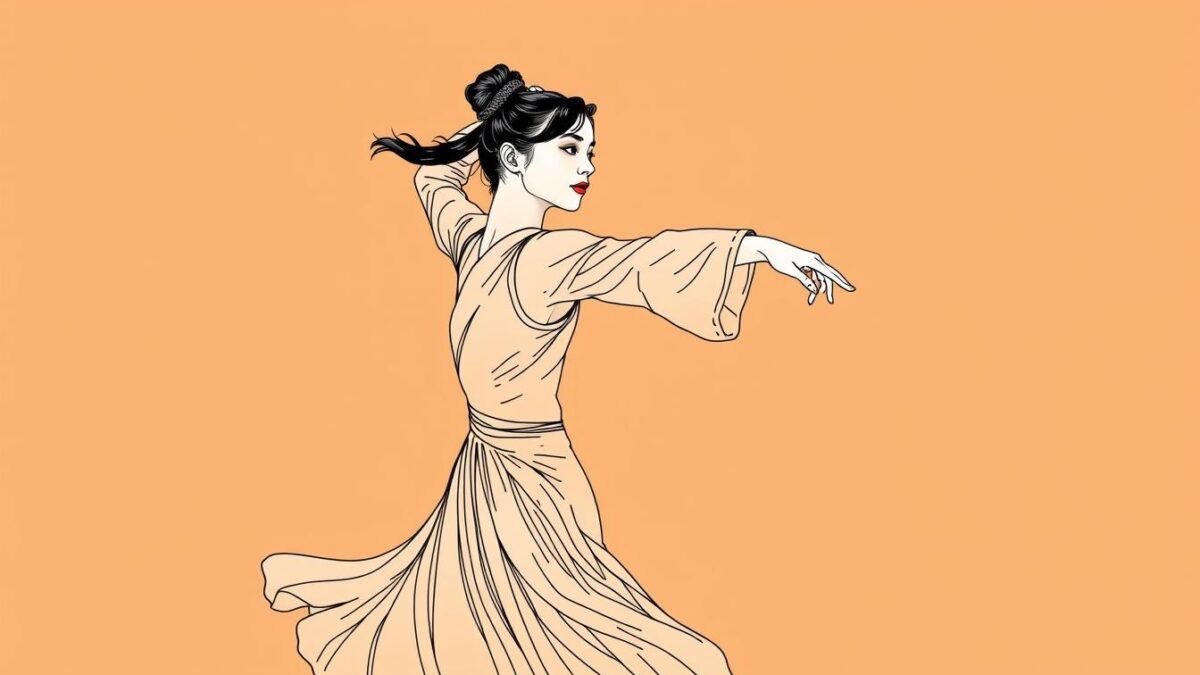
A young artist from Japan commands attention on the contemporary dance stage. She translates deep emotion into movement with a precision that judges recognize instantly.
At just 15, this dancer claimed first place in the Contemporary Dance Category for women in the Senior Age Division at a major youth ballet competition. This feat places her among the country’s most promising young performers. She also secured a spot in the Top 12.
Her training ground is Angel. K. Ballet, a studio known for cultivating strong technique and artistic voice. It has shaped a dancer who doesn’t just execute choreography. She inhabits it.
This competitive success reflects years of disciplined work and artistic risk-taking. It shows a stage presence that holds an audience from the first position to the final bow.
This is the story of a young woman who chose dance and made it matter. It traces the background, attributes, and signature style that set her apart. No hype, no filler—just the facts of a legacy being built, one movement at a time.
Profile Overview of Konoka Mori
From the studios of Angel. K. Ballet emerged a dancer whose approach blends Japanese cultural influences with global contemporary language. This foundation supports performances that feel both rooted and expansive.
Early Life and Background
Born in June 2003, Konoka Mori developed within Japan’s rich artistic landscape. Traditional arts and modern performance culture coexisted around her.
Her training at Angel. K. Ballet provided essential technical rigor. The studio emphasizes classical discipline alongside creative freedom for contemporary work.
While early life details remain private, her competition record suggests childhood beginnings. Years of daily practice built the strength and musicality visible today.
Distinct Physical and Artistic Attributes
Physically, she possesses the lean lines favored in contemporary dance. Core strength enables complex floor work and sudden shifts from explosive movement to stillness.
Artistically, her performances show maturity beyond her years. She demonstrates emotional intelligence and willingness to be vulnerable onstage.
Her movement vocabulary feels personal rather than trendy. It combines instructor guidance with her own instincts and interpretations.
Dance Achievements and Competition Highlights
Her first-place finish in a major national competition wasn’t just a win; it was a statement. It confirmed a talent that operates at the highest level of contemporary dance.
This victory placed her firmly among Japan’s most promising performers. The achievement carries weight because of the field she conquered.
Competition Performances and Scores
Konoka Mori secured the top spot in the Contemporary Dance Category for the Senior Age Division. Judges saw a performance that blended technical precision with deep emotional resonance.
She also earned a position in the category’s Top 12 rankings. This showed consistency across multiple rounds, not just a single moment of brilliance.
Dancers from elite studios like BALLET・LE・COEUR and Yuki Tokunaga Ballet School provided fierce competition. Facing such talent makes the first-place result even more significant.
Awards and Notable Placements
The competition’s structure was comprehensive, featuring various age groups and styles. Winning the Senior Age Division placed her at the pinnacle of that year’s event.
Notably, no Grand Prix was awarded in her division that season. This detail highlights the judges’ rigorous standards, making her first-place award a clear endorsement of excellence.
It was a victory built on fluid movement, emotional clarity, and undeniable control. A win that respected the art form itself.
Konoka Mori in the World of Contemporary Dance
A unique fusion of classical discipline and modern freedom defines the approach of this rising dance talent. Her work bridges traditional Japanese ballet foundations with contemporary experimentation.
This artistic positioning creates performances that feel both grounded and innovative. The dance community recognizes this distinctive voice.
Signature Dance Style and Techniques
Her movement vocabulary combines ballet’s clean lines with contemporary’s emotional rawness. She executes precise extensions while embracing floor work and off-balance momentum.
The technique shows careful training in both form and feeling. Controlled movements flow into spontaneous, gestural phrases.
Impact and Influence on the Dance Community
Her competition success signaled a new artistic voice emerging. Judges noted her ability to interpret choreography with personal authenticity.
She represents Japanese dancers honoring tradition while exploring global influences. This approach inspires peers and mentors alike.
Evolution of Her Artistic Journey
The journey began with foundational ballet training at Angel. K. Ballet. She mastered classical methods before transitioning to contemporary forms.
Over time, she developed a distinctive movement signature. Her use of breath to drive motion creates organic, flowing performances.
| Classical Element | Contemporary Adaptation | Artistic Result |
|---|---|---|
| Turnout and alignment | Modified for floor work | Fluid transitions |
| Precise extensions | Emotional collapses | Dynamic contrast |
| Structured positions | Off-balance momentum | Spontaneous feeling |
| Technical control | Expressive freedom | Authentic performance |
Reflecting on Konoka Mori’s Legacy
When a young performer achieves national recognition, the question becomes not what they’ve won, but what legacy they’ll build. At fifteen, this dancer’s first-place finish marks a clear starting point for something larger.
True artistic impact requires sustained commitment beyond any single victory. Future paths could lead to professional companies, international stages, or creative collaborations. The essential factor remains continued growth and artistic courage.
Her contribution already demonstrates that young dancers can compete with integrity. The lasting legacy will be measured by performances that move audiences and inspire future generations. It’s the quiet influence that truly endures.