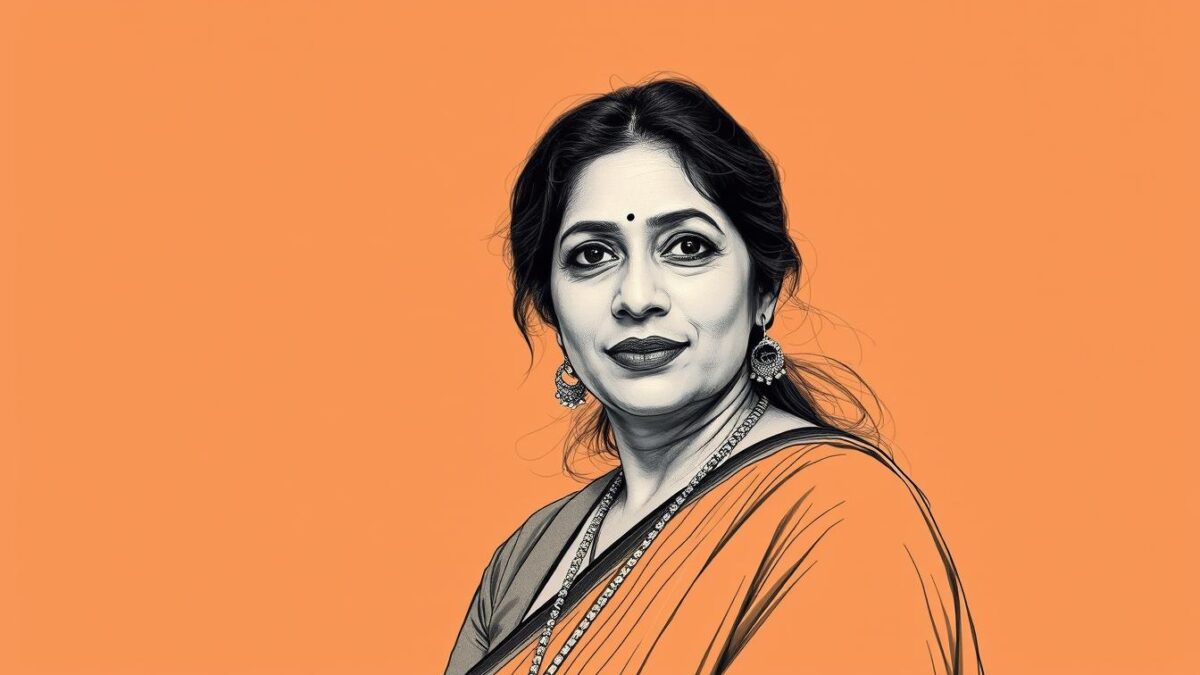
Born Sharada Krishnamurthy in New Delhi, this artist emerged as one of India’s most celebrated vocal talents. Her career spans five remarkable decades.
She recorded over 50,000 songs across nearly 45 languages. This includes Hindi, Bengali, Tamil, and many others.
The singer earned four Filmfare Best Female Playback Singer Awards. She won three consecutively between 1995 and 1997.
In 2005, she received the Padma Shri, India’s fourth-highest civilian award. This honor recognized her immense contributions to Indian music.
For American audiences unfamiliar with Bollywood traditions, playback singers provide the vocals that actors lip-sync on screen. Their voices become as iconic as the performances themselves.
This guide explores her journey from classical training to international stardom. It examines her craft, persistence, and lasting influence on generations of music lovers.
Early Life and Musical Beginnings
The foundation for an extraordinary singing career was laid in childhood, when Sharada began her musical education under careful guidance. Her journey started in New Delhi within a Tamil family that valued both education and culture.
Childhood and Family Influences
Born as Sharada to T.S. Krishnamurthy, an Education Ministry employee, her artistic path was shaped early. Her aunt Protima Bhattacharya recognized her talent and enrolled her with guru Surama Basu.
She learned Rabindra Sangeet, the lyrical Bengali tradition rooted in Tagore’s compositions. This training gave her a unique musical perspective from young age.
By eight years old, she won a gold medal at a music competition. She continued earning awards at the Inter-Ministry Classical Competition throughout the mid-1960s.
Foundations in Classical and Rabindra Sangeet
Parallel to Bengali styles, she studied Hindustani classical music under Balram Puri. This dual foundation allowed her to navigate diverse musical forms with ease.
In 1971, she recorded her first film song—a Bengali duet with the legendary Lata Mangeshkar. The session was arranged by composer Hemant Kumar for Shriman Prithviraj.
College years at St. Xavier’s in Mumbai brought crucial connections. She met Ranu Mukherjee, Hemant Kumar’s daughter, during the Malhar festival.
This reintroduction led to professional opportunities. Kumar began using her as a live performance vocalist, building her stage experience.
Playback singer Manna Dey noticed her talent at these events. He recruited her for advertisement jingles, providing steady work and industry exposure.
| Training Type | Mentor | Musical Style | Key Period |
|---|---|---|---|
| Rabindra Sangeet | Surama Basu | Bengali lyrical tradition | Early childhood |
| Hindustani Classical | Balram Puri | North Indian classical | Formative years |
| Early Performances | Hemant Kumar | Live stage singing | College period |
Despite initial aspirations for the Indian Foreign Services, she moved to Bombay at fourteen. This decision to pursue music would shape Indian cinema’s soundscape for decades.
Rise to Fame and Cinematic Journey
Before her voice defined an era, she honed her craft behind the scenes. She cut demo tracks for established stars like Lata Mangeshkar, learning the ropes while waiting for her own break.
Her first credited Hindi song was a 1976 remake. Yet, her first original recording came in a 1977 Kannada film, establishing an early presence in South Indian cinema.
Breakthrough in Bollywood Playback Singing
The real turning point arrived in 1987 with the film ‘Mr. India’. The song “Hawa Hawai,” lip-synced by Sridevi, became a national phenomenon.
It launched the singer into stardom. This hit cemented her status as a leading female playback singer.
Major Collaborations and Film Milestones
The 1990s saw her dominate the film industry. She became one of the decade’s most sought-after voices.
She worked with famed music directors like A.R. Rahman and Anu Malik. Her work on soundtracks for films like ‘1942: A Love Story’ showcased her incredible versatility.
Alongside Alka Yagnik, she shaped the musical identity of 90s Bollywood. Her duets with leading male singers created some of the era’s most memorable romantic songs.
Kavita Krishnamurthy: Ultimate Guide to a Legendary Career
Her voice became a global ambassador for Indian music, echoing in prestigious halls from London to New York. This legendary career expanded far beyond the recording studio.
She connected with audiences on every continent. Her artistic journey showcases remarkable versatility and enduring recognition.
International Performances and Global Impact
This celebrated artist brought Indian melodies to the world’s most famous stages. She performed at Royal Albert Hall, The Kennedy Center, and Lincoln Center.
Her concerts spanned the US, UK, Europe, and Asia. She introduced global audiences to the power of the Indian female playback singer.
Fusion, Pop, and Devotional Ventures
In 1999, she began a pivotal collaboration with violinist L. Subramaniam. Their Global Fusion project blended Eastern and Western musical traditions.
This partnership led to both artistic innovation and marriage. She also recorded solo pop and devotional albums, demonstrating her range beyond the original motion picture soundtrack.
Awards, Recognitions, and Honors
Her trophy case reflects a career of excellence. She earned four Filmfare Awards for Best Female Playback Singer.
Three wins were consecutive from 1995 to 1997. She shared a fourth award with Shreya Ghoshal in 2003.
The Indian government honored her with the Padma Shri in 2005. This recognized her immense contribution to the arts.
| Award | Year | Significance |
|---|---|---|
| Filmfare Best Female Playback Singer | 1995-1997, 2003 | Four wins, including three consecutive |
| Padma Shri | 2005 | India’s fourth-highest civilian award |
| Honorary Doctorate (Jain University) | 2015 | Recognition of artistic contribution |
| Lifetime Achievement Award (UK Asian Film Festival) | 2024 | International career acknowledgment |
Other honors include the S.D. Burman International Award and the Lokmat Sur Jyotsna Award. These solidify her status as a true legend of the film industry.
Discography and Enduring Hits
From playful dance numbers to soulful romantic ballads, her discography reads like a history of Indian film music itself. The female playback singer created an extensive catalog across multiple languages and genres.
Iconic Bollywood Numbers and Regional Classics
“Hawa Hawai” from Mr. India launched her into mainstream recognition. This 1987 hit became synonymous with Sridevi’s iconic performance.
The romantic ballad “Pyaar Hua Chupke Se” earned her first Filmfare Award. It showcased her ability to convey deep emotion through R.D. Burman’s composition.
Her consecutive Filmfare wins included “Mera Piya Ghar Aaya” and “Aaj Main Upar.” These songs demonstrated her command of both celebratory and complex emotional material.
The duet “Dola Re Dola” with Shreya Ghoshal became a cultural phenomenon. This Devdas number remains one of Bollywood’s most celebrated female collaborations.
Her versatility shone through in diverse hits like “Tu Cheez Badi Hai Mast Mast” and “Nimbooda” from Hum Dil De Chuke Sanam. Each song highlighted different aspects of her vocal range.
Beyond Hindi cinema, she recorded classics in Kannada, Bengali, and other regional languages. Films like Sparsha and Raja Huli featured her distinctive voice.
Television soundtracks for Mahabharat and Ramayan brought devotional music to millions. Her work continued into the 2010s with contributions like “Koi Chahat Koi Hasrat.”
Reflecting on a Timeless Legacy
From the recording studio to the global stage, Kavita Krishnamurthy redefined what it means to be a playback singer. Her five-decade career, spanning over 50,000 songs, cemented her status as one of the best female voices in cinema history.
Her versatility was her signature. She moved effortlessly from classical ragas to romantic ballads, making her an irreplaceable force in Indian music.
That foundation in Hindustani and Rabindra Sangeet gave her performances unmatched emotional depth and technical precision. She helped elevate the playback singer from a behind-the-scenes artist to an internationally recognized star.
Today, she continues to shape the future through mentorship and her work with the Subramaniam Academy. Her voice remains a timeless model of discipline and artistry for new generations.