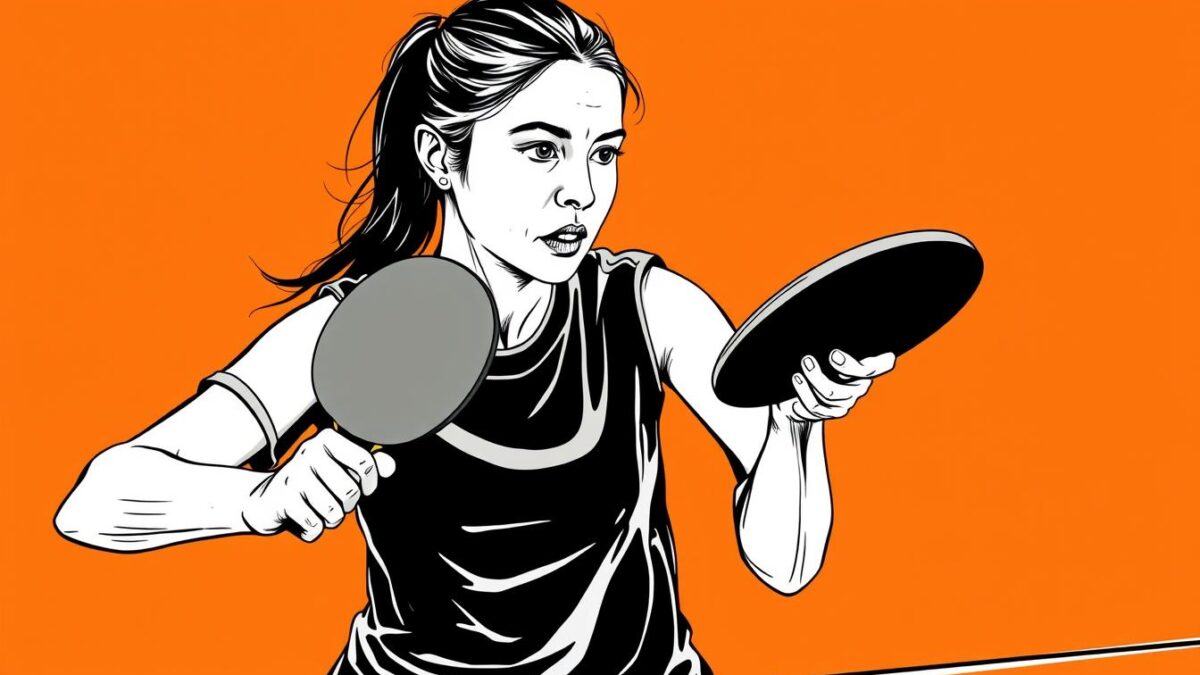
The final point landed. On May 1, 2023, Kasumi Ishikawa closed a remarkable 23-year chapter in professional table tennis. She retired at age 30, leaving as Japan’s most decorated female player of her generation.
Her career began at seven years old. It was a family affair. Her mother, Kumi, coached her, while her father and younger sister also competed at high levels. The sport was their way of life.
On the table, Ishikawa was a left-handed force. Her shakehand grip and attacking style produced speedy top-spins and loops. This technical precision earned her a peak world ranking of No. 3 in 2017.
She became a cultural icon in Japan. Fans loved her for more than medals. Her humility and perseverance inspired a nation. She even learned Mandarin, building a bridge to fans in China.
Her legacy transcends statistics. It’s a story of consistent excellence against the world’s best. A legacy built on speed, heart, and quiet strength.
Formative Years and Table Tennis Roots
Before the international spotlight, there were years of quiet dedication and family support. The sport ran deep in her bloodline.
Family Influence and Early Training
Her entire family competed at high levels. Her mother Kumi reached national play and became her primary coach. Her younger sister Rira also joined the professional circuit.
The household transformed to support her ambitions. By first grade, her parents built a dedicated practice space at home. This allowed daily training with proper equipment.
Youth, Education, and Early Competitions
Her talent emerged early at the All Japan Championships. She defeated older high school and university students. This performance put her on the national radar.
From 2007 through 2010, she dominated the junior division. She claimed four consecutive titles during this time. The media dubbed her “Ai-Chan II” after another prodigy.
She studied Ai Fukuhara’s underspin serve and incorporated it. After primary school, she moved to Osaka for elite training. She practiced late into the night with Japan’s best players.
| Year | Competition | Achievement | Age |
|---|---|---|---|
| 2007 | All Japan Championships Junior | First Title | 14 |
| 2008 | All Japan Championships Junior | Second Consecutive Win | 15 |
| 2009 | All Japan Championships Junior | Third Straight Victory | 16 |
| 2010 | All Japan Championships Junior | Fourth Championship | 17 |
Her primary school yearbook captured a childhood dream. She wrote about wanting to compete in the Olympic Games. That dream would eventually become reality.
Breakthrough Moments and Rise Through the Ranks
The transition from national prodigy to global contender happened swiftly. A quarter-final run at the 2009 World Table Tennis Championships announced her talent on the international stage.
By 2011, she secured the national singles title at just 17. This victory cemented her status as Japan’s leading player in women’s table tennis.
National Triumphs and Early International Exposure
Her world ranking climbed steadily, reaching a career-high by 2012. She entered the London Olympic Games as a seeded player, a testament to her rapid ascent.
Olympic Debut and Key Team Successes
At her first Olympic Games, Ishikawa made history. She became the first Japanese player to reach the women’s singles semi-finals.
Though she finished fourth, her performance in the team event was pivotal. She delivered crucial wins to help Japan secure a historic silver medal.
The Rio 2016 Olympics brought a bronze medal in the team event. A leg cramp cut her singles campaign short, showcasing the sport’s physical demands.
At Tokyo 2020, she added a second team silver to her collection. Across three Olympic cycles, her consistency in the team event was remarkable.
Kasumi Ishikawa’s Career Highlights and Impact on Table Tennis
The 2017 World Table Tennis Championships delivered a historic moment for Japanese sport. Partnering with Maharu Yoshimura, Kasumi Ishikawa clinched the mixed doubles gold. This victory ended a 48-year drought for Japan in this event at the world championships.
She proved it was no fluke by repeating the feat in Budapest in 2019. Her dominance in mixed doubles was a hallmark of her career.
Major Tournament Victories and Records
Her success spanned the globe on the ITTF World Tour. She captured eight singles titles, demonstrating remarkable consistency against top international competition.
A significant domestic triumph came in 2021. She reclaimed the All Japan National Championships title, defeating a younger rival. This win marked her fifth national crown.
| Year | World Tour Event | Achievement |
|---|---|---|
| 2014 | Grand Finals | Champion |
| 2016 | Swedish Open | Singles Winner |
| 2018 | German Open | Singles Winner |
Innovative Playing Style and Competitive Spirit
As a left-handed player, her attacking style was formidable. She used a Butterfly Viscaria blade with specialized rubbers. This setup maximized her speedy top-spins and powerful loops.
Her technical skill and aggressive play overwhelmed opponents. She held her own against the world’s best for over a decade.
Mentorship and Influence on Future Japanese Stars
Kasumi Ishikawa’s impact reached beyond her medal collection. She became a role model for the next wave of Japanese talent. Younger players admired her professionalism and work ethic.
Her fluency in Mandarin, learned from coaches, built a unique bridge to fans in China. This cultural connection amplified her status as a global ambassador for women’s table tennis.
Reflections on a Remarkable Journey
When nearly 150 reporters gathered on May 18, 2023, they came to witness an athlete at peace. Kasumi Ishikawa announced her retirement after a rare stumble—failing to qualify for the World Table Tennis Championships. She called it the right time to walk away.
“I decided to retire because I felt like I left everything out there,” she said. Her pride centered on consistency: three Olympic team medals, including a bronze, and a decade competing against the world’s elite. The sport taught her how to turn childhood dreams into reality.
Her final match against Chinese rival Chen Meng closed a 23-year chapter. Now she organizes clinics for young players across Japan. Her legacy isn’t just hardware—it’s the grace and commitment she brought to the table every time.