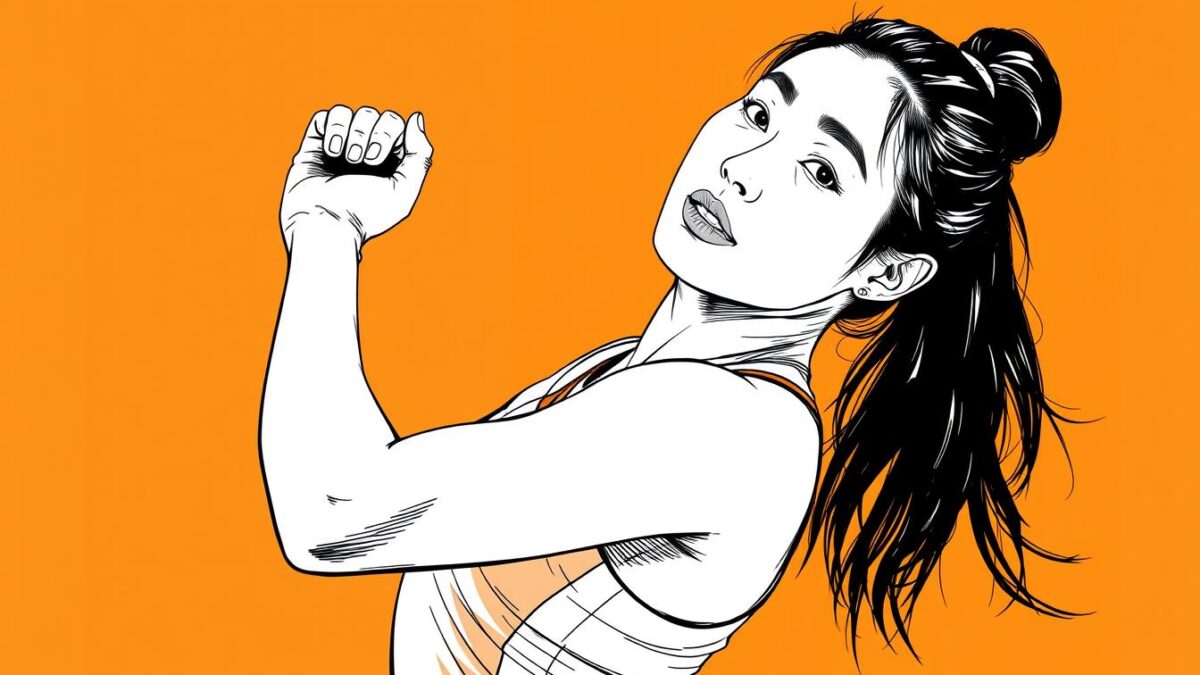
The journey began in Kobe, where a young athlete was born in April 2000. This coastal city became the training ground for a future champion. Her early start at age four laid the foundation for an extraordinary career.
Today, she stands as one of Japan’s most decorated figure skaters. Her three consecutive World Championship victories from 2022 to 2024 mark an unprecedented achievement. No Japanese skater in any discipline had ever accomplished this feat before.
The 2022 Beijing Olympics brought dual medals—a team silver and individual bronze. This made her only the fourth Japanese woman to medal in Olympic singles competition. Her consistency across multiple seasons demonstrates remarkable mental toughness.
Beyond the ice, she balanced elite athletics with academic pursuits. She graduated from Kobe Gakuin University in 2023 with an economics degree. Now she prepares for her final competitive season ahead of the 2026 Milan Cortina Olympics.
Early Life and Personal Background
A collective family decision in Kobe set a young girl on a path toward global recognition. The support of her parents and two older sisters created a stable launchpad. This environment in the port city nurtured her talent from the very start.
Birth, Family, and Hometown
Kaori Sakamoto has called Kobe home her entire life. Training locally provided remarkable consistency. She worked with the same coaching team from childhood through her senior career.
Her family unit was central to her development. The choice to pursue skating was a shared one. This early commitment from her relatives built a foundation of unwavering support.
Education and Early Inspirations
Beyond the rink, Sakamoto valued academics. She balanced world-level competition with remote studies. She earned an economics degree from Kobe Gakuin University in 2023.
As a child, she admired the skater Suzuki Akiko. Akiko’s elegant style and longevity were a major inspiration. They fueled her own dreams of skating for Japan.
Her life off the ice is rich with creative hobbies. She enjoys swimming, jigsaw puzzles, and painting. These activities provide a mental balance to her disciplined training regimen.
Introduction to the World of Figure Skating
A television screen flickered with the grace of figure skaters, capturing the imagination of a four-year-old. This early exposure to the sport sparked an immediate and lasting fascination.
That childhood interest quickly turned into action. On November 18, 2003, she took her first official steps onto the ice in Kobe.
The First Steps on Ice
Her start in skating was guided by a dedicated team from day one. Coaches Sonoko Nakano, Mitsuko Graham, and Sei Kawahara provided the foundation.
Maintaining the same coaching team for over two decades is rare in elite sports. This continuity allowed for a seamless development of technical skill and artistry.
| Coach | Role Emphasis | Tenure |
|---|---|---|
| Sonoko Nakano | Technical Fundamentals | 2003-Present |
| Mitsuko Graham | Artistic Expression | 2003-Present |
| Sei Kawahara | Choreography & Strategy | 2003-Present |
Influences and Early Motivation
Watching Olympian Akiko Suzuki perform shaped her understanding of excellence. Suzuki’s style became an early benchmark for her own ambitions.
Her family recognized her passion and talent from those first wobbly strides. They provided the unwavering support and resources necessary for serious training.
This childhood inspiration matured into a profound professional determination. The discipline she would later demonstrate was rooted in those initial moments of wonder.
Rise Through Junior Competitions
The national stage first witnessed her talent at the 2012-13 Japan Novice Championships. This early gold medal signaled the podium consistency that would define her entire career.
National Debut and International Presence
Her international debut came during the 2013-14 season on the ISU Junior Grand Prix circuit. A sixth-place finish in Ostrava, Czech Republic marked her first global exposure.
The following seasons showed steady progression. She earned a silver medal at the 2015-16 Junior Grand Prix event in Riga, Latvia.
Victories at the Asian Open FS trophy in 2013 and 2015 provided crucial international experience. These competitions built confidence for tougher fields ahead.
Key Milestones on the Junior Stage
The 2016-17 season became her junior breakthrough. She collected medals at both Junior Grand Prix assignments—silver in France and gold in Japan.
This success led to winning the Japanese junior national title. Her performance signaled readiness for higher-level competition.
In December 2016, she took bronze at the Junior Grand Prix Final in Marseille. This proved she belonged among the world’s elite junior skaters.
The 2017 World Junior Championships bronze medal validated her international competitiveness. This achievement served as the springboard to senior events.
Transitioning to Senior-Level Success
The 2017 competitive season marked a pivotal shift as the junior champion stepped onto the senior international stage. This transition tested her skills against world-class opponents in high-pressure environments.
Overcoming Early Challenges
Her senior debut at the 2017 Asian Figure Skating Trophy proved seamless. She won gold by placing first in both segments, immediately establishing herself as a serious contender.
The maiden Grand Prix appearance at Rostelecom Cup resulted in a fifth-place finish. This event provided valuable experience competing against established senior skaters.
At the 2017 Skate America, she earned silver behind teammate Satoko Miyahara. She set new personal bests, proving she could challenge Japan’s top women.
The breakthrough came at the 2017-18 Japan Championships. Sakamoto won the short program and claimed overall silver, securing her first senior national medal.
This performance earned her a spot on Japan’s team for the PyeongChang Olympics. The selection marked a rapid ascent to the highest level of competition.
She dominated the 2018 Four Continents Championships, winning both the free skate and overall title. The victory completed a Japanese podium sweep and earned her first senior international championship.
At the PyeongChang Olympics, she placed sixth in the ladies’ singles event. Despite minor errors, the experience exposed areas for technical refinement that would fuel future success.
Kaori Sakamoto – Signature Style and Technical Brilliance
Technical precision meets artistic expression in a skating style that has evolved from pure athleticism to complete performance art. The athlete’s clean execution of jumps and consistent landings set her apart from competitors who prioritize difficulty over control.
Her equipment choices reflect this balanced approach. White Edea Ice Fly skates with traditional silver blades provide the responsive support needed for powerful jumping techniques. This setup enables intricate footwork sequences while maintaining stability.
Early in her career, critics noted a reliance on technical elements over emotional connection. Through deliberate focus on choreography and interpretation, she transformed this perceived weakness into a major strength. Her performances now showcase remarkable emotional depth.
The triple Lutz jump became a reliable scoring element after years of refinement. This technical expansion demonstrates her commitment to growth while maintaining consistency. Under extreme pressure, her jump quality and presentation remain remarkably stable.
Two decades with the same coaching team cultivated both technical precision and artistic maturity. This continuity produced a complete skater whose programs showcase the full spectrum of figure skating excellence.
Major Competitive Achievements and Titles
The medal collection tells a story of sustained excellence across every major competition. Each piece represents a milestone in an extraordinary career.
Medals: Olympics, World Championships, and More
At the 2022 Beijing Olympics, she earned a bronze medal in singles and a silver medal in the team event. This made her only the fourth Japanese woman to medal in Olympic singles competition.
Her three consecutive World Championship titles from 2022 through 2024 established historic dominance. No Japanese skater had ever achieved this three-peat before.
The 2025 World Championships brought another silver medal, showing continued excellence against new challengers. Her first major senior international title came at the 2018 Four Continents Championship.
Historic National and Grand Prix Wins
She captured the 2023-24 Grand Prix Final championship during a perfect season. The following year, she added a bronze medal at the same event.
Across the demanding Grand Prix circuit, she collected eleven total medals. This includes seven gold medals, three silver medals, and one bronze medal.
Five Japanese national championship titles cement her status as the country’s leading skater. These victories secured her selection for multiple Olympic and World teams.
In-Depth Look at Key Competitions
Pressure reveals character, and few competitions tested this athlete’s mettle like the 2022 Beijing Olympics. These major events became stages where career-best performances emerged under intense scrutiny.
The 2022 Beijing Olympic Breakthrough
Kaori Sakamoto delivered when it mattered most at the Beijing Games. Her clean short program earned a personal best score of 79.84 points, placing her third.
The free skate brought even greater drama. Despite skating cleanly for another personal best of 153.29, she expected to finish fourth. Then frontrunner Kamila Valieva faltered, securing Sakamoto’s bronze medal.
Earlier in the team event, her fifth-place finish contributed to Japan’s bronze medal. This was later upgraded to silver after disqualifications.
Grand Prix Finals and Four Continents Highlights
Sakamoto’s dominance continued at the 2022 World Championships. She won both segments with personal best scores, totaling 236.09 points.
Her 2018 Four Continents victory showcased early promise. She placed second in the short program before winning the free skate decisively.
The 2023-24 Grand Prix Final capped an undefeated season. She claimed both program segments in Beijing for her first title at this event.
| Competition | Short Program Score | Free Skate Score | Result |
|---|---|---|---|
| 2022 Beijing Olympics | 79.84 (PB) | 153.29 (PB) | Bronze Medal |
| 2022 World Championships | 80.32 (PB) | 155.77 (PB) | Gold Medal |
| 2023-24 Grand Prix Final | 76.89 | 148.35 | Gold Medal |
| 2018 Four Continents | 71.81 (PB) | 145.76 (PB) | Gold Medal |
Records, Consistency, and Historical Impact
History was made when a Japanese skater achieved what no other had accomplished across any discipline. Her three consecutive world championship titles represent a level of dominance that redefines excellence in the sport.
Three-Peat World Championship Success
The athlete became the first Japanese woman to win the world championship since Mao Asada’s 2014 victory. This ended an eight-year drought for Japanese women’s skating.
Her three-peat marked the first time any Japanese skater won consecutive world titles. The achievement placed her alongside American legend Peggy Fleming, who last accomplished this feat from 1966-1968.
This consistency across multiple competitive cycles demonstrates remarkable longevity. It distinguishes her career from skaters who achieved brief peaks of success.
Defining Moments in Figure Skating History
The 2023-24 season showcased perfect competitive form. She won all seven events entered, including two Grand Prix competitions and the world championship.
Her three world titles tied the record for most wins by a Japanese woman. This links two generations of skating excellence in her nation’s sporting history.
This sustained success occurred during intense international competition. It proves her dominance against the best skaters from North America, Asia, and Europe.
Kaori Sakamoto’s Road to the 2026 Milan Cortina Olympics
As the Olympic cycle turns toward Milan Cortina, a champion prepares her swan song with programs that reflect her journey. The 2025-26 season marks her final competitive campaign after two decades of elite skating.
Preparing for Her Final Season
Her short program music choice carries emotional weight. “Time to Say Goodbye” signals the approaching end of her competitive career. This program showcases the artistic maturity developed over years of international competition.
For her free skate, she selected a medley of French songs including “L’Hymne a l’amour.” This sophisticated musical choice demonstrates her growth as a complete performer. She aims to leave audiences with a memorable final impression.
The season opened at the Grand Prix de France with a second-place finish. She trailed Japanese teammate Ami Nakai by under three points. Her fifth national championship victory secured the Olympic team spot.
Anticipated Competitive Challenges and Prospects
The Milan Cortina Olympics will feature intense competition. American skaters Alysa Liu and Isabeau Levito present strong technical challenges. South Korea’s Kim Chae-yeon and neutral athlete Adelia Petrosian also threaten the podium.
Despite announcing retirement, Sakamoto remains among the world’s best skaters. Her consistency and experience make her a medal favorite. However, any clean performance across both program segments could claim victory.
A final Olympic medal would provide the perfect conclusion to her remarkable career. It would solidify her legacy as one of figure skating’s greatest champions of this era.
Final Reflections on a Remarkable Journey
What defines a champion’s career is not just the medals won but the journey taken and the legacy left behind. Kaori Sakamoto’s path from a four-year-old captivated by television skating to a three-time World Champion shows remarkable consistency across many years.
Even at the peak of her career, this figure skater experienced intense pre-competition nerves. Her legs would shake before performances, revealing the courage required to excel. She balanced elite athletics with remote university studies, earning an economics degree while competing internationally.
Her hometown of Kobe recognized these achievements with the City Sports Special Award in 2023. After retirement, Sakamoto plans to become a figure skating coach, passing on two decades of knowledge to the next generation.
Her impact on Japanese figure skating will endure long after her final performance. The three consecutive world championships and Olympic medals represent a golden era defined by technical precision and artistry. As she prepares for Milan Cortina, her career stands as inspiration for future champions.