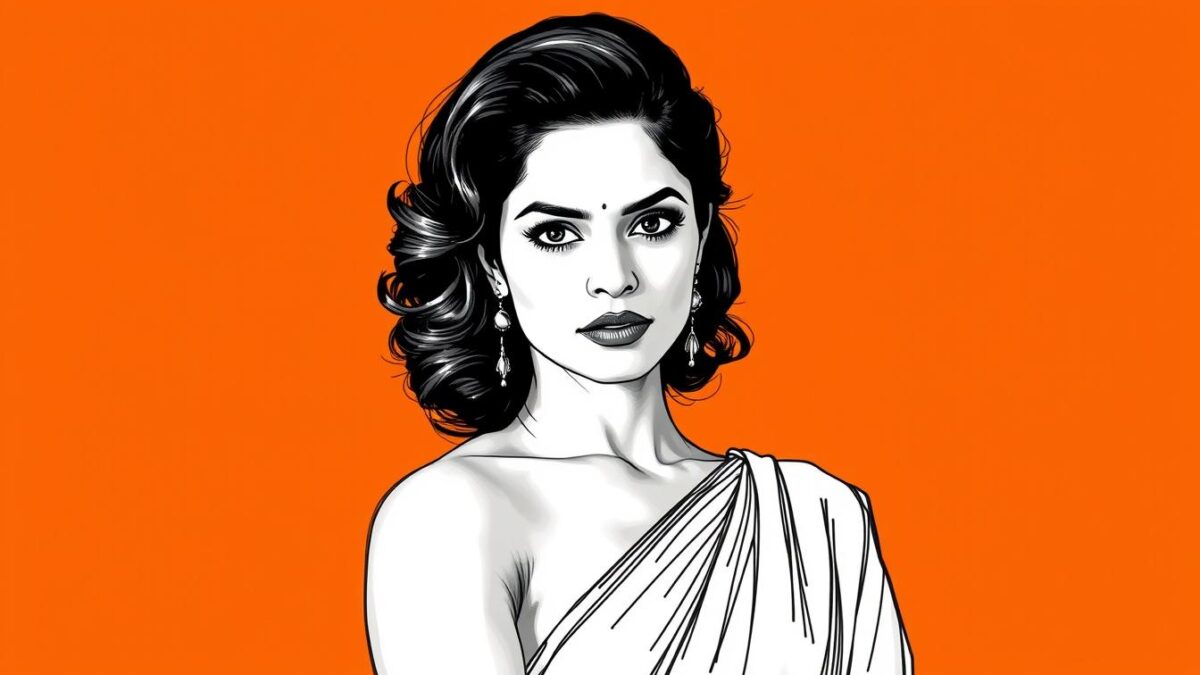
From a small town in Himachal Pradesh to the national stage, Kangana Ranaut commands attention. Her journey is one of remarkable transformation. She stands today as one of Indian cinema’s most decorated performers.
Her career spans nearly two decades, defined by fearless choices. She consistently portrays strong-willed, unconventional women. These roles have earned her four National Film Awards and the Padma Shri.
Her influence now extends beyond the silver screen. In 2024, she entered a new office, winning a parliamentary seat. This move from actor to politician marks a significant chapter.
This profile traces her path from theater training to national discourse. It examines the craft and controversy that define her legacy. She remains a polarizing figure who challenges industry norms.
Early Life and Background
The foundations of Kangana Ranaut’s resilient public persona were laid during her early life in the Himalayan foothills. Her childhood in Bhambla, a small town in Himachal Pradesh, was simple and happy.
She was raised in a traditional Rajput joint family. This environment instilled strong values from a young age.
Her family background is notable:
- Her mother, Asha, worked as a school teacher.
- Her father, Amardeep, was a businessman.
- Her great-grandfather served as a Member of the Legislative Assembly.
This lineage hinted at a future in public life. Even as a child, she showed a strong, independent spirit. She often questioned perceived gender biases within her family.
Childhood in Himachal Pradesh
Growing up in the ancestral haveli shaped her worldview. The serene landscape of Mandi district provided a stark contrast to the ambition brewing within her.
Education and Early Interests
She attended DAV School in Chandigarh, pursuing science. Her parents initially pushed her toward a career in medicine.
A pivotal moment arrived during her twelfth grade. Failing a chemistry test made her reconsider her path. This event prompted a radical decision at sixteen.
She chose to leave home for Delhi, pursuing a different dream. This choice created a rift with her family for some time. That early defiance directly shaped the determined woman she became.
Introduction to Acting and Bollywood Debut
Her search for creative depth led her from a brief, unsatisfying modeling stint to the demanding stages of Delhi’s theater scene. She joined the Asmita Theatre Group, training under director Arvind Gaur.
Theater work built a solid foundation. It gave her the confidence to tackle complex roles, even stepping in for missing actors.
Mumbai was the next logical step. She enrolled in a drama school, honing her skills further. An audition for Anurag Basu’s Gangster followed.
Initially deemed too young, she eventually won the part. She replaced another actor to play Simran, an alcoholic caught in a love triangle.
At seventeen, the emotionally intense performance was a challenge. She later reflected on her craft as raw during the shoot.
Released in 2006, the film was a major success. It earned praise from critics and launched Kangana Ranaut’s career.
Her work secured the Filmfare Award for Best Female Debut. It was a powerful entrance for the new actor.
Breakthrough Roles and Early Critical Acclaim
The acclaim for her debut was immediate, but Kangana Ranaut’s next choice truly defined her artistic courage. She followed Gangster with the 2006 drama Woh Lamhe…, a semi-biographical film.
This role required a deep emotional dive. She portrayed the late actress Parveen Babi, exploring her mental illness and complex relationships.
The performance left her emotionally drained. She spoke of feeling Babi’s desolation and loneliness long after filming ended.
A Critical Darling Emerges
Film critics took immediate notice. Subhash K. Jha of Sify offered high praise for her raw vulnerability.
He compared her to legends Smita Patil and Shabana Azmi. He highlighted her phenomenal ability to convey torment through her eyes.
This portrayal cemented her status as a serious actor. She was not afraid to strip her soul naked for the camera.
| Film (Year) | Critical Reception | Box Office Result |
|---|---|---|
| Gangster (2006) | Highly Praised | Commercial Success |
| Woh Lamhe… (2006) | Acclaimed | Underperformed |
Despite the glowing reviews, Woh Lamhe… did not find a wide audience. This established an early pattern for the actor.
Her boldest artistic choices did not always guarantee commercial success. Yet, these roles built her unique credibility.
She consistently preferred complex, emotionally damaged characters. This set her apart from peers seeking conventional leads.
Diverse Film Genres and Experimentation
The years following her acclaimed debut saw Kangana Ranaut deliberately testing her range across multiple genres. She moved beyond intense dramas to explore musicals, ensemble pieces, and regional cinema.
This period showcased her willingness to take creative risks. Even when commercial success proved inconsistent.
Transition from Modeling to Acting
Her 2007 musical thriller Shakalaka Boom Boom became a critical disaster. India Today called the film an “amateur mess.” The project also sparked creative conflict when the director replaced her voice without consent.
She reunited with Anurag Basu for Life in a… Metro, playing a sophisticated socialite. Critics praised her ability to handle complex emotions without overreaching. Raja Sen noted she “manages to herd her emotions well.”
The actor ventured into Tamil cinema with Dhaam Dhoom in 2008. This romantic thriller was completed after the director’s tragic death during production.
These diverse projects demonstrated her commitment to challenging roles. Each film represented a deliberate step in expanding her artistic horizons.
Commercial Successes and Box Office Hits
Commercial validation arrived for Kangana Ranaut through three distinct films that showcased her box office power. These projects balanced her artistic reputation with mainstream appeal.
In 2009’s “Raaz: The Mystery Continues,” she played a possessed model. The supernatural horror became a financial success despite critical concerns about typecasting.
“Once Upon a Time in Mumbaai” (2010) featured her as fictional actress Rehana. She studied classic performers like Zeenat Aman for the role. The gangster film became one of the year’s biggest hits.
Her most profitable venture came with 2013’s “Krrish 3.” As a shapeshifting mutant, she brought depth to the superhero spectacle. The film earned approximately ₹300 crore worldwide.
These commercial triumphs proved her versatility beyond intense dramas. They demonstrated consistent box office draw across different genres.
Distinctive Performances in Fashion and Life in a… Metro
Her portrayal of a troubled supermodel in the 2008 film Fashion demonstrated a new level of emotional depth and technical skill. The role required a complete physical and emotional transformation that captivated audiences and critics alike.
As Shonali Gujral, she played a substance-abusing model facing career collapse. The character’s journey from confident diva to broken addict showcased her range. This performance earned unanimous critical acclaim.
India Today called the film a landmark in her career. Taran Adarsh praised her confident portrayal, while Nikhat Kazmi noted her “exquisite metamorphosis” through each phase of the character’s decline.
The film faced controversy when media speculated the role was based on former model Geetanjali Nagpal. The Delhi Commission for Women temporarily stayed the release, approving it only after script narration.
Fashion became a commercial success with worldwide revenue of ₹600 million. The performance earned Kangana Ranaut both the National Film Award and Filmfare Award for Best Supporting Actress.
| Film (Year) | Critical Reception | Box Office | Award Recognition |
|---|---|---|---|
| Fashion (2008) | Unanimous Acclaim | ₹600 million | National Film Award |
| Life in a… Metro (2007) | Positive Reviews | Moderate Success | Critical Praise |
| Gangster (2006) | Highly Praised | Commercial Hit | Debut Award |
This validation cemented her status as a serious performer capable of carrying emotionally demanding narratives. The film’s success marked a turning point in her career trajectory.
The Making of Queen and Its Feminist Impact
The year 2014 brought a cinematic turning point that would redefine perceptions of female-led narratives in Indian cinema. Queen became the actress’s defining role, a coming-of-age dramedy where she also co-wrote dialogues.
She played Rani, a sheltered Delhi girl who embarks on her European honeymoon alone after her fiancé cancels their wedding. This performance presented a unique challenge, as Rani’s timid nature contrasted sharply with her own confident personality.
Transformative Role and Critical Praise
Critics called it a “role of a lifetime,” praising her seamless movement between vulnerability, humor, and growing self-assurance. Devesh Sharma of Filmfare noted her maturity in handling the character’s transformation.
Sudhish Kamath of The Hindu described the journey as “absolutely delightful.” The film and her portrayal received unanimous acclaim from critics, exceeding box office expectations.
Award Wins and Industry Recognition
The performance earned both the Filmfare Award and National Film Award for Best Actress. This recognition cemented her status as Hindi cinema’s foremost actress for women-centered narratives.
Queen gained cult status and scholarly recognition as an influential feminist text. The film celebrates female autonomy and self-discovery, making it a landmark analysis of modern womanhood.
Dual Roles in Tanu Weds Manu Returns
The 2015 sequel presented Kangana Ranaut with one of her most technically demanding challenges. She played both Tanuja, the fiery character from the original film, and Datto, a new Haryanvi athlete.
This dual performance required meticulous preparation. For Datto, she learned the Haryanvi dialect and trained in triple jump. She even visited Delhi University in disguise to study mannerisms.
Character Nuances and Preparation
Critics praised how she created two distinct individuals. Sweta Kaushal noted her perfection of body language and accents. Saibal Chatterjee found it difficult to believe one actress played both roles.
The film’s box office performance broke records. It earned over ₹2.4 billion worldwide, becoming the highest-grossing Bollywood film with a female protagonist.
This portrayal earned her a Filmfare Critics Award. She also won her second consecutive National Film Award for Best Actress.
The performance demonstrated remarkable range. It solidified her status as Hindi cinema’s most bankable female star.
This box office success proved female-led films could compete with male-dominated blockbusters. The office collections set a new standard for women-centric narratives.
Social Media and Controversial Remarks
Beyond the film sets and awards ceremonies, Kangana Ranaut’s digital presence has become its own stage for controversy and legal battles. Her social media activity frequently generates intense public debate and media coverage.
Supreme Court Commentary on Defamation Case
The Supreme Court addressed a significant legal complaint regarding her remarks about the farmers’ protests. The court noted her post was not a simple retweet but contained added commentary.
This case stemmed from tweets during the 2020-21 protests against the farm laws. She had commented about a woman protester, claiming she participated in earlier demonstrations.
Mahinder Kaur filed the defamation complaint in Bathinda court. The actress sought to quash the case but withdrew her plea after judicial remarks.
Influence of Retweets and Public Reactions
Her social media posts often generate strong responses from both supporters and critics. The farmers protest comments exemplify how political statements can lead to legal consequences.
This case highlighted how retweets with added commentary carry accountability. Public figures face scrutiny for their online activity and remarks.
The media coverage of this legal battle showed the intersection of celebrity, politics, and social media. It became significant news during the farm laws controversy.
Political Transition and Parliamentary Career
Winning the Lok Sabha seat from Mandi transformed Kangana Ranaut from celebrated actress to elected representative. This move formalized her long-standing political alignment with right-wing ideologies. Her candidacy represented a natural progression of her public advocacy.
She assumed office as Member of Parliament on June 4, 2024. Representing the Bharatiya Janata Party, she succeeded Pratibha Singh in the Mandi constituency. This district holds deep personal significance as her birthplace.
The new politician now balances acting, directing, and governance duties. Her parliamentary role adds another dimension to her public persona. This office allows her to directly serve the people of her home region.
Some people viewed her candidacy as leveraging celebrity status for political gain. Others saw it as genuine ideological commitment. This career shift reflects a broader trend of film personalities entering Indian politics.
Behind the Scenes: Filmmaking and Directorial Ventures
Launching her own production company in 2020 signaled a new chapter of artistic independence. This move behind the camera represented a natural progression for someone who had always sought creative control.
Launching Manikarnika Films
Manikarnika Films became her platform for directing and producing. The company’s first major work was the 2019 epic “Manikarnika: The Queen of Jhansi.”
This historical film faced production challenges when original director Krish departed. She stepped in to co-direct the project, portraying the legendary warrior queen Rani Lakshmibai.
Her performance in this film, combined with her role in “Panga” (2020), earned a fourth National Film Award. The industry response to her directorial debut was mixed but acknowledged her ambition.
Her second directorial effort came with 2025’s “Emergency,” a biographical drama about Indira Gandhi. The movie received poor reviews from critics who questioned its historical accuracy.
Through Manikarnika Films, she continues to center women’s stories in her work. The production house represents her commitment to shaping narratives beyond acting.
Life Off-Screen: Personal Journey and Challenges
A defining moment in her personal life was the decision to refuse financial help. This choice carried a heavy cost. During her early years in Mumbai, the actress survived on meager meals of bread and pickle.
She turned down assistance from her father, creating a rift with her family. This act of independence led to years of silence. Her relatives disapproved of her entry into the film industry.
This difficult period lasted until her career began to solidify. The release of Life in a… Metro in 2007 became a turning point. It prompted a long-awaited reconciliation with her family.
Her elder sister, Rangoli Chandel, eventually became her manager. This brought a new layer of family support into her professional world. Kangana Ranaut has often criticized the media for focusing on her personal relationships.
She believes this attention overshadows her professional work. The woman has prioritized her career over traditional expectations. She remains unmarried, a choice that reflects her independent life.
Analysis of Media Portrayal and Industry Impact
Her presence on Forbes India’s Celebrity 100 list six times underscores a career built on undeniable commercial impact and polarizing public discourse. The media’s analysis of Kangana Ranaut reveals a figure split between artistic admiration and ideological debate.
Critics’ Reviews and Public Perception
Major outlets like Hindustan Times and Times of India provide frequent coverage. Their reporting spans from box office success to political commentary. This dual focus highlights the complex nature of her public image.
Critics consistently praise her acting craft in films like Queen. They highlight her ability to portray strong, unconventional women. Yet, this praise often clashes with scrutiny of her off-screen statements.
Her alignment with right-wing ideologies creates a stark contrast. It positions her against the more liberal leanings of the film industry. This tension makes her a lightning rod for national debates.
Public perception remains deeply divided. Supporters see a fearless voice challenging the status quo. Detractors point to controversial remarks and professional clashes. This division ensures her media portrayal is never simple.
Kangana Ranaut: Trailblazer in Indian Cinema
With four National Film Awards and a Padma Shri, she has rewritten the rules for what a female actor can achieve in Hindi cinema. Her career stands as a blueprint for artistic courage meeting commercial success.
She consistently chose strong-willed women over conventional parts. This approach distinguished her from other actresses who often took supporting roles. Her films proved female protagonists could carry box office hits.
The Government of India honored her with the Padma Shri in 2020. This recognized her contribution to Indian arts. She appears regularly on lists celebrating influential women in cinema.
| Achievement | Year | Significance |
|---|---|---|
| Fourth National Film Award | 2021 | Record for most by a female actor |
| Padma Shri Award | 2020 | Fourth-highest civilian honor |
| Queen Release | 2014 | Redefined female-led narratives |
| Political Entry | 2024 | Expanded influence beyond cinema |
She challenged industry norms throughout her career. She demanded equal pay and refused submissive character types. Her willingness to take creative risks influenced a generation.
As both an actor and star, she redefined possibilities. Her trailblazing extends from performance to production and politics. She modeled multiple pathways for women in the industry.
Wrap-Up: Reflecting on a Dynamic Career
Few careers in modern Indian cinema have sparked as much debate while achieving such artistic heights. Kangana Ranaut’s journey spans nearly two decades of exceptional film work and controversial public statements.
Her four National Film Awards place her among India’s most decorated actresses. Movies like Queen and Tanu Weds Manu Returns earned both critical praise and massive box office success.
She transformed possibilities for female-led films. This star proved women could carry commercial blockbusters.
Yet her social media activity generated strong response. The farmers protest case showed how online posts carry real consequences.
At this moment, she balances three careers: actor, filmmaker, and parliament member. People remain divided on her legacy.
Analysis reveals a pattern of brilliant performance paired with public controversy. Kangana Ranaut’s influence on Indian culture remains undeniable.