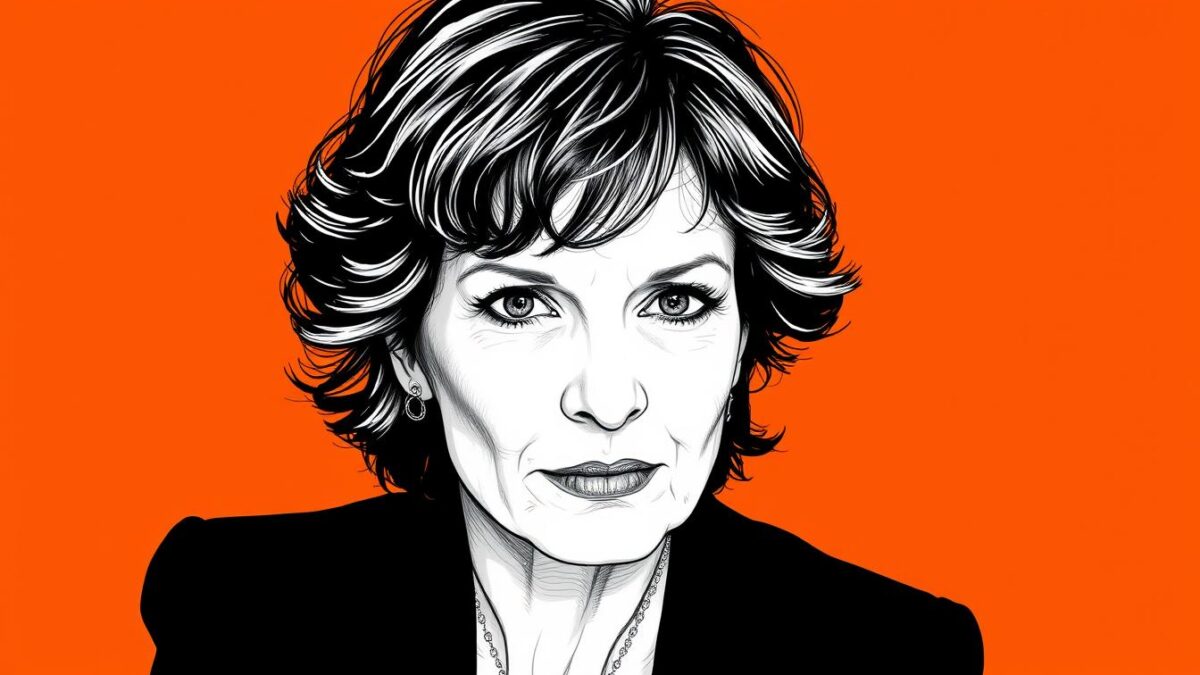
Fanny Ardant stands as a commanding presence in European cinema. Her career spans five remarkable decades. She transformed from a youthful beauty into an actress known for profound depth.
Born in Saumur, France, she grew up in a military family. Discipline and culture were central to her upbringing. She initially studied political science before finding her true calling.
Her journey to stardom was unconventional. She chose craft over convention, following a powerful instinct. A stage appearance in 1974 set her on a new path.
By the early 1980s, she became a major film star. Recognition came quickly, catching the eye of legendary directors. This launched a career that would spark conversation across continents.
This profile examines the woman behind the iconic roles. It looks at her work as a director amplifying marginalized voices. Her choices on screen and off reveal a unique artistic spirit.
Early Life and Discovering the Arts
From a structured childhood in Monte Carlo to discovering literature’s emotional depths, her early life set the stage. The youngest of five children, she grew up surrounded by military order and intellectual curiosity.
Childhood in Monaco and France
Her father served as a cavalry officer, bringing discipline to their home. The family lived in Monaco until she turned seventeen. A convent school education in Monte Carlo shaped her formative years.
At fifteen, she discovered Marcel Proust’s writings. The author’s work spoke directly to her awakening sensibilities. This encounter revealed the emotional architecture beneath daily life.
Education and the Initial Spark for Acting
After moving to Aix-en-Provence at seventeen, she studied political science. This practical path honored her father’s military pragmatism. But her heart leaned toward more creative pursuits.
A diplomatic job at the French embassy in London followed graduation. Poor timekeeping and disheveled appearance led to her dismissal. The experience forced her to confront what she truly wanted.
She returned to France and enrolled in drama school almost on impulse. Her first stage appearance in 1974 marked a professional turning point. This woman began trusting her own voice, moving toward performance.
The death of her father that same year profoundly affected her. Yet his advice to pursue education guided her through grief. She combined rigorous preparation with instinctive emotional truth in her acting.
Fanny Ardant: A Storied Career in Film and Stage
At thirty-one, a phone call from François Truffaut would pivot her career toward cinematic immortality. The 1980s became her defining decade.
Breakthrough with “The Woman Next Door”
Her role opposite Gérard Depardieu in “The Woman Next Door” marked a turning point. Truffaut’s film explored obsessive love with raw intensity.
The performance earned her first César nomination. It announced her as a major presence in French cinema.
Collaborations with Truffaut and International Ventures
The professional partnership with Truffaut became personal. They worked together on “Vivement dimanche!” before his tragic death.
Fluent in English and Italian, she expanded into international films. Her portrayal of Maria Callas demonstrated remarkable range.
Transition into Directing and Screenwriting
By 2009, she stepped behind the camera with “Ashes and Blood.” This directorial debut signaled a new creative phase.
She continued exploring different artistic forms. Opera direction and advocacy work showed her expanding vision.
Recent awards confirm her enduring relevance. Each role reveals deeper layers of her craft.
Impact and Recognition in the Cinematic World
From César Awards to international festival honors, her trophy case tells a story of enduring excellence. The recognition spans genres and decades.
Awards, Accolades, and Festival Highlights
Major awards mark key moments in her career. They celebrate both popular success and artistic risk.
| Year | Award | Film | Category |
|---|---|---|---|
| 1997 | César Award | Pédale douce | Best Actress |
| 2002 | European Film Award | 8 Women | Best Actress (shared) |
| 2013 | César Nomination | Bright Days Ahead | Best Actress |
| 2020 | César Award | La Belle Époque | Best Supporting Actress |
The Stanislavsky Award in 2003 honored her acting principles. Festival appearances from Berlin to Moscow expanded her global reach.
Legacy and Influence on French and Global Cinema
Her influence extends beyond awards. Films like Crossed Tracks and Bright Days Ahead challenged conventions.
The Maria Callas role demonstrated remarkable vocal control. Each part gave voice to complex women.
As a director, she amplifies marginalized stories. Her work continues to inspire new generations of artists.
Reflecting on an Enduring Legacy
Fanny Ardant’s story is not one of fading away but of growing more luminous with each passing year. Recent films like “American Star” prove her command of the screen remains undiminished. She continues to choose roles with intelligence and presence.
Her life off-screen mirrors the drama and resilience of her characters. The love story with François Truffaut, though brief, left a lasting creative mark and a daughter, Joséphine. This personal history fuels the depth she brings to every performance.
As a director, her vision extends advocacy to marginalized voices. Her work behind the camera complements a legendary acting career. She demonstrates that true artistry is not confined to a single role.
Her legacy is a powerful voice—both literal and metaphorical—that carries authority and vulnerability. It is a model of a woman who aged visibly, worked continuously, and remained vital. She inspires by refusing to be simplified.