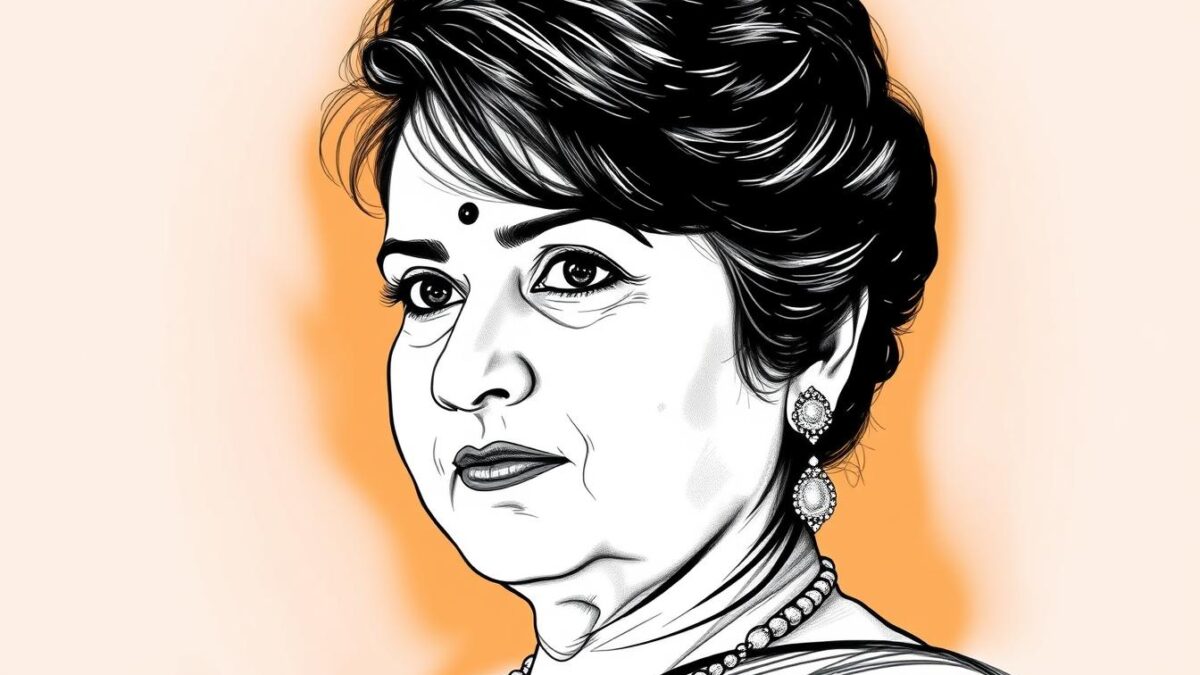
Falguni Pathak commands a unique space in Indian music. Her voice blends pop energy with deep folk roots. She started her professional journey in 1987.
Born in Mumbai on March 12, 1969, she built her career on pure passion. She is a self-taught artist with no formal training. Her natural talent resonates with millions.
Fans know her as the “Dandiya Queen.” This title reflects her mastery of Gujarati folk-pop. She dominates the festival circuit, especially during Navratri.
Her appeal transcends generations. At 56, she remains a vital force in the industry. Reports from 2013 highlighted her earning power, with offers reaching ₹70 lakh per day.
Her story is one of authentic talent and lasting impact. She continues to captivate audiences with music that feels both timeless and fresh.
Early Life and Beginnings of a Musical Journey
A young girl’s passion for music clashed with the rigid traditions of her conservative Gujarati household. Her father held deep-seated beliefs about a woman’s place. Public performance, especially singing, was seen as shameful.
Childhood Influences and Self-Taught Passion
Falguni Pathak’s talent was innate. She taught herself, honing a skill that her family could not understand. This self-driven passion became her sanctuary.
It was also a source of conflict. Her father strictly opposed her musical pursuits. He feared it would bring dishonor.
Breaking Social Barriers in a Conservative Setting
Her first paid performance ignited a crisis. Learning of it, her father reacted with anger and physical punishment. The cost of her art was immediate and personal.
Yet, she refused to stop. Her defiance was quiet but absolute. She accepted the consequences with a stark resilience.
She later recalled the cycle simply: coming home, getting beaten. Her matter-of-fact attitude revealed a profound commitment. She would not hide her true self.
| Barrier | Family Stance | Personal Response |
|---|---|---|
| Public Performance | Viewed as inappropriate for women | Continued performing openly |
| Career Pursuit | Strict opposition and disapproval | Unyielding self-taught passion |
| Cultural Expectations | Pressure to conform to norms | Quiet defiance and resilience |
This early struggle forged an independent spirit. It set the stage for an artist who would always choose artistic integrity over external approval.
Rise to Stardom and Cultural Breakthroughs
The transition from local performer to national sensation happened swiftly through a series of breakthrough hits that captured India’s imagination.
From Terrace Performances to Professional Debut
Her professional journey accelerated after the debut album’s success. Universal Music India released “Maine Payal Hai Chhankai” in 1999.
This title track became instantly iconic. The distinctive ankle-bell sound defined her signature style.
“Maine Payal Hai Chhankai” blended traditional Gujarati motifs with contemporary pop. The sound felt both familiar and fresh to listeners.
Signature Hits and the Dandiya Revolution
Songs like “Yaad Piya Ki Aane Lagi” demonstrated remarkable crossover appeal. This track transitioned from her independent album to a Bollywood soundtrack.
The melody of “Yaad Piya Aane Lagi” captured romantic yearning that defined 1990s Indian pop. “Piya Aane Lagi” embedded itself in cultural memory.
Her music videos told complete love stories rather than just dance sequences. This narrative approach gave audiences deeper emotional investment.
The artist revolutionized how Gujarati folk traditions entered mainstream consciousness. Dandiya music became accessible to non-Gujarati audiences nationwide.
| Traditional Element | Modern Adaptation | Cultural Impact |
|---|---|---|
| Gujarati folk rhythms | Contemporary pop arrangements | National appeal beyond regional borders |
| Ankle-bell sounds (payal) | Signature musical motif | Instantly recognizable sound identity |
| Love story narratives | Music video storytelling | Emotional connection with youth audience |
Tracks like “Maine Payal” and “Payal Hai” became mandatory Navratri playlist items. Each release reinforced her “Dandiya Queen” title.
The consistent love themes across her discography showed understanding of universal emotions. Regional music could speak to pan-Indian experiences.
Falguni Pathak: Impact on Music and Pop Culture
The sound of bangles and the image of a flying scarf defined an era of Indian pop music. Her unique blend of folk and contemporary sounds created timeless anthems.
These songs transcended their time to become nostalgic touchstones for a generation.
Balancing Independent Music with Bollywood Offers
Her 2000 album, “Meri Chunar Udd Udd Jaye,” was a landmark release. The title track, “Meri Chunar Udd Udd Jaye,” became a cultural phenomenon.
Its imagery of a scarf flying freely symbolized youthful freedom. Another massive hit, “Chudi Jo Khanki,” used the sound of bangles as a romantic symbol.
Celebrating Iconic Tracks and Global Fan Engagement
Her presence is essential at Navratri festivals, where her songs are favorites. She performs these beloved tracks at shows across India and internationally.
Television appearances on programs like Kaun Banega Crorepati showcased her crossover appeal.
Audiences connect not just with the melodies but with the complete stories from her music videos.
| Song Title | Key Symbolism | Enduring Impact |
|---|---|---|
| Meri Chunar Udd Udd Jaye | Scarf representing freedom | Anthem for romantic longing |
| Chudi Jo Khanki | Bangles as musical motif | Instantly recognizable sound |
| Maine Payal Hai Chhankai | Ankle-bell rhythm | Definitive Dandiya track |
Decades after their release, these songs still evoke powerful nostalgia. They remain fixtures at every garba and dandiya event.
Reflecting on a Timeless Legacy in Music
Three decades into her career, this singer’s legacy is built on unwavering personal truth. Falguni Pathak maintains her status as the Dandiya Queen without chasing trends. Her music connects generations through pure authenticity.
At 56, she remains single by choice, focusing entirely on her craft. Her androgynous style became an accidental statement of gender fluidity. She never set out to be a queer icon, but her natural presentation resonated deeply.
Recent news shows her songs still dominate Navratri playlists. New audiences discover her work through social media. Her greatest legacy is staying exactly who she’s always been.