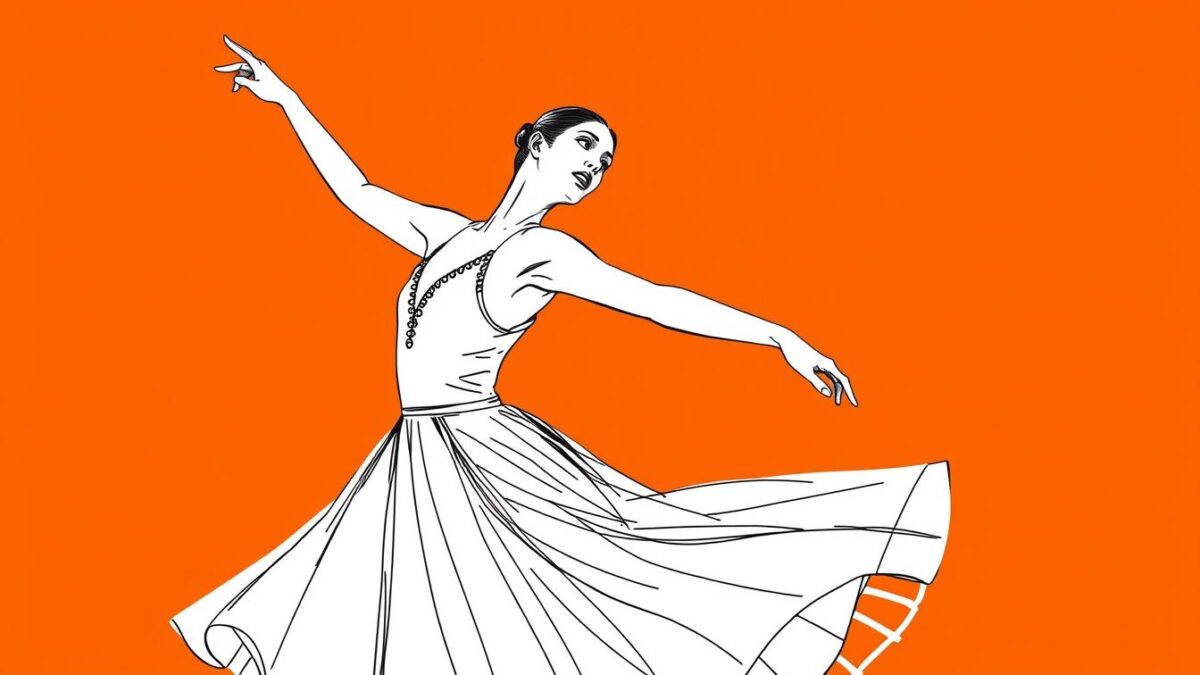
In the world of 19th-century ballet, few stars burned as brightly or as briefly as Emma Livry. Her life and art captured the very essence of the Romantic era.
Born in 1842, she entered the theater world through her mother, a dancer. Her own debut at sixteen was a sensation. She performed in La Sylphide with an ethereal quality that immediately captured attention.
The legendary ballerina Marie Taglioni saw immense promise in the young dancer. Taglioni became her mentor, even creating the ballet Le Papillon specifically for her protégée.
This ballerina’s career ascended with incredible speed. She embodied a delicate, otherworldly femininity that defined the time.
Tragedy struck during a rehearsal in 1862. Her costume caught fire, leading to severe burns. She survived for eight months in immense pain before succumbing at age twenty.
Her death was more than a personal loss. It marked a turning point, a moment where the art form lost a luminous talent and faced the harsh realities of its time.
A Glimpse into the World of 19th Century Ballet
Behind the gauzy tutus and weightless grace of Romantic ballet lay a world of harsh realities and rigid hierarchies. This period reshaped the art form completely.
Setting the Stage: The Romantic Era and French Ballet
The mid-19th century transformed ballet from male-dominated court entertainment into a showcase for female ethereality. Ballerinas became central figures telling complete stories with character arcs.
New gaslight technology created magical stage effects but introduced deadly fire hazards. The iconic knee-length tutus seen in Degas paintings defined the era’s aesthetic.
Women like Marie Taglioni pioneered pointe work that created an illusion of supernatural grace. This technical innovation became synonymous with the art.
Influence of the Paris Opera and Early Training
The Paris Opera Ballet stood as the epicenter of this transformation. It set technical standards that other companies aspired to match.
Most corps de ballet members came from destitute families. These young dancers, called “petit rats,” trained under brutal conditions with little protection.
Wealthy patrons exercised significant power backstage. They could observe rehearsals and select dancers, creating a system where young women had limited agency.
Training emphasized extreme physical discipline from childhood. It shaped bodies into instruments capable of the demanding technique Romantic ballet required.
The Artistry and Technique Behind a Ballerina
The sculptor Jean-Auguste Barre captured a fleeting moment of artistry, freezing a dancer’s leap in bronze for eternity. His figurines of Emma Livry in her signature role reveal the physical poetry of her dance. They show a body perfectly calibrated for the stage.
Mastering Ballon and Signature Movements
Livry’s most celebrated skill was her extraordinary ballon. This technical form describes the illusion of hovering at the peak of a jump. Contemporary critics wrote she seemed to float like a feather.
Her mastery created a unique performance quality. She moved as if her feet barely touched the ground. This way of moving defined the Romantic ballet aesthetic.
- Ballon requires immense leg strength and precise core control.
- The goal is a suspended quality, a moment of weightlessness.
- It makes the difficult look effortless, hiding the intense work.
This skill set the ballerina apart. It was the foundation of her art.
Choreographic Influence and Rehearsal Insights
Marie Taglioni created the full-length ballet *Le Papillon* specifically for Livry. This demonstrated immense confidence in the young dancer‘s abilities. The choreography highlighted her unique gifts.
Rehearsal was where technique transformed. It was the hard work behind the magic. Dancers repeated movements until they became instinct.
The body learned to respond without conscious thought. This grueling process happened off-stage, hidden from the audience. The final performance in ballet was an illusion of ease, a beautiful lie built on discipline.
Emma Livry: Her Life, Trials, and Tragic Fate
Strategic planning by her mother’s influential lover set the stage for a career that would end in tragedy. The young dancer’s path was carefully engineered from the beginning.
Rise to Stardom under Marie Taglioni’s Guidance
Vicomte Ferdinand de Montguyon arranged a special performance to showcase the girl’s talent. He convinced the Paris Opera director to change the program so Marie Taglioni would witness her in La Sylphide.
Taglioni saw her younger self in the promising dancer. She committed to mentoring the rising star, creating the ballet Le Papillon specifically for her protégée.
The Infamous Costume Fire and Its Aftermath
During a rehearsal on November 15, 1862, tragedy struck. As Livry made her entrance, her skirts brushed against a gaslight and ignited.
Fire-proofing treatments existed but dancers rejected them. The chemicals made costumes stiff and discolored. Flames engulfed her as she ran across the stage three times.
Over 40% of her body suffered severe burns. The metal stays of her corset fused into her flesh from the intense heat. She endured eight months of agony before succumbing to infection at age twenty.
Even facing death, she maintained her artistic standards. She insisted she would never wear fire-proofed costumes, valuing beauty over safety.
The Cultural Impact of Emma Livry on Ballet
What happens when the chain of artistic knowledge breaks? French ballet discovered this painful truth in the late 19th century. The art form’s center of power shifted away from Paris for nearly a hundred years.
Transformation of Ballet Traditions in France
After 1863, ballet’s world changed dramatically. The tragic death of Emma Livry created a vacuum that French dance never fully recovered from during that time. Italy and Russia became the new centers of power in the ballet world.
These countries established clear training lineages. Their pedagogues produced generations of skilled dancers. French ballet lost its prominent place in the international scene.
| Time Period | Ballet Center | Key Figures | Impact on French Ballet |
|---|---|---|---|
| Pre-1863 | Paris, France | Marie Taglioni, Emma Livry | Global leadership position |
| 1863-1920s | Italy & Russia | Various European pedagogues | Decline and disregard |
| 1920s onward | Paris revival | Russian ballerinas teaching in Paris | Tradition restored through new lineage |
The revival began in the 1920s when Imperial Russian ballerinas started teaching in Paris. Matilda Kchessinska, Olga Preobrajenska, and Lyubov Egorova brought their knowledge back to France. Their work helped reseed the tradition that had withered.
Later French ballerinas like Yvette Chauviré and Claude Bessy continued this important work. They trained Sylvie Guillem, completing the restoration of French ballet. The entire process shows how artistic knowledge passes through direct teaching.
This story raises questions about how societies value artists’ lives. It makes us consider whether beauty justifies the risks performers face. The impact of one dancer’s life and work can shape an art form for generations.
An Exploration of Ballet’s Evolution and Dancer Lineage
For every ethereal ballerina celebrated on stage, a harsh reality of exploitation simmered backstage. The art form’s beauty often masked a brutal system.
Challenges Faced by Women in the 19th Century Art Scene
Young dancers, known as “petit rats,” frequently came from impoverished families. Their training demanded complete submission.
Wealthy patrons held significant power over these women’s lives and careers. They treated the Paris Opera like a personal harem. Dancers had little agency, hoping attention from rich men might lift them from poverty.
Fire was a constant, grim danger. Between 1861 and 1863, multiple tragedies occurred. The 1861 Continental Theater fire killed nine dancers over four days.
Audiences sometimes bought “tickets to the tomb,” a dark slang phrase reflecting this peril. Victorian poetry warned ballerinas of the “perils dire” of fire.
The Enduring Legacy of Ballerinas and Their Stories
Despite this exploitation, women shaped ballet’s artistic direction. Choreographers like Marie Salle worked in the 18th century, though their contributions were often erased.
The legacy of these dancers is a dual narrative. It includes their transcendent art and the systemic violence they endured.
Their stories reveal how little value was placed on women’s lives compared to the entertainment they provided. Understanding this duality is essential to grasping ballet’s true evolution.
Legacy and Reflections for Modern Dance
Her legacy forces a hard look at the price of beauty in dance. The story of Emma Livry asks how much suffering we accept for art. Her death at age twenty broke a vital lineage.
That broken chain took decades to repair. It shows how one person’s work carries weight far beyond their time. Choices made in a moment can shape an art form for a year or a century.
Modern dance has eliminated the specific fire hazard. But questions about bodies, risk, and cost remain. Performers still navigate the balance between safety and artistic power.
Livry’s brief life reminds us that traditions pass through people. When that transmission breaks, something precious is lost. Her story endures as a lesson about the human cost of creating beauty.