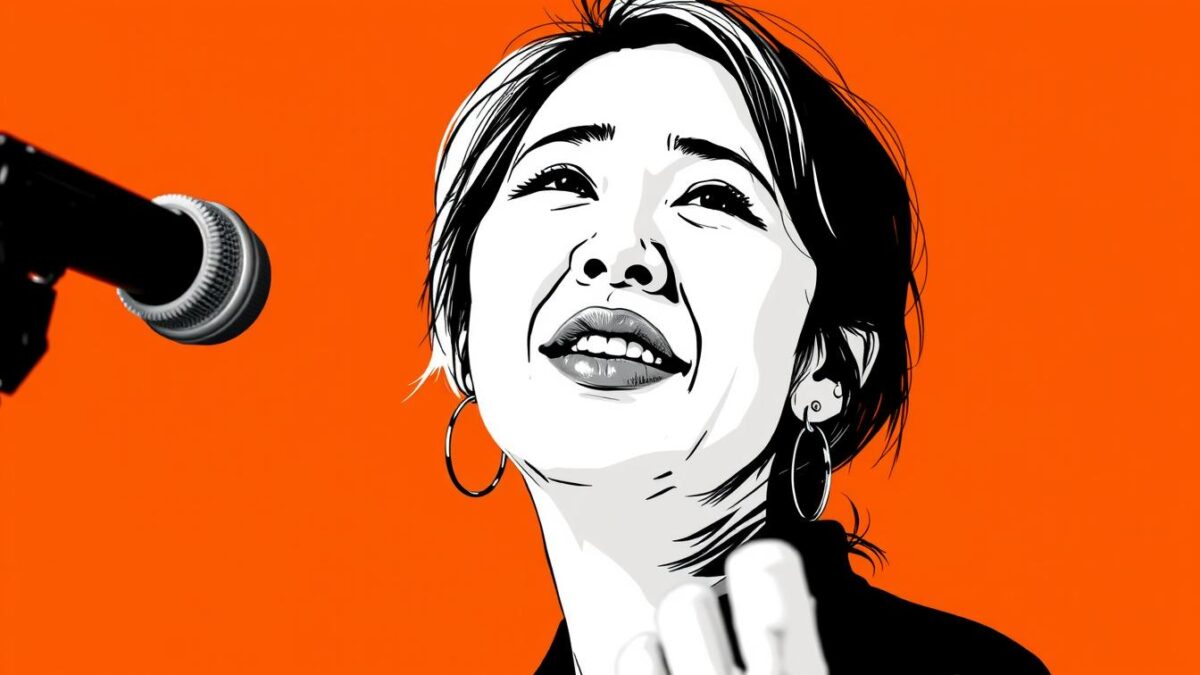
Born in Kyoto in 1987, this artist bridges two worlds. Her mother is Japanese, her father American. This dual heritage shapes her unique sound and perspective.
She grew up in Seattle, Washington, starting classical piano at six. Her passion soon expanded into jazz. This early training laid the foundation for a career that defies easy categorization.
Her academic path deepened her musical exploration. She studied ethnomusicology at Pomona College. There, she delved into global traditions like Indian ragas and Japanese gagaku.
This serious study informs her work as a pianist and singer-songwriter. She is based in both Seattle and Tokyo. This allows her to maintain an active presence in both the American and Japanese music scenes.
A key moment arrived in 2007. She won the Seattle-Kobe Jazz Vocalist Competition. This victory launched her professional journey in Japan’s competitive industry.
Her story is one of cross-cultural artistry. It blends traditions into a fresh, contemporary jazz voice. Her work deserves a deeper look beyond the basic biography.
Exploring Emi Meyer’s Bi-Cultural Heritage and Early Inspirations
A deep connection to art and culture was nurtured early by her mother, a professor of Japanese art history. This intellectual rigor filled their home. It existed alongside her father’s American perspective.
This unique environment shaped her worldview. Two languages and traditions coexisted daily. It was a foundation built on fusion.
Her musical training began with classical piano at age six. She attended University Prep in Seattle. This early discipline provided a technical foundation for her future jazz explorations.
Early Life and Musical Beginnings
Her academic path at Pomona College was a natural extension. She studied ethnomusicology and international relations. There, she delved into Indian ragas and Japanese gagaku.
She could finally theorize what she had lived. Her thesis examined the division between hogaku and yogaku in Japanese music. It was an intellectual engagement with the cultural split she knew personally.
Influences of Japanese and American Cultures
A study-abroad program brought her back to Kyoto, her birthplace. It was a homecoming and a discovery. She experienced the city through adult eyes and academic curiosity.
For a long time, she felt pressure to fit into one box. She later realized her strength lay in balancing contrasts. Her art thrives in the productive tension between her home cultures.
| Influence | Source | Manifestation |
|---|---|---|
| Intellectual & Aesthetic Rigor | Mother (Japanese Art Professor) | Appreciation for tradition, academic approach to art |
| Musical Foundation | Classical Piano Training | Technical discipline, understanding of Western music theory |
| Global Perspective | Ethnomusicology Studies | Theoretical framework for understanding cultural fusion in music |
| Personal Navigation of Duality | Bi-Cultural Household | Lived experience of balancing Japanese and American identities |
Career Milestones and Musical Evolution
A self-released collection of songs, “Curious Creature,” became an unexpected hit in 2007. This debut album surged to number one on the iTunes Japan jazz chart. The single “Room Blue” earned Single of the Week honors, creating vital early momentum.
Her live presence grew across diverse stages. She performed at Seattle’s Northwest Folklife Festival and the prestigious Sundance Film Festival. These shows demonstrated her ability to connect with both indie and film audiences.
Breakthrough with Curious Creature and Debut Achievements
The success of that first project was just the beginning. It announced a serious new voice in contemporary jazz. The music was personal and immediately resonant.
Innovative Collaborations and International Performances
A bold creative shift followed with 2010’s “Passport.” The album was written entirely in Japanese. It featured rapper Shing02 and incorporated bossa nova rhythms recorded in Brazil.
This spirit of exploration continued. Her 2015 jazz standards album, “Monochrome,” was recorded in Paris. Produced by Éric Legnini, it debuted at number one and was called a “gem” by DownBeat Magazine.
These projects show an artist unafraid of geographic or stylistic limits. Her career is a map of deliberate, creative steps.
Emi Meyer: In-Depth Interview Insights
Behind the career milestones lies a thoughtful journey of self-discovery and cultural navigation. This artist’s music is deeply informed by a personal philosophy forged through lived experience.
Personal Reflections and Journey Through Duality
Emi Meyer once felt pressure to fit into a single category. She later understood her strength lies in balancing contrasts. This constant movement between worlds became her creative rhythm.
International touring revealed a universal truth. Everyone feels both included and excluded at different times. Her specific experience speaks to a broader human condition.
She channels this understanding into her music. Her songs blend influences, resisting simple genre labels. The blend creates a sound that is uniquely her own.
At home in Tokyo, she finds harmony in small rituals. Time with her children and quiet moments provide essential grounding. These practices remind her that duality can be a source of beauty.
For this artist, living spectacularly means leaning into contrasts. It is an invitation to embrace the complexities that make us human. Her work celebrates connection over division.
Emi Meyer: Embracing Her Future in Music
Recent years reveal a musician expanding her territory without abandoning her core identity. Her 2020 EP “The Road to Franklin” recorded at Nashville’s Blackbird Studio, showed a pivot toward American roots music. The collaboration with Keb’ Mo’ on “When I Lose Control” captured pandemic emotions with striking clarity.
This artist’s evolution continues into film composition. She wrote and composed the soundtrack for 2023’s “Dealing with Dad” and “The Modelizer.” This move from performer to complete soundtrack creator demonstrates significant growth.
Her influence extends beyond her own songs. In 2022, she produced J-Pop artist Crystal Kay’s EP “Start Again.” All tracks featured in Amazon Japan’s series “A2Z,” showcasing her production skills for visual storytelling.
A collaboration with Dan the Automator in 2023 brought her Japanese vocals into experimental hip-hop. Headlining Tokyo’s Cotton Club and Blue Note Place affirms her standing in Japan’s elite jazz circuit.
These projects form a deliberate mosaic. They reinforce a central vision that thrives on duality, refusing to choose between roles. Her future promises continued exploration across all creative fronts.