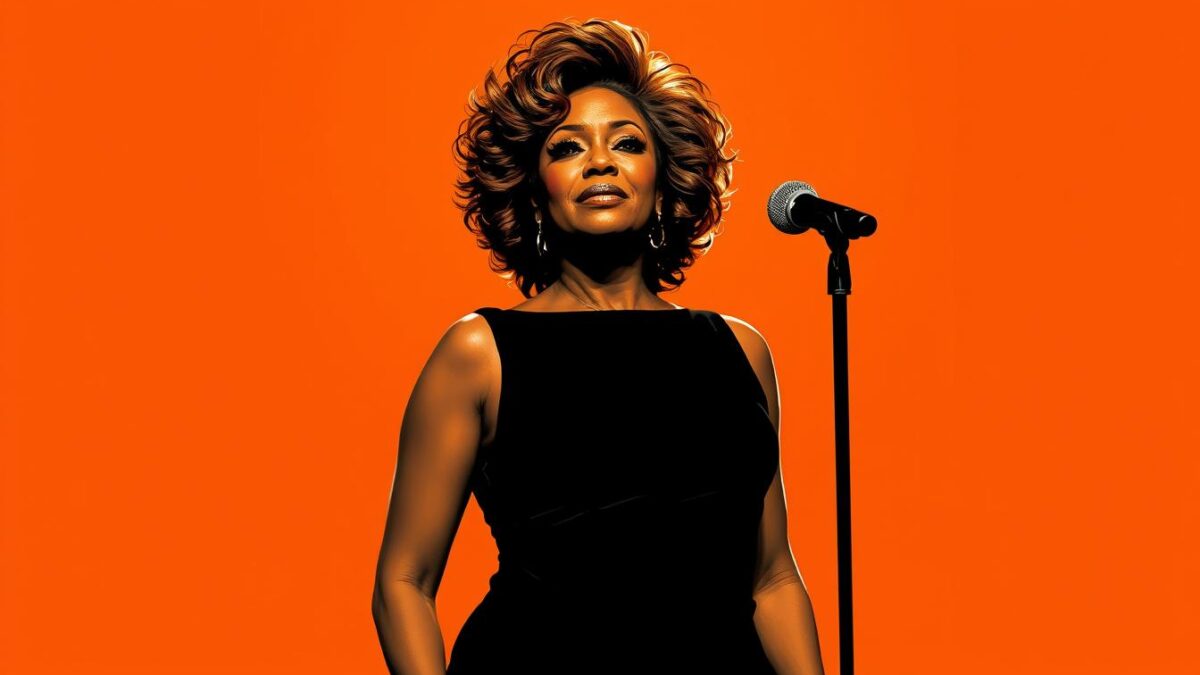
Her voice arrived like a force of nature. Husky, textured, and unmistakable. It was a sound built from hardship and genius, a voice that commanded Brazilian music for six incredible decades.
Born in 1930 in a Rio de Janeiro favela, she called her early life “Planet Hunger.” Yet from those margins, Elza Soares rose to become a national treasure. Her career spanned samba, bossa nova, and beyond, redefining the sound of a nation.
In 1999, the BBC named her Singer of the Millennium, a title she shared with Tina Turner. This honor placed her in a pantheon few artists ever enter. It was a recognition of a singular talent.
She sang through dictatorship, exile, and personal tragedy. Her sound never softened, her stance never wavered. This is the story of a Black woman who became the center, singing until the very end. She died in January 2022 at the age of 91, leaving a legacy of over 30 albums.
Early Life and Personal Challenges
Her story began not on a stage, but in the dusty streets of a Rio de Janeiro favela. In the Moça Bonita neighborhood, Elza Soares knew hunger as a constant companion. Yet she also found joy, playing barefoot and flying kites.
Responsibility came at a young age. Her father forced her into marriage when she was just twelve years old. Motherhood followed a year later.
Childhood in Rio de Janeiro and Early Struggles
Tragedy struck when she was fifteen. Her second child died. This profound loss was a harsh lesson in her early life.
Her life moved with a cruel speed. After her husband fell ill, she began working in a soap factory. Widowed at twenty-one, she was left alone to raise five children.
Overcoming Poverty and Early Loss
Desperation led to a turning point. When her son needed medicine, she saw one chance. It was a radio talent show in 1953.
The host noticed her oversized, ragged dress. He asked where she was from. Her answer, “Planet Hunger,” silenced the room.
Then she sang. In that moment, a raw talent met a desperate need. It was the first time her true talent was heard publicly. That radio contest opened a door she refused to let close. Those years of hardship carved a voice that was uniquely powerful.
Elza Soares: Rise to Fame and Iconic Career
Her career ignited not in a studio, but on the road. Touring Argentina for eight months in 1958 built her stage presence. This early venture set the foundation for what would follow.
Breakthrough Moments and Early Musical Ventures
The 1960 single “Se Acaso Você Chegasse” changed everything. She introduced scat singing to samba, creating a fresh sound. This innovative blend announced a new voice in Brazilian music.
Moving to São Paulo, she performed in theaters and night clubs. Her husky voice became her trademark. Critics called it raw and unforgettable.
In 1962, she represented Brazil at the World Cup in Chile. There she met Louis Armstrong, who called her “daughter.” He recognized something kindred in her powerful growl.
Defying Societal Norms and Personal Resilience
At thirty-two, she began a relationship with football legend Garrincha. Brazilian society vilified her for it. She faced death threats and had eggs thrown at her home.
The military dictatorship deemed her dangerous. In 1970, agents machine-gunned her house while her children were inside. She and Garrincha fled to Italy, joining other exiled artists.
Tragedy stalked her years. Her mother died in a 1969 car accident with Garrincha driving. Later losses included Garrincha’s death and her young son’s passing.
Through it all, she kept singing. Her career became an act of resilience. She defied genres and expectations, turning pain into powerful music.
Musical Style, Albums, and Collaborations
Her sound was a raw instrument of defiance, forged in the crucible of life itself. The singer developed a vocal style that blended scat singing with percussive grit. This unique approach became her trademark across six decades of music.
Innovative Techniques and Signature Vocal Style
Elza Soares described her vocal cords as “crooked, just like my life.” Her voice operated between scat singing and vocal fry. It created a rugged, flexible texture that many compared to Louis Armstrong.
She denied any imitation, stating she hadn’t heard Armstrong before their 1962 meeting. Her technique emerged from personal struggle rather than outside influence.
Key Albums, Hits, and Collaborative Projects
The 1961 album “A Bossa Negra” introduced her powerful, unrestrained style. Its opening track showcased wild improvisation and growling solfeggio.
She recorded three albums with Miltinho from 1967-1969. In 1968, she partnered with Wilson das Neves for a samba-jazz collaboration.
Her 2002 album “Do Cóccix Até O Pescoço” earned a Grammy nomination. It featured Caetano Veloso and blended blaxploitation flavors with Brazilian rhythms.
Impact on Samba, Bossa Nova, and Beyond
Elza Soares moved effortlessly through samba-canções, bossa nova, and samba-jazz. Her career expanded these genres with innovative approaches.
Later albums like “A Mulher do Fim do Mundo” fused samba with rap and electronic music. She remained relevant by constantly pushing musical boundaries.
Her performances at major events cemented her status as Brazil’s living legend. The singer’s influence continues to inspire new generations of artists.
Final Reflections on an Enduring Musical Legacy
In her final years, the singer’s creative fire burned with unprecedented intensity. Her last three albums formed a powerful trilogy that redefined artistic legacy.
Collaborating with São Paulo’s avant-garde artists, she fused samba with rap and electronic textures. These works confronted racism, sexism, and social injustice with broken-tempo rhythms that felt like manifestos.
Elza Soares became an oracle for new generations, her voice still fierce in her 80s and 90s. She sang until the very end, just as she wished.
The artist died in January 2022, but her music continues speaking to our time. Her posthumous album proved that even death couldn’t silence this vital voice in Brazilian music.