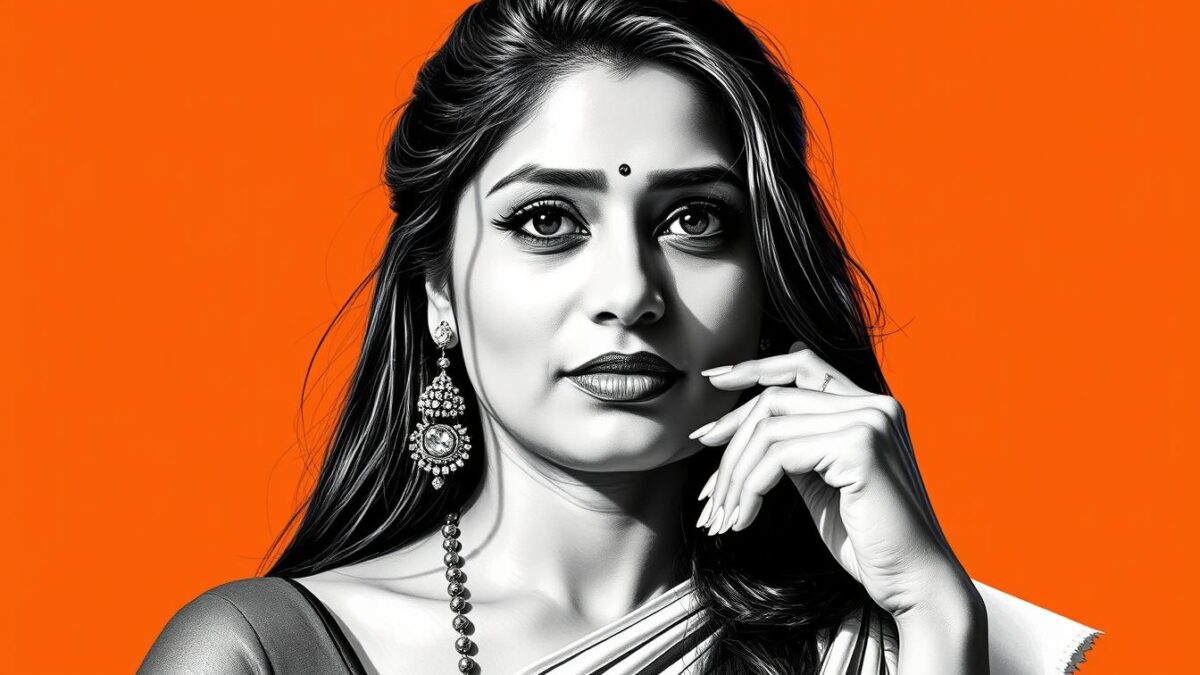
A voice can define an era. For two decades, one singer’s talent has woven through the heart of South Indian cinema. Her story is one of instant fame, quiet resilience, and a powerful return.
She got her first major break at just fifteen. The song became an instant classic, launching a remarkable career. Her voice soon became a dominant force in Tamil, Telugu, Malayalam, Kannada, and Hindi films.
This artist also lent her voice to famous actresses as a dubbing artist. But her life took a dramatic turn in 2018. She became a central figure in India’s #MeToo movement, speaking out against harassment.
That time brought professional exile and years of silence. Her 2025 performance marked more than a musical comeback. It was a cultural statement, a refusal to be silenced.
This is the story of her rise, her resistance, and her enduring voice. A life that reflects the cost of speaking truth to power.
Early Life and Musical Breakthrough
The foundation for a legendary voice was laid not in a studio, but at home. Her mother, T Padmasani, provided rigorous training in Carnatic music from a very young age. This classical discipline built the vocal control that would later define her career.
The big break arrived when she was just fifteen years old. Legendary composer A.R. Rahman offered her the song “Oru Dheivam Thantha Poove” for Mani Ratnam’s film, Kannathil Muthamittal. The track’s emotional depth required a voice beyond her years.
That single opportunity in 2002 changed everything. The song became an instant classic, launching her into playback stardom. At a time when most teens are finding themselves, she had found her calling.
| Song Title | Film | Composer | Year | Significance |
|---|---|---|---|---|
| Oru Dheivam Thantha Poove | Kannathil Muthamittal | A.R. Rahman | 2002 | Debut playback song; launched career |
Her early success was no accident. It was the result of years of dedicated practice. Carnatic music shaped her soulful tone, but cinema gave that voice its powerful reach.
Charting a Stellar Career: Achievements and Milestones
From one breakthrough song grew a career spanning languages and decades. Chinmayi Sripada became a dominant presence across South Indian cinema. Her voice traveled through Tamil, Telugu, Malayalam, Kannada, and Hindi films.
| Film | Song | Language | Significance |
|---|---|---|---|
| Guru | Tere Bina | Hindi | National recognition in Bollywood |
| Chennai Express | Titli | Hindi | Collaboration with top composers |
| Vaagai Sooda Vaa | Sara Sara | Tamil | Critical acclaim for emotional delivery |
| Ye Maaya Chesave | Various tracks | Telugu | Breakthrough dubbing performance |
Her work extended beyond playback singing. Dubbing became another pillar of her craft. She lent her voice to stars like Trisha Krishnan and Samantha Ruth Prabhu.
The film Ye Maaya Chesave showcased her remarkable emotional range. She could inhabit characters through voice alone. This versatility set her apart in an industry that often typecast female singers.
Over the years, she became one of the most sought-after voices. Films came and went, but her vocal presence remained constant. Her reliability and work ethic built a career that defined eras.
Creative Process and Musical Innovation
Recording sessions reveal more about life than just music. Her creative process is remarkably straightforward. Someone calls, she arrives at the studio on time, sings the lyrics, and leaves.
In-Studio Anecdotes and Unscripted Moments
But her mind wanders during takes. She thinks about her kids, dogs, and house. The everyday things keep her grounded while creating art.
Her four dogs often became part of the process. Uppli used to accompany her to recordings. He even sat near the microphone during the song “Kaathalae Kaathalae.”
Studio staff were often surprised to see a dog so close to the equipment. Now Uppli prefers staying home, tired of the studio drama.
Exploring New Genres and Artistic Boundaries
She has sung across many musical styles throughout her career. Composers gave her opportunities to try different types of songs.
Rap remains one genre she hasn’t explored. She admits she struggles with rhyming for rap songs. But she never rules anything out completely.
| Element | Description | Impact |
|---|---|---|
| Studio Routine | Simple, efficient process without rituals | Focuses energy on performance |
| Mental Space | Thinks about home life during recording | Brings authenticity to vocals |
| Genre Exploration | Willing to try new musical styles | Expands artistic range |
Music happens alongside real life, not separate from it. This approach keeps her work fresh and genuine.
Navigating Industry Challenges and Blacklisting
Professional exile often comes with a hidden price tag. For Chinmayi Sripada, the financial fallout was as severe as the professional silence. It revealed a harsh reality behind the glamour.
Trust became a liability during this difficult time. People she had known for years would become central to her financial struggles.
Financial Exploitation and the Reality of Unpaid Work
A major U.S. tour in 2018 should have been a career highlight. Instead, it became a lesson in betrayal. She performed nearly ten shows but received no payment for her work.
The promoter, someone she had trusted since childhood, claimed the tour was a loss. This excuse came while the singer was facing intense public shaming. The promised money, desperately needed during her blacklisting, never arrived.
This was not an isolated incident. Another powerful figure owed her significant sums for television work. The power imbalance in the industry allowed this exploitation to continue unchecked.
Many young artists accept poor conditions because they need the work. They are underpaid, poorly housed, and sometimes not even fed. They do it to survive.
That time taught a brutal lesson. She now has a firm policy: full payment before any performance. It is a necessary boundary, born from painful experience.
Catalyst of Change: The Impact of the #MeToo Movement
Speaking truth to power requires crossing a terrifying threshold. The #MeToo movement arrived in India in 2018, creating a pivotal moment for many women. It gave them collective energy and a shared purpose.
Even to speak up at that point in time was frightening. But this artist crossed that line with other women beside her. She knew no welcome or awards awaited her.
Raising Voices: Speaking Up Against Injustice
In October 2018, she publicly supported two women who accused dubbing union president Radha Ravi of sexual harassment. This act of solidarity came with immediate consequences. The South Indian Cine, Television Artistes and Dubbing Artistes Union expelled her shortly after.
The union cited technical grounds like alleged non-payment of fees. Many people saw this as clear retaliation. That same year, she accused veteran lyricist Vairamuthu of sexually harassing her during an event in Switzerland.
| Date | Action | Consequence | Significance |
|---|---|---|---|
| October 2018 | Public support for women accusing Radha Ravi | Expulsion from dubbing union | Showed industry retaliation patterns |
| 2018 | Accusation against lyricist Vairamuthu | Professional blacklisting began | Highlighted power imbalances |
| 2018-2025 | Continued advocacy | Years of professional exile | Demonstrated cost of speaking truth |
The movement exposed how power operates in the industry. It acts swiftly and punitively without accountability. At that critical point, she had to choose between silence or truth.
She chose truth. People who benefited from the status quo made her pay. But she signed up for the struggle with no regrets.
Chinmayi Sripada’s Pioneering Return: The ‘Thug Life’ Performance
When the first notes of “Muththa Mazhai” filled the Chennai auditorium, silence turned to electricity. The singer stood on stage after years away from Tamil cinema. Her May 30, 2025, performance at the Thug Life event became an instant cultural moment.
She offered a new version of the AR Rahman composition originally sung by Dhee. Her interpretation carried a sense of defiance that resonated deeply. The audience felt the weight of every lyric in her voice.
People stood and cheered throughout the song. Phones recorded the moment as it unfolded. The emotional response was immediate and overwhelming.
Her performance went viral within hours. Due to massive demand, organizers officially released her version online. Stars like Kamal Haasan and Trisha witnessed this powerful show.
This was more than a musical return. It became a memory etched in collective consciousness. Her voice reminded everyone what had been missing during her absence.
The event marked a statement of resilience. It showed that artistic expression cannot be silenced forever. The Thug Life performance cemented her comeback as a cultural triumph.
Breaking Barriers: Empowerment in a Male-Dominated Industry
Change often begins with a single, determined step. The film industry remains heavily male-dominated, but women are creating new pathways. Supriya Yarlagadda, Nandini Reddy, and Jhansi Laxmi took decisive action.
These women approached the film chamber directly. Their initiative led to the creation of an Internal Complaints Committee. Without their courage, there would be no formal mechanism for addressing harassment.
Power has historically rested with men in this industry. The point of this structural change is protection, not just representation. It creates accountability where none existed before.
Each woman who speaks up makes it easier for the next. The industry resists such shifts, but collective voices are weakening that resistance. People are recognizing the need for safe working environments.
Chinmayi Sripada credits these pioneers with breaking critical barriers. Their work demonstrates that real change requires systemic solutions. The struggle continues, but the foundation for accountability now exists.
From Playback to Dubbing: Versatility in South Indian Cinema
A voice can build a character just as powerfully as it can carry a melody. Chinmayi Sripada proved this by becoming an indispensable dubbing artist. She lent her voice to major stars like Trisha Krishnan and Samantha Ruth Prabhu.
Her dubbing work required a different skill set. It meant inhabiting a character, matching lip sync, and conveying emotion without being seen. Performances in films like Ye Maaya Chesave and Surya s/o Krishnan were lauded for their emotional nuance.
For many years, she was a trusted voice in the film industry. Her work was consistently praised. In 2018, she received acclaim for her dubbing in the film 96.
| Film | Actress Voiced | Year | Critical Reception |
|---|---|---|---|
| Ye Maaya Chesave | Samantha Ruth Prabhu | 2010 | Praised for emotional depth |
| Surya s/o Krishnan | Sameera Reddy | 2008 | Noted for character authenticity |
| 96 | Trisha Krishnan | 2018 | Widely acclaimed |
After 2018, a quiet erasure began. Credit for her work started to disappear. Her dubbing for the 2019 film Hero went unacknowledged in official promotions.
At times, her voice was still heard in films. But her identity was scrubbed from the credits. This was a clear consequence of speaking out, a professional punishment that lasted for years.
Entrepreneurial Ventures and Life Beyond Music
When music became a closed door, business became an open window. Chinmayi built a new life beyond the studio, creating ventures that reflected her diverse interests. These businesses gave her control over her own world during difficult times.
She runs Blue Elephant, a translation company that bridges languages across industries. Skinroute grew from her personal passion for wellness and self-care. Deep Skin Dialogues operates medi-spa clinics in Chennai and Hyderabad.
| Company | Industry | Locations | Core Purpose |
|---|---|---|---|
| Blue Elephant | Translation Services | Multiple | Language bridging |
| Skinroute | Skincare | Online | Wellness and self-care |
| Deep Skin Dialogues | Medi-spa Clinics | Chennai, Hyderabad | Specialized treatments |
These ventures became her safety net when music income disappeared. They provided financial independence and a sense of stability. The entrepreneurial life offered a different kind of creative expression.
Home became both a physical space and a mental sanctuary. Family and business formed the twin pillars supporting her through professional exile. Things that once seemed secondary became central to survival.
Sripada built her own house, both metaphorically and literally. She created a world where her skills and interests could thrive together. This business life became her foundation when the industry turned away.
The Role of Family and Personal Growth in Her Journey
Family became both sanctuary and classroom during years of professional silence. The industry turned away, but home remained constant. This private world offered stability when public life offered punishment.
Chinmayi married actor Rahul Ravindran in 2014, building a partnership grounded in mutual respect. Their family grew in June 2022 with the birth of twins Driptah and Sharvas. She shared this joyful moment with fans through intimate photos.
Her approach to parenting reflects deep wisdom. She hopes her children learn life lessons by observation, not instruction. Kids absorb what they see, so she strives to live with integrity.
Time at home became sacred during the blacklisting years. Family provided love when the industry offered rejection. Her mother had been her first teacher, and now she embraced that role herself.
The lessons she passes on are the ones she lived through. Speak truth, stand firm, survive. Her children will grow up knowing their mother chose courage when silence was safer.
Cultural Influence: Tradition, Gender, and Social Change
Some debates reveal more about power than faith. The singer used her platform to question long-held traditions. She engaged directly with the Sabarimala temple controversy.
Her articles challenged restrictions on women entering sacred spaces. She questioned why menstruation became a barrier to worship. The point was clear: people created these rules, not divine beings.
Debates Around Gender in Religious and Artistic Spaces
Chinmayi highlighted how belief systems have historically excluded women. She referenced the Vaishnodevi temple where no such restrictions exist. This comparison showed that equality is possible within tradition.
Over time, power structures justified exclusion as divine will. Women and oppressed castes faced barriers to temples and public spaces. Her writing sparked important conversations about inherited norms.
| Sacred Site | Entry Restrictions | Historical Basis | Modern Status |
|---|---|---|---|
| Sabarimala Temple | Women of menstruating age barred | Aagama Shastras interpretation | Legal battles ongoing |
| Vaishnodevi Temple | No gender-based restrictions | Different scriptural traditions | Equal access maintained |
| Historical Hindu Temples | Caste and gender exclusions common | Social hierarchy preservation | Gradual reform movements |
People defending exclusion often invoked tradition without examining its origins. Sripada’s sense of justice rejected biological discrimination in worship. Her stories illustrated how power dynamics shape religious practice.
At that time, gender debates were gaining mainstream attention. She contributed thoughtful perspectives that went beyond surface-level arguments. Her articles encouraged people to question rather than blindly accept.
Industry Reforms: The Impact of Her Activism
Industry norms don’t shift until someone refuses to accept exploitation as normal. The singer’s public stance created necessary conversations about labor rights and financial fairness. Her experiences exposed systemic problems that many young artists face.
She now offers hard-won lessons to newcomers. Separate holidays from work. Demand fair payment upfront. These things seem simple but require courage to enforce.
| Practice Challenged | Previous Norm | Emerging Standard |
|---|---|---|
| Payment Timing | Payments delayed or denied | Full payment before performance |
| Contract Clarity | Verbal agreements only | Written contracts required |
| Visa Exploitation | Artists misled on work visas | Proper documentation demanded |
Lessons for Future Artists and New Industry Practices
Young people entering the field face a lot of pressure. Those in power often exploit their desperation. The ones who speak up create change for everyone.
It takes time to shift deep-rooted practices. But each public warning helps. A lot of artists still fall into old traps, yet awareness grows.
The industry relies on silence. Breaking that silence costs something. But the lessons learned protect future generations of creators.
Resilient Revival: Chinmayi Sripada’s Comeback Story
Cultural memory has a stubborn way of preserving what power tries to erase. For years, the singer faced professional exile after speaking truth. Her voice disappeared from credits and new projects.
The public never forgot her story or why she was silenced. Time revealed both the cost of courage and its enduring value. People remembered what the industry tried to make them forget.
| Year | Event | Significance |
|---|---|---|
| 2018-2024 | Professional blacklisting period | Years of silence and erased credits |
| 2025 | Thug Life performance | Public return and cultural statement |
| 2025 | Viral online release | Mass audience reconnection |
The 2025 Thug Life show marked a turning point. Her performance became more than a musical return. It symbolized refusal to accept permanent erasure.
A sense of justice began to take shape in the public response. The comeback proved that resilience can outlast attempts at silencing. Her return showed that integrity matters more than temporary exile.
This revival story transcends personal achievement. It represents cultural memory reclaiming truth. The industry learned that some voices cannot be silenced forever.
Final Thoughts on a Trailblazing Musical Journey
The true measure of an artist isn’t found in their accolades but in their resilience. Chinmayi Sripada’s life in music spans over two decades across five languages. Her journey stands as one of the most instructive stories in Indian cinema.
She broke through young, working with legends like A.R. Rahman. The world first knew her as a singer, but she became much more. Years of exile revealed her strength and refusal to be silenced.
A lot of artists face exploitation, but few survive the backlash. Her house, kids, and businesses became part of a life rebuilt outside industry approval. Her mother trained her in music, and now she raises children with the same sense of purpose.
Times have changed, but her lessons remain urgent. Stories like hers ripple outward, shifting how people think. The ones who come after will walk an easier path because she walked first.
Her music will outlast controversy, but the struggle gave her voice meaning beyond melody. At the break of a new era, she stands as proof that integrity outlasts punishment.