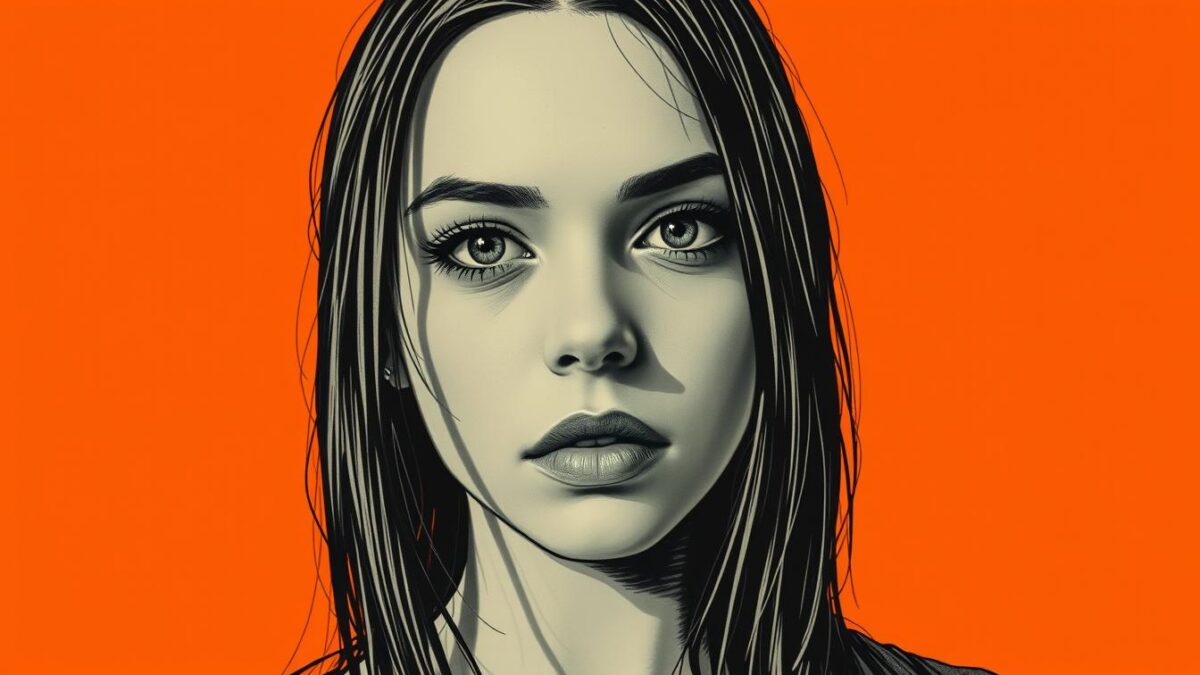
Billie Eilish Pirate Baird O’Connell arrived at the turn of the millennium. She was born in Los Angeles, California, on December 18, 2001. Her story began in a specific place and time, grounded in the city’s creative pulse.
This young artist reshaped the sound of contemporary pop. Her debut single, “Ocean Eyes,” emerged in 2015, capturing public attention from the start. She built a career from bedroom recordings to a global phenomenon.
Her achievements are unprecedented. Eilish is the first person born in the 21st century to win an Academy Award. She also stands as the youngest two-time Oscar winner in history.
Her accolades speak to a massive cultural impact. They include nine Grammy Awards and twenty Guinness World Records. According to the RIAA and Billboard, she ranks among the most successful artists of the 2010s.
This introduction sets the stage for a deeper look. It explores how one young woman from Highland Park became a voice for millions. Her journey is one of extraordinary talent and rapid ascent.
Billie Eilish’s Early Life and Musical Beginnings
Long before global recognition, a creative ecosystem in Highland Park was quietly shaping a future music icon. The artist’s upbringing defied conventional paths from the start.
Family Background and Upbringing
Her parents, Maggie Baird and Patrick O’Connell, were both working actors and musicians. They created an environment where artistic exploration came first. Homeschooling gave the siblings freedom to pursue their interests without traditional constraints.
The family’s creative approach extended even to naming. Each part of her name carries personal significance and family history.
Early Exposure to Music and Performance
Musical education began remarkably early. She started playing ukulele at six years old and joined the Los Angeles Children’s Chorus at eight. Her brother Finneas became a key influence and collaborator.
At eleven, she wrote her first complete song for her mother’s songwriting class. The composition drew inspiration from television shows she enjoyed. This early creative work established patterns that would define her career.
| Age | Musical Milestone | Significance |
|---|---|---|
| 6 years | Began playing ukulele | First instrumental experience |
| 8 years | Joined children’s chorus | Early performance training |
| 11 years | Wrote first original song | Songwriting foundation |
| Teen years | Focus shifted to recording | Career direction established |
A dance injury in 2016 redirected her energy entirely toward music. This unexpected turn proved transformative, cementing her musical path.
Rise to Fame: From Ocean Eyes to Global Sensation
What began as a practical solution for choreography class would soon redefine contemporary pop music. The year 2015 marked the beginning of an extraordinary journey from bedroom recordings to international recognition.
The Breakthrough with “Ocean Eyes”
Finneas O’Connell originally wrote “Ocean Eyes” for his own band. He quickly realized the track better suited his sister’s distinctive vocal style. The song found its purpose when their dance teacher requested original music for choreography.
They uploaded the track to SoundCloud for easy access. Within two weeks, several hundred thousand listens captured industry attention. Manager Danny Rukasin recognized the young artist’s potential immediately.
Radio tastemakers from Beats 1 to BBC Radio 1 championed the haunting ballad. The March 2016 music video directed by Megan Thompson amplified the song’s emotional impact. This organic discovery demonstrated how digital platforms could launch careers.
The Sibling Collaboration with Finneas O’Connell
The creative partnership between brother and sister became the foundation of their success. Their chemistry produced music that felt both intimate and universal. The homemade quality gave the work authentic appeal.
Apple Music’s partnership with A&R company Platoon in January 2016 provided professional infrastructure. This strategic move preserved creative control while building industry connections. Early collaborations with Chanel helped shape the artist’s distinctive visual identity.
The sibling team proved that authentic creativity could resonate with millions. Their partnership redefined modern music production and artist development.
Breakout EP: Don’t Smile at Me and Its Impact
The strategy behind the artist’s rise was a deliberate departure from the music industry’s chase for a viral hit. Instead, the focus shifted to building a distinct aesthetic and a loyal fanbase through a steady stream of music.
This methodical approach began in earnest after her signing to Darkroom and Interscope Records in August 2016. A&R executive Justin Lubliner applied a rollout strategy inspired by hip-hop, prioritizing persona over a singular smash.
Early videos, like the one for “Six Feet Under” directed by Eilish herself and edited by her mother, established an authentic, homemade quality. This contrasted sharply with the polished norm of major labels.
Throughout 2017, she released a series of strategic singles. Tracks like “Bellyache” and “Bored,” featured on the ’13 Reasons Why’ soundtrack, each added a new layer to her emerging narrative.
Critical Acclaim and Fan Reception
The culmination of this buildup was the debut EP, ‘Don’t Smile at Me,’ released on August 11, 2017. It packaged her unique identity into nine cohesive tracks.
The project performed as a sleeper hit. It gained momentum through sustained streaming and word-of-mouth, eventually reaching number 14 on the US Billboard 200.
This success proved the loyalty of her audience. Her first headlining tour in October 2017 translated those digital connections into powerful live experiences, cementing the foundation for a lasting career.
Debut Album: When We All Fall Asleep, Where Do We Go?
The year 2019 witnessed a seismic shift in pop music, arriving not from a major studio but from a Los Angeles bedroom. “When We All Fall Asleep, Where Do We Go?” landed on March 29, crafted by Billie Eilish and her brother Finneas. It redefined what a global smash could sound like.
Spotify launched a multi-level campaign for the debut album. It featured a pop-up experience in Los Angeles. Fans could explore a multi-sensory journey through each track.
Chart-Topping Singles and Records
The album’s impact was immediate and historic. It debuted at number one on both the Billboard 200 and the UK Albums Chart. This made Eilish the first artist born in the 21st century to top the U.S. chart.
She also broke the record for most simultaneous Hot 100 entries by a female artist. Fourteen songs from the album charted at once. The single “Bad Guy” eventually climbed to number one, ending a historic 19-week run by another song.
Innovative Production and Aesthetic
The music itself was a revelation. Recorded at home, its sound was intimate and experimental. Whispered vocals, minimal beats, and ASMR influences created a new pop aesthetic.
Thematic darkness around sleep paralysis and depression connected deeply with listeners. This debut album proved artistic authenticity could achieve massive commercial success. It was a definitive statement for a new era.
Key Career Milestones and Award Achievements
Institutional validation arrived with unprecedented speed for the groundbreaking musician. Her accolades span music and film, creating a rare cross-industry legacy.
Grammy Awards and Record-Breaking Moments
The 62nd Grammy Awards in 2020 marked a historic sweep. Billie Eilish became the second artist ever to win all four general field categories in one night.
At eighteen, she was the youngest person to achieve this feat. Record of the Year, Album of the Year, Song of the Year, and Best New Artist all went to her that evening.
Academy Award Recognitions
Her first Oscar came for the James Bond theme “No Time to Die” in 2022. This made her the first person born in the 21st century to win an Academy Award.
The Barbie film song “What Was I Made For?” earned her a second Oscar at age twenty-two. She became the youngest two-time winner in Academy history.
Beyond these major honors, she accumulated twenty Guinness World Records and numerous other awards. Her recognition transcends typical pop star achievements, placing her among cultural history-makers.
Influence on Modern Pop and Electropop
The sound of mainstream pop music shifted profoundly with her arrival. She redefined expectations for the streaming era with a new aesthetic.
Her approach was minimalist. It favored whispered vocals over powerful belting and deep bass over bright melodies. This challenged pop’s long-standing love for vocal gymnastics and maximalist arrangements.
Critics labeled the sound “streambait.” This is mid-tempo, melancholy pop designed for playlist consumption. It draws influence from Lana Del Rey’s bleakness and hip-hop production styles.
This music connected deeply with Gen Z audiences. They showed a clear preference for emotional authenticity and sonic experimentation. The polished, upbeat formulas of earlier decades lost their dominance.
Her electropop innovations were key. She incorporated ASMR elements and trap-influenced beats. Song structures often prioritized mood and atmosphere over traditional pop hooks.
As the RIAA’s 26th-highest-certified digital singles artist, her success proved a point. Streaming metrics could signify genuine cultural influence, not just passive listening numbers.
Younger artists now see her as a trailblazer. She gave them permission to embrace darkness and vulnerability. An anti-commercial aesthetic could still achieve massive mainstream success.
Billie Eilish is more than a successful pop star. She is a paradigm shifter who altered what the genre could sound like and feel.
Fan Culture and the Concert Experience
From Coachella’s massive fields to pandemic-era livestreams, the live experience evolved with each tour. The artist translated bedroom intimacy into arena-scale connection.
Live Performances and Tour Highlights
Eilish began her When We All Fall Asleep Tour at Coachella in April 2019. The tour concluded that November in Mexico City.
A world tour launched in March 2020 but stopped after three shows due to COVID-19. This forced creative adaptation to digital formats.
| Tour Name | Dates | Key Features |
|---|---|---|
| When We All Fall Asleep Tour | Apr – Nov 2019 | Launched at Coachella, arena-scale bedroom pop |
| Where Do We Go? World Tour | Mar 2020 (3 shows) | Cut short by pandemic, led to livestream innovation |
| Happier Than Ever World Tour | Feb 2022 – Apr 2023 | Full-scale return, Disney+ concert film collaboration |
Fan Interactions and Emotional Moments
Her concert approach emphasizes vulnerability over spectacle. She frequently addresses audiences directly from the stage.
Fan interactions often involve tears and heartfelt confessions. These moments show how her music serves as emotional support.
The October 2020 livestream raised funds for crew members during isolation. It maintained fan connection when physical concerts weren’t possible.
Controversial Concert Moments and Incident Analysis
A Thursday night in Miami turned dangerous when fan interaction crossed into physical assault at the Kaseya Center. The incident revealed the physical risks artists face during intimate crowd moments.
The Kaseya Center Encounter
After performing “Guess,” the artist jumped from the stage to high-five fans. A man in the second row violently yanked her toward the crowd barrier.
Witness Andres Rodriguez described the man’s suspicious pre-show behavior. He had arrived just before the performance and gave unprompted reassurances to teenage girls nearby.
Eighteen-year-old Aniyah Saint-Surin immediately confronted the man. Her quick action earned her viral fame as “Red Bandanna Girl” and gratitude from the performer.
Miami Police ejected the man from the Kaseya Center but filed no criminal charges. The incident raised questions about accountability in concert settings.
Impact on Concert Etiquette and Security
Viral videos of the encounter sparked industry discussions about artist safety. This wasn’t an isolated incident but part of a concerning pattern.
The moment illustrated how parasocial relationships can manifest as dangerous entitlement. It prompted venues to reconsider security protocols during fan interactions.
Artists now face increased physical vulnerability when bridging the gap between stage and audience. The industry continues grappling with balancing accessibility and safety.
Viral Social Media Moments and Online Buzz
Vanity Fair’s side-by-side interview format captured a star’s transformation in real time. The “Same Interview” series showed Billie Eilish’s evolution from unknown teenager to global phenomenon. This visual timeline created intimate connection with audiences.
Strategic partnerships felt organic rather than corporate. Spotify playlist placements introduced her music to new listeners. YouTube’s documentary series offered genuine insight into her creative process.
The Kaseya Center incident demonstrated social media’s instant mythology-making power. Clips of the confrontation spread across platforms within hours. “Red Bandanna Girl” became an overnight hero narrative.
Celebrity amplifications from Finneas and Reneé Rapp showed how viral moments transcend traditional publicity. These instances built community around shared experiences.
Social media created both connection and challenge. It allowed direct fan engagement but also exposed the artist to constant scrutiny. The balance between accessibility and boundaries remains delicate.
Rolling Stone and other publications documented these viral phenomena. They showed how digital platforms reshape celebrity culture. People engaged with these moments as participatory events.
Videos became essential documentation of her career trajectory. Each viral moment added layers to her public narrative. This organic coverage often revealed more than planned interviews.
Collaborations and Industry Partnerships
Beyond solo work, collaborative projects revealed how the artist navigated industry expectations while staying true to her vision. Each partnership reflected careful selection rather than chasing trends.
Notable Musical Collaborations
Eilish released “Lovely” with Khalid in 2018 for the 13 Reasons Why soundtrack. The haunting duet showcased her ability to blend voices while maintaining distinct identity.
Later came the “Bad Guy” remix featuring Justin Bieber. This brought together artists from different generations. Rosalía joined for “Lo Vas a Olvidar” on HBO’s Euphoria.
The Charli XCX collaboration on “Guess” connected her to hyperpop’s experimental edge. These musical partnerships spanned genres without diluting her core sound.
Partnerships with Major Brands
Fashion became another creative outlet through Chanel and Next Management. These deals shaped her signature oversized aesthetic.
Apple Music supported her career from early A&R to interactive Music Lab projects. Fender ukuleles made music creation accessible to young fans.
Each brand alignment felt authentic rather than purely commercial. This careful balance maintained credibility while expanding influence.
Visual Storytelling: Music Videos and Artistic Imagery
Visual storytelling became a parallel language to the music itself. The artist transformed videos from promotional tools into artistic statements.
Early work established a DIY authenticity. The “Six Feet Under” video was literally homemade. Eilish directed it, and her mother handled the editing.
This approach contrasted sharply with industry polish. It created a raw, intimate connection with viewers from the start.
The “Ocean Eyes” dance video added biographical depth. It showcased her movement background before an injury shifted her focus.
This context made the song’s vulnerability more poignant. As budgets grew, directors like Miles and AJ maintained her unique aesthetic.
They favored unsettling beauty and emotional rawness over conventional glamour. The video for “Bellyache” is a prime example of this style.
Eilish released “Therefore I Am” during the pandemic. Its concept was simple yet powerful. She wandered an empty mall, capturing isolation while asserting independence.
Her videos often challenge pop’s typical framing. They present her body and face on her own terms. Oversized clothes and direct camera address subvert the male gaze.
A consistent color palette of greens, blues, and blacks creates a recognizable visual identity. This makes her work instantly distinguishable from other artists.
The visual component is as deliberate as the music. It is a core part of her artistic expression.
Billie Eilish in the Media Spotlight
From rapid-fire questionnaires to in-depth documentaries, media formats became vehicles for authentic storytelling. The artist used interviews to control her narrative while maintaining transparency with fans.
Key Interviews and Documentaries
Vanity Fair’s annual “73 Questions” series documented her maturation with unusual intimacy. Side-by-side interviews from different years revealed genuine growth.
The documentary “Billie Eilish: The World’s a Little Blurry” offered unprecedented access. It showed her creative process and family dynamics during fame’s explosive arrival.
Critics praised the film for avoiding hagiography. Instead, it showed anxiety and the complicated reality of teenage superstardom.
| Media Outlet | Format | Key Insight |
|---|---|---|
| Vanity Fair | 73 Questions Series | Documented year-over-year personal growth |
| Apple Music | Beats 1 Radio Interview | Early career perspectives |
| Hollywood Reporter | 2023 Feature Interview | Addressed concert safety concerns |
| Rolling Stone | Incident Coverage | Fan perspective on concert etiquette |
In her Hollywood Reporter interview, Eilish said concert safety remains a concern. “People just get excited and it can be dangerous,” she noted about fan interactions.
Rolling Stone coverage through Saint-Surin’s perspective added depth to conversations about parasocial relationships. The artist’s media strategy balances accessibility with clear boundaries.
Billie Eilish – A 21st Century Icon
Generational representation found its voice through authentic vulnerability rather than polished perfection. The artist’s cultural significance extends beyond music charts and award counts.
Time magazine recognized this impact twice. She appeared on the inaugural Time 100 Next list in 2019. The main Time 100 followed in 2021.
BBC honored her as one of their 100 Women in December 2022. This acknowledged her influence on gender conversations. She championed body autonomy and female agency.
| Honor | Year | Significance |
|---|---|---|
| Time 100 Next | 2019 | Recognized emerging influence |
| Time 100 | 2021 | Confirmed cultural impact |
| BBC 100 Women | 2022 | Acknowledged gender advocacy |
| Academy Award Winner | 2022 | First 21st century-born Oscar winner |
Her achievements mark a generational transition. She gives voice to contemporary struggles often ignored in pop music. Climate anxiety and mental health crises find validation in her work.
This iconography resonates with Gen Z values. It offers permission to embrace complexity. Sadness and anger become worthy of celebration alongside joy.
Navigating Fame: Challenges and Social Activism
In an era where celebrity often means silence, one voice has consistently broken through with political conviction. The artist’s platform extends far beyond music charts.
Political Activism and Social Causes
Eilish has built a reputation for direct engagement with critical issues. Climate change awareness remains a central focus in her work. She implements sustainable tour practices and advocates for environmental legislation.
Women’s reproductive rights became increasingly important to her platform. Following the Dobbs decision, she used concerts and social media to reach millions. Her advocacy reflects Gen Z’s expectation that public figures take stands.
Gender equality work extends beyond statements to practice. Her signature oversized fashion challenges traditional objectification. She speaks extensively about body autonomy and media scrutiny faced by women in entertainment.
Unlike some peers accused of performative activism, her advocacy connects directly to her music’s themes. The art and activism form a coherent worldview. This contrasts with Taylor Swift’s more cautious political navigation.
| Activism Focus | Key Actions | Impact |
|---|---|---|
| Climate Change | Sustainable tours, eco-friendly releases | Environmental legislation advocacy |
| Reproductive Rights | Concert statements, social media campaigns | Post-Dobbs awareness raising |
| Gender Equality | Fashion choices, body autonomy advocacy | Challenging industry standards |
The artist acknowledges the personal toll of fame. “People just get excited and it can be dangerous,” Eilish said about concert safety. Her activism emerges from lived experience rather than abstract ideology.
Evolving Sound: Experimentation and Genre-Bending
The transition between albums revealed a deliberate path of sonic experimentation that challenged pop conventions. Each release marked significant growth while maintaining the artist’s distinctive voice.
Transition Between Albums and Styles
Happier Than Ever showcased dramatic maturation in 2021. The album featured brighter production and live instrumentation. Its title track’s cathartic scream departed from earlier whispered darkness.
All four singles reached top ten positions in both the US and UK. This proved audiences embraced her evolving artistic direction. The pop landscape expanded to accommodate her creative risks.
Hit Me Hard and Soft arrived in 2024 as her most experimental work yet. Critics praised its genre-defying fusion of electronic, rock, and pop elements. The album title perfectly captured her artistic duality.
“Lunch” and “Birds of a Feather” became instant hits. The latter achieved number one on the Billboard Global 200. This marked her first chart-topper on that prestigious metric.
Each album maintains core elements despite stylistic shifts. Finneas’s production and confessional lyrics remain constants. The artist continues refusing conventional pop structures.
Billie Eilish’s Enduring Legacy and Future Horizons
True cultural shifts happen when an artist redefines not just the sound, but the very rules of stardom itself. Billie Eilish accomplished this by proving bedroom recordings could compete with major studios.
Her influence extends beyond music charts. She created space for women in pop to embrace authenticity over perfection. Younger artists now feel permission to be vulnerable and experimental.
The connection with fans runs deep. As one supporter noted, “they just get it.” This parasocial intimacy defines modern fandom.
With her third album receiving critical acclaim, Eilish’s career trajectory suggests decades more influence. Her legacy continues to unfold, with potential exceeding even her extraordinary present achievements.