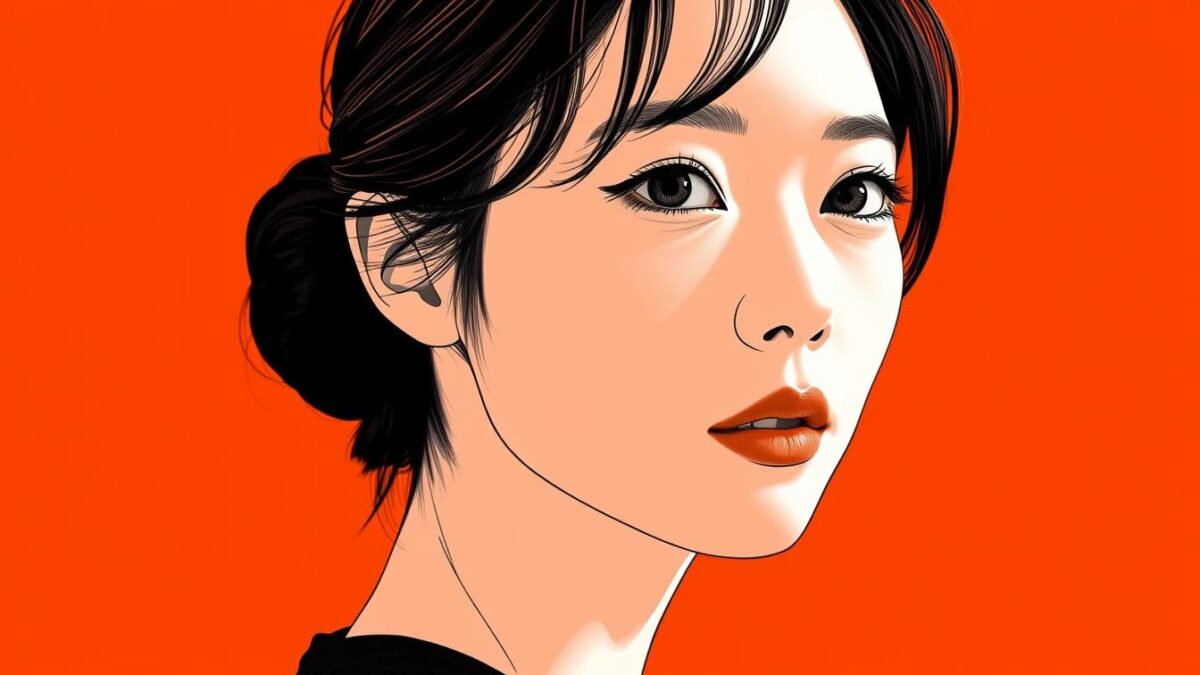
Bae Doona commands attention as one of South Korea’s most compelling actors. Her career spans over twenty years, moving from Seoul’s independent film scene to major international productions. She chooses roles with a sharp eye for story and character depth.
Born in Seoul on October 11, 1979, she began as a model. She fully committed to acting in 1999. Her path was never about commercial fame. It was always about artistic truth.
This actress collaborates with visionary directors like Bong Joon-ho and the Wachowskis. She is known for portraying complex women. Her performances are physically demanding and emotionally raw. She often works without makeup, focusing purely on the craft.
Beyond acting, Doona Bae is a serious photographer. She publishes photo-essay books that reveal her quiet observation. Her membership in the Academy of Motion Picture Arts and Sciences since 2018 validates her unique approach. This profile traces her journey from local theaters to global Netflix series.
Early Life and Influences
The theater wings of Seoul became Bae Doona’s childhood classroom, where she watched her mother Kim Hwa-young command the stage night after night.
Family Background and Early Exposure to Theater
Her mother’s career as a stage actress provided constant exposure to performance. Bae absorbed dialogue and blocking from an early age. This immersion revealed acting’s true demands rather than romanticizing it.
She once noted the experience had “the opposite effect.” It made her believe acting required extraordinary talent. This early skepticism built deep respect for the craft.
Education and Initial Interests
Before acting called, Bae explored academic paths. She enrolled at Hanyang University in 1998. A modeling scout soon discovered her in Seoul.
She later studied film arts at Konkuk University. This formal education grounded her practical experience. It gave her theoretical understanding of cinematic language.
| Institution | Year | Field of Study | Significance |
|---|---|---|---|
| Hanyang University | 1998 | General Studies | Initial academic exploration before industry discovery |
| Modeling Agency | 1999 | Professional Modeling | Industry entry point and career launch |
| Konkuk University | Early 2000s | Film Arts | Formal cinematic education and theory |
The combination created a unique perspective. She understood live performance’s immediacy and cinema’s constructed reality. This dual foundation shaped her distinctive approach to acting.
Modeling and Acting Beginnings
Her professional journey started not on stage but in fashion catalogs, where she learned the language of the lens. A scout discovered Bae Doona on a Seoul street in 1998 while she attended Hanyang University.
From Modeling to the Big Screen
Modeling for brands like COOLDOG taught her essential skills. She mastered how to communicate presence without words. This training proved invaluable for screen acting.
The young actress made a decisive career shift in 1999. She left university studies incomplete to pursue acting full-time. This bold move launched her performing career.
Debut Roles in Television and Film
Her television debut came in the drama “School” that same year. It introduced her to Korean audiences. Her first film role followed quickly in The Ring Virus.
This Korean adaptation of Japanese horror gave her early genre experience. In 2000, Plum Blossom showcased her risk-taking approach. The provocative performance challenged industry expectations.
| Year | Project | Role Type | Significance |
|---|---|---|---|
| 1998 | Modeling Discovery | Professional Entry | Learned camera presence and non-verbal communication |
| 1999 | School (TV) | Television Debut | First introduction to acting and Korean audiences |
| 1999 | The Ring Virus | Film Debut | Early horror genre experience and remake dynamics |
| 2000 | Plum Blossom | Risk-taking Role | Demonstrated willingness to challenge conventions |
These early choices established lasting patterns. She consistently selected challenging material over safe options. The foundation was set for her distinctive career path.
Career Milestones and Breakthrough Roles
When other South Korean actresses refused to appear without makeup, one performer saw it as an opportunity for authenticity. This decision marked the beginning of a transformative decade.
Impactful Films from Barking Dogs Never Bite to Take Care of My Cat
Director Bong Joon-ho cast her in Barking Dogs Never Bite precisely because she embraced the natural look. The film became her artistic awakening. She later called it the role that changed her entire approach to acting.
Take Care of My Cat followed in 2001, exploring female friendship in post-IMF Korea. Her performance showcased delicate emotional precision. The film demonstrated her ability to convey complex relationships.
Park Chan-wook’s Sympathy for Mr. Vengeance expanded her range into morally complex territory. She played a political activist driven by ideology. This role confirmed her versatility beyond conventional characters.
After commercial disappointments, she took a creative hiatus that included photography. Linda Linda Linda brought her to Japan in 2005. The film celebrated youth culture and cross-cultural connection.
Reuniting with Bong Joon-ho for The Host required months of archery training. The blockbuster became South Korea’s highest-grossing film. Her character combined physical skill with emotional depth.
Air Doll in 2009 earned international acclaim and Best Actress awards. Playing an inflatable doll gaining consciousness demanded extraordinary physical control. The performance showcased her commitment to transformative roles.
Bae Doo-na: Global Recognition and Hollywood Debut
Hollywood’s gates opened for Bae Doona not through careful planning, but through a director’s vision that saw past language barriers. The Wachowskis recognized her capacity for emotional truth beyond English limitations.
Notable International Roles in Cloud Atlas and Jupiter Ascending
Cloud Atlas became her Hollywood introduction in 2012. She played Sonmi~451, a clone turned revolutionary in dystopian Neo Seoul. The film wove six interconnected stories across centuries.
Her performance earned praise despite mixed reviews for the movie. Bae described the Wachowskis as important as her mother, showing deep creative trust.
She returned to Korean independent cinema with A Girl at My Door in 2014. Doona Bae committed to the role without payment just three hours after reading the script. She played a police officer protecting a mysterious young girl.
The film premiered at Cannes and won her Best Actress at the Asian Film Awards. Jupiter Ascending reunited her with the Wachowskis in 2015 as bounty hunter Razo.
Recently, she starred as warrior android Nemesis in Zack Snyder’s Rebel Moon. Part One and Part Two showcased her action capabilities. Each part required different physical and emotional registers.
The time between Korean films and Hollywood blockbusters never caused artistic whiplash. She approached every role with the same commitment regardless of budget or language.
Television Triumphs and Evolving Series
Television provided a new canvas for Bae Doona’s artistic exploration. Streaming platforms expanded her global reach across multiple series.
Her Korean television success began with the 2017 crime thriller Stranger. She played Lieutenant Han Yeo-jin opposite a emotionally detached prosecutor. The series balanced procedural investigation with institutional critique.
Korean Successes in Stranger and Kingdom
Season two arrived in 2020 with her character promoted to Senior Inspector. This deepened the exploration of police-prosecutor tensions. Her performance grounded the show’s complexity with human warmth.
Kingdom premiered on Netflix in 2019 as a period zombie series. Bae played physician Seo-bi investigating a mysterious plague. She maintained calm analytical presence amid political intrigue and survival horror.
Innovative Collaborations and Streaming Hits
Sense8 represented the Wachowskis’ ambitious television experiment. Bae played Sun Bak, a Seoul businesswoman and underground fighter. The series explored themes of identity and connection across global locations.
The Silent Sea brought her back to science fiction in 2021. She played an astrobiologist on a dangerous lunar mission. The Netflix production showcased Korea’s capacity for high-concept genre television.
| Series | Year | Platform | Character Type |
|---|---|---|---|
| Stranger | 2017-2020 | Korean TV/Netflix | Passionate police investigator |
| Kingdom | 2019 | Netflix | Period drama physician |
| Sense8 | 2015-2018 | Netflix | Global connected fighter |
| The Silent Sea | 2021 | Netflix | Scientific mission specialist |
These series demonstrate her understanding of television’s extended format. It allows character development impossible in film’s compressed time frame. Bae Doona chooses projects that reward sustained attention.
Final Thoughts on Bae Doo-na’s Enduring Impact
The true measure of an actor’s impact lies not in box office numbers but in the roles that challenge conventions. This actress built a career on artistic integrity rather than commercial appeal.
Bae Doona consistently chose directors with vision over projects with marketing budgets. Her filmography reflects deep trust in collaborators like Bong Joon-ho and the Wachowskis.
Awards accumulated across two decades validate her approach. From early recognition in South Korea to international honors, these accolades span multiple film cultures.
Her 2018 AMPAS invitation acknowledges contributions to global cinema. Bae Doo-na’s legacy proves that character depth outlasts celebrity noise.