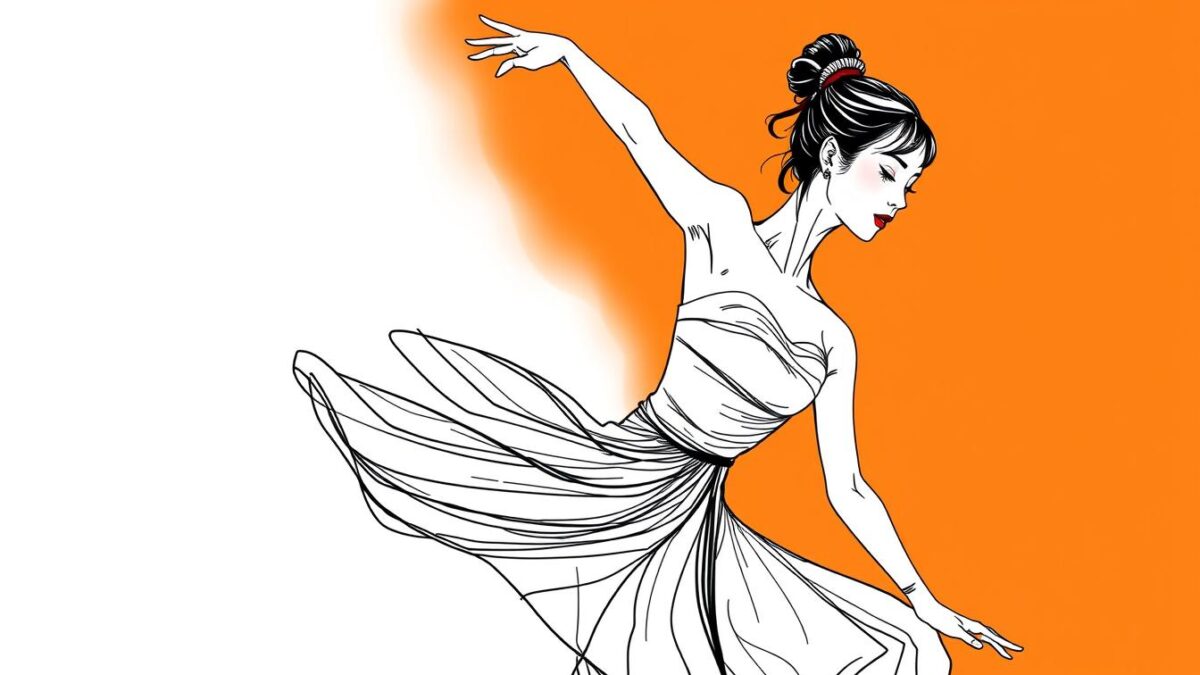
A young dancer from Japan commands attention in senior classical competitions. At seventeen, she earned a place among the top twelve performers nationwide. This achievement signals a serious arrival in the competitive dance world.
Her training ground is the respected Koike Ballet Studio. This is where technique meets artistry. The studio’s rigorous approach prepares dancers for this exact moment in time.
Competing against older, more experienced artists requires exceptional discipline. Her journey reflects a clear path of development. She represents a new generation blending precision with personal expression.
Japanese ballet culture demands years of dedicated practice. Young artists commit fully before stepping onto national stages. Her story shows what happens when talent meets unwavering focus.
Profile of Ayana Sakamoto
A dancer’s profile reveals the intricate balance between disciplined training and personal influences. The environment at Koike Ballet Studio shapes technically strong students who compete nationally.
Early Influences and Background
Studio culture and peer relationships form early artistic foundations. Many serious ballet students in Japan begin training in childhood.
They spend years mastering foundational technique before advancing. This progression builds the physical and artistic standards needed for senior competitions.
Training, Breakthroughs, and Inspirations
Training breakthroughs involve mastering difficult variations and developing stage presence. Dancers learn to convey emotion through controlled movement.
Inspirations often come from watching principal dancers and studying performances. Guest choreographers visiting the studio also provide fresh perspectives.
The available data shows Sakamoto’s commitment extends beyond performance. Her time as an exchange research student suggests intellectual curiosity about dance pedagogy and cultural research.
| Training Stage | Typical Age Range | Key Focus Areas | Competition Level |
|---|---|---|---|
| Foundational | 6-10 years | Basic technique, posture | Local studio events |
| Intermediate | 11-14 years | Pointe work, simple variations | Regional competitions |
| Advanced | 15-18 years | Complex choreography, artistry | National senior division |
| Professional | 18+ years | Performance quality, interpretation | International stages |
This research into training methods helps dancers understand their craft more deeply. The combination of physical discipline and intellectual study creates well-rounded artists.
Artistic Journey and Unique Dance Style
Ballet artists cultivate their distinctive style gradually, blending technical precision with personal interpretation. This development happens over years of focused work.
Signature Techniques and Visual Aesthetics
Clean lines and strong turnout define classical excellence. Precise footwork creates the foundation for expressive movement.
Visual harmony comes from careful attention to details. Arm carriage, head angles, and extension quality shape the complete picture.
Performance Highlights and Stage Presence
Stage presence transforms technical skill into memorable artistry. It connects the dancer emotionally with the audience.
Performance highlights accumulate through various projects. Each showcase builds toward national recognition.
Explorations in Visual Media and Theater
Some dancers expand beyond traditional ballet through research and collaboration. These projects explore contemporary movement and interdisciplinary work.
Theater projects allow experimentation with character roles. They test different aspects of artistic expression.
| Artistic Element | Technical Focus | Expressive Quality | Development Timeline |
|---|---|---|---|
| Line and Extension | Posture alignment | Fluid movement quality | 2-4 years |
| Turnout Control | Hip flexibility | Stable foundation | 3-5 years |
| Foot Articulation | Ankle strength | Precise musicality | 2-3 years |
| Arm Carriage | Shoulder placement | Emotional expression | 1-2 years |
This artistic development balances classical preservation with personal growth. Each project contributes to the dancer’s unique voice.
Competitive Achievements and Project Involvement
Dance competitions offer objective data points that track artistic progression. The senior division represents the highest tier for pre-professional dancers.
Ayana Sakamoto’s placement among the top twelve finalists demonstrates exceptional skill. She competed against dancers from elite institutions nationwide.
Accolades in Dance Competitions
The classical dance category demands technical precision and emotional depth. Finalists must master complex variations while maintaining stage presence.
This achievement validates years of studio training. It opens doors to professional opportunities and advanced training programs.
Her work as an exchange research student shows a dual focus. She balanced performance with academic inquiry into dance science.
This research likely involved laboratory studies of movement mechanics. Such projects deepen understanding of artistic execution.
| Competition Metric | Senior Division Standard | National Level Impact | Career Advancement |
|---|---|---|---|
| Technical Score | 90%+ precision required | Benchmarks against peers | Company auditions |
| Artistic Expression | Emotional connectivity | National recognition | Principal roles |
| Stage Presence | Audience engagement | Industry visibility | Guest performances |
| Finalist Status | Top 12 placement | National ranking | Scholarship offers |
Collaborative projects beyond competition enrich artistic development. They provide context for the technical mastery displayed on stage.
Final Reflections and Future Horizons
A dancer’s future often unfolds through a combination of performance opportunities and intellectual pursuits. Sakamoto stands at this intersection with rare balance.
Her time as both competitor and research student creates unique flexibility. This dual foundation allows for diverse project engagements beyond traditional stages.
The future of dance increasingly values artists who bridge practice and theory. Laboratory work informs performance, while stage experience grounds academic research.
Project-based collaborations with choreographers offer one path forward. These creative ventures develop new works over extended periods.
Another direction involves educational initiatives or dance science research. The field needs practitioners who understand both artistry and methodology.
This approach builds a sustainable career with multiple entry points. It honors tradition while embracing the evolving nature of dance professions.