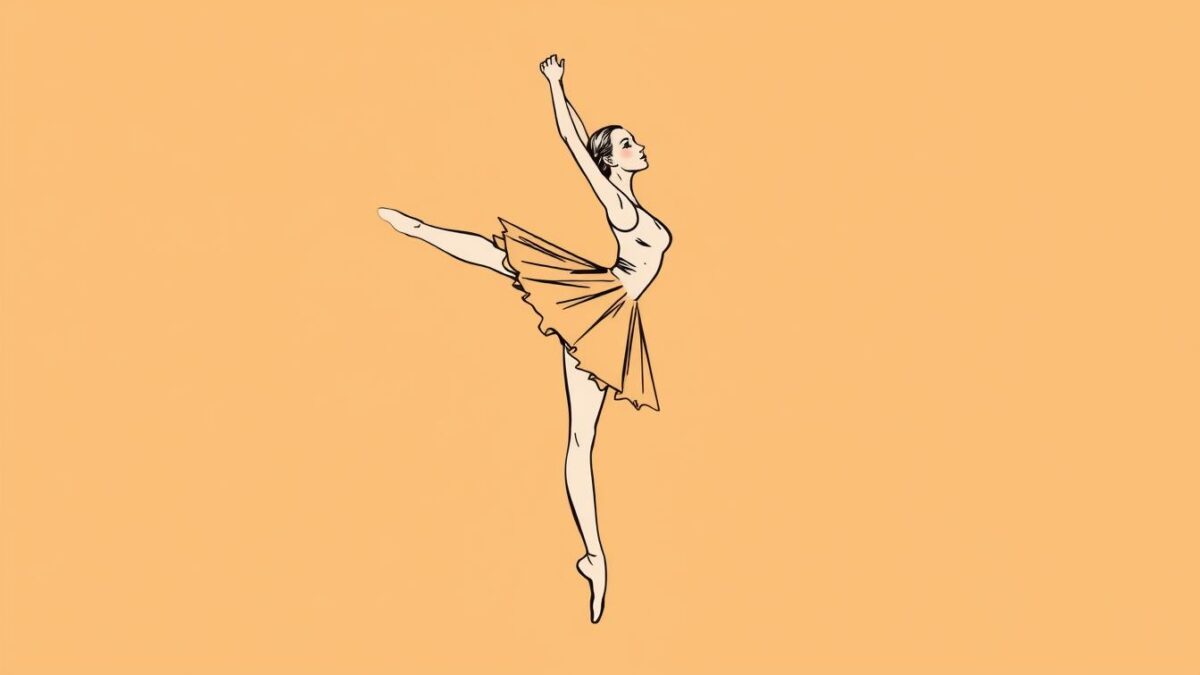
Dame Antoinette Sibley defined an era of British ballet. Her career, spanning over three decades, showcased a rare combination of technical precision and deep emotional expression.
She joined the Royal Ballet in 1956, a graduate of its prestigious school. By 1960, she became a soloist. Her name became synonymous with grace on the stage.
Her legendary partnership with Anthony Dowell captured audiences worldwide. They created one of the most celebrated pairings in the history of dance. Their work defined the company’s golden age.
This ballerina mastered a vast range of roles. She brought characters to life with a powerful yet delicate presence. Her performances in both classical and contemporary works left a lasting mark.
After her retirement from dancing in 1989, her influence continued to grow. She became President of the Royal Academy of Dance in 1991. Later, she served as a Governor of the Royal Ballet Board.
Her story is one of enduring artistry. It moves from a young student to a revered leader. Her legacy continues to inspire new generations of dancers today.
Introduction to a Legendary Dancer
Alastair Macaulay’s pursuit of an interview with the ballerina began with a missed connection and a bouquet of red roses. He first saw her in Belgrave Square in 1979, just after her retirement news broke. He bought a dozen roses, but she vanished before he could offer them.
He wrote about it in his newspaper column. Six months later, a postcard arrived from her. It invited him for a drink. Their first long conversation about her career happened that December.
This was the start of a dialogue that spanned decades. Macaulay spoke with her many times through the 1980s. Their final recorded talk was in her home in 2014. This gives us a rare view into the mind of a great artist over time.
Overview of the Interview Post
The insights here come from these many meetings. Macaulay’s role changed from fan to trusted friend. This access allowed for candid talk about her craft.
She shared technical details about iconic roles. She discussed musicality and character. The table below outlines key moments in their long conversation.
| Year | Location | Primary Focus of Discussion |
|---|---|---|
| December 1979 | Not Specified | Reflections on career following retirement announcement |
| 1980s | Various | Technical approach to roles; artistic process |
| Autumn 2014 | Belgravia Home | Perspective gained with distance from performing years |
Setting the Stage for Her Story
These personal accounts are supported by history. Writers like Mary Clarke of Dancing Times documented her rise. Clarke followed her journey from early shows at Covent Garden to her final bow.
This context is vital. It shows the world of British ballet as Sibley entered it. The Royal Ballet was becoming a global force. Her story is part of that larger tapestry.
Together, these sources build a full picture. We see not just the public success but the private artistry. We hear the ballerina’s own voice, full of warmth and sharp intelligence.
Early Life and Ballet Training
In the London suburb of Bromley, a young dancer’s journey began with foundational training at the Arts Educational Schools. This early education provided the essential groundwork before advancing to more specialized instruction.
Growing Up in Bromley and Early Inspirations
The ballerina’s first appearance on stage came in January 1956 while still a student. She danced as a swan in Swan Lake, a small role that introduced her to the repertoire she would later master.
Just six months after this debut, she joined the Royal Ballet company in July 1956. Her early professional roles included character parts like Red Riding Hood in Sleeping Beauty.
Dance critic Joan Lawson recognized something special in the young performer. Writing in The Dancing Times, she praised the “lyrical qualities and beautifully flowing line” evident even in minor roles.
A turning point came in 1959 with coaching from Tamara Karsavina. The legendary ballerina emphasized sharp, precise footwork that would shape the dancer’s technical approach for years to come.
| Year | Milestone | Significance |
|---|---|---|
| Pre-1956 | Arts Educational Schools | Foundational ballet training |
| January 1956 | Stage debut in Swan Lake | First professional performance as student |
| July 1956 | Joined Royal Ballet company | Beginning of professional career |
| 1959 | Coaching by Tamara Karsavina | Advanced technical refinement |
These formative years established both technical foundation and artistic understanding. The rapid progression from student to company member signaled exceptional potential recognized early by teachers.
Breakthrough Moments on Stage
Ninette de Valois, the Royal Ballet’s artistic director, made a bold decision that would change a dancer’s career trajectory. On March 21, 1959, she cast the young artist as Swanhilda in Coppélia for a matinée at the Royal Opera House.
This first major role demonstrated de Valois’s eye for emerging talent. She often tested young dancers in afternoon performances before evening galas.
The real turning point came just seven months later. On October 24, 1959, the dancer unexpectedly received the lead role in Swan Lake. She partnered with Michael Somes, one of the company’s most respected artists.
Dancing Odette/Odile represented the ultimate test for any ballerina. The role demanded technical precision for the Black Swan’s fouettés and emotional depth for the White Swan’s lyrical passages.
Success in this performance opened international doors immediately. The Royal Ballet selected her for prestigious tours to the United States and Soviet Union.
Russian critic Natalia Roslavleva observed the company in Moscow. She noted the dancers’ “youthful charm, good technique and engaging personalities” while suggesting they needed to develop “mature stagecraft.”
This measured critique acknowledged Sibley’s potential while identifying her future challenge. She would need to transform natural gifts into deeper artistry.
These 1959 breakthroughs established the dancer as a rising star at age twenty. They set her on a path toward principal roles and legendary partnerships.
Antoinette Sibley: An Icon in Ballet
The mark of a true ballerina is not just the roles she dances, but the indelible impression she leaves on them. Dame Antoinette Sibley achieved iconic status through performances that revealed a rare depth of artistry.
Critic Mary Clarke captured this perfectly. She noted that while other dancers would inherit the great classical parts, one small Ashton creation belonged to this dancer forever. That role was Dorabella in Enigma Variations.
Clarke’s observation points to a special kind of greatness. It lies in the ability to inhabit a character so completely that the performer and the part become one. For those who saw her, there was only one Dorabella.
Alastair Macaulay experienced a profound personal connection to her work. Watching her at the Royal Ballet’s Covent Garden home, he felt her way of dancing epitomized his own inner self. He believed she was the ballerina about whom he wrote best.
Her iconic status was built on consistency. She danced many demanding roles over decades. She embodied a distinctly British approach to ballet—lyrical, musical, and technically secure without showiness.
| Critic | Publication | Core Insight |
|---|---|---|
| Mary Clarke | The Guardian | Highlighted her unique, irreplaceable interpretation of the role Dorabella. |
| Alastair Macaulay | Dance Criticism | Emphasized the deep personal and artistic connection her performances created. |
This combination of critical acclaim and audience connection cemented her place in history. It was an icon status earned not by celebrity, but by the pure power of her art.
Artistic Collaborations and Partnerships
When Sir Frederick Ashton cast two young dancers together in 1964, he created something magical. Their partnership would become one of the most celebrated in Royal Ballet history.
Working with Anthony Dowell and Sir Frederick Ashton
The ballet was The Dream, Ashton’s version of A Midsummer Night’s Dream. He cast the ballerina as Titania opposite Anthony Dowell’s Oberon. Dance historian David Vaughan noted this partnership was “sure of a place in contemporary ballet history.”
Vaughan praised her “swiftness” and “impersonation of a half-wild creature.” He contrasted this with Anthony Dowell’s “silken fluidity of phrasing.” Their complementary talents made them perfect partners.
Sir Frederick Ashton created multiple roles specifically for this dancer’s talents. These included Dorabella in Enigma Variations and Friday’s Child in Jazz Calendar. Working with Ashton taught her about musicality and full-body movement.
The Royal Ballet Experience
The Sibley-Dowell partnership extended throughout the Royal Ballet repertoire. They danced everything from Romeo and Juliet to abstract works. Their collaboration defined an era for the company.
Between 1982 and 1988, the ballerina experimented with new partners. She danced with international stars including Baryshnikov, Nureyev, and Fernando Bujones. She also partnered with rising Royal Ballet dancers.
For this artist, the Royal Ballet represented an artistic family. Choreographers, dancers, and coaches collaborated constantly. They developed a distinctive style balancing classical purity with dramatic expression.
Defining Signature Roles and Performances
A ballerina’s legacy is often measured by the roles she makes uniquely her own. For this artist, that meant mastering both the classical canon and daring new creations. Her interpretations became the standard for a generation.
Her first Aurora in The Sleeping Beauty in 1961, partnered by John Gilpin, was an immediate triumph. Critics saw in her performance the promise of a new era, comparing her Aurora to Margot Fonteyn’s. This role remained a cornerstone of her career for decades.
Memorable Performances in Swan Lake and Sleeping Beauty
In a 1979 conversation, she detailed Aurora’s Act Three variation for Alastair Macaulay. She explained the coordination of eyes, wrists, and feet, building a “cylinder of space.” The final manège was her moment to shine, looking up triumphantly.
The dual role of Odette and Odile in Swan Lake showcased her range. She delivered the lyrical purity of the White Swan and the technical fire of the Black Swan. She sometimes embellished the famous thirty-two fouettés with double pirouettes.
Beyond these classics, her versatility shone. She created the title role in Kenneth MacMillan’s Manon, defining the character with innocence and intensity. She was also renowned for her dramatic depth in MacMillan’s Romeo and Juliet.
From Ashton’s abstract Symphonic Variations to the playful Jazz Calendar, her repertoire was vast. Each role demonstrated a rare combination of technical security and profound musicality. This range cemented her status as a complete artist.
Behind the Scenes of a Ballerina’s Career
While audiences saw only the polished performances, the true story of a ballerina’s career unfolded in daily classes and painful rehabilitation. For two and a half years, from 1976 to 1979, Sibley battled a recurrent knee injury that flared during filming of The Turning Point.
She took class daily during those difficult months, rebuilding strength and technique. Some observers believed she regained her former level. But she remained unsure her knee could withstand demanding roles like Swan Lake.
Alastair Macaulay’s privileged access revealed the analytical mind behind the artistry. In December 1979, they spent a long evening discussing her career. She articulated sophisticated theories about musicality that few dancers could express so clearly.
Sibley distinguished between two types of musicality. Dancers like herself “were the music,” while others like Merle Park could “play with the music” in ways that could be even more wonderful. This insight showed her intellectual engagement and generosity toward colleagues.
| Year | Focus of Discussion | Key Revelation |
|---|---|---|
| December 1979 | Career reflection post-injury | Detailed analysis of musicality theories |
| 1984 | Technical approach to roles | Some 1979 details had faded from memory |
| Autumn 2014 | Perspective with distance | Body memory retained what conscious mind forgot |
The interviews revealed a fascinating paradox. Much of what Sibley explained in 1979 had evaporated from her mind by later conversations. Yet her body still knew the movements exquisitely.
This suggests that dancers’ knowledge lives in muscles and nerves as much as in conscious memory. Behind every great performance lay this complex relationship between mind and body.
Enduring Influence on the Ballet World
Her retirement marked not an end, but a shift into a powerful new phase of mentorship. Sibley’s influence expanded through key leadership positions. She became President of the Royal Academy of Dance in 1991.
This role let her shape training standards for thousands of dancers worldwide. She also returned as a guest coach at the Royal Ballet. Later, she served on the Royal Ballet Board.
These roles kept her connected to the company’s heart. She ensured the traditions she embodied were passed on.
Impact on Future Generations of Dancers
Her coaching partnership with Anthony Dowell became legendary. They taught younger dancers the Ashton repertoire. Observers noted their unique collaborative process.
Sibley would often ask, “What comes next, darling?” Dowell would prompt her memory. Then she would demonstrate the movement fabulously.
This teaching style transmitted more than just steps. It conveyed the essential quality of movement and musicality. She showed how the upper and lower body work together.
At seventy-five, she could still demonstrate Ashton’s choreography with perfect coordination. A ballet school studio now bears her name. Young ballerinas train there, surrounded by portraits of her dancing.
Her impact came from embodying a style with such integrity. Dancers saw what they were aspiring to achieve. She taught the “why” behind every movement, not just the “what.”
Reflections on Artistic Challenges and Triumphs
The Royal Ballet’s canteen at Covent Garden became the unlikely setting for a conversation that would help a ballerina rediscover her passion. Sibley confessed to Rudolf Nureyev her struggle with finding inspiration in The Sleeping Beauty, a role she had danced countless times.
Nureyev responded with such thrilling insight that she declared she would never forget his words. They carried her through subsequent performances. Yet by 1984, when recounting this to Alastair Macaulay, she had forgotten what he said.
This reveals the ephemeral nature of artistic inspiration. Dancers must constantly find new ways into familiar roles.
Different ballerinas faced unique challenges within the same ballet. Where Margot Fonteyn found Act Three of Sleeping Beauty taxing, Antoinette found it more congenial than Act One.
Around 1973, Fonteyn congratulated her after a fine Act One but warned about the remaining acts. Sibley cheerfully replied that Acts Two and Three never alarmed her. This exchange shows the camaraderie among artists facing demanding repertoire.
Her greatest challenge came during 1976-1979 with a persistent knee injury. After announced retirement and months away from the stage, she discovered in 1980 that pregnancy had healed what treatment could not.
Mary Clarke and other critics noted that her artistry deepened in later years. She brought new emotional insights to roles that would have been impossible in her twenties.
Retirement, Return, and Lasting Legacy
Retirement announcements in ballet often mark definitive endings, but for this dancer, it became the beginning of an unexpected second act. Her initial retirement came after three months of deliberation following her fortieth birthday.
Deciding When to Leave the Stage
Dame Antoinette announced her retirement in 1979, influenced by her mentor’s wisdom about leaving gracefully. She faced persistent knee issues from 1976 to 1979 that limited her technical range.
What few knew during that December interview was her pregnancy with a son born the following summer. This personal turning point coincided with her professional transition.
After eighteen months away, Anthony Dowell and Sir Frederick Ashton persuaded her back to the stage. Her November 1980 return surprised everyone, including herself.
The Role as a Mentor and Coach
Her second career spanned from 1982 to 1988, featuring roles created by Ashton and Michael Corder. She gave final performances in December 1988, soon after Ashton’s passing.
She became President of the Royal Academy of Dance in 1991. This role let her coach Royal Ballet dancers, sharing three decades of stage experience.
The ballerina’s journey shows how retirement can open new creative chapters. Her legacy continues through the dancers she mentors today.
Final Reflections on a Life of Dance
True artistry transcends physical movement, becoming a mirror in which audiences see their own humanity reflected. For critic Alastair Macaulay, watching Antoinette Sibley felt like seeing his inner self epitomized on the Covent Garden stage.
This profound connection defines her legacy. It rests not on a single role but on a career spanning performing, teaching, and leadership at the Royal Academy of Dance.
She balanced a demanding stage life with a stable personal one. Her marriages to dancer Michael Somes and later banker Panton Corbett provided a foundation away from the spotlight.
Writers like Mary Clarke in The Dancing Times documented this journey with care. They recognized an artist who embodied the best of British ballet.
Some magic escapes words or film—the live experience of her dancing, her perfect musicality. Even at seventy-five, she could demonstrate a role with a depth younger dancers struggled to match.
Her influence, through the Royal Ballet and the academy, ensures this artistry inspires new generations of dancers. It is a legacy that truly transcends time.