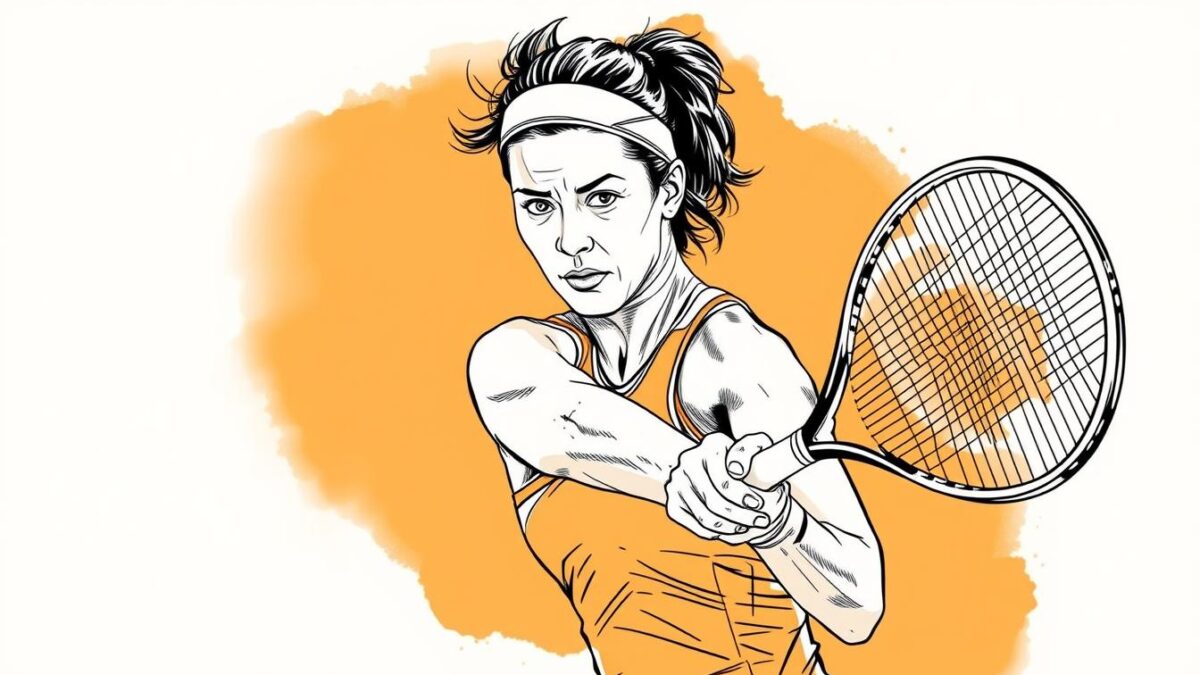
Amélie Mauresmo stands as a defining figure in French tennis. Her career is a story of power and precision. She reached the pinnacle of the sport, becoming the world No. 1.
Her journey began in Saint-Germain-en-Laye. She crafted a legacy built on a formidable one-handed backhand and aggressive net play. This style led her to two major singles titles in a single year.
She conquered the Australian Open and Wimbledon in 2006. These victories cemented her status among the elite. Her influence, however, extends far beyond her playing days.
After retiring from professional tennis, she transitioned into coaching and leadership. She now guides the French Open as its tournament director. Her path reflects a deep, enduring connection to the game.
From champion to coach to director, her impact on the world of tennis continues. She broke barriers and inspired a generation with her skill and determination.
Early Life and Tennis Beginnings
The spark that ignited a legendary tennis career came from a television screen in 1983. A four-year-old watched Yannick Noah become the first Frenchman in decades to win the French Open. That moment captured her imagination completely.
Childhood Inspirations and Family Background
Her parents recognized the immediate passion in their daughter. They bought her first racket soon after Noah’s victory. The family provided stable support from their home in Saint-Germain-en-Laye.
Her father Francis worked as an engineer while her mother Françoise managed the household. Her brother Fabien would follow the engineering path. But she found her calling on the court instead.
First Steps on the Tennis Court
The early years showed remarkable progression. She built fundamental skills with disciplined practice. Her signature one-handed backhand began taking shape during this time.
By 1996, at just 17 years old, she dominated junior tennis. She won both the French Open and Wimbledon junior titles that year. The International Tennis Federation named her Junior World Champion.
| Year | Milestone | Achievement |
|---|---|---|
| 1983 | First Inspiration | Watched Yannick Noah win French Open |
| 1983 | Started Playing | Received first tennis racket at age 4 |
| 1996 | Junior Breakthrough | Won French Open Junior title |
| 1996 | International Success | Won Wimbledon Junior title |
| 1996 | Recognition | Named ITF Junior World Champion |
This early success validated her potential. It foreshadowed the Grand Slam victories that would come later. The time between that first racket and junior championships showed steady growth.
Rise to Prominence on the WTA Tour
Her arrival on the international stage came with explosive force at Melbourne Park. The 1999 season transformed her from promising talent to proven contender.
Breakthrough at the Australian Open 1999
Entering the tournament unseeded, she fought through a remarkable path. Her stunning upset of world No. 1 Lindsay Davenport announced her arrival among elite players.
The victory propelled her into the final against Martina Hingis. Though she lost the championship match, her performance made history. She became only the second Frenchwoman to reach an Australian Open final.
At just 19 years old, she also made personal headlines. Following her quarterfinal win, she came out as gay to the international press. She credited her breakthrough to finding personal freedom and authenticity.
Entry into World Top Rankings
The 1999 season catapulted her ranking dramatically. She finished 1998 at No. 29 in the world but climbed to No. 10 by year’s end.
This rapid ascent established her as a consistent presence in women’s tennis. The tournament proved she could compete with the world’s best players.
| Year | Year-End Ranking | Key Achievement |
|---|---|---|
| 1998 | No. 29 | Established on WTA Tour |
| 1999 | No. 10 | Australian Open Finalist |
| Career High | No. 1 (2004) | World’s Top Player |
Her aggressive baseline game and tactical intelligence were now undeniable. The tennis world took notice of this new force.
Grand Slam Triumphs and Historic Achievements
Her potential finally crystallized into championship form during a remarkable 2006 season. That year, she captured two major singles titles, silencing any lingering doubts about her ability to win on the biggest stages.
Australian Open and Wimbledon Victories in 2006
At the Australian Open, Amélie Mauresmo powered through a tough draw. She faced former world No. 1 players Kim Clijsters and Justine Henin back-to-back. Both opponents retired from their matches due to injury and illness.
She was leading decisively in each match, proving her superior form. This victory secured her first Grand Slam title. It was a monumental moment for the French athlete.
Five months later, she entered Wimbledon as the top seed. Her path to the final included wins over Maria Sharapova and others. The championship match was a full battle against Henin.
She dropped the first set but fought back brilliantly. Her 2-6, 6-3, 6-4 victory was a complete display of skill and nerve. This win on grass cemented her status as a true champion.
Memorable Matches and Record-Breaking Moments
That Wimbledon final was historic for several reasons. She became the first Frenchwoman to win there since Suzanne Lenglen in 1925.
She also remains the most recent women’s champion to use a classic one-handed backhand. The match was also notable for being the only final in the 2000s without a Williams sister.
These two titles, won against elite competition, defined her career peak. They demonstrated her ability to conquer different surfaces and high-pressure situations.
Amélie Mauresmo’s Playing Style and Technique
The French champion’s game was built around a weapon that had become rare in women’s tennis. Her one-handed backhand stood out in an era dominated by two-handed techniques.
Signature One-Handed Backhand and Net Play
This elegant shot gave her exceptional versatility on the court. She could drive flat winners down the line or slice with defensive precision. The angles she created often pulled opponents completely out of position.
Her aggressive net approach distinguished her from baseline specialists. She preferred finishing points quickly with strong volleys rather than engaging in long rallies. This style required perfect timing and tactical intelligence.
Under coach Loïc Courteau from 2002 to 2008, she refined this approach. Her 5’9″ athletic build generated power from both wings while maintaining net agility. Though her serve wasn’t the fastest, its reliable placement set up attacking opportunities.
| Playing Style Element | Mauresmo’s Approach | Typical WTA Player |
|---|---|---|
| Backhand Technique | One-handed, versatile | Two-handed, powerful |
| Court Positioning | All-court, net-rushing | Baseline-oriented |
| Point Construction | Attack-first, shorten points | Rally-based, endurance |
| Surface Adaptation | Excelled on grass | Often clay or hard court specialists |
This complete technical package made her adaptable to different surfaces and opponents. Grass courts particularly suited her attacking game. The combination required both physical skill and mental conviction against powerful baseliners.
Challenges, Injuries, and Moments of Resilience
The path to championship glory was not without its obstacles. Injuries and high-pressure moments frequently tested her resolve throughout her career.
Injury Setbacks and Recoveries
Physical ailments disrupted several key tournaments. After winning Wimbledon in 2006, a groin injury forced her withdrawal from Fed Cup matches.
The following season brought more challenges. Acute appendicitis required surgery, causing her to miss the Miami Open and clay court events.
Injuries became more frequent toward the end of her career. A thigh problem at Wimbledon 2008 led to a two-month break from competition.
Handling High-Pressure Situations
Before her 2006 breakthrough, she often struggled in crucial matches. Between 2002 and 2005, she reached 12 Grand Slam quarterfinals but frequently fell short.
The 2004 Wimbledon semifinal exemplified this pattern. She won the first set and led by a break against Serena Williams, only to lose in three sets.
These tight contests revealed the mental challenge of closing out big matches. The seven-year gap between her first final and major wins reflected needed psychological growth.
| Year | Tournament | Injury/Challenge | Impact |
|---|---|---|---|
| 2004 | Wimbledon | Pressure in semifinal | Lost after leading vs. Williams |
| 2006 | Wimbledon/Fed Cup | Groin injury | Missed international matches |
| 2007 | Miami Open | Appendicitis surgery | Missed clay season events |
| 2008 | Wimbledon | Thigh injury | Two-month break from tennis |
Each season brought new tests of resilience. Mauresmo’s ability to return from setbacks demonstrated the mental toughness that defined her career.
From Champion to Mentor: Transition to Coaching
When her playing days ended, a new chapter began in coaching. The former world No. 1 brought her championship experience to developing other elite players. Her transition started immediately after retiring from professional tennis in 2009.
Mauresmo began with fellow French player Michaël Llodra during the 2010 grass season. This early work established her coaching credentials quickly.
Insights into Her Coaching Philosophy
Her approach emphasized tactical intelligence and mental preparation. She drew from her own career challenges to help others navigate pressure situations. This philosophy proved effective across both WTA and ATP tours.
The coach focused on building confidence alongside technical adjustments. Her guidance helped players break through at the highest levels.
Notable Coaching Tenures with Top Players
In 2013, she joined Marion Bartoli just before Wimbledon. Under Mauresmo’s guidance, the French No. 1 won her first Grand Slam title without dropping a set. Bartoli credited the coach for reviving her career.
June 2014 brought a groundbreaking appointment. Mauresmo became Andy Murray’s coach, one of few women to guide a top-tier male player. Their partnership produced significant achievements.
Murray won his first clay-court titles under her tutelage. This included a historic victory over Rafael Nadal at the 2015 Madrid Open. The player reached multiple Australian Open finals during their collaboration.
She also captained the France Fed Cup team from 2013-2016. Later work with Lucas Pouille in 2019 demonstrated her ongoing commitment to developing talent.
Impact on Women’s Tennis and Cultural Influence
A pivotal moment in 1999 reshaped not just her career but the conversation around women in tennis. After a breakthrough victory, the 19-year-old player came out as gay to the international press.
She became the first prominent female tennis player to do so in nearly two decades. This act broke a significant silence in women tennis.
Mauresmo credited her on-court success to finding personal peace. Her openness sent a powerful message to young athletes everywhere.
Breaking Barriers and Public Milestones
Her decision made her a pioneer for LGBTQ+ visibility in the world of professional sports. It demonstrated that authenticity and elite performance could go hand-in-hand.
This courage was recognized with one of France’s highest honors. In 2007, she received the Chevalier of the Légion d’honneur.
The award celebrated her contributions both on and off the court. It honored her role in French tennis and society.
Role Model for Future Generations
The message she conveyed throughout her career was clear. Athletes should be judged on skill and character, not conformity.
This philosophy influenced how women athletes approached their public personas in subsequent years. Her induction into the International Tennis Hall of Fame in 2015 cemented this legacy.
It recognized her as a champion who expanded possibilities for women in the sport. Her impact resonates across the world of athletics.
| Year | Milestone | Significance |
|---|---|---|
| 1999 | Publicly came out | First prominent female player to do so since 1981; increased LGBTQ+ visibility. |
| 2007 | Awarded Légion d’honneur | Recognized national contributions beyond sports, honoring cultural impact. |
| 2015 | Hall of Fame Induction | Cemented legacy as a barrier-breaking champion and role model. |
Amélie Mauresmo in the Spotlight of Modern Tennis
Scheduling decisions at the French Open have become the central focus of her administrative tenure. The tournament director faces recurring questions about women’s match placements during night sessions.
Navigating Post-Retirement Roles
Her appointment as director in 2021 placed her in charge of one of tennis’s premier events. Each year brings the same press conference inquiries about gender balance.
Only two women’s matches have featured in night sessions across four tournaments. This stark contrast to other Grand Slam events draws criticism from players and fans alike.
Top competitors like Ons Jabeur call the situation “a shame” for women’s tennis. Iga Swiatek argues for equal treatment, noting women deliver equal entertainment value.
The director maintains that men’s longer format provides better value for ticket buyers. This message repeats each year without policy changes.
When pressed about the scheduling disparity, Mauresmo often deflects the questions. Her response suggests frustration with the ongoing controversy.
This administrative phase presents complex challenges where business needs meet equality concerns. The former champion now navigates leadership scrutiny from multiple angles.
The Enduring Legacy of Amélie Mauresmo
The numbers tell a powerful story of consistency and elite performance. A 545-227 career record reflects a 70.6% win rate across 16 years in professional tennis.
This winning percentage places her among the most reliable competitors of her generation. Her career was built on sustained excellence.
Honors Recognized and Records Set
She captured 25 singles titles, a testament to her skill. The pinnacle was 2006, with Grand Slam victories at the Australian Open and Wimbledon.
Her ascent to world No. 1 in September 2004 was a historic first for a French player since computerized rankings began. She held the top spot for 39 weeks.
Beyond the tour, she led France to a Fed Cup title in 2003 and won an Olympic silver medal in Athens. The International Tennis Federation named her Junior World Champion in 1996.
Her technical legacy is also unique. Amélie Mauresmo remains the most recent women’s champion to win Wimbledon with a classic one-handed backhand.
Induction into the International Tennis Hall of Fame in 2015 cemented her status. This honor recognized a champion whose impact continues to resonate.
Reflecting on a Remarkable Journey in Tennis
When a champion steps away from competition, their legacy extends beyond trophies and rankings into the lives they’ve shaped. Amélie Mauresmo’s retirement announcement on December 3, 2009, closed a 15-year professional chapter that began with that childhood spark of inspiration.
Her career spanned the evolution of women’s tennis, from that breakthrough Australian Open final in 1999 to back-to-back Grand Slam singles titles in 2006. The classical style she championed—the one-handed backhand and net aggression—stood out in an era shifting toward power baseline play.
Beyond matches and tournaments, her authenticity at age 19 changed what was possible for athletes. The transition from player to coach to French Open tournament director shows how influence continues after the final point.
Ending ranked world No. 21 in 2009, Mauresmo’s journey demonstrates how dedication transforms inspiration into lasting impact. Her story continues to resonate across the tennis world.