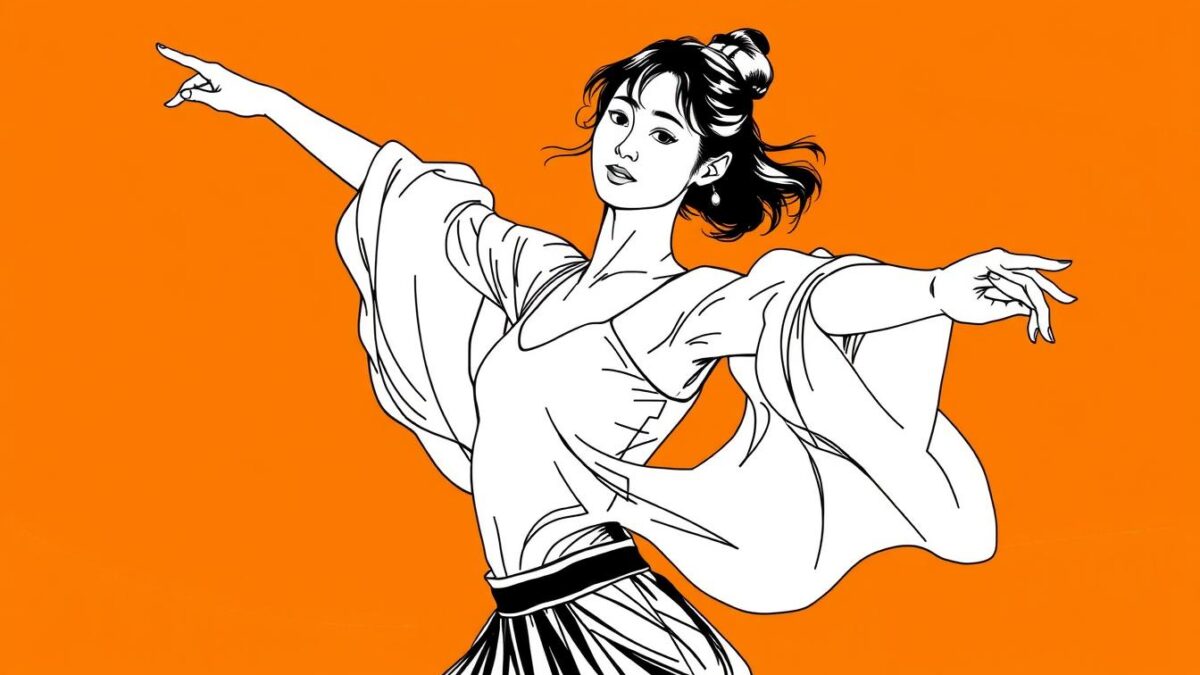
At sixteen, this young artist made her mark in Japan’s competitive dance world. Training at BALLET・LE・COEUR, she entered the Senior Age Division against older performers. Her results spoke volumes about her talent and dedication.
She earned second place in contemporary dance, showing emotional depth and physical courage. The category demands vulnerability and risk-taking. Her performance demonstrated these qualities beautifully.
In classical ballet, she reached the Top 12 among women competitors. This achievement confirmed her strong technical foundation. She proved that traditional discipline and modern expression can coexist.
Her dual success across different styles reveals rare versatility. Judges notice when a dancer commands multiple forms with equal conviction. She navigates this artistic transition with clear intention and intelligence.
Breaking News: Spotlight on Akane Settsu’s Stellar Performance
Contemporary and classical categories require different artistic approaches, yet one dancer mastered both disciplines in the same competitive season. Akane Settsu’s results demonstrated rare versatility across styles.
Performance Highlights from Recent Competitions
Her second place finish in contemporary dance positioned her between top-tier competitors. She trailed only Konoka Mori from Angel. K. Ballet while outperforming Kurara Ishikawa from Yuki Tokunaga Ballet School.
| Category | Placement | Key Details |
|---|---|---|
| Contemporary Dance | 2nd Place | Competed against dancers from K-BALLET ACADEMY, Angel. K. Ballet |
| Classical Dance | Top 12 | Faced exceptional competitors including Hono Hamasaki, Yuina Saito |
| Overall Season | Dual Category Success | Demonstrated adaptability between contrasting dance forms |
The classical category saw her secure a Top 12 place among strong technical performers. This achievement highlighted her solid foundation in traditional ballet technique.
Expert Opinions and Judge Insights
Judges evaluated minute details like port de bras clarity and musical phrasing. They sought authenticity within technical precision.
Her performances stood out for their emotional honesty and structural integrity. The dancer translated choreography into personal statement without losing form.
Global Stage: Akane Settsu and International Dance Competitions
From Berlin to Seoul to Tampa, the 2022 dance season demonstrated how competitive ballet has become truly borderless. The Youth America Grand Prix created a network connecting young talent across continents.
Recap of U.S. and International Events
The grand prix season included preliminary rounds in major cities worldwide. Dancers competed from October through March before the finals in April.
This structure allowed multiple performance opportunities. Competitors could refine their work based on judge feedback throughout the season.
| Region | Key Competition Cities | Season Timeline |
|---|---|---|
| Europe | Berlin, Paris, Barcelona, Riccione | October – March |
| Asia | Osaka, Seoul | January – February |
| United States | Tampa, Austin, Seattle, New York, Chicago | November – March |
| Finals | Tampa, Florida | April 13-20, 2022 |
Impact on the International Ballet and Contemporary Dance Scene
International ballet competitions like the youth grand prix create crucial pathways. They bring together dancers from strong training traditions worldwide.
Japanese participation has grown significantly in recent years. The country’s ballet schools now produce dancers who compete successfully at the international level.
The contemporary component shows how ballet has evolved. Dancers must demonstrate fluency in multiple movement languages to succeed.
Exploring the Youth Grand Prix and Ballet Academies
Japan’s diverse ballet academy landscape creates a competitive ecosystem where multiple training approaches yield success. The youth grand prix circuit reveals patterns of institutional strength across different age divisions.
The Role of Ballet Schools and Academies in Shaping Talent
Ballet schools function as the architectural foundation for competitive dancers. Institutions like BALLET・LE・COEUR demonstrate remarkable consistency across categories.
Their students achieve high placements in both classical and contemporary disciplines. This suggests a training methodology that prepares dancers for diverse performance demands.
| Ballet School | Notable Achievements | Training Focus |
|---|---|---|
| BALLET・LE・COEUR | Multiple Top 12 placements across age divisions | Classical foundation with contemporary versatility |
| Minato City Ballet School | Anne Takahashi: 3rd place Classical, 2nd place Contemporary (Junior) | Early development of dual-discipline talent |
| Yuki Tokunaga Ballet School | Consistent Top 12 rankings in senior categories | Technical precision and performance maturity |
| K-BALLET ACADEMY | Strong presence in competitive contemporary field | Artistic innovation within classical framework |
Insights from Leading Judges and Competition Rankings
Judges evaluate more than individual technique. They assess the training quality visible in musical preparation and artistic risk-taking.
Anne Takahashi’s dual success at age twelve mirrors patterns seen in older competitors. Certain schools clearly identify and nurture versatile talent from early stages.
The variety of institutions producing top-ranked dancers indicates Japan’s decentralized training excellence. Multiple pedagogical approaches contribute to the country’s competitive strength.
Cultural Influences: Traditional Japanese Dance Meets Contemporary Innovation
The fusion of traditional Japanese aesthetics with Western ballet technique creates a unique artistic signature. Dancers from Japan’s top training grounds often carry this dual heritage. Their movement speaks two languages fluently.
This cultural blend shapes training from the start. The name Settsu itself connects to Japanese history. A strong ballet school instills values like discipline and continuous improvement.
Ballet academies in Japan navigate a fascinating duality. They teach Russian and French techniques. Yet they also embrace Japanese principles of subtlety and precision.
Legacy of Japanese Dance Traditions in Modern Performance
Contemporary dance in Japan frequently draws from deep roots. Traditional forms like Butoh and Kabuki teach powerful lessons. Stillness holds as much weight as movement.
The concept of ‘ma,’ or negative space, is vital. It refers to the pause between actions where meaning gathers. Applying this idea to Western choreography adds profound depth.
| Traditional Concept | Modern Influence | Example in Performance |
|---|---|---|
| Emotional Restraint (Noh) | Nuanced expression in contemporary pieces | Power conveyed through subtle gesture, not overt drama |
| Movement Economy (Kabuki) | Highly efficient and precise technique | No wasted motion; every step has clear intention |
| Spatial Awareness (Butoh) | Unique use of stage space and relationship to audience | Creating atmosphere through presence and connection |
| Collective Excellence | Ballet school ethos emphasizing ensemble work | Dancers who excel both in solos and group performances |
This cultural context helps dancers develop a distinctive voice. Their work feels technically universal yet personally authentic. It is a hybrid artistry that audiences recognize immediately.
Final Reflections on the Impact and Future of Akane Settsu
A second-place finish at the youth grand prix is more than a ribbon; it’s a professional passport. For Akane Settsu, this achievement signals a pivotal moment. Her future now unfolds with serious options.
Major city ballet companies and contemporary ensembles value such versatile talent. Her dual success this season makes her a compelling candidate. The connections of her ballet school can help open those doors.
The competitive landscape is always shifting, with new talent like Anne Takahashi rising. This grand prix placement provides a crucial advantage. It builds a reputation that precedes auditions.
Her path will involve difficult choices between immediate company contracts and further training. The discipline honed at her ballet academy prepares her for either route. This season’s results have firmly set the stage for what comes next.